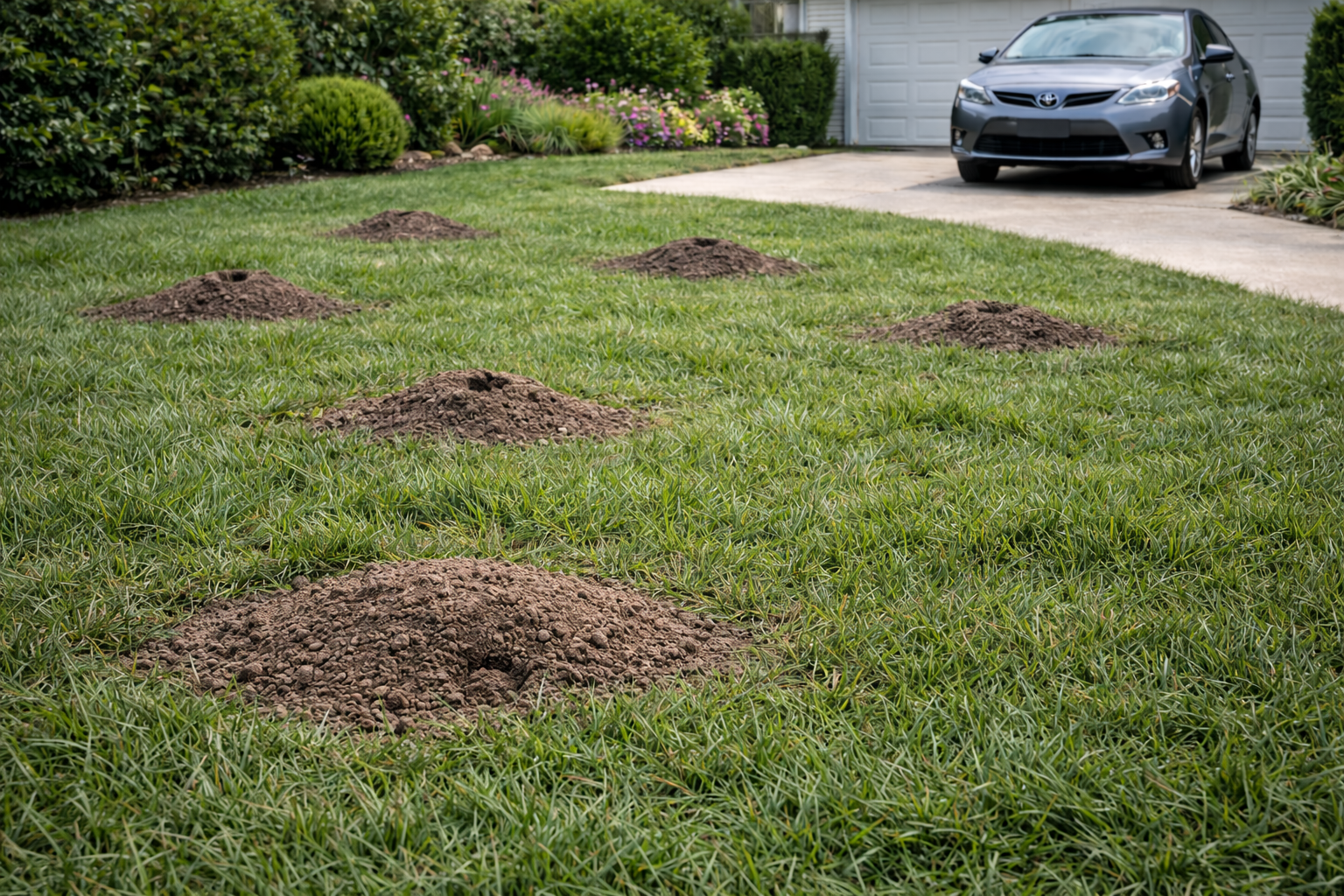
Gopher Activity in Redondo Beach, CA

Gophers have established a persistent presence throughout Redondo Beach, from the coastal bluffs to the inland neighborhoods near South Redondo. The combination of sandy loam soils, established residential landscaping, and proximity to undeveloped coastal sage scrub habitat creates ideal conditions for pocket gopher populations to thrive year-round in this South Bay community.

Why Redondo Beach Has Significant Gopher Activity

Redondo Beach's unique geography and environmental conditions make it particularly susceptible to gopher activity. The city sits on the Palos Verdes Peninsula, which features sandy loam and clay loam soils that are relatively easy for pocket gophers to excavate compared to harder, rockier terrain found in other parts of the region. The area's Mediterranean climate—with mild, wet winters and dry summers—supports year-round gopher feeding, as vegetation remains available even during the drier months due to irrigation systems installed throughout residential neighborhoods.

The proximity of Redondo Beach to natural open spaces, including the coastal bluffs and the nearby Torrance Refinery buffer areas, provides source populations of gophers that continually recolonize disturbed or managed properties. Additionally, most residential areas in Redondo Beach feature extensive irrigation infrastructure to maintain lawns and ornamental plantings, which keeps soil moisture levels elevated—a condition that gophers require to maintain their tunnel systems and prevent collapse. The city's landscape aesthetic, which emphasizes well-watered green spaces and dense plantings common to Southern California coastal communities, essentially creates a favorable environment extending gopher habitat into what might otherwise be marginal territory.

Common Gopher Species in Redondo Beach

The Botta's pocket gopher (Thomomys bottae) is the primary gopher species found throughout Redondo Beach and the greater South Bay region. Adult Botta's pocket gophers typically weigh between 2 and 4 ounces and measure 5 to 7 inches in body length, with a relatively short tail that may measure 1 to 2 inches. Their coloration ranges from dark brown to grayish-brown, often matching the predominant soil color in their local area—an adaptation that provides camouflage when they venture above ground, though they spend the majority of their time in underground tunnel systems.

These gophers are solitary, territorial animals that maintain extensive burrow networks extending up to 300 linear feet in favorable soil conditions. In Redondo Beach yards, individual gophers may occupy territories ranging from one-half acre to several acres depending on food availability and soil conditions. The Botta's pocket gopher is distinguished by external cheek pouches—deep folds of skin extending from the mouth—which the animal uses to transport soil, plant material, and seeds through its tunnel system. The species is exceptionally well-adapted to life underground, with small eyes, small ears, and powerful front legs equipped with long claws specialized for digging. This anatomical suite makes Botta's pocket gophers highly efficient burrowers, capable of creating the characteristic mounding patterns that residents throughout Redondo Beach neighborhoods frequently observe in their yards.

When Gopher Activity Peaks in Redondo Beach

Gopher activity in Redondo Beach follows predictable seasonal patterns driven by breeding cycles and moisture availability. The primary breeding season occurs from January through March, when soil moisture levels peak following the region's winter rainfall. During this period, gopher activity becomes most visible, with fresh mounding occurring frequently as animals construct new tunnels and expand their burrow systems in preparation for breeding and raising young. Spring months (March through May) following Redondo Beach's primary wet season represent the second activity surge, as juvenile gophers disperse from maternal burrows and establish new territories.

Summer months (June through August) typically show reduced mounding activity as soil dries and gophers focus on accessing water sources and established vegetation. However, activity does not cease entirely during summer months—gophers continue foraging and maintaining tunnel systems, particularly in properties with active irrigation that maintains soil moisture. Fall months bring moderate activity levels as animals prepare for winter and respond to autumn rains that occasionally occur in the region. Winter activity depends heavily on rainfall patterns; wet winters produce extended periods of intense gopher activity, while dry winters result in more sporadic mounding and reduced visibility of gopher presence. Understanding these seasonal patterns helps residents in Redondo Beach recognize when gopher populations are most likely to cause noticeable damage to landscaping and irrigation systems.

Signs of Gopher Damage in Redondo Beach Yards

The most conspicuous sign of gopher presence in Redondo Beach yards is the characteristic mound—a crescent or fan-shaped earthen structure created as animals push excavated soil to the surface. Gopher mounds typically measure 4 to 8 inches in diameter and 2 to 4 inches in height, though larger mounds occasionally occur in heavy clay soils. The mound's opening, usually located on the mound's side, marks the entrance to the main tunnel. Unlike the scattered, irregular mounding patterns created by moles, gopher mounds are geometrically more regular and often occur in clusters or lines indicating the direction of tunnel expansion.

Beyond surface mounding, gophers cause considerable subsurface damage to irrigation systems common throughout Redondo Beach properties. Gophers frequently tunnel directly through buried irrigation lines, creating breaks in PVC piping and severing emitter lines. This damage typically manifests as sudden dry patches in landscaping, reduced water pressure in fountain systems, or wet spots indicating leaks. Gophers also damage vegetation directly through root clipping—they sever plant roots underground while foraging for food, causing landscape plants to wilt and die despite adequate irrigation. In Redondo Beach yards, mature shrubs and small trees sometimes perish mysteriously, with post-mortem investigation revealing gopher damage to the root system. Additionally, gophers cause aesthetic damage through their mounding activity, which disrupts lawn surfaces and can create trip hazards in high-traffic residential areas.

Landscape Considerations for Redondo Beach Properties

Redondo Beach's landscape aesthetic emphasizes Mediterranean and California native plantings combined with water-conserving shrubs, creating diverse environments where gophers encounter abundant food sources. Properties throughout the city feature combinations of California buckwheat, California lilac, toyon, manzanita, and other native shrubs alongside ornamental plantings including bougainvillea, rosemary, and various groundcovers. Many Redondo Beach yards also include vegetable gardens and fruit trees, particularly in neighborhoods like South Redondo and North Redondo, where larger properties accommodate culinary plantings. Gophers show particular preference for root crops (carrots, potatoes, turnips), legumes, and succulent plant materials, making vegetable gardens especially vulnerable to damage.

The contrast between hardscaped areas (pavers, patios, drought-resistant rock landscaping) and softscaped areas (lawns, planting beds, irrigated zones) creates a mosaic of gopher habitat throughout Redondo Beach neighborhoods. Interestingly, gophers avoid dense, well-maintained hardscape but readily exploit transition zones where landscaping meets maintained turf. Properties with extensive lawn areas, common in neighborhoods closer to the coast and in the Redondo Beach South and North subdivisions, provide particularly favorable gopher habitat. The combination of year-round irrigation, diverse food sources, and the sandy-loam soils characteristic of the Palos Verdes Peninsula creates conditions where gopher populations can sustain themselves indefinitely if unopposed. Understanding which landscape features attract gophers helps residents recognize their property's inherent vulnerability to infestation and the likelihood of population reestablishment following removal efforts.