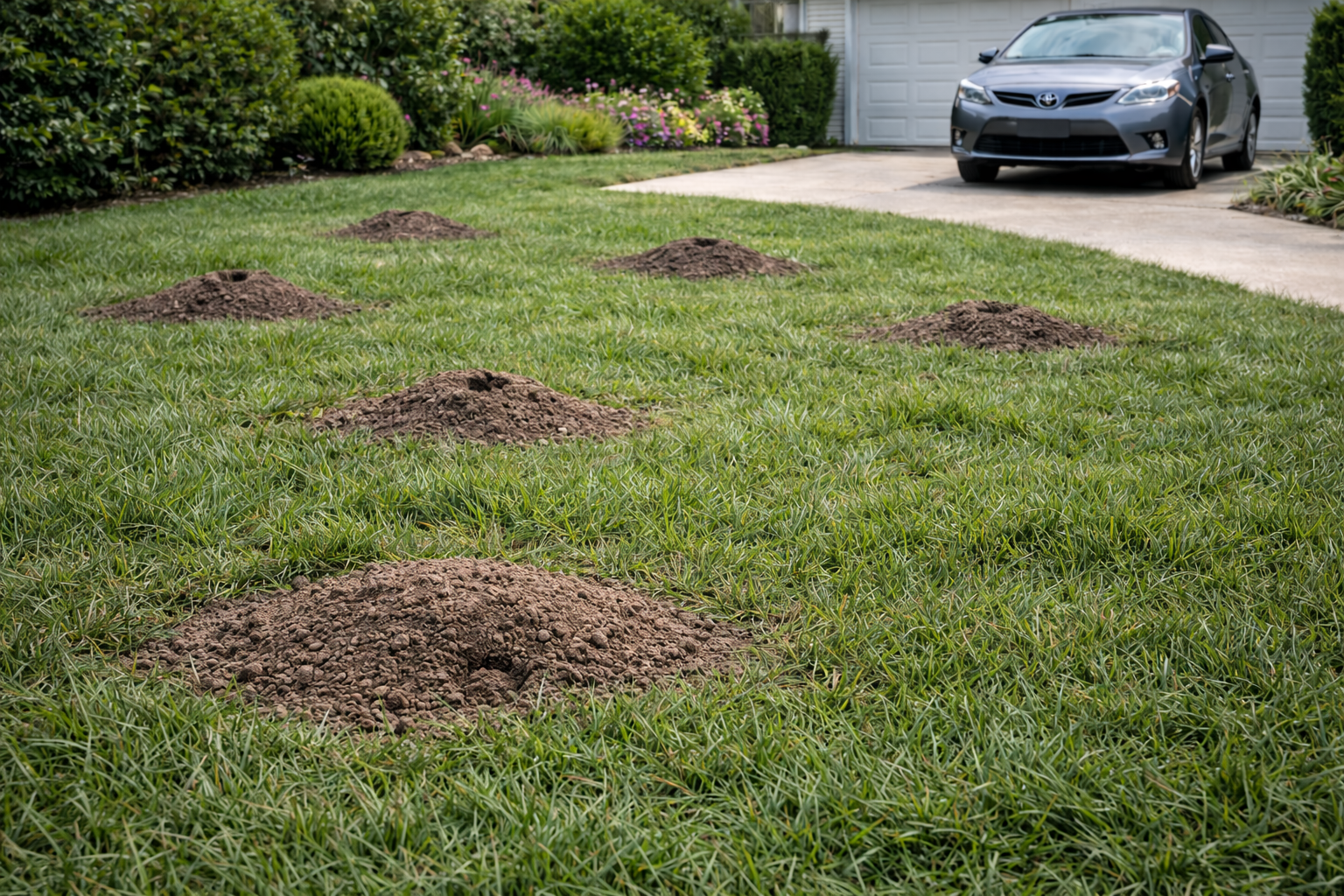
Gopher Activity in Rolling Hills, CA

Rolling Hills, located in southwestern Los Angeles County on the Palos Verdes Peninsula, experiences consistent gopher activity throughout the year. The community's unique geography—characterized by rolling terrain, established neighborhoods with mature landscaping, and proximity to open space reserves—creates ideal conditions for pocket gophers. Understanding local gopher behavior and ecology helps residents recognize activity patterns specific to their region.

Why Rolling Hills Has Significant Gopher Activity

The environmental conditions in Rolling Hills are exceptionally favorable for gopher populations. The peninsula's soil composition consists primarily of sandy loam and clay soils derived from the Palos Verdes Hills formation, which are relatively easy for gophers to excavate compared to compacted urban soils found in flat areas. Seasonal rainfall from October through April—averaging 12 to 15 inches annually—creates periods of optimal soil moisture that facilitate tunnel construction and maintenance.

Rolling Hills' landscaping practices further support gopher colonization. Many properties feature irrigated gardens, ornamental plantings, and established root systems that provide year-round food sources. The community's semi-rural character means larger properties with more undeveloped land, fewer barriers between adjacent yards, and greater connectivity to the nearby Rolling Hills Nature Preserve and open hillside areas where wild gopher populations thrive naturally.

The elevation variation across Rolling Hills—ranging from approximately 400 to 800 feet—creates microclimates that influence gopher activity. Higher elevations experience cooler temperatures and retain soil moisture differently than lower areas, affecting breeding cycles and tunnel network development. Additionally, the community's mature landscape with established trees and shrubs provides both protective cover and food sources that encourage sustained populations.

Common Gopher Species in Rolling Hills

The Botta's pocket gopher (Thomomys bottae) is the primary gopher species found throughout Rolling Hills and the greater Palos Verdes Peninsula. This medium-sized rodent measures approximately 6 to 8 inches in body length with a short, sparsely-haired tail that typically extends 1 to 2 inches. Botta's pocket gophers display fur coloration ranging from dark brown to reddish-brown, providing camouflage in local soil environments.

These gophers derive their common name from the external cheek pouches (or "pockets") used to transport food and nesting material through tunnel systems. Unlike ground squirrels or chipmunks, pocket gophers rarely emerge above ground and remain solitary except during brief mating periods. Their front feet feature disproportionately large claws adapted for powerful digging, allowing single animals to excavate extensive tunnel networks spanning multiple properties.

Rolling Hills' specific soil types and vegetation create ideal habitat for Botta's pocket gophers. The species thrives in the loamy, well-draining soils common to the Palos Verdes Peninsula while maintaining populations in areas with varying moisture levels. Their preference for herbaceous vegetation and tender plant roots makes established gardens and landscaped yards attractive territories. Botta's pocket gophers are present year-round in Rolling Hills, though activity levels fluctuate seasonally.

When Gopher Activity Peaks in Rolling Hills

Gopher activity in Rolling Hills follows predictable seasonal patterns influenced by local weather and breeding cycles. The peak breeding season occurs from January through March, corresponding with winter and early spring rainfall that increases soil moisture and plant growth. During this period, male gophers expand territory ranges searching for mates, resulting in increased tunnel excavation and surface mounding visible across residential properties.

Spring months—particularly March through May—represent the most visible period of gopher activity for Rolling Hills residents. Seasonal rains combined with warming temperatures stimulate plant growth, increasing food availability and attracting gophers to actively maintained gardens and irrigated landscapes. New mounds appear frequently during this window as established populations expand existing tunnel networks and juvenile gophers disperse to establish new territories.

Summer activity typically decreases as soil moisture declines and available vegetation becomes sparser following spring growth cycles. However, supplemental irrigation common in Rolling Hills neighborhoods can sustain gopher populations throughout the dry season. Fall months show moderate activity levels as populations prepare for winter. The relatively mild climate of the Palos Verdes Peninsula means gophers remain active during winter months—unlike populations in colder regions—making December through February a secondary activity peak as animals tunnel beneath wet soils and establish winter food caches.

Signs of Gopher Damage in Rolling Hills Yards

Fresh gopher mounds appear as crescent-shaped or fan-shaped mounds of displaced soil in lawns, gardens, and landscaped areas throughout Rolling Hills properties. Mounds typically measure 3 to 6 inches in diameter and 2 to 4 inches in height, though larger mounds result from repeated use. Multiple mounds visible within a yard indicate either a single gopher with an extensive territory or multiple individuals sharing overlapping ranges. The soil composing these mounds originates from subsurface tunneling and often differs in color and texture from surrounding lawn soil.

Subsurface tunnel damage frequently causes irrigation system malfunctions across Rolling Hills yards. Gophers tunnel beneath sprinkler lines, creating pressure changes that activate or disable irrigation zones unexpectedly. Damaged drip irrigation lines and burst water pipes result from direct gnawing or tunnel collapse beneath pipes. Property owners often discover gopher presence only after noticing irregular lawn irrigation patterns or receiving elevated water bills from hidden leaks.

Plant damage in Rolling Hills gardens ranges from mysterious wilting of healthy plants to complete removal of root systems. Gophers gnaw on tender roots and bulbs, particularly affecting vegetable gardens, ornamental plantings, and young trees. Damage appears suddenly as individual plants weaken and die without visible above-ground cause. Mature root systems supporting established shrubs and trees may sustain considerable damage before symptoms become apparent, representing a delayed threat to Rolling Hills' signature mature landscaping.

Landscape Considerations for Rolling Hills Properties

Rolling Hills' distinctive landscape character—defined by mature oaks, toyon, sage scrub, and carefully maintained ornamental gardens—creates a mosaic of attractive and vulnerable habitats for gophers. The community's aesthetic prioritizes naturalistic plantings that integrate native species alongside cultivated specimens, a design philosophy that inadvertently supports gopher populations by maintaining diverse food sources and protective cover year-round.

Certain plant species common to Rolling Hills yards prove particularly vulnerable to gopher damage. Newly planted trees and shrubs with tender root systems attract concentrated feeding activity. Vegetable gardens and fruit orchards provide particularly attractive food sources, making productive yards ground zero for gopher populations. Conversely, established native plantings with deep, woody root systems—such as coast live oaks and California lilac—suffer less conspicuous damage despite gopher presence below ground.

The contrast between softscape and hardscape elements in Rolling Hills properties influences gopher distribution and damage patterns. Yards featuring extensive lawns and garden beds attract gopher colonization more readily than properties with substantial hardscape, drought-tolerant landscaping, or minimal irrigation. Properties transitioning toward drought-tolerant design inadvertently reduce gopher habitat appeal through decreased water availability and reduced preferred food sources. Understanding these landscape-gopher relationships helps Rolling Hills residents interpret activity patterns and assess risk across different property areas.