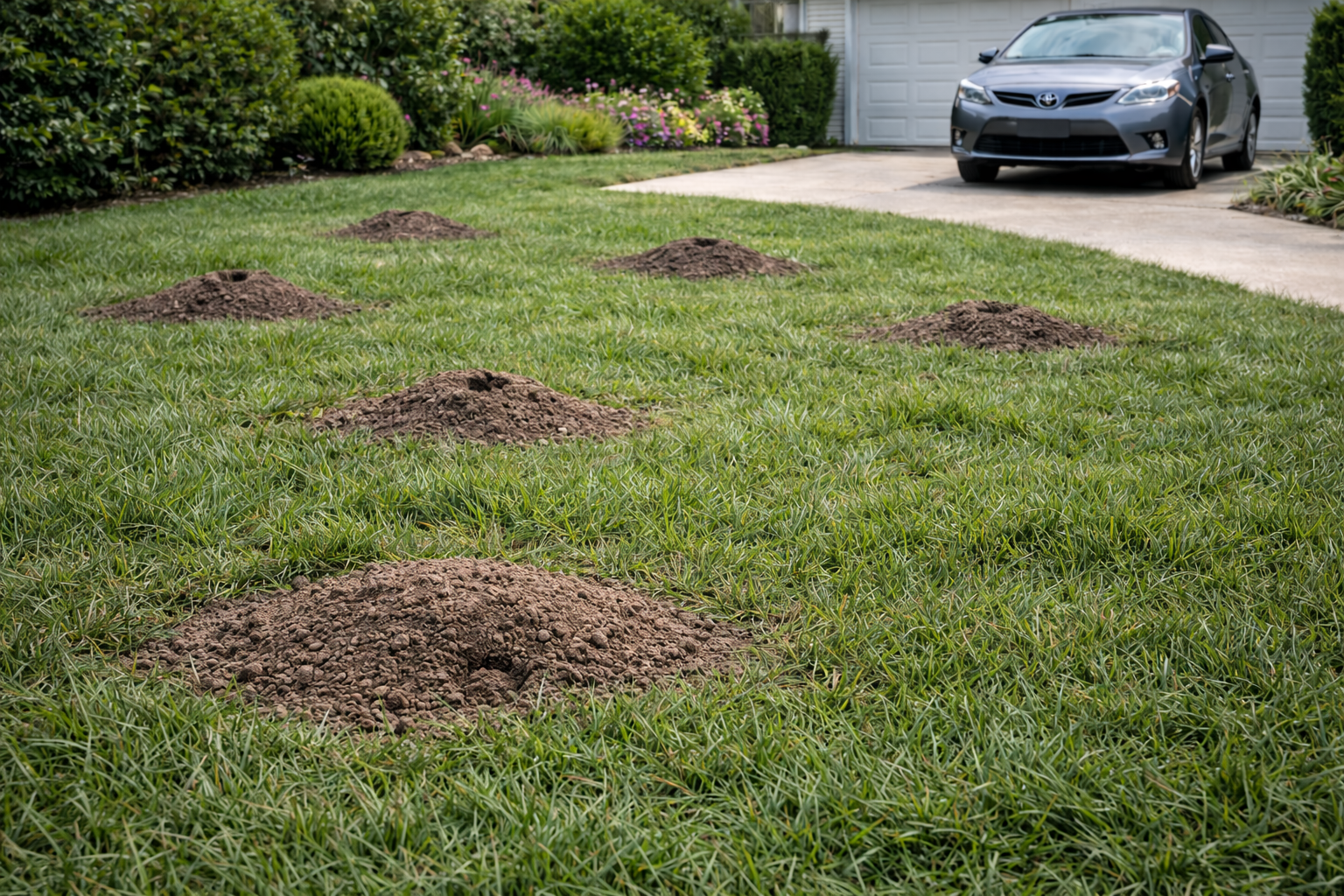
Gopher Activity in Rosemead, CA
Gopher presence in Rosemead represents a significant environmental and property management concern for residents across this San Gabriel Valley community. The combination of fertile soil, consistent irrigation practices, and favorable climate conditions creates an ideal habitat for pocket gophers throughout the city's residential and commercial areas. Understanding the patterns and indicators of gopher activity helps Rosemead property owners recognize problems early and make informed decisions about their landscapes.
Why Rosemead Has Significant Gopher Activity
Rosemead's geographic location in the San Gabriel Valley contributes substantially to gopher populations in the region. The city sits on alluvial soils deposited by the San Gabriel River, which creates naturally fertile, well-draining conditions that gophers find ideal for tunnel construction and foraging. These soil types—primarily sandy loams and silty loams—allow gophers to excavate extensive burrow systems with minimal effort, unlike harder clay-based soils found in surrounding areas.
The valley's irrigation infrastructure amplifies gopher activity considerably. Rosemead residents maintain landscaped yards, gardens, and ornamental plantings that require regular watering through sprinkler systems, drip irrigation, and manual watering. This consistent moisture softens the soil year-round, making it more workable for gophers compared to naturally drier environments. Additionally, the moisture attracts invertebrates and plant roots that serve as primary food sources for pocket gophers.
Rosemead's climate pattern—characterized by mild winters and warm, dry summers—enables gopher breeding and activity throughout most of the year. Unlike northern California regions where gopher activity slows during harsh winters, Rosemead's temperate conditions allow populations to remain active during winter months when soil remains workable. The city's proximity to the San Gabriel Mountains and regional open spaces means that wild gopher populations can expand into residential neighborhoods as urban development continues to encroach on their natural habitat.
Common Gopher Species in Rosemead
The Botta's pocket gopher (Thomomys bottae) represents the predominant gopher species found throughout Rosemead and the broader San Gabriel Valley region. This species demonstrates remarkable adaptability to both rural and suburban environments, making it the primary concern for property owners across the city.
Botta's pocket gophers typically measure six to eight inches in body length, with stocky frames, small ears, and powerful front legs equipped with long claws specialized for digging. Their coloration varies from brown to grayish-brown, depending on local soil composition and genetics. The species possesses distinctive external cheek pouches that extend from the mouth to the shoulders, used exclusively for transporting food and nesting materials rather than for storage.
These gophers demonstrate exceptional adaptation to Rosemead's landscape diversity. They thrive equally well in residential yards, vacant lots, parks, and golf courses across the city. Their preference for loamy, moisture-retaining soils makes properties with established landscaping particularly attractive habitat. Botta's pocket gophers maintain solitary territories, with each individual occupying and defending a burrow system that can extend across multiple properties. Understanding this territorial behavior helps property owners recognize that multiple gophers may be present even when evidence appears limited to a single yard.
When Gopher Activity Peaks in Rosemead
Gopher activity in Rosemead follows predictable seasonal patterns influenced by the region's climate and reproductive cycles. The primary breeding season occurs between January and March, coinciding with Rosemead's mild winter weather and increased soil moisture from winter rains. During this period, male gophers expand their tunnel systems and range more extensively in search of mates, resulting in elevated mound construction and surface activity visible throughout residential neighborhoods.
Spring months bring secondary activity peaks as young gophers born in winter and early spring establish their own territories. This dispersal period, typically occurring in April and May, creates widespread evidence of new burrow systems across properties. The season immediately following Rosemead's occasional spring rains shows particularly intense gopher activity, as softened soil facilitates easier excavation and expanded food sources become available.
Summer months, while generally drier in Rosemead, do not eliminate gopher activity because irrigated landscapes maintain suitable soil conditions. However, the frequency of fresh mound construction typically decreases compared to spring months. Fall presents another notable activity increase as gophers prepare for winter by establishing larger food caches and reinforcing burrow systems. Year-round irrigation in Rosemead neighborhoods means that gopher activity never completely ceases, distinguishing the valley from California regions with pronounced seasonal dormancy patterns. Property owners should expect evidence of gopher presence during any month of the year.
Signs of Gopher Damage in Rosemead Yards
Mound identification represents the most visible indicator of active gopher presence in Rosemead properties. Botta's pocket gophers create distinctive horseshoe or fan-shaped mounds composed of excavated soil pushed to the surface during tunnel construction. These mounds typically measure four to twelve inches in diameter and appear irregularly distributed across yards rather than in organized patterns. Unlike gopher mounds, mole tunnels create raised ridges across lawns, a distinction important for accurate pest identification in the San Gabriel Valley.
Subsurface tunnel systems damage irrigation infrastructure throughout Rosemead yards. Gophers tunnel directly under drip lines and sprinkler systems, severing connections and disrupting water delivery to landscaped areas. Property owners often notice sudden brown patches in otherwise healthy lawns, indicating both gopher tunnel damage and subsequent irrigation failure. Underground tunnels collapse soil around plant roots, effectively girdling trees, shrubs, and perennials even when external damage remains invisible.
Plant damage from gopher foraging appears dramatically in Rosemead gardens and landscapes. Gophers consume vegetable crops, pulling entire plants underground for roots and tubers. In ornamental landscapes, they girdle young trees and shrubs, consuming bark and cambium from roots and base areas. Established trees may show sudden decline after gopher damage severs critical root connections. Vegetable gardens suffer complete crop loss in severe infestations, with gophers removing roots, bulbs, and entire plants. The feeding damage often appears suddenly rather than progressing gradually, creating obvious yard deterioration over short timeframes.
Landscape Considerations for Rosemead Properties
Rosemead's predominant landscaping style reflects Southern California Mediterranean and contemporary desert aesthetics, featuring a mix of drought-tolerant plants, turf areas, hardscape elements, and established shade trees. These diverse landscape compositions create varied levels of gopher vulnerability across the city. Properties emphasizing turf and shallow-rooted ornamentals face particularly intense gopher pressure, while hardscape-heavy landscapes suffer less direct plant damage but may experience tunnel-related foundation and irrigation complications.
Established oak and sycamore trees common to Rosemead neighborhoods face serious gopher threats, particularly younger specimens. Root vegetables and herb gardens prove especially attractive to gophers, with carrots, potatoes, and bulbs suffering complete loss in active infestations. Native plantings and drought-tolerant species popular in modern Rosemead designs offer no inherent gopher resistance, though their deeper root systems sometimes tolerate underground tunnel activity better than shallow-rooted ornamentals. Turf areas, nearly universal in Rosemead yards, provide ideal foraging habitat and mounding surfaces, concentrating gopher activity in the most visible property areas.
Hardscape features including patios, pathways, and decorative rock borders do not eliminate gopher pressure but reduce visible mounding and direct plant damage. Water features and pools, increasingly common in Rosemead properties, actually attract gophers through increased irrigation and groundwater, contradicting assumptions that these elements provide pest control benefits. Rock barriers and underground screening demonstrate limited effectiveness against determined Botta's pocket gophers, whose powerful claws penetrate most residential-grade barriers relatively easily. Gopher activity ultimately depends more on available food sources and soil conditions than on landscape style or hardscape presence.
For professional gopher control in Southern California, visit Rodent Guys — serving Los Angeles, Orange, San Bernardino, and Riverside counties.