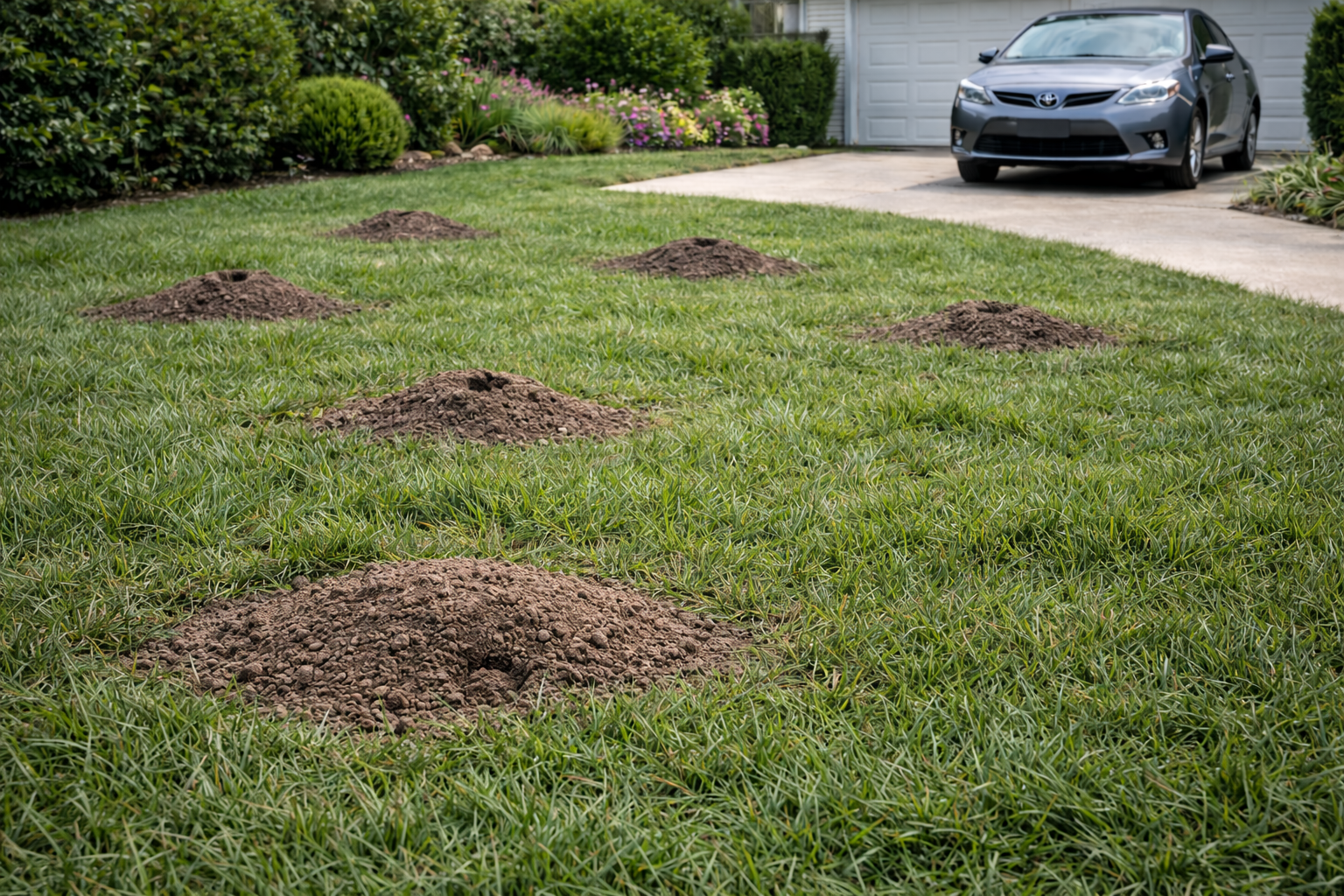
Gopher Activity in Rowland Heights, CA
Rowland Heights, located in the unincorporated area of Los Angeles County in the northeastern San Gabriel Valley, experiences consistent gopher activity throughout the year. The combination of favorable soil conditions, extensive irrigation infrastructure supporting residential landscaping, and proximity to undeveloped foothill areas creates an environment where gophers thrive. Property owners in this community frequently encounter evidence of burrowing activity in gardens, lawns, and landscaped areas.
Why Rowland Heights Has Significant Gopher Activity
The geological and environmental characteristics of Rowland Heights make the area particularly suitable for gopher populations. The region sits at the base of the Puente Hills, with elevations ranging from approximately 400 to 800 feet, and features predominantly sandy loam and clay loam soils that are ideal for digging and tunnel maintenance. These soil types, common throughout the San Gabriel Valley floor where Rowland Heights is situated, allow gophers to excavate extensive burrow systems with minimal effort.
Irrigation plays a crucial role in supporting gopher activity. Most residential properties in Rowland Heights rely on landscaping that requires regular watering—from decorative gardens to fruit trees to maintained lawns. This consistent moisture softens the soil and increases the abundance of plant roots and vegetation that gophers depend upon for food. Additionally, Rowland Heights receives moderate winter and early spring rainfall, with annual precipitation typically between 14 and 16 inches concentrated in the November through April period. This seasonal moisture pattern triggers peak vegetation growth and makes soil conditions optimal for gopher tunneling during late winter and spring months.
The proximity of Rowland Heights to undeveloped areas, including portions of the Puente Hills and surrounding open spaces, serves as a natural reservoir for gopher populations. Gophers can migrate from these less-developed regions into residential neighborhoods, seeking the more abundant food sources provided by cultivated gardens and landscaping. The gradual transition from suburban to semi-rural landscape creates numerous corridors for gopher movement between established burrow systems.
Common Gopher Species in Rowland Heights
The pocket gopher species found throughout Rowland Heights is the Botta's pocket gopher (Thomomys bottae), which dominates the Los Angeles County region. Botta's pocket gophers are medium-sized rodents, typically measuring 5 to 7 inches in body length with a short tail of 1 to 2 inches. Their fur ranges from tan to dark brown, often matching local soil coloration, and they possess small external ears, small eyes, and notably large, prominent front teeth designed for gnawing through roots and soil.
The name "pocket gopher" derives from fur-lined cheek pouches that these animals use to transport food and nesting materials through their tunnel systems. Botta's pocket gophers are solitary, territorial animals that typically remain within their established burrow networks. Each gopher maintains its own system of tunnels, rarely encountering or tolerating other gophers except during brief mating periods. In Rowland Heights, where suburban properties often have smaller lot sizes, multiple independent gopher burrow systems may exist within a single neighborhood block, with different animals occupying different properties or even different areas of the same yard.
These rodents are adapted to the local climate and soil conditions of the San Gabriel Valley. Their strong forelimbs and specialized claws are perfectly suited to the sandy loam soils prevalent in Rowland Heights. Unlike some other California gopher species that prefer specific soil types or elevations, Botta's pocket gophers demonstrate remarkable adaptability to the diverse residential environments found throughout the community, from lower-elevation valley properties to hillside homes.
When Gopher Activity Peaks in Rowland Heights
Gopher activity in Rowland Heights follows distinct seasonal patterns influenced by local climate and breeding cycles. The most intense period of gopher activity occurs from January through April, coinciding with the breeding season and the peak of the region's rainy winter period. During these months, gophers are more active in tunnel construction, food gathering, and reproduction, resulting in more visible surface activity and greater likelihood of property damage.
The winter rains that characterize Southern California climate patterns are particularly significant for Rowland Heights gopher populations. When rainfall increases soil moisture in November through March, the ground becomes easier to excavate, and plant growth accelerates, providing abundant food sources. Homeowners often notice fresh mounds appearing regularly during and immediately after rainy periods. This phenomenon reflects both the gophers' increased ability to tunnel in softened soil and their heightened activity levels in response to improved environmental conditions.
Spring activity (March and April) remains elevated as gophers establish new burrow systems and expand existing tunnel networks. By late spring and summer, as soil dries and irrigation becomes the primary moisture source, activity generally decreases somewhat, though gophers never become completely dormant. During the hot, dry months of June through September, gophers concentrate their burrowing efforts in areas that receive regular irrigation, making yards with consistent watering schedules prime targets for continued activity. Fall months (October through December) show moderate activity levels as temperatures begin cooling and winter moisture returns to the region.
Signs of Gopher Damage in Rowland Heights Yards
The most visible indicator of gopher presence is the characteristic mound of excavated soil that appears on lawns and in gardens. These mounds are typically cone or crescent-shaped, measuring 2 to 4 inches in height and 4 to 6 inches in diameter, formed when gophers push loose soil to the surface while excavating or maintaining their burrow systems. In Rowland Heights yards with clay loam soils, mounds often appear slightly raised and compact, while sandy loam areas may produce more scattered soil patterns. Property owners frequently discover multiple mounds appearing overnight after rainfall or heavy irrigation, indicating active tunnel construction.
Gophers cause damage to irrigation systems that are ubiquitous throughout Rowland Heights residential landscaping. Drip irrigation lines, soaker hoses, and underground irrigation pipes often run directly through gopher burrow systems. As gophers tunnel, they may puncture or sever these water delivery systems, resulting in leaks, uneven watering, and wasted water. This damage can be difficult to diagnose initially, as breaks occur underground where they are not immediately visible.
Vegetation damage provides another clear sign of gopher activity. Gophers clip plant stems at ground level while foraging and also consume roots, bulbs, and tubers from underground. In Rowland Heights yards featuring vegetable gardens, fruit trees, or ornamental plantings, affected plants may suddenly wilt, die back, or disappear entirely. Young trees and shrubs are particularly vulnerable to gopher damage, as the animals can sever roots or damage root systems, girdling the plants and causing death. In some cases, gophers pull entire small plants into their burrows for food storage.
Landscape Considerations for Rowland Heights Properties
The typical landscaping style in Rowland Heights reflects the community's character as a suburban San Gabriel Valley neighborhood with diverse cultural influences and varied property sizes. Many homes feature a combination of hardscape elements—including paved patios, decorative stone, and concrete—alongside soft landscaping with flowering plants, herbs, and edible gardens. This mix creates both protected and vulnerable areas for gopher activity, as the rodents must tunnel through open soil areas but cannot burrow under paved surfaces or through hard landscaping materials.
Certain plant species commonly used in Rowland Heights landscapes are particularly susceptible to gopher damage. Fruit trees—including avocado, citrus, and stone fruits popular in the region—are vulnerable to both root damage and bark gnawing. Root vegetables such as carrots, beets, and potatoes planted in Rowland Heights vegetable gardens are highly attractive to gophers and often suffer complete crop loss. Bulb plantings, including tulips, daffodils, and lilies, are among the most damaged plants in ornamental landscapes, as gophers actively seek out underground bulbs as food sources. In contrast, established hardscape features and paved areas provide protection from gopher activity, as do certain tough, fibrous-rooted plants that resist gopher feeding.
Properties in Rowland Heights with extensive turf areas face particular gopher challenges, as gophers easily tunnel through grass-covered soil in search of roots and grubs. The maintenance of large lawns—whether for aesthetic reasons or as family recreation areas—inadvertently creates ideal gopher habitat. Conversely, properties with reduced turf areas and more hardscape coverage tend to experience less visible gopher activity, though burrowing may still occur in any remaining soil areas. Water-wise landscaping choices increasingly popular in drought-conscious Southern California can paradoxically support gopher populations if designed with soil-based planting areas, though xeriscaping with extensive mulching and rock groundcovers may provide some deterrent effect.
For professional gopher control in Southern California, visit Rodent Guys — serving Los Angeles, Orange, San Bernardino, and Riverside counties.