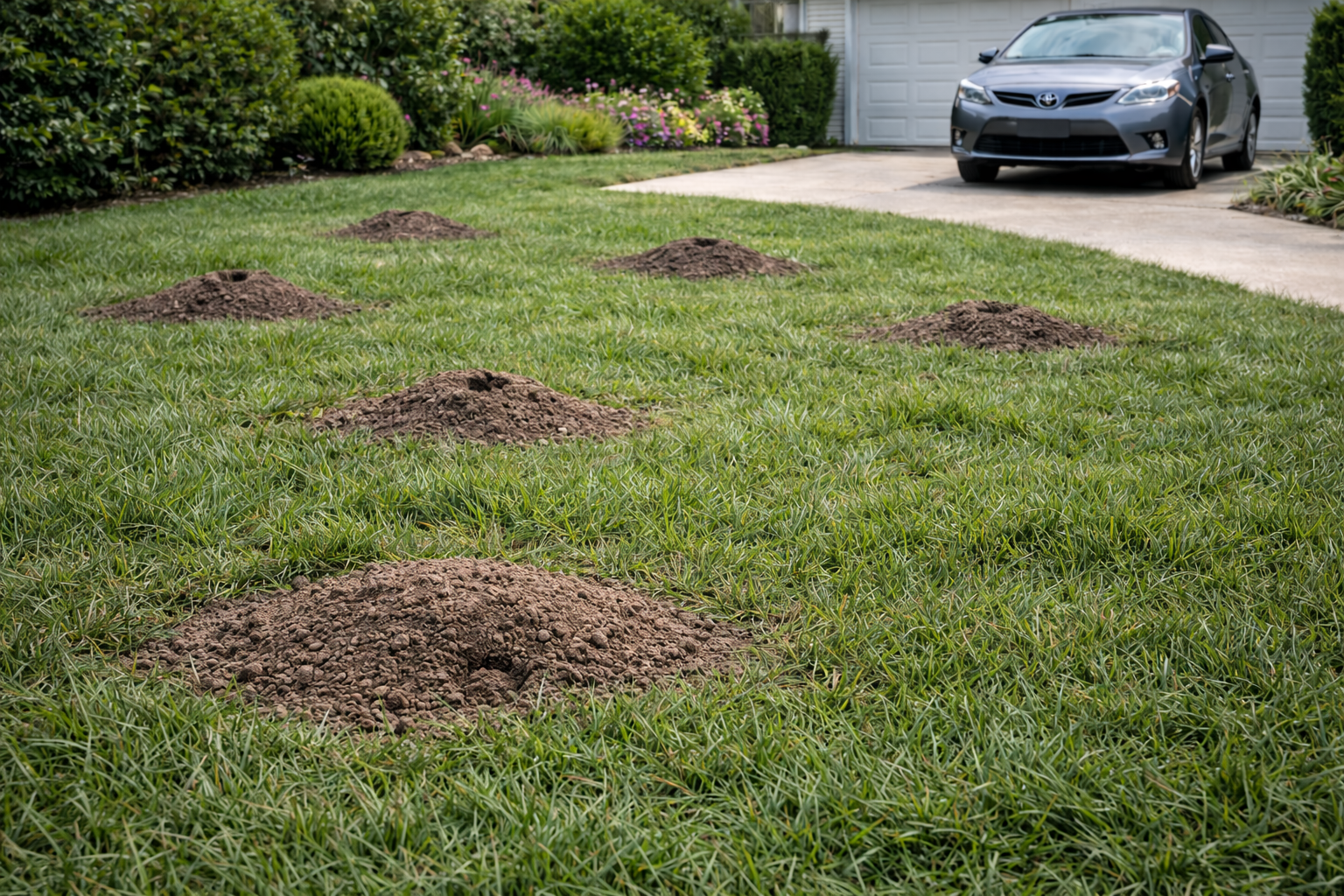
Gopher Activity in San Bernardino, CA

San Bernardino, located in the Inland Empire at the base of the San Bernardino Mountains, experiences consistent gopher activity throughout residential and developed areas. The region's combination of irrigated landscapes, specific soil composition, and semi-arid climate creates an environment where pocket gophers thrive and reproduce successfully. Property owners across the city—from the downtown corridor to neighborhoods in the foothills—frequently encounter evidence of gopher tunneling and burrowing.

Why San Bernardino Has Significant Gopher Activity

The San Bernardino Valley sits on alluvial plains composed primarily of sandy loam and sandy clay soils deposited over thousands of years from mountain runoff. These soil types are ideal for gopher burrowing because they're soft enough for efficient digging yet stable enough to maintain tunnel structure. The extensive irrigation infrastructure throughout San Bernardino—including residential sprinkler systems, golf courses, and agricultural water lines—maintains soil moisture at levels gophers find optimal for tunneling and foraging.

San Bernardino's semi-arid climate, with average annual rainfall around 10-15 inches concentrated primarily in winter months, means that artificial irrigation sustains vegetation year-round. This creates persistent food sources and soft soil conditions that encourage gopher populations. The proximity of developed areas to undisturbed habitat in the San Bernardino National Forest and surrounding foothill regions provides a continuous reservoir of gophers that naturally disperse into residential zones. Additionally, the city's elevation gradient—ranging from approximately 1,050 feet in downtown areas to over 3,000 feet in mountain neighborhoods—creates varied microclimates where gophers adapt successfully across different zones.

Common Gopher Species in San Bernardino

The Botta's pocket gopher (Thomomys bottae) is the dominant gopher species throughout San Bernardino County and dominates the region from sea level through the foothills. These rodents are medium-sized burrowers, typically weighing 2.5 to 4 ounces with bodies measuring 5 to 7 inches long, plus a short, sparsely-haired tail. Their fur coloration ranges from light tan to dark brown, often matching local soil tones in their specific habitat areas. Botta's pocket gophers possess powerful front legs with prominent claws specifically adapted for excavation, and their lips close behind their incisors—an adaptation that allows them to move soil while keeping dirt from entering their mouths.

These gophers are solitary, territorial animals that spend most of their lives underground in extensive tunnel systems. Individual gophers maintain home ranges of approximately 200 to 2,000 square feet, depending on soil quality and food availability. In San Bernardino's urban and suburban environments, a single property may host one to several gophers simultaneously, though typically one primary resident occupies the most active tunnel system. Botta's pocket gophers are primarily herbivorous, feeding on roots, bulbs, tubers, and aboveground vegetation they pull into their burrows. They're active throughout the year, though activity patterns shift seasonally in response to breeding cycles and vegetation availability.

When Gopher Activity Peaks in San Bernardino

Gopher activity in San Bernardino exhibits distinct seasonal patterns tied to breeding cycles and moisture availability. The primary breeding season extends from January through March, when soil moisture from winter rains reaches optimal levels and male gophers become more mobile in search of mates. During this period, tunneling activity intensifies noticeably, with new mounds appearing frequently in yards and landscaped areas. Spring months (March through May) see continued elevated activity as newly independent juveniles disperse and establish their own territories, creating additional visible mounding.

Summer months (June through August) typically show reduced surface activity as gophers move deeper into soil to access moisture at greater depths and to escape heat near the surface. However, in irrigated yards where soil remains consistently moist, gophers continue active tunneling throughout summer. Fall (September through November) brings moderate activity levels as gophers prepare for winter and take advantage of fall vegetation. Winter activity varies—during wet periods when soil moisture is abundant, gophers maintain active tunneling; during dry spells, activity drops noticeably. The arrival of winter and spring rains in San Bernardino consistently reactivates gopher populations, making late winter through spring the critical period for monitoring and managing gopher presence on properties.

Signs of Gopher Damage in San Bernardino Yards

The most obvious indicator of gopher presence is the appearance of mounds—rounded, crescent-shaped or fan-shaped accumulations of soil pushed from tunnel entrances. These mounds typically measure 2 to 6 inches in height and 4 to 12 inches in diameter. In San Bernardino yards, they commonly appear in turf areas, garden beds, and along property lines. Unlike ground squirrel mounds, gopher mounds are typically asymmetrical and composed of compacted soil arranged in characteristic patterns. The hole itself is often obscured or plugged by the gopher pushing soil from below.

Beyond mounding, homeowners observe depressed or sunken areas in lawns where tunnel roofs collapse, creating uneven terrain. Gopher activity damages irrigated landscapes significantly—their tunnels disrupt water distribution, causing dry patches adjacent to over-watered areas. Root damage appears as sudden wilting of shrubs, trees, and perennials despite adequate water supply. Young trees in San Bernardino neighborhoods sometimes experience complete girdling of roots or trunks at soil level. Vegetables and bulbs in gardens may simply disappear as gophers pull plants down into their tunnels for feeding. In extreme cases, extensive tunneling causes sidewalk and driveway settling, and damage to irrigation lines and buried utilities becomes evident through leaks or system failures.

Landscape Considerations for San Bernardino Properties

San Bernardino properties reflect diverse landscaping styles ranging from traditional turf-and-shrub layouts to drought-resistant xeriscaping and Mediterranean-style plantings. The region's hot summers and limited rainfall make water-efficient landscapes increasingly common, yet ironically, any irrigated vegetation attracts gophers. Properties featuring extensive lawn areas, vegetable gardens, ornamental flower beds, and fruit-bearing trees present ideal foraging opportunities. Common San Bernardino landscape plants particularly vulnerable to gopher damage include established roses, newly planted shade trees, vegetable gardens, flowering bulbs, and root vegetables.

Hardscape features—including patios, pathways, and decorative rock arrangements—provide some protection by limiting foraging areas, yet gophers tunnel beneath hardscaping and can damage utility lines and create settling issues. The combination of irrigation-dependent landscaping in San Bernardino's semi-arid climate essentially guarantees gopher-favorable conditions. Properties that transition toward drought-resistant plantings, deeper mulching, and reduced irrigation still attract gophers if irrigation occurs at all. Strategic landscape design that minimizes soft soil preparation, concentrates plantings, and utilizes gopher-resistant barriers can reduce attractiveness somewhat, but in San Bernardino's environment, active gopher management remains necessary for most developed properties. Understanding these landscape vulnerabilities helps residents make informed decisions about property maintenance and gopher activity management strategies.