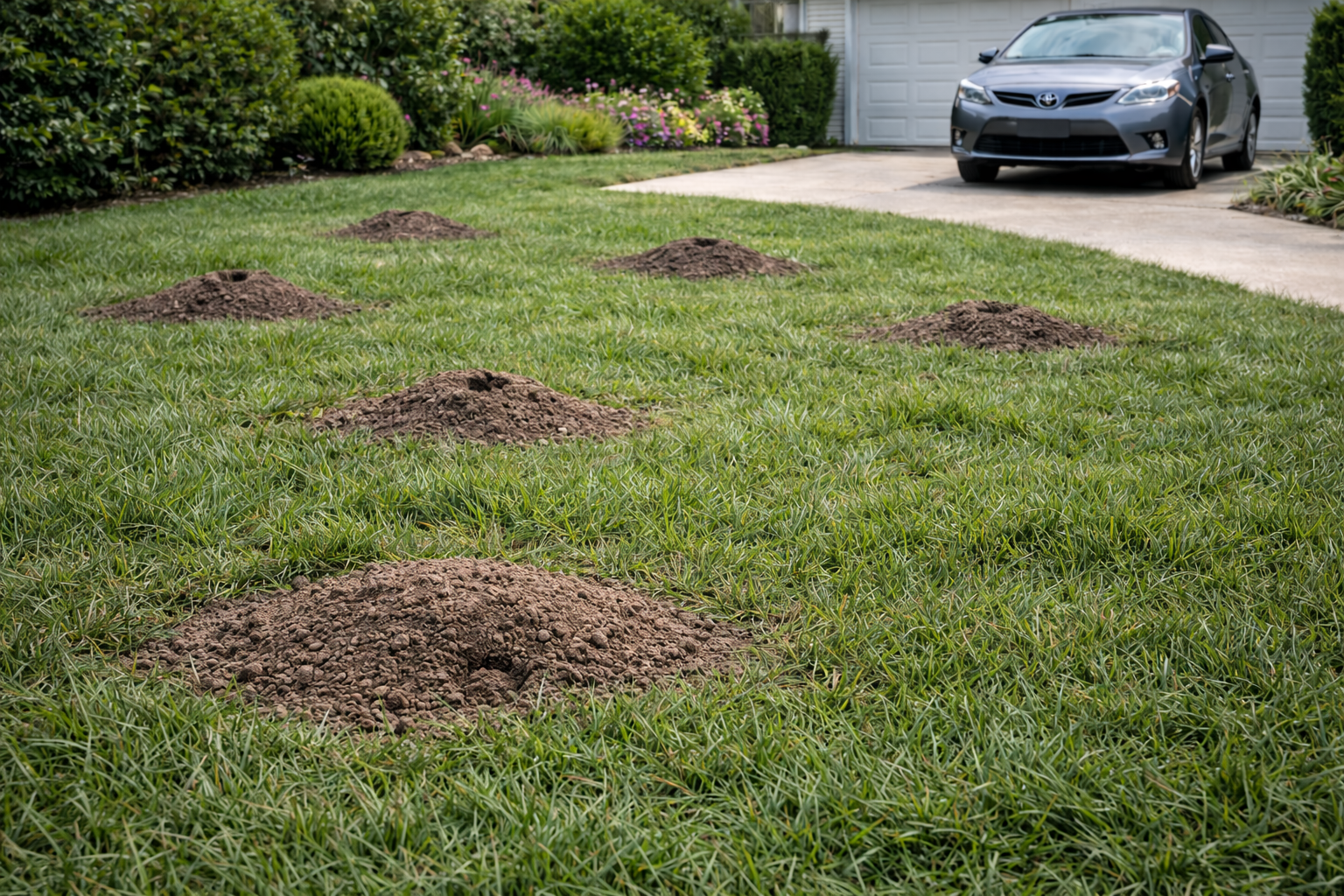
Gopher Activity in San Dimas, CA

San Dimas, located in the western San Gabriel Valley in Los Angeles County, experiences persistent gopher activity due to its unique combination of irrigated residential landscapes, favorable soil conditions, and proximity to natural foothill areas. The presence of pocket gophers has become a common concern for property owners throughout the community, from the flatlands near Bonita Avenue to the residential slopes approaching the San Dimas Canyon area. Understanding local gopher behavior and seasonal patterns helps residents recognize when and where problems are most likely to occur.

Why San Dimas Has Significant Gopher Activity

The San Dimas area presents ideal conditions for gopher populations, making the region particularly susceptible to burrowing activity. The underlying soil composition throughout San Dimas consists primarily of alluvial deposits with clay and silt loam characteristics, which are relatively easy for gophers to excavate compared to dense clay or rocky substrates. These soil types, combined with the region's semi-arid climate and modern irrigation infrastructure, create an attractive environment for pocket gophers seeking consistent moisture and established vegetation.

Water availability represents a critical factor in gopher abundance across San Dimas. Residential properties typically feature irrigated lawns, gardens, and landscaping that maintain soil moisture levels year-round—conditions that gophers require for both burrowing and sustaining their food sources. The local climate receives approximately 15-16 inches of annual rainfall, concentrated primarily between November and March, leaving properties dependent on supplemental irrigation during the dry season. This irrigation pattern directly supports gopher populations by maintaining soil workability and plant growth throughout the year.

San Dimas' position at the transition zone between developed suburban areas and the San Gabriel Mountains also influences gopher distribution. The undeveloped foothill areas and open spaces near San Dimas Canyon and Puddingstone Reservoir serve as natural gopher habitat, and populations gradually expand downslope into residential neighborhoods. Properties located on or near the margins of these wild areas often experience higher gopher pressure than those in the central valley portions of the community.

Common Gopher Species in San Dimas

The Botta's pocket gopher (Thomomys bottae) is the primary gopher species found throughout San Dimas and the greater San Gabriel Valley region. This species is well-adapted to the local semi-arid climate and soil conditions characteristic of the area. Adult Botta's pocket gophers typically weigh between 3 and 6 ounces and measure approximately 6-8 inches in body length, with short, powerful legs and small eyes adapted for a subterranean lifestyle. Their coloration varies across the region but generally ranges from brown to dark gray, with lighter underbelly fur.

The species derives its common name from the distinctive external cheek pouches located on either side of the mouth, which gophers use to transport food and nesting materials through their tunnel systems. These pouches can expand to remarkable proportions, allowing individual animals to move substantial quantities of vegetation and soil. Botta's pocket gophers possess continuously growing incisor teeth, which they maintain through constant gnawing on roots, bulbs, and woody materials. In San Dimas, where properties feature a mix of native and ornamental plantings, gophers encounter abundant food sources throughout most of the year.

This species is solitary and territorial, with each adult typically maintaining an individual burrow system ranging from 200 to 600 feet in length depending on food availability and soil conditions. In San Dimas properties with extensive landscaping and regular irrigation, individual burrow systems tend to be more compact due to higher resource density. Gophers rarely venture above ground, making direct observation difficult, but their burrowing activity creates obvious surface evidence.

When Gopher Activity Peaks in San Dimas

Gopher activity in San Dimas follows predictable seasonal patterns influenced by the region's Mediterranean climate and local breeding cycles. The breeding season typically begins in January and extends through March, corresponding with San Dimas' wet season when soil moisture increases and new plant growth becomes abundant. During this period, gophers become more active in their burrowing, extending existing tunnel systems and establishing new territories. Male gophers expand their range during breeding season in search of mates, resulting in increased surface mound construction across affected properties.

Spring represents the secondary peak of gopher activity across San Dimas, particularly following periods of rain that soften soil throughout March and April. The combination of moisture and rapidly growing ornamental plants provides optimal foraging conditions. However, gopher activity persists year-round on irrigated properties throughout San Dimas, unlike in non-irrigated areas where activity may decline during dry months. Properties with automatic irrigation systems or regular hand-watering maintain gopher-friendly conditions even during the dry summer months (June through September), though visible surface activity may decrease.

Autumn months (September through November) show moderate activity levels as gophers prepare for winter by expanding food caches within their burrow systems. This is frequently when property owners notice increased damage, as gophers intensify their foraging and root-cutting activities. During particularly dry years, irrigated landscapes in San Dimas become even more attractive to gophers from surrounding areas, resulting in occasional population surges.

Signs of Gopher Damage in San Dimas Yards

The most visible evidence of gopher activity consists of mounds of excavated soil appearing on lawns, gardens, and landscaped areas throughout San Dimas properties. These mounds are created when gophers push soil upward while extending their tunnel systems, and they typically measure 4-12 inches in diameter and 2-4 inches in height. Unlike mole mounds, which are conical and centered over burrow openings, gopher mounds are characteristically asymmetrical, with the burrow opening positioned to one side. San Dimas residents often discover multiple mounds appearing suddenly after rain when soil moisture facilitates burrowing.

Underground damage frequently exceeds visible surface evidence. Gopher tunnel systems directly damage irrigation systems common throughout San Dimas properties, crushing or displacing drip lines, soaker hoses, and underground sprinkler pipes. This damage disrupts water distribution to landscaping and can result in inconsistent irrigation coverage. Additionally, gophers consume roots of ornamental plants, vegetables, and shrubs directly from underground, causing plants to wilt or die without obvious above-ground feeding marks. Prized plants may deteriorate rapidly once gophers access their root systems.

Damage to desirable trees and shrubs often appears as root severing, causing sudden dieback of portions or entire plants. In San Dimas gardens and vegetable patches, young plants may disappear entirely, as gophers pull seedlings down into their burrows for consumption. Lawn areas show gradual quality decline as tunnel construction destabilizes sod and creates uneven surfaces. Some homeowners observe subsidence or settling in lawn areas where burrow ceilings have collapsed.

Landscape Considerations for San Dimas Properties

San Dimas properties display diverse landscaping styles reflecting both the region's semi-arid climate and residents' preferences for ornamental gardens. Mediterranean-inspired designs featuring drought-tolerant plants, rock landscapes, and hardscape elements dominate newer properties, while established neighborhoods contain traditional turf lawns combined with mixed ornamental plantings. The prevalence of irrigated landscapes means that most San Dimas yards provide suitable conditions for gophers regardless of specific plant selections, though certain species attract more intensive foraging than others.

Particularly vulnerable plant species include root vegetables (carrots, parsnips, turnips), tender bulbs (tulips, daffodils, lilies), and young fruit trees and berry bushes. Common San Dimas ornamentals such as junipers, pittosporum, and various ornamental grasses may sustain root damage without showing immediate above-ground symptoms. Native California plants occasionally planted in San Dimas landscapes for water conservation, including toyon and coyote brush, also fall victim to gopher predation. In contrast, established native oaks and some other mature trees demonstrate greater resistance due to deeper root systems situated below typical gopher burrowing depths.

Properties incorporating hardscape elements—patios, walkways, artificial turf, decorative rock—may experience fewer gopher problems simply due to reduced available soil for tunneling. However, gophers readily burrow beneath hardscape features to access vegetation on the opposite side, so hardscape alone does not provide complete protection. San Dimas residents seeking to balance aesthetics with gopher resistance often employ a combination of raised garden beds, hardscape barriers, and selective plant choices rather than relying on any single approach.