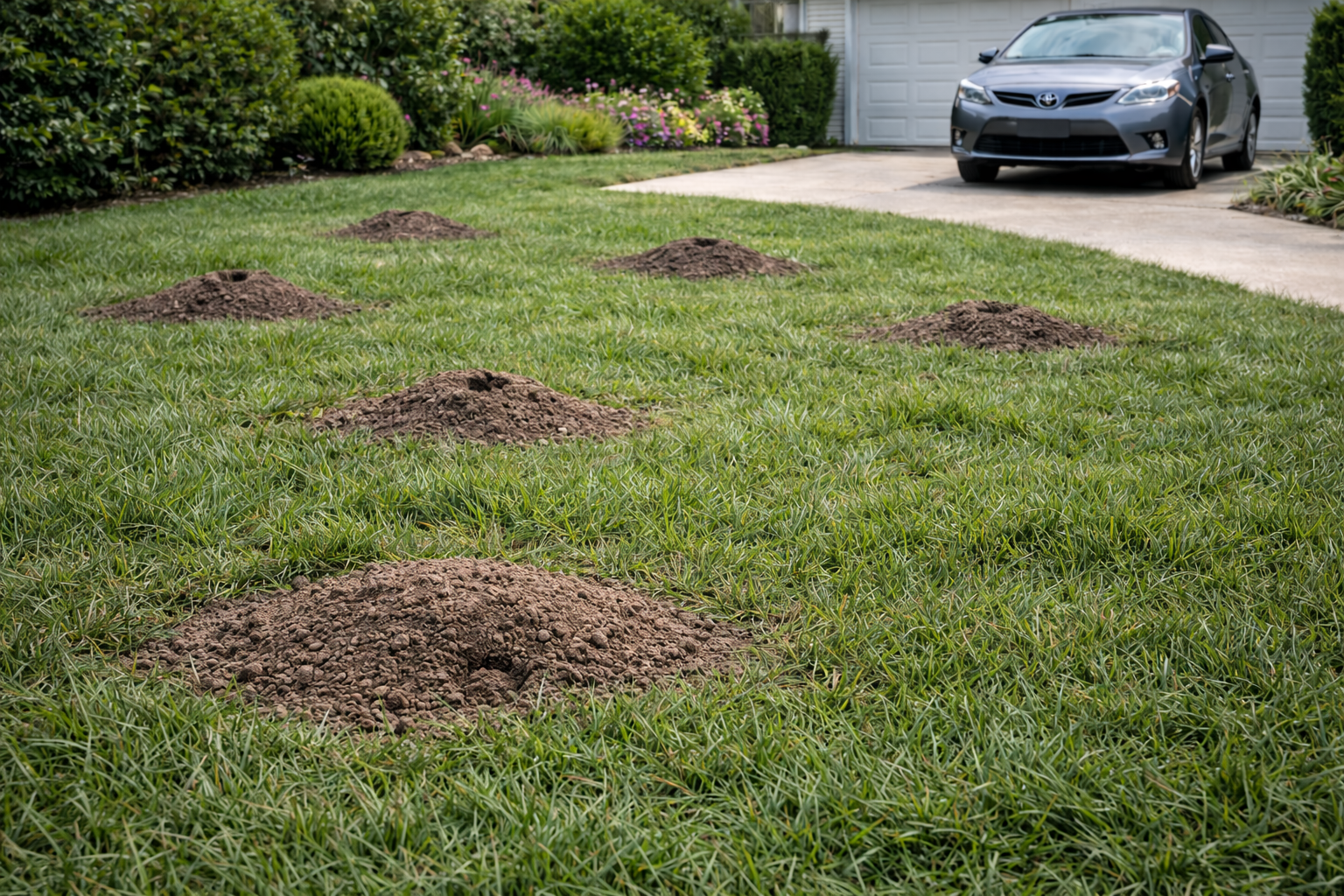
Gopher Activity in San Fernando, CA

Gophers are a persistent presence throughout San Fernando, a small city in the San Fernando Valley located in northwestern Los Angeles County. The combination of irrigated residential gardens, favorable soil conditions, and the valley's Mediterranean climate creates ideal habitat for these burrowing rodents. Property owners in San Fernando neighborhoods regularly encounter gopher activity, from the characteristic mounds appearing in yards to damage affecting landscaping and irrigation systems.

Why San Fernando Has Significant Gopher Activity

San Fernando's geography and environmental conditions make it particularly susceptible to gopher populations. The city sits in the heart of the San Fernando Valley, an expansive basin with rich alluvial soils deposited over millennia by the Los Angeles River and its tributaries. These loamy, well-draining soils are ideal for gopher burrowing—soft enough to excavate efficiently but stable enough to maintain tunnel structure.

The valley's climate, characterized by hot, dry summers and mild winters with occasional winter rains, allows gophers to remain active throughout most of the year. Unlike regions with harsh winters or prolonged freezing, San Fernando's gophers can forage and breed during extended periods. Irrigation infrastructure that supports residential landscaping and local agriculture creates year-round moisture in the soil, providing both drinking water and softened earth for tunneling.

San Fernando's proximity to undeveloped areas and the foothills surrounding the valley also contributes to gopher pressure. The nearby San Fernando Mission Hills and access to larger wild spaces mean that gopher populations in those areas regularly disperse into residential neighborhoods. This constant recruitment from surrounding habitat maintains populations even when localized control measures are attempted.

Common Gopher Species in San Fernando

The primary gopher species found throughout San Fernando and the greater Los Angeles area is the Botta's pocket gopher, scientifically known as Thomomys bottae. This species is remarkably well-adapted to the valley's environment and has thrived in the region for centuries. Botta's pocket gophers are medium-sized rodents, typically measuring 5 to 8 inches in body length, with relatively short tails and robust, stocky builds designed for underground excavation.

These gophers possess distinctive physical features that aid in their burrowing lifestyle. Their front feet feature elongated claws that function as miniature shovels, allowing them to move soil efficiently. Small eyes and ears reflect their underground existence, where vision is less important than tactile sensation and hearing. The species derives its common name from small, fur-lined cheek pouches used to transport seeds and roots back to storage chambers within their burrow systems.

Coloration varies in San Fernando's Botta's pocket gopher population, but individuals typically display brown or grayish-brown fur, sometimes with lighter undersides. This coloration provides camouflage in the valley's loamy soils. Unlike some gopher species found in other California regions, Botta's pocket gophers are solitary animals, with each burrow system typically occupied by a single individual except during brief mating periods. This territorial behavior means that multiple gophers in a neighborhood represent separate populations rather than family groups.

When Gopher Activity Peaks in San Fernando

Understanding seasonal patterns of gopher activity helps property owners in San Fernando anticipate and recognize gopher problems. Gopher breeding occurs primarily between January and March, coinciding with increasing day length and improving food availability in early spring. During this period, males expand their burrow systems significantly while searching for mates, and females establish nesting chambers in preparation for producing young. This breeding season often corresponds with the wettest months in the valley, when winter rains soften the soil and promote vegetation growth.

Spring and early summer represent peak observable gopher activity periods in San Fernando. As young gophers mature and disperse from their birth tunnels, new burrow systems appear in previously unaffected areas of yards and gardens. The combination of soft, moist soil from winter rains and abundant fresh plant growth in spring creates optimal foraging conditions. Many property owners first notice gopher problems during April through June when mounds become prominent and plant damage becomes evident.

Activity does not cease during summer and fall in San Fernando, despite the region's hot, dry conditions. Established gophers maintain their tunnel systems and continue foraging, particularly in irrigated landscapes where soil moisture persists. Fall months sometimes show renewed activity as gophers prepare for winter and gather seeds and plant material for storage. Even during the mildest winters in the San Fernando Valley, gopher activity continues, distinguishing this region from areas where gophers enter hibernation or reduced activity states.

Signs of Gopher Damage in San Fernando Yards

Identifying gopher presence requires familiarity with the damage patterns and signs these animals create. The most obvious indicator is the characteristic mound, a cone-shaped or horseshoe-shaped pile of soil pushed to the surface as gophers excavate tunnels. In San Fernando's loamy soils, these mounds are often quite visible, particularly in maintained lawns where they contrast sharply with surrounding grass. Mounds vary in size from 3 to 12 inches in diameter, depending on soil type and the gopher's tunnel architecture.

Gophers in San Fernando frequently damage irrigation systems, creating costly problems for property owners. As these animals tunnel through yards, they may sever drip lines, puncture buried water lines, or compromise sprinkler systems. The damage is often discovered when sections of landscape fail to receive water or when water bills increase unexpectedly. Garden beds and vegetable patches suffer particular vulnerability, as the combination of regular irrigation, soft mulched soils, and accessible plants makes these areas attractive to gophers.

Plant damage provides another key indicator of gopher activity. Gophers in San Fernando's residential landscapes clip vegetation at ground level and below, sometimes pulling entire young plants into their burrows to consume roots. Fruit trees, vegetable plants, ornamental shrubs, and flowering perennials all fall victim to gopher browsing. Unlike aboveground herbivores, gophers may kill plants by gnawing roots underground, causing sudden wilting or death without obvious evidence of grazing. Observation of fresh mounds near damaged plants often confirms gopher responsibility for the injury.

Landscape Considerations for San Fernando Properties

San Fernando's landscaping aesthetic reflects both the region's climate and historical development patterns. Many properties feature Mediterranean-style gardens with drought-tolerant plants, ornamental shrubs, and hardscape elements common to the area. Others maintain traditional suburban lawns and mixed plantings typical of mid-20th century valley development. Both landscape types encounter gopher challenges, though the specific plants affected and damage patterns differ.

Properties relying on softscape elements—lawns, garden beds, and plantings—experience more visible gopher activity. The disturbed soil of mounds becomes immediately apparent in manicured lawns, and the accessibility of plants in beds makes them vulnerable to browsing. San Fernando properties featuring extensive shade trees, including coast live oaks and California black walnuts that may have been native to the area, face gopher damage to root systems even when young growth is protected. Fruit trees common in San Fernando yards, including citrus, stone fruits, and fig trees, attract gophers seeking bark, roots, and fallen fruit.

Hardscape-heavy landscapes—those emphasizing patios, walkways, raised beds, and structural elements—reduce gopher accessibility to prized plants. However, even extensive hardscape does not eliminate gophers, as they tunnel beneath pavers and concrete, potentially causing subsidence or damage to structures. The transition zones between hardscape and softscape areas often show the most concentrated gopher activity. San Fernando property owners seeking to balance aesthetic preferences with gopher pressure considerations may find that strategic hardscape placement, combined with careful plant selection and protective measures, provides the most practical approach to landscape management.