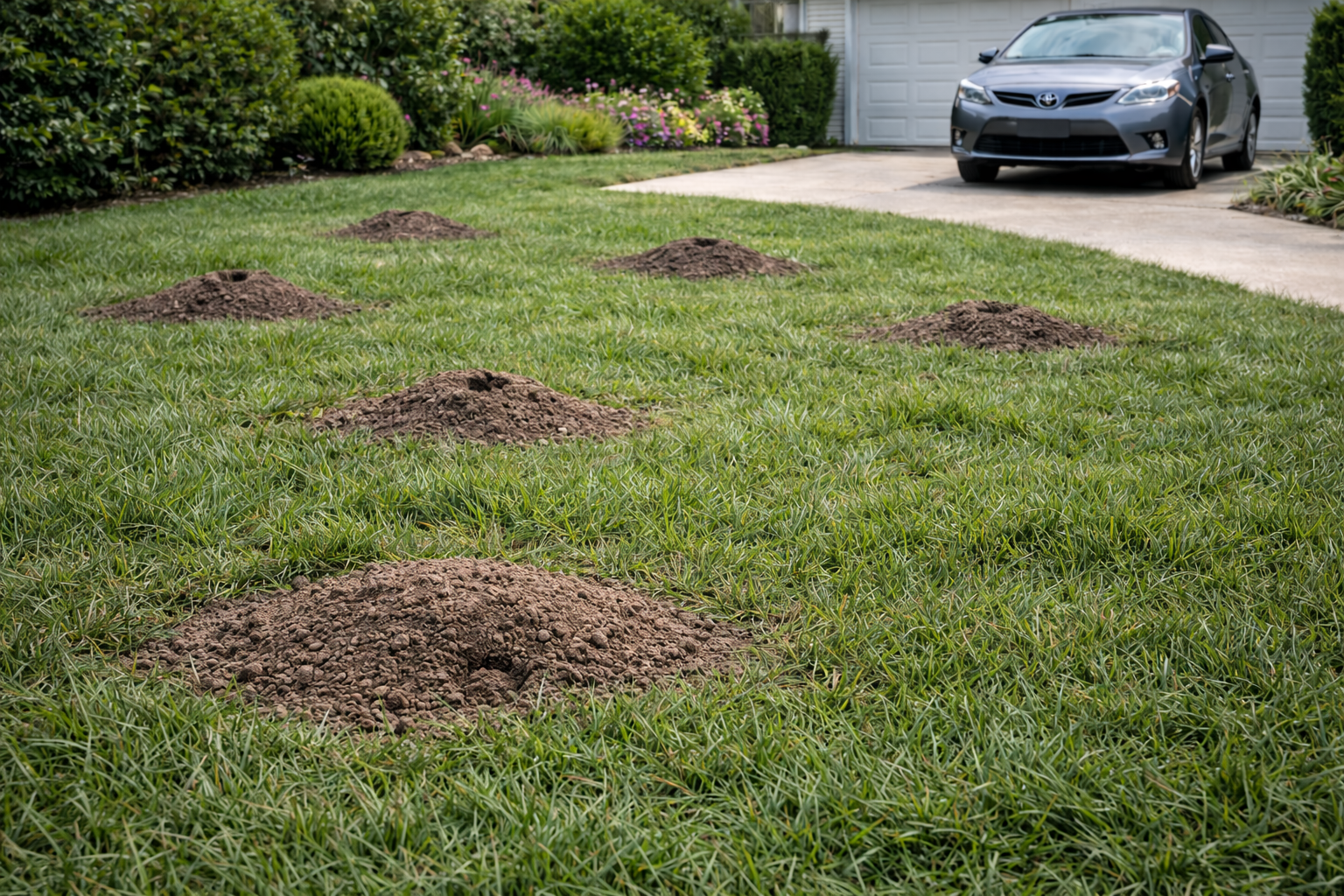
Gopher Activity in Santa Clarita, CA
Santa Clarita residents regularly encounter gopher activity across the city's diverse neighborhoods and landscape types. The combination of favorable soil conditions, consistent irrigation practices, and proximity to undeveloped areas creates an environment where pocket gophers thrive year-round. Understanding gopher behavior and activity patterns helps property owners recognize and respond to signs of infestation on their land.
Why Santa Clarita Has Significant Gopher Activity
Santa Clarita's geography and climate create ideal conditions for gopher populations. The city spans the Santa Clarita Valley, situated between the San Gabriel Mountains to the south and the Sierra Pelona range to the north. This geography influences local soil composition significantly. Much of Santa Clarita features sandy loam and clay loam soils, which pocket gophers find relatively easy to excavate compared to dense clay or rocky substrates. These soil types are particularly prevalent in neighborhoods like Newhall, Saugus, and Valencia, where residential properties have established root systems and maintained lawns.
The region's semi-arid Mediterranean climate receives most precipitation between November and March, with annual rainfall averaging 14-16 inches. This seasonal pattern means that spring months bring increased soil moisture, making digging easier for gophers and triggering breeding activity. Additionally, Santa Clarita's extensive irrigation infrastructure—common in landscaped residential areas throughout the city—maintains consistently moist soil conditions that gophers require for survival and tunnel construction. The proximity to wild areas in the San Gabriel and Sierra Pelona Mountains provides a continuous source population. Gophers from these undeveloped regions periodically migrate into suburban areas, particularly as natural food sources become stressed during dry summers.
Common Gopher Species in Santa Clarita
The pocket gopher species found throughout Santa Clarita is the Botta's pocket gopher (Thomomys bottae), named after naturalist Paolo Botta. This species is the most common gopher across Southern California and is well-adapted to the region's diverse environments. Adult Botta's pocket gophers typically measure 5 to 6 inches in body length, with an additional 1 to 2 inches of tail. They exhibit stocky, cylindrical body shapes that facilitate movement through underground tunnels. Their fur ranges from dark brown to yellowish-brown, with lighter coloration on the belly.
Several physical characteristics distinguish Botta's pocket gophers from other burrowing rodents in the area. They possess large, forward-facing incisors that continuously grow throughout their lives, requiring constant gnawing to maintain proper length. Their front feet feature long claws specialized for digging—the name "pocket gopher" derives from their fur-lined cheek pouches, which they use to transport food and nesting material through tunnels. In Santa Clarita, Botta's pocket gophers inhabit lawns, gardens, open fields, and areas bordering natural chaparral. They prefer locations with adequate moisture and vegetation cover, making residential properties with irrigation systems particularly attractive. The species is solitary and territorial, with individual gophers maintaining extensive tunnel systems that may extend across multiple properties.
When Gopher Activity Peaks in Santa Clarita
Gopher activity in Santa Clarita follows predictable seasonal patterns tied to local climate and reproductive cycles. The primary breeding season occurs from January through March, coinciding with increased soil moisture from winter and early spring rains. During this period, male gophers expand their tunnel systems and become more active in search of mates, resulting in more visible mounding activity across yards. Homeowners in areas like Stevenson Ranch and Canyon Country often notice increased gopher presence during these months.
Spring months—particularly March through May—represent a secondary peak in gopher activity as juvenile gophers disperse from maternal burrows and establish their own tunnel systems. Summer months bring relative dormancy, not because gophers disappear, but because reduced soil moisture and declining vegetation make existing burrows less desirable. However, in heavily irrigated properties, summer activity may continue uninterrupted. Fall months see modest activity increases as gophers prepare for winter by stockpiling food and extending tunnel networks. The winter season itself does not halt gopher activity in Santa Clarita, as the region's mild winters do not force true hibernation. Instead, gophers continue working underground, though at reduced levels, making winter a viable time for property owners to address infestations before spring breeding season amplifies populations.
Signs of Gopher Damage in Santa Clarita Yards
Identifying gopher activity requires recognition of several distinctive signs commonly observed in Santa Clarita residential properties. The most obvious indicator is the presence of mounds—fresh, fan-shaped or crescent-shaped piles of soil pushed to the surface as gophers excavate their tunnels. These mounds vary in size from 2 to 4 inches in height and typically appear in lawns, garden beds, and landscaped areas where soil remains soft. Unlike mole mounds, which are roughly circular, gopher mounds display characteristic plugged holes where soil was pushed upward from below.
Beyond visible mounding, gophers cause extensive underground damage that may not become apparent until significant harm has occurred. They sever irrigation lines and drip systems, leading to water waste and brown patches in lawns. Plant damage appears as sudden wilting and death, often caused by gophers cutting plant roots or consuming entire plants from below ground level. Vegetable gardens, young trees, and newly planted ornamentals in Santa Clarita yards prove particularly vulnerable. Subsurface tunneling creates weak points in soil that cause surfaces to collapse, presenting safety hazards on walkways and driveways. In some cases, extensive tunnel networks underneath landscape features cause visible depressions or holes where tunnel ceilings have caved in. Property owners may also observe heaps of discarded soil in garden areas, which gophers push out from deeper tunneling work.
Landscape Considerations for Santa Clarita Properties
Santa Clarita's landscaping preferences and practices significantly influence gopher vulnerability across different neighborhoods and property types. The region's semi-arid climate has driven widespread adoption of California-friendly landscapes featuring native and drought-tolerant plants, alongside more traditional irrigated lawns and ornamental gardens. Properties in newer master-planned communities like Newhall Ranch and Valencia typically feature uniform landscaping with substantial turf areas and decorative plantings that require regular irrigation—conditions that actively support gopher populations.
Certain plant species prove particularly attractive to gophers, including clovers, alfalfa, lupines, and young tree seedlings. Vegetables like carrots, potatoes, lettuce, and root vegetables become immediate targets in garden settings. Many Santa Clarita residents maintain landscape palettes that include these vulnerable plants, creating attractive habitats for gophers. Conversely, properties featuring extensive hardscaping—including pavers, concrete, and stone features—reduce available habitat, though gophers readily tunnel underneath hardscapes to access vegetated areas. Groundcovers, flowering perennials, and shrubs popular in Southern California landscapes all suffer damage when gopher tunneling severs root systems or allows soil settlement. Understanding which plant species in one's Santa Clarita landscape are most vulnerable to gopher damage helps property owners make informed decisions about replanting strategies and preventive measures for future landscaping projects. Transitioning portions of property toward hardscape or selecting gopher-resistant plants can reduce long-term vulnerability, though complete elimination of gopher activity through landscape modification alone remains impractical given their extensive burrowing capabilities.
For professional gopher control in Southern California, visit Rodent Guys — serving Los Angeles, Orange, San Bernardino, and Riverside counties.