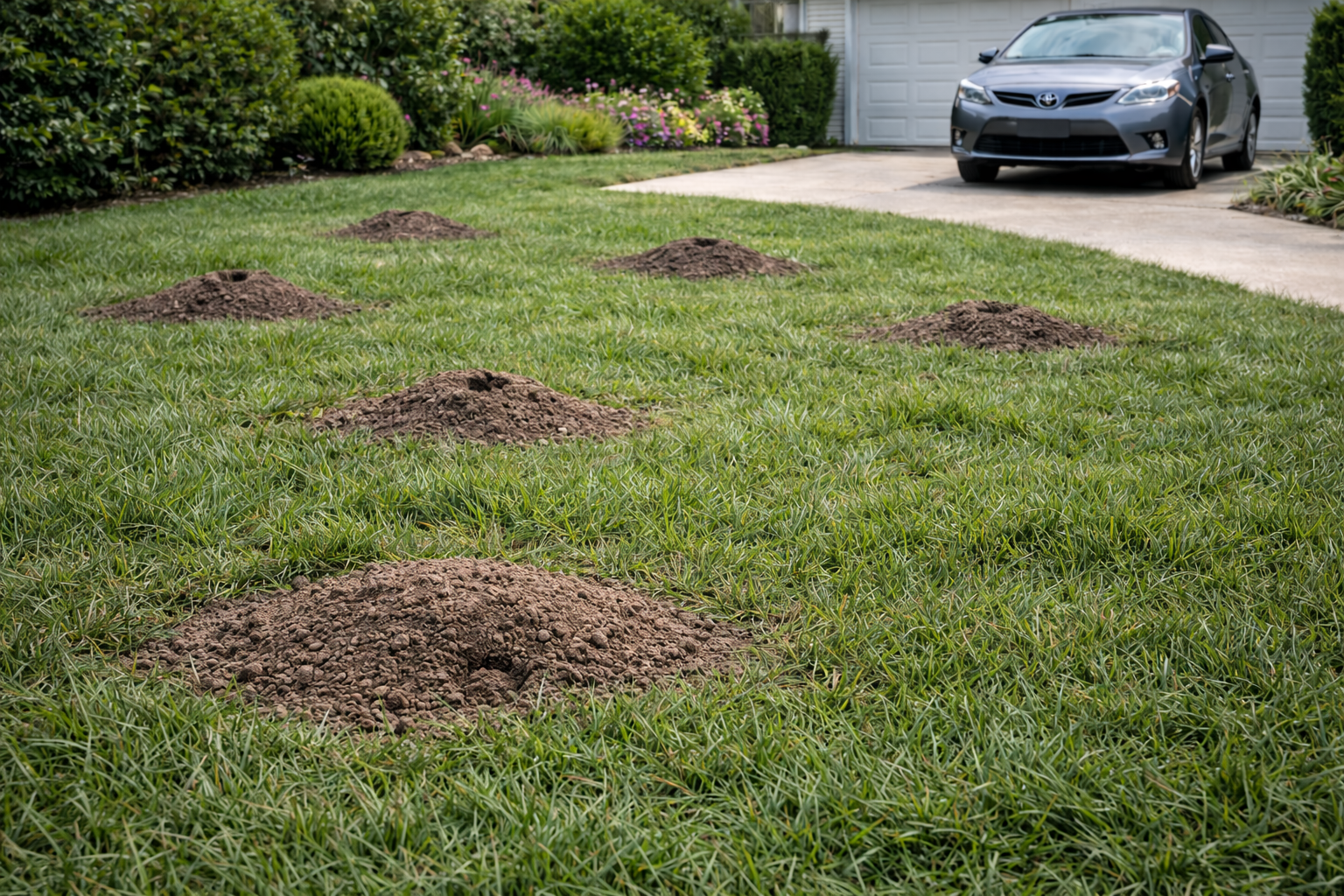
Gopher Activity in Signal Hill, CA

Signal Hill, located in Long Beach and straddling the Los Angeles-Orange County border, experiences notable gopher activity due to its unique topography, soil composition, and suburban-to-rural transitional landscape. The hill's elevation and surrounding undeveloped areas create ideal conditions for pocket gopher populations to establish and thrive. Residents and property managers across Signal Hill's neighborhoods frequently encounter evidence of burrowing activity, particularly during spring and early summer months.

Why Signal Hill Has Significant Gopher Activity

Signal Hill's geography contributes substantially to its gopher population. The area sits atop rolling terrain with elevations ranging from approximately 300 to 500 feet, creating well-drained slopes that pocket gophers prefer. The underlying soil composition consists primarily of sandy loam and silty clay loam, typical of the Los Angeles Basin geology. These soil types are ideal for burrowing—soft enough to excavate efficiently yet stable enough to maintain tunnel structure without frequent collapse.

The region's Mediterranean climate, characterized by dry summers and mild, wetter winters, aligns perfectly with gopher breeding and activity cycles. Residents throughout Signal Hill maintain irrigated yards, ornamental gardens, and landscaping that requires regular watering. This consistent moisture attracts gophers by creating soft soil conditions and establishing abundant plant root systems, their primary food source. Additionally, Signal Hill's proximity to the San Gabriel River bottom lands, undeveloped coastal sage scrub areas, and larger open spaces in surrounding Long Beach provides natural gopher habitat corridors. Gophers migrating from these wild areas often colonize residential properties along the hill's edges and lower elevations.

Common Gopher Species in Signal Hill

The Botta's pocket gopher (Thomomys bottae) represents the dominant species in Signal Hill and throughout the Los Angeles Basin. These rodents are stocky, muscular creatures measuring 5 to 7 inches in body length, with relatively short tails—typically 1 to 2 inches—that aid in navigation within confined tunnels. Their fur ranges from dark brown to grayish-brown, providing natural camouflage in Southern California's soil and landscape.

Botta's pocket gophers possess highly specialized anatomical adaptations for subterranean life. Their front limbs are disproportionately powerful, equipped with long claws designed for excavation. Their eyes and ears are notably small, reflecting reduced reliance on vision and hearing in underground environments. The species derives its common name from the external fur-lined cheek pouches, or "pockets," used to transport soil and plant materials through tunnel systems. In Signal Hill specifically, these gophers establish permanent burrow networks extending several feet deep, with multiple entrance and exit points. They are solitary animals, with each individual typically maintaining its own territory except during brief breeding periods. The species' adaptation to local soil types and vegetation patterns makes Signal Hill's diverse neighborhoods—from the upper residential areas to lower-elevation properties near the commercial zones—uniformly suitable habitat.

When Gopher Activity Peaks in Signal Hill

Gopher activity in Signal Hill follows distinct seasonal patterns tied to Southern California's climate cycles. The primary breeding season occurs from January through March, when mild winter temperatures and increased soil moisture create optimal conditions for reproduction and juvenile dispersal. During this period, male gophers expand their territory ranges in search of mates, often crossing residential properties and establishing new burrow systems. This translates directly to increased surface activity and more visible mounding throughout Signal Hill neighborhoods.

Spring and early summer represent the second peak activity window. As local winter rains taper off and irrigation systems activate in Signal Hill yards, soil moisture levels remain elevated while temperatures rise. The combination stimulates growth of annual and perennial plants, providing abundant food resources. Young gophers born during winter breeding dispersed into new territories beginning in April and May, expanding the total burrowing population across residential areas. Late summer typically shows reduced surface activity as soil becomes drier and natural vegetation patterns shift. However, in Signal Hill's irrigated residential settings, artificially maintained moisture sustains year-round gopher populations. Fall activity often increases again in September and October as temperatures cool and some areas receive early season moisture, triggering secondary breeding activity in some individuals. Winter months (December through early January) show variable activity depending on rainfall amounts and soil saturation levels throughout Signal Hill's different neighborhoods and elevations.

Signs of Gopher Damage in Signal Hill Yards

Gopher presence in Signal Hill properties manifests through several distinctive physical indicators. The most obvious sign is the characteristic mound formation—typically 4 to 6 inches in height and 6 to 12 inches in diameter—composed of freshly excavated soil pushed to the surface. Signal Hill's sandy loam soils produce mounds with a somewhat lighter coloration than surrounding undisturbed soil, making them readily visible across lawns and landscaped areas. These mounds appear sporadically across properties rather than in organized rows, reflecting gophers' tendency to create multiple access points throughout their burrow networks.

Beyond visible mounding, gopher activity damages Signal Hill properties in several ways. Subsurface tunnel construction undermines turf, creating soft, spongy areas and causing uneven settling that appears as shallow depressions across lawns. In irrigation-heavy areas of Signal Hill—particularly among properties with drip systems and automated watering—gophers damage underground lines by burrowing directly through flexible tubing, puncturing drip lines, and disrupting water distribution. Plant damage occurs as gophers consume roots of ornamental plants, vegetables, shrubs, and young trees. California native plants and drought-tolerant species common in Signal Hill landscaping, such as ceanothus and sage varieties, experience root pruning. More visible damage includes the mysterious disappearance of young plants that appear healthy one day but are pulled underground the next, a behavior where gophers drag vegetation down into burrows. In vegetable gardens—increasingly common in Signal Hill neighborhoods—gophers cause devastating damage to root crops, bulbs, and planted seedlings.

Landscape Considerations for Signal Hill Properties

Signal Hill's neighborhoods encompass diverse landscape styles reflecting both the area's hillside character and suburban development patterns. Upper elevation properties often feature Mediterranean-style xeriscaping with ornamental grasses, drought-tolerant shrubs, and hardscape elements—stone pathways, retaining walls, and paved areas. Mid-elevation residential zones frequently combine irrigated lawn areas with ornamental plantings, reflecting earlier development patterns. Lower Signal Hill areas include both maintained residential properties and transitional zones with remnant native vegetation patterns. These varied landscape types present different levels of gopher vulnerability.

Ornamental plantings common throughout Signal Hill—including roses, flowering shrubs, and young ornamental trees—face significant gopher pressure due to their tender root systems and consistent irrigation. Vegetable gardens and fruit trees, increasingly popular in Signal Hill neighborhoods pursuing food self-sufficiency, attract gophers powerfully. Conversely, hardscaped properties with extensive paving, raised beds, and container plantings minimize gopher damage by eliminating accessible soft soil. Properties with well-draining, unirrigated native plantings experience less gopher activity than those with high-moisture ornamental gardens. The local trend toward California native plant landscaping—promoting drought tolerance and reduced water consumption—paradoxically can reduce gopher attraction once plants establish and irrigation diminishes. However, during the establishment phase requiring regular watering, newly planted native species remain vulnerable to gopher damage. Understanding these landscape dynamics helps Signal Hill property owners make informed decisions about planting choices, irrigation methods, and property design that either attract or discourage gopher colonization.