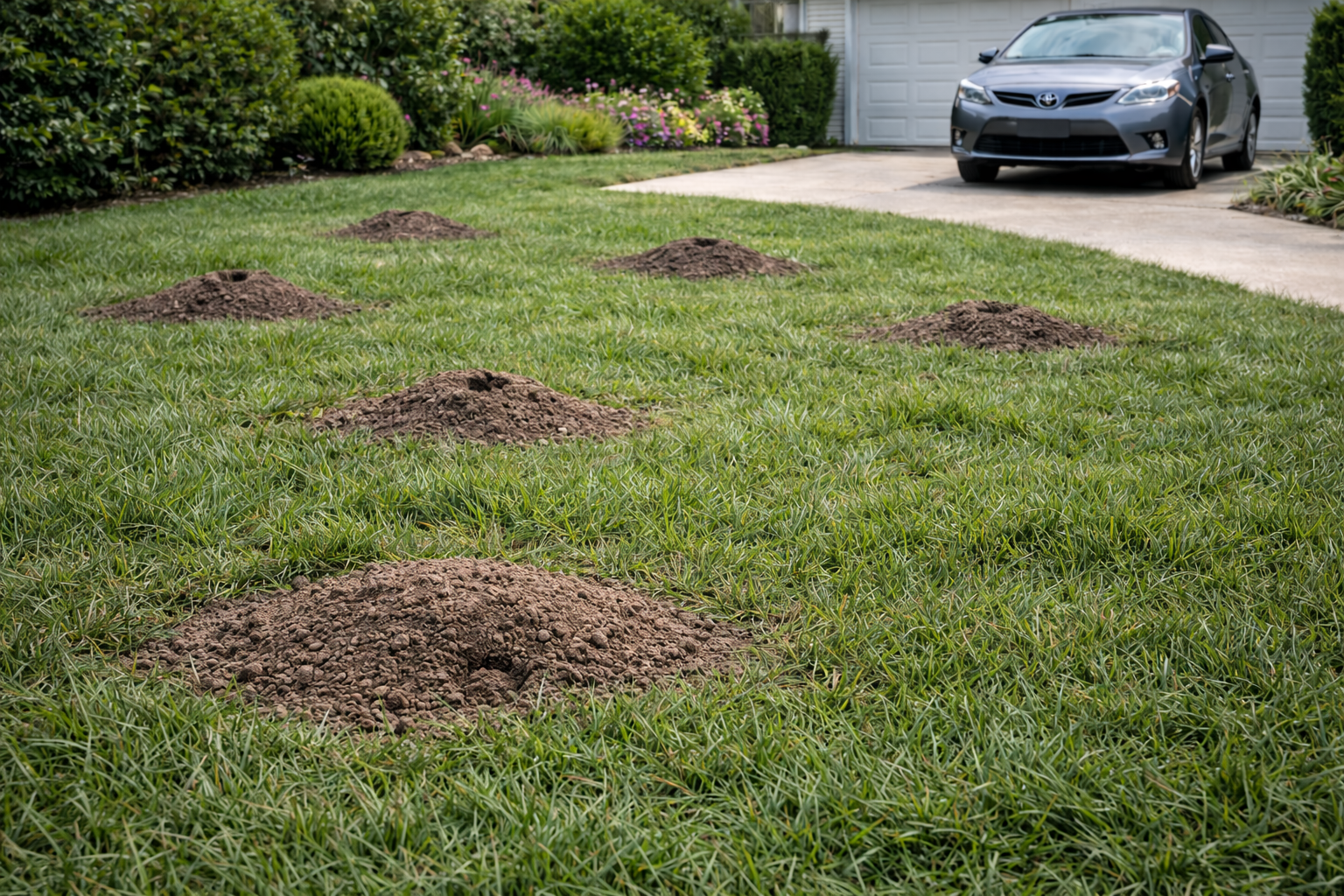
Gopher Activity in Stanton, CA
Stanton, a small but densely developed city in central Orange County, experiences notable gopher activity throughout much of the year. The combination of irrigated residential yards, accessible soil conditions, and the city's location near natural habitats creates an environment where pocket gophers thrive. Property owners in Stanton frequently encounter evidence of gopher tunneling systems that damage landscaping, irrigation infrastructure, and garden spaces.
Why Stanton Has Significant Gopher Activity
Stanton's geography and infrastructure create ideal conditions for pocket gopher populations. The city sits within the Los Angeles Plain physiographic region, characterized by alluvial soils deposited over millennia by the Santa Ana River and its tributaries. These soils—typically clay loam to sandy loam compositions—are moderately firm yet workable, making them suitable for the extensive burrowing that pocket gophers require. The soil structure allows gophers to create tunnel systems with relative ease while providing the structural integrity necessary to prevent collapse.
The local water management system significantly influences gopher distribution across Stanton. Most residential properties rely on consistent irrigation to maintain lawns, ornamental plants, and vegetable gardens in the semi-arid Southern California climate. This irrigation elevates soil moisture levels, which softens the earth and makes digging more efficient for gophers. Additionally, moist soil attracts the plant roots and invertebrates that constitute the primary food sources for these burrowing rodents.
Stanton's proximity to the Santa Ana River riparian corridor and undeveloped open spaces in surrounding areas provides reservoir populations of gophers that continually disperse into residential neighborhoods. The city's relatively compact urban footprint means that developed properties often exist near or adjacent to patches of native vegetation, facilitating movement between wild and residential areas. The region's Mediterranean climate—with mild, wet winters and hot, dry summers—establishes seasonal patterns that influence gopher activity and visibility in yards.
Common Gopher Species in Stanton
The Botta's pocket gopher (Thomomys bottae) is the primary gopher species inhabiting Stanton and the broader Orange County region. This medium-sized rodent typically measures 5 to 6 inches in body length, with a stubby tail adding another inch or so. Botta's pocket gophers display fur coloration ranging from light tan to dark brown, often matching the local soil tones. The species derives its common name from the external fur-lined cheek pouches, or "pockets," that gophers use to transport food and nesting materials through their burrow systems.
Physical adaptations make Botta's pocket gophers exceptionally efficient diggers. Their front paws possess enlarged claws specialized for excavation, while their lips close behind their large incisors, preventing soil from entering the mouth while tunneling. Their eyes are proportionally small, reflecting their primarily subterranean lifestyle where vision provides minimal survival advantage. The cylindrical body shape allows easy navigation through narrow tunnel passages.
In Stanton's residential context, Botta's pocket gophers prefer areas with soft, irrigated soil where food sources remain abundant year-round. Unlike some gopher species that migrate seasonally, Stanton's mild climate allows year-long residence and activity. Individual gophers establish and defend extensive burrow systems that may encompass 200 square feet or more, depending on resource availability and soil conditions. These solitary creatures typically interact with neighbors only during breeding season, maintaining separate tunnel networks otherwise.
When Gopher Activity Peaks in Stanton
Gopher activity in Stanton follows seasonal patterns influenced by breeding cycles and weather conditions. The breeding season typically occurs from January through March, when gophers actively tunnel to establish territories and seek mates. During these months, property owners often notice increased mound appearance and fresh excavation activity in yards. Males expand their burrow systems while searching for females, resulting in visible surface disturbance across lawns and garden areas.
Spring rains, which commonly occur in Stanton between February and April, trigger increased gopher activity by softening soil and stimulating plant growth. These moisture conditions reduce the physical effort required for tunneling and increase the availability of succulent plant roots—a preferred food source. Property owners may observe accelerated damage during this period compared to drier months. However, irrigation systems in Stanton partially mitigate seasonal moisture variations, sustaining gopher activity even through the naturally dry summer months when rainfall is minimal.
Summer and early fall represent a secondary activity period, though gophers remain active year-round in Stanton due to consistent irrigation and mild temperatures. The abundance of summer vegetables in home gardens attracts and sustains established populations. Late fall and early winter see somewhat reduced activity as temperatures cool, though surface evidence of tunneling continues. The city's low winter temperatures rarely drop to freezing levels, preventing the dormancy or migration patterns observed in more northern regions.
Signs of Gopher Damage in Stanton Yards
Identifying gopher activity requires familiarity with the characteristic signs these rodents leave. The most visible indicator is the fresh mound—a crescent or horseshoe-shaped accumulation of soil pushed to the surface as gophers excavate burrow systems. In Stanton's typical residential yards, these mounds measure 3 to 6 inches in diameter and appear in clusters or lines as gophers extend their tunnel networks. Unlike mole mounds, which are roughly conical and compact, gopher mounds often display loose, crumbly soil and frequently include a plugged opening where the animal has sealed the burrow from within.
Subsurface tunneling can damage irrigation systems installed throughout Stanton properties. Gophers frequently chew through drip irrigation lines, buried poly tubing, and even PVC pipe as they construct burrow passages. Property owners may notice sudden dry patches in otherwise regularly irrigated sections of yard, often tracing to compromised irrigation infrastructure rather than equipment failure. Plant damage occurs when gophers consume roots and bulbs, particularly affecting newly planted trees, shrubs, and perennial plants. Vegetables in raised beds or in-ground gardens suffer damage from below as gophers feed on root systems and underground portions of crops.
Surface evidence includes denuded or wilting plants with visible tunnel entrances nearby, shallow surface runways where gophers have created above-ground passage routes, and displaced soil around multiple yard areas. In Stanton's typical landscaping of mixed hardscape and planted areas, gopher damage often becomes apparent beneath drip-irrigated trees and shrubs where soil remains consistently moist and tunneling is easiest.
Landscape Considerations for Stanton Properties
Stanton's residential landscape character reflects typical Orange County suburban development, featuring a mix of maintained lawns, ornamental shrubs, fruit trees, and drought-tolerant plantings on many properties. The prevalence of irrigated landscapes creates sustained conditions favoring gopher populations. Properties with extensive softscape—lawn areas and garden beds—experience more gopher damage than those emphasizing hardscape such as patios, walkways, and decorative rock areas. Gophers thrive beneath densely planted areas and irrigated turf but avoid exposed, compacted hardscape zones.
Commonly planted trees in Stanton, including citrus varieties, stone fruits, and ornamental species, suffer varying degrees of gopher root damage. Young trees prove particularly vulnerable due to underdeveloped root systems and limited capacity to compensate for root loss. Shrubs frequently planted in Stanton yards—including various flowering ornamentals and evergreen foundation plantings—often experience gopher damage to their root systems, resulting in sudden decline or death despite adequate surface watering.
Vegetable gardens present especially attractive resources for local gopher populations. The consistent soil moisture, abundant food sources, and typically loose soil composition in garden beds create optimal conditions for tunneling and feeding. Root crops—carrots, beets, potatoes—and bulb plantings frequently suffer complete losses to gopher predation in Stanton gardens. Property owners considering vulnerable plantings should assess their willingness to manage gopher populations concurrently with crop production.
For professional gopher control in Southern California, visit Rodent Guys — serving Los Angeles, Orange, San Bernardino, and Riverside counties.