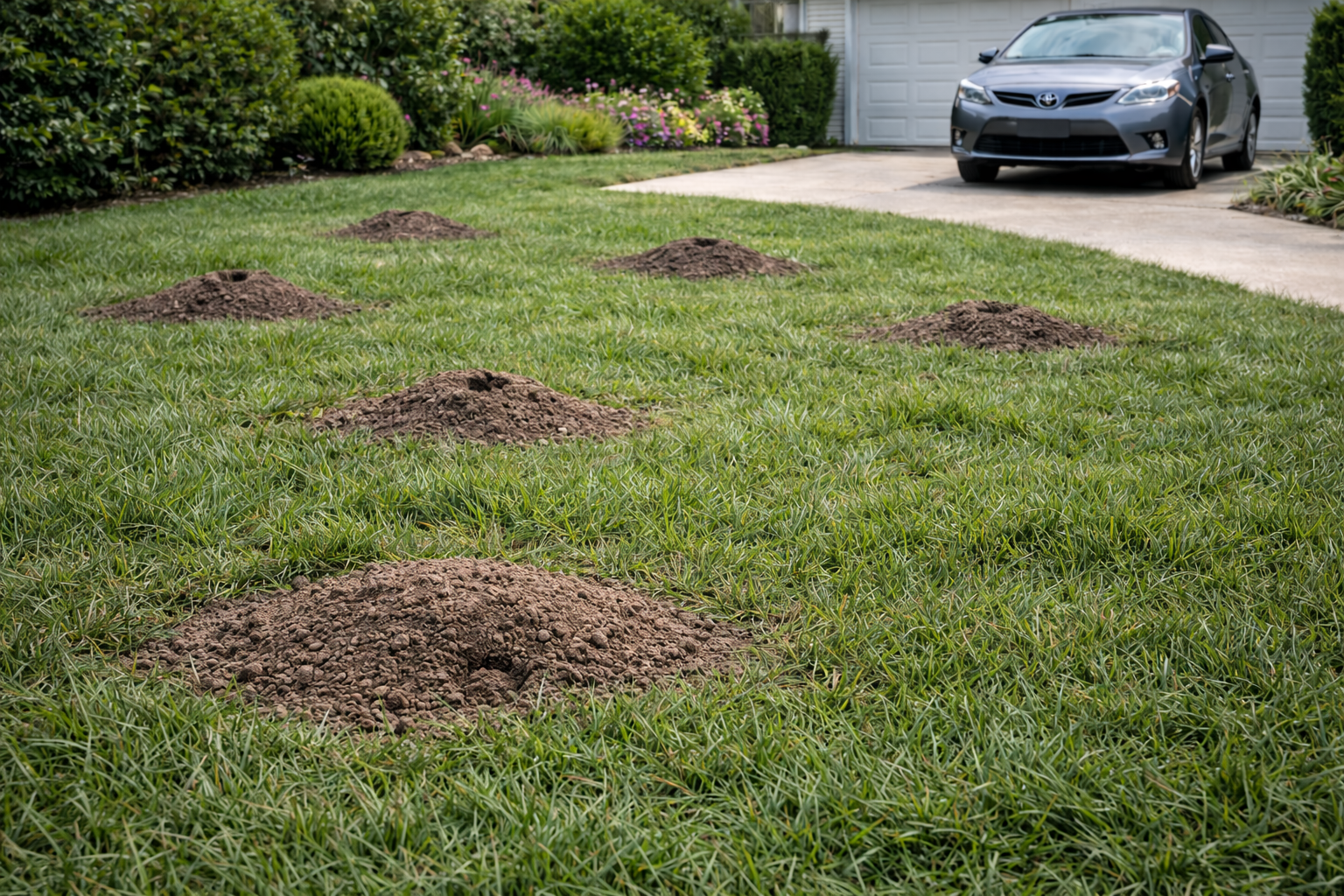
Gopher Activity in Temecula, CA
Gophers represent a persistent ecological and landscaping challenge throughout Temecula, California, where soil conditions, water availability, and residential expansion create ideal habitats for these burrowing rodents. The city's location in southwestern Riverside County, with its blend of agricultural heritage, planned residential communities, and proximity to undeveloped land, means that gopher populations thrive across both rural properties and suburban neighborhoods. Understanding gopher activity patterns in this specific region helps residents and property managers recognize problems early and implement appropriate management strategies.
Why Temecula Has Significant Gopher Activity
Temecula's geography and environmental conditions make it exceptionally suitable for gopher populations. The region's soil composition, dominated by sandy loam and clay loam across much of the valley floor, provides ideal conditions for burrowing. These soils are neither too compact nor too loose, allowing gophers to excavate extensive tunnel systems with manageable effort. The area's elevation ranges from approximately 1,000 to 2,500 feet, creating microclimates that support year-round gopher activity.
The region's irrigation infrastructure significantly contributes to gopher prevalence. Temecula's semi-arid Mediterranean climate receives most of its annual precipitation during winter months, with very little rainfall from May through September. Property owners rely heavily on irrigation systems to maintain lawns, gardens, and landscaping throughout the dry season. This consistent moisture availability, combined with the root systems of irrigated plants, creates abundant food sources that sustain large gopher populations. The nearby Pechanga Valley and the watershed areas provide natural water sources that support gophers in less developed regions, and these populations naturally expand into adjacent residential areas as development occurs.
Proximity to wild and undeveloped areas further encourages gopher activity. Properties at the edges of established neighborhoods, particularly those near open space preserves or along the periphery of the city, experience higher gopher pressure from nearby populations seeking expanded territory and resources.
Common Gopher Species in Temecula
The Botta's pocket gopher (Thomomys bottae) represents the primary gopher species found throughout Temecula and the surrounding region. This species is well-adapted to the local climate and soil conditions and demonstrates remarkable burrowing ability despite its modest size. Adult Botta's pocket gophers typically measure between 5 and 7 inches in body length, with relatively short tails that range from 1 to 2 inches. Their fur coloration varies from brownish to grayish depending on local soil tones, providing natural camouflage in their underground habitat.
Several physical characteristics distinguish Botta's pocket gophers from other rodent species in the area. These animals possess notably large front claws adapted for excavation, powerful jaw muscles, and small eyes reflecting their subterranean lifestyle. The name "pocket" gopher derives from fur-lined cheek pouches that extend from the mouth to the shoulders, which these animals use to transport food and nesting material through their tunnel systems. In Temecula's terrain, individual Botta's pocket gophers typically maintain territories ranging from roughly 200 to 2,000 square feet, depending on food availability and soil conditions.
Botta's pocket gophers in Temecula establish habitat in lawns, gardens, agricultural areas, and natural grasslands where soil moisture and plant roots are accessible. They are solitary animals except during brief breeding periods, and each gopher defends its burrow system against intruders of the same species.
When Gopher Activity Peaks in Temecula
Gopher activity in Temecula follows predictable seasonal patterns shaped by the region's climate and the animals' reproductive cycle. The primary breeding season occurs during winter and early spring months, typically from January through March. During this period, males actively search for females, expanding their tunnel systems and creating new surface disturbances as they travel through established territories seeking mates. Elevated gopher activity during these months often goes unnoticed by residents focused on winter weather rather than yard monitoring.
Spring rains, which typically occur from February through April in Temecula, trigger secondary peaks in gopher activity. Winter and spring precipitation softens soil, making excavation easier and creating optimal burrowing conditions. This moisture also stimulates plant growth, increasing food availability and encouraging gophers to expand their tunnel networks and surface foraging. Residents frequently observe the most visible gopher damage during these wet months, with fresh mounds appearing overnight after rainfall.
Summer and early fall activity decreases as soil hardens and plant growth slows, but irrigation systems sustain gopher populations through the dry season. Fall months bring variable activity depending on specific weather patterns and irrigation practices. Understanding these seasonal fluctuations helps property owners recognize when gophers are most likely to cause noticeable damage and when habitat conditions favor population expansion.
Signs of Gopher Damage in Temecula Yards
The most obvious indication of gopher presence in Temecula properties involves the characteristic mounds created during tunnel excavation. Gophers produce distinct crescent or horseshoe-shaped mounds as they push soil to the surface, typically three to six inches in height and four to eight inches across. These mounds appear scattered across lawns, gardens, and landscaped areas, often in lines that follow subsurface tunnel routes. Unlike mole mounds, which form volcano-shaped structures, gopher mounds display the characteristic plugged or heaped appearance that distinguishes gopher activity.
Subsurface tunnel damage frequently causes problems in Temecula's residential properties long before surface mounds become obvious. Gopher burrows undermine lawn integrity, creating soft spots and collapse areas that become safety hazards and aesthetic problems. Extensive tunnel systems sometimes damage irrigation lines, causing water loss and creating wet patches across yards. Shallow lateral tunnels near the soil surface disrupt seed germination and destabilize newly planted vegetation.
Plant damage represents another significant gopher impact in Temecula landscapes. Gophers clip plant roots and stems, consuming portions while gathering additional material for subsurface storage. Trees, shrubs, and perennial plants show sudden wilting or death despite adequate water, symptoms caused by gophers severing root systems below the soil surface. In vegetable gardens and ornamental plantings, the sudden disappearance of seedlings or young plants often indicates gopher activity before mounds become visible.
Landscape Considerations for Temecula Properties
Temecula's residential landscape aesthetics heavily influence gopher damage patterns. The region's popular landscaping styles vary significantly across neighborhoods and elevation zones. Properties in established communities such as Temeku and Margarita often feature traditional turf lawns with irrigated ornamental plantings, creating ideal gopher habitat. Mediterranean and drought-resistant xeriscape designs, which are increasingly common given California's water conservation emphasis, still provide gopher food sources through root systems of shrubs and perennials.
Certain plant species commonly used in Temecula landscaping prove particularly vulnerable to gopher damage. Fruit trees, including apple, pear, and stone fruit varieties, suffer significant gopher damage through bark stripping and root consumption. Ornamental shrubs such as roses, boxwood, and euonymus frequently show gopher damage as these plants' root systems are both accessible and palatable. Native California species like sage and manzanita may be less attractive to gophers but still experience pressure in established yards. Young trees and plants require protection from gopher damage during their vulnerable establishment period.
The contrast between hardscaped and softscaped areas in Temecula properties affects gopher distribution. Driveways, patios, and stone features provide physical barriers limiting gopher movement, while surrounding turf and planting beds offer prime habitat. Properties with extensive hardscaping experience proportionally less gopher damage than those dominated by planted areas, though gophers readily occupy landscaped zones adjacent to buildings and pavement. Mulched planting beds and wood chips attract gophers through the combination of loose soil texture and accessible root systems of planted vegetation.
For professional gopher control in Southern California, visit Rodent Guys — serving Los Angeles, Orange, San Bernardino, and Riverside counties.