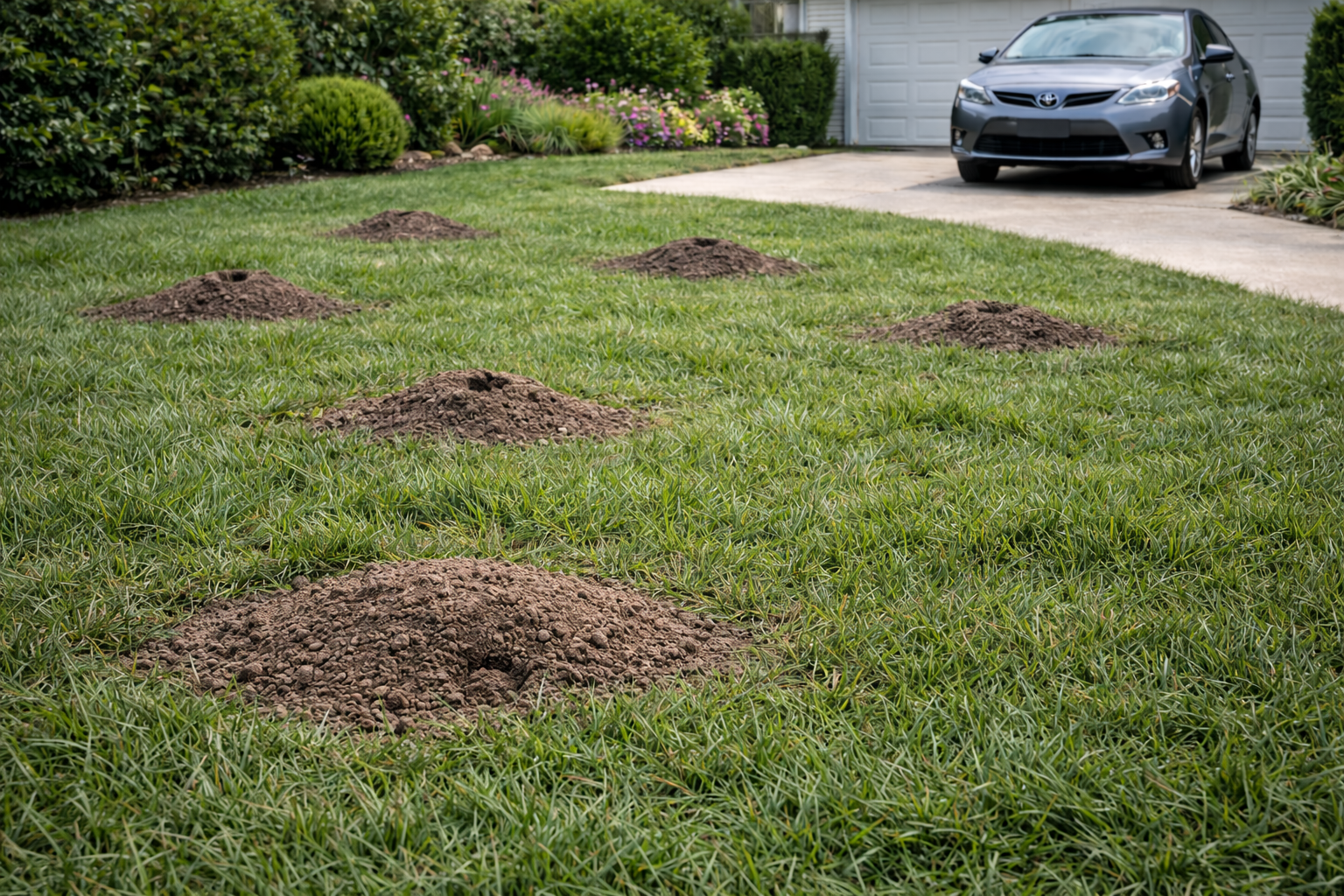
Gopher Activity in Temple City, CA

Gopher activity represents a persistent ecological and horticultural challenge throughout Temple City, a residential community located in Los Angeles County's San Gabriel Valley. The region's combination of favorable soil conditions, consistent irrigation practices, and proximity to undeveloped foothill areas creates an ideal environment for gopher populations to thrive. Property owners throughout Temple City's neighborhoods regularly encounter evidence of gopher burrowing, making understanding these animals essential for residents.

Why Temple City Has Significant Gopher Activity

Temple City's geography and environmental conditions actively support robust gopher populations across the community. The San Gabriel Valley floor, where much of Temple City is situated, contains predominantly sandy loam and clay loam soils that are relatively easy for gophers to excavate. These soil types, common throughout the valley's agricultural heritage areas, present minimal resistance to burrowing compared to rocky or compacted earth found in other Southern California regions.

The region's irrigation infrastructure substantially contributes to gopher presence. Most Temple City properties depend on supplemental watering to maintain lawns and landscaping in the semi-arid climate, creating consistently moist soil conditions that gophers prefer for tunneling and food location. This moisture makes soil workable throughout much of the year, extending the active season beyond what naturally occurs in non-irrigated areas.

Climate patterns specific to Temple City also influence gopher activity levels. The area experiences mild winters with average January temperatures around 50–60 degrees Fahrenheit, eliminating the hard freezes that would kill or drive gophers deeper underground in colder regions. Conversely, summer heat approaching 95 degrees pushes gophers toward deeper, cooler tunnels but does not eliminate them. Spring rains, typically occurring February through April, soften soil and trigger breeding behaviors that increase visible surface activity.

Temple City's proximity to the San Gabriel Mountains and foothill communities means gopher populations naturally extend from wild areas into residential zones. The transition zone between developed neighborhoods and undeveloped slopes creates continuous habitat corridors that facilitate population movement and recolonization of treated properties.

Common Gopher Species in Temple City

The Botta's pocket gopher (Thomomys bottae) represents the primary gopher species affecting Temple City properties, though other Thomomys species occasionally appear in foothill neighborhoods. Botta's pocket gophers are medium-sized rodents, typically weighing between 2 and 4 pounds, with stocky bodies measuring approximately 5 to 7 inches in length. Their fur coloration ranges from light brown to dark brown, sometimes appearing nearly black in individuals inhabiting certain soil types.

These gophers possess several anatomical features perfectly adapted to their subterranean lifestyle. Powerful front claws, significantly larger than hind claws, enable excavation of extensive tunnel systems. Their eyes and ears are proportionally small, reflecting adaptation to underground existence where vision provides minimal advantage. Notably, Botta's pocket gophers possess external cheek pouches that extend from their mouths backward toward their shoulders, allowing them to transport food and nesting materials without using their front legs.

Within Temple City specifically, Botta's pocket gophers inhabit yards, gardens, parks, and landscaped median areas throughout residential neighborhoods from the valley floor extending into the foothills. They establish extensive burrow systems beneath lawns and ornamental plantings, creating a network of primary tunnels that can extend 500 feet or more per individual. Gophers maintain multiple burrow entrances within a territory, with fresh mounding indicating regular system maintenance and expansion. Temple City's year-round growing season means gophers find consistent food sources, including roots, bulbs, and underground stems throughout the property.

When Gopher Activity Peaks in Temple City

Seasonal patterns in Temple City gopher activity follow reproductive and climatic cycles that align with the region's Mediterranean-influenced weather patterns. January through March represents the primary breeding season, when male gophers increase surface activity while searching for mates. This period coincides with spring soil moisture from winter and early spring rains, creating optimal burrowing conditions. Property owners frequently observe increased mounding activity during February and March as populations expand and establish new territories.

Spring activity continues through April and May as juvenile gophers disperse from maternal burrow systems to establish independent territories. This dispersal phase often produces visible damage patterns, with new mounds appearing across previously stable areas. Summer months bring reduced surface activity as gophers retreat deeper into cooler tunnel systems while heat intensifies above ground. However, subsurface damage continues as gophers feed on roots and maintain tunnel networks.

Fall months, typically September through November, show intermediate activity levels. Gophers feed heavily in preparation for winter, and fall rains soften the soil, encouraging some surface work. Unlike regions with severe winters, Temple City's mild climate prevents the dormancy period that characterizes gopher activity in northern California. Instead, activity continues at lower levels throughout winter months, with increased intensity during warm spells when soil moisture becomes adequate for tunneling.

Understanding Temple City's specific seasonal patterns helps residents anticipate when damage might accelerate and recognize that year-round gopher presence remains the norm rather than exception.

Signs of Gopher Damage in Temple City Yards

Gopher mounds represent the most recognizable evidence of active burrowing beneath Temple City properties. These mounds appear as crescent-shaped or conical piles of excavated soil, typically 3 to 8 inches in height and 4 to 12 inches in diameter. Fresh mounds display loose, finely textured soil in brown or tan colors, while older mounds become compacted and may support vegetation growth. The mound's shape often indicates the direction of the tunnel beneath, with the crescent opening pointing away from the primary burrow entrance. Property owners may observe multiple mounds appearing within days, particularly during spring breeding season.

Subsurface tunnel damage frequently exceeds mound damage in significance. Gopher tunneling creates air pockets beneath lawns, causing turf to become spongy and prone to collapse under foot traffic or machinery. Irrigation systems suffer substantial damage when gophers tunnel through buried lines, causing leaks that waste water and create muddy patches. Drip lines, soaker hoses, and main supply lines all fall victim to gopher activity as they chew through plastic and rubber.

Plant damage manifests in multiple ways throughout Temple City landscapes. Gophers clip plant roots from beneath soil, causing otherwise healthy-appearing plants to suddenly wilt and die. Young trees and shrubs face particular vulnerability when gophers girdle root systems at the soil line. Bulbs, roots, and tubers completely disappear into gopher burrows as food sources. Vegetable gardens experience catastrophic losses when gophers access planted rows, consuming plants from beneath the soil surface before gardeners detect problems above ground.

Landscape Considerations for Temple City Properties

Temple City's residential landscape character reflects its suburban positioning within the San Gabriel Valley, combining both traditional valley architecture with contemporary developments. The community's landscaping typically emphasizes water-conscious xeriscaping in newer properties alongside established neighborhoods featuring irrigated lawns, ornamental plantings, and fruit trees characteristic of mid-twentieth-century valley development. These varied landscape approaches present different vulnerabilities to gopher damage.

Properties featuring extensive lawn areas face considerable gopher damage potential since turf damage becomes immediately visible and widespread tunneling destabilizes soil across large areas. Native oak trees remaining from pre-development landscapes, along with established fruit trees common in Temple City yards, represent high-value targets for gopher root damage. Decorative bulb plantings, including tulips and daffodils popular in many Temple City gardens, disappear entirely when gophers access planted areas.

Hardscape features including pathways, patios, and concrete slabs become problematic when gopher tunneling undermines their support, creating settling and cracking. Temple City properties with extensive underground irrigation systems, increasingly common as water consciousness grows among residents, face compound vulnerabilities since gophers damage both the plants the system supports and the distribution infrastructure itself.

Conversely, landscapes emphasizing rock mulch, decomposed granite, and native plant communities adapted to drier conditions present fewer gopher attractions. Areas with shallow-rooted groundcovers and established hardscape with minimal exposed soil prove less susceptible to visible damage. Understanding which landscape elements face highest vulnerability allows Temple City property owners to make informed decisions about landscape design and maintenance approaches compatible with persistent gopher presence.