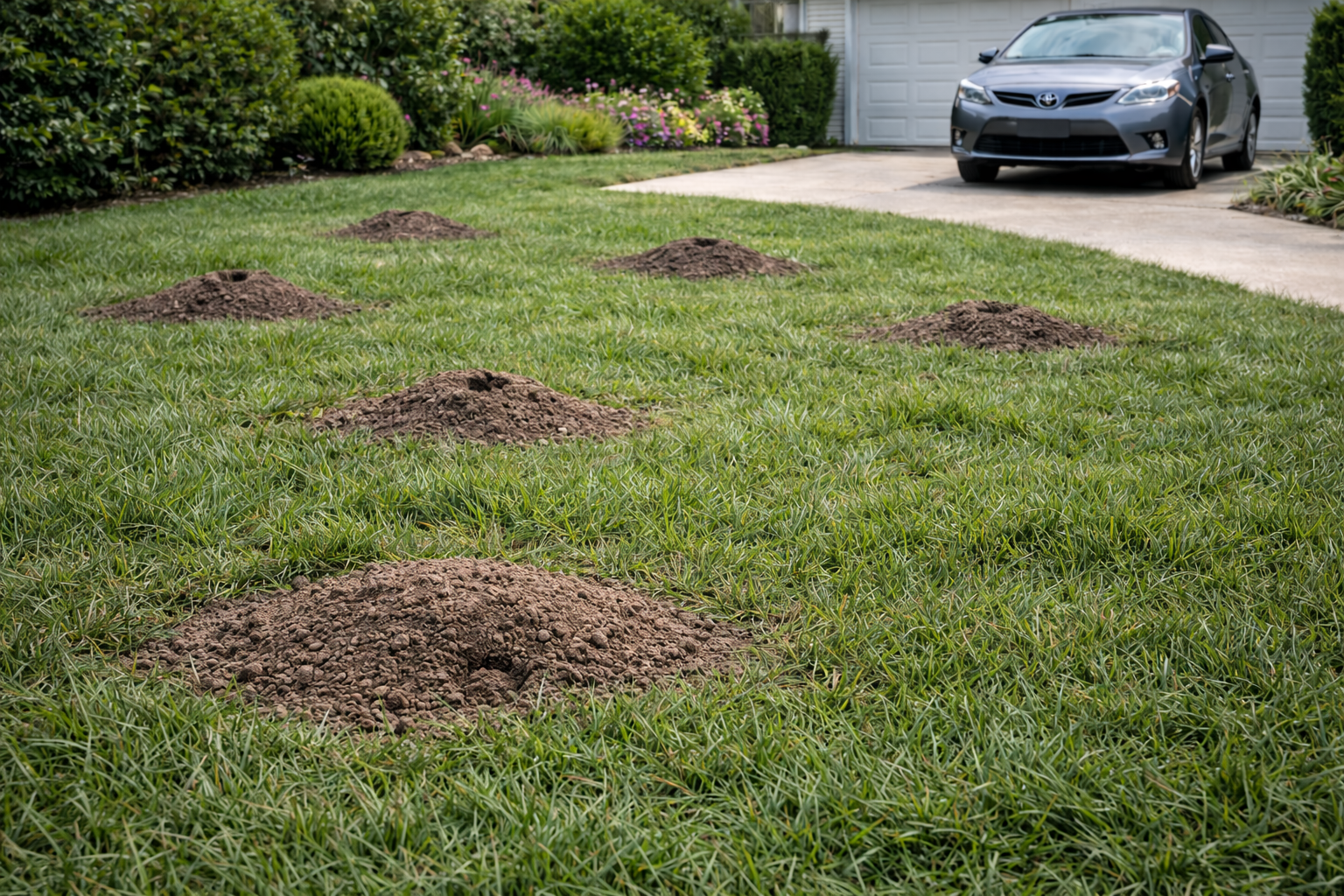
Gopher Activity in Thousand Oaks, CA
Thousand Oaks, located in Ventura County approximately 40 miles northwest of Los Angeles, experiences consistent gopher activity throughout the year. The combination of the region's Mediterranean climate, well-irrigated residential landscapes, and proximity to undeveloped hillsides creates ideal conditions for pocket gophers to thrive. Property owners in this community regularly encounter evidence of burrowing activity in their yards, gardens, and landscaped areas.
Why Thousand Oaks Has Significant Gopher Activity
The environmental characteristics of Thousand Oaks strongly support gopher populations. The area's soils consist primarily of fine sandy loams and clay loams derived from weathered granitic and sedimentary parent materials, which are ideal for tunneling and burrow construction. These soil types retain moisture well, making them easier for gophers to excavate compared to compacted or rocky terrain.
Thousand Oaks receives approximately 15 to 17 inches of annual rainfall, concentrated primarily between November and April. This precipitation pattern, combined with extensive residential irrigation systems used to maintain ornamental landscaping and turf throughout the drier months, creates consistently moist soil conditions that gophers prefer. The moisture softens soil, reduces the energy required for tunneling, and supports the growth of roots and vegetation that comprise the gopher diet.
The city's location at the southern edge of the Santa Susana Mountains and its proximity to the Conejo Valley's natural open spaces mean that wild gopher populations inhabit nearby undeveloped areas. As residential development has expanded, gophers have readily adapted to suburban yards, parks, and golf courses. The region's generally mild winters, with average lows rarely dropping below 40°F, allow gophers to remain active throughout the year rather than entering deep hibernation.
Common Gopher Species in Thousand Oaks
The pocket gopher species most commonly encountered in Thousand Oaks is Botta's pocket gopher, scientifically known as Thomomys bottae. This species is native to California and well-adapted to the region's ecological conditions. Adult Botta's pocket gophers typically measure 5 to 6 inches in body length, with a tail adding another 1 to 1.5 inches. They possess robust, stocky builds and dark brown to grayish-brown fur that blends effectively with local soil colors.
These gophers have distinctive physical adaptations suited to their burrowing lifestyle. Their front legs are disproportionately large and equipped with long, sharp claws designed for excavating soil. The name "pocket" gopher derives from their fur-lined cheek pouches, which they use to transport food and nesting materials within their tunnel systems. Their small eyes and ears reflect their primarily subterranean existence, where these sensory organs are less critical than their highly developed tactile and olfactory senses.
Botta's pocket gophers are solitary animals outside of breeding season, with each individual maintaining its own burrow system. In Thousand Oaks yards and gardens, a single gopher can construct tunnel networks extending 200 to 500 feet, depending on soil conditions and food availability. The species is native throughout much of California's lower elevations and has demonstrated remarkable ability to colonize suburban environments wherever suitable soil and vegetation exist.
When Gopher Activity Peaks in Thousand Oaks
Gopher activity in Thousand Oaks follows distinct seasonal patterns tied to the region's climate and the animals' reproductive cycle. Activity intensifies significantly during the winter and early spring months, particularly from January through March. This timing coincides with the gophers' breeding season, when males range more widely in search of females, resulting in increased burrow construction and surface evidence of activity.
The onset of seasonal rains in November and December softens the soil, making excavation easier and triggering increased tunneling activity. As winter progresses and spring approaches, the combination of adequate soil moisture and lengthening daylight stimulates reproductive behavior. Males expand their territory and create new tunnels, while females prepare nesting chambers lined with grass and plant material.
Spring months bring renewed landscape growth as ornamental plants and turf respond to moisture and warming temperatures. This abundance of fresh plant material—shoots, roots, bulbs, and tender vegetation—provides abundant food resources, further encouraging gopher activity. Summer months typically show reduced activity as soil dries from June through September, though gophers continue working along irrigated landscaping, pathways, and areas near water features. Fall activity remains moderate until the seasonal rains return and restart the cycle.
Signs of Gopher Damage in Thousand Oaks Yards
Identifying gopher activity requires recognizing several distinctive signs commonly observed in Thousand Oaks properties. The most obvious evidence is the appearance of mounds—characteristic raised accumulations of soil pushed to the surface by burrowing activity. These mounds typically measure 4 to 6 inches in height and 8 to 12 inches in diameter, though larger structures occasionally form. The mound's central tunnel opening appears plugged with soil, distinguishing gopher activity from other burrowing animals like moles, whose mounds have open volcano-like craters.
Gophers cause significant damage to underground irrigation systems common throughout Thousand Oaks residential landscapes. Their burrows frequently intercept drip lines, micro-sprinkler systems, and irrigation tubing, either puncturing the lines directly or creating voids that cause water loss and system malfunction. Property owners may notice sudden dry patches in landscaping despite functioning irrigation systems, indicating subsurface tunneling has disrupted water delivery.
Plant damage extends beyond irrigation interference. Gophers damage woody ornamentals and shrubs by gnawing bark and roots below ground, often killing established plants despite no visible above-ground damage. They consume bulbs planted in fall—tulips, daffodils, and other popular Thousand Oaks plantings—leaving gardeners frustrated when spring blooms fail to emerge. Vegetable gardens suffer particularly severe damage, with gophers consuming root crops, destroying young transplants, and severing plant roots throughout growing beds. Lawn damage manifests as irregular dead patches where root systems have been consumed.
Landscape Considerations for Thousand Oaks Properties
Thousand Oaks properties typically feature distinctive landscaping styles reflecting the region's Mediterranean climate and affluent suburban character. Many residential properties combine drought-resistant ornamental plants, manicured turf areas, hardscape elements, and mature shade trees. This mix of vegetation types creates varied vulnerability to gopher damage. Xerophytic plants like California native shrubs, ornamental grasses, and Mediterranean species generally attract less gopher feeding pressure than moisture-loving plants and tender annuals.
Turf areas present particular vulnerability in Thousand Oaks yards, especially cool-season grasses like fescue and bluegrass planted throughout neighborhoods for aesthetic reasons. Gophers readily consume grass roots, and heavy burrowing beneath turf creates extensive subsurface voids that cause soil collapse and surface rutting. The frequent irrigation required to maintain turf in the region's dry season further encourages gopher activity by maintaining moist conditions favorable for tunneling.
Hardscape features—including concrete patios, stone walkways, decorative rock features, and landscape borders—represent the most gopher-resistant landscape elements. However, gophers frequently burrow beneath hardscape structures, undermining foundations and creating settling damage. Planted beds containing bulbs, root crops, and young ornamental plants suffer more severe damage than established woody plants with deeper, tougher root systems. Native California plants adapted to local conditions generally demonstrate greater tolerance for gopher activity than imported specimens requiring supplemental irrigation and care.
For professional gopher control in Southern California, visit Rodent Guys — serving Los Angeles, Orange, San Bernardino, and Riverside counties.