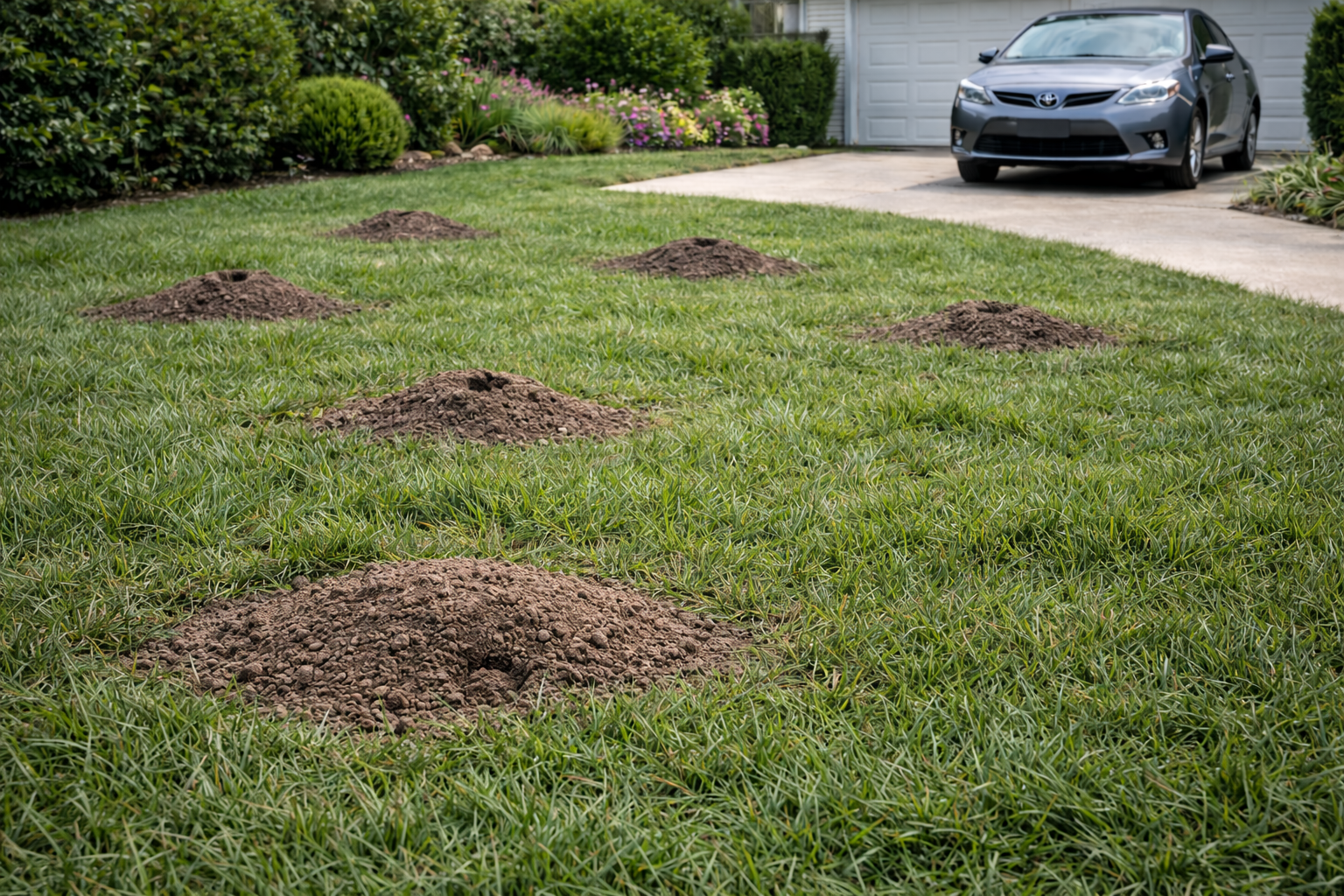
Gopher Activity in Torrance, CA

Gophers are a persistent presence across Torrance, California, affecting residential yards, commercial landscapes, and public spaces throughout the city. The coastal South Bay municipality's combination of sandy loam soils, extensive irrigation systems, and Mediterranean climate creates ideal conditions for pocket gopher populations to thrive. Residents and property managers in neighborhoods from Old Torrance to Seaside Ranchos frequently encounter evidence of gopher tunneling, particularly during spring and early summer months.

Why Torrance Has Significant Gopher Activity

Torrance's geographical and environmental characteristics make it exceptionally suitable for gopher colonization. The city sits on the Palos Verdes Peninsula, characterized by predominantly sandy loam and clay loam soils that are relatively easy for pocket gophers to excavate. Unlike harder, clay-heavy soils found in some inland regions, Torrance's soil composition allows gophers to construct extensive tunnel networks with minimal energy expenditure.

The city's extensive irrigation infrastructure compounds the gopher problem significantly. Most residential neighborhoods maintain year-round landscape watering systems designed to support the drought-sensitive plants common to Southern California gardens—ornamental shrubs, turf lawns, fruit trees, and vegetable gardens. This consistent moisture creates an environment where soil remains workable throughout much of the year, and the vegetation supported by irrigation provides abundant food sources. Gophers require moisture in their diet and prefer areas where they can find succulent plant roots and bulbs.

Torrance's Mediterranean climate, with dry summers and mild, wet winters, establishes predictable seasonal patterns that gophers exploit effectively. Winter rainfall (typically November through March) saturates soils and triggers vegetative growth, supporting gopher populations. The mild temperatures mean that freezing rarely occurs, allowing year-round activity that residents in colder regions would not experience.

Additionally, Torrance's proximity to open space areas, including portions of the Palos Verdes nature preserve and the South Bay coastal bluffs, provides wildlife corridors through which gopher populations naturally disperse into residential areas. The city's development pattern, with older neighborhoods featuring established trees and gardens interspersed with newer residential tracts, creates diverse habitat conditions favoring gopher establishment.

Common Gopher Species in Torrance

The primary gopher species encountered throughout Torrance is the Botta's pocket gopher (Thomomys bottae), a burrowing rodent perfectly adapted to Southern California's environmental conditions. Adult Botta's pocket gophers typically measure 5 to 6 inches in body length, with an additional 1 to 2 inches of tail. They display uniformly brown to grayish-brown coloration, with darker individuals sometimes observed in Torrance's coastal areas.

These rodents possess distinctive anatomical features that facilitate their subterranean lifestyle. Their front feet have elongated claws measuring up to half an inch long, providing powerful digging capability. Their eyes are proportionally small, reflecting adaptation to underground existence where vision is less critical than in surface-dwelling animals. Botta's pocket gophers possess large, externally facing cheek pouches—the anatomical feature that gives pocket gophers their common name—which they use to transport soil, food, and nesting materials through their tunnel systems.

Within Torrance, Botta's pocket gophers inhabit diverse locations: established residential yards with mature landscaping, newer subdivisions with developing root systems, commercial properties with maintained grounds, and the edges of preserved natural areas. They tolerate a wide range of soil types and moisture conditions, though they concentrate activities in areas providing reliable food and workable soil. Torrance's neighborhoods, from the tree-lined streets of Old Torrance to the more open properties of Seaside Ranchos, all support active gopher populations.

When Gopher Activity Peaks in Torrance

Gopher activity in Torrance follows distinct seasonal patterns tied to the region's Mediterranean climate and the reproductive cycle of the species. Winter months (November through February) typically show increased visible activity as soil moisture reaches peak levels. Winter rains saturate the ground, making tunnel excavation and expansion easier while simultaneously triggering vegetation growth that provides food resources.

The breeding season for Botta's pocket gophers occurs primarily between January and March in the Torrance area. During this period, males expand their territory ranges, increasing their tunnel network excavation as they seek mates. This reproductive behavior correlates directly with increased mound emergence and fresh soil disturbance visible in yards and landscaped areas. Female gophers preparing to raise litters also intensify their foraging activity, creating additional surface evidence of underground presence.

Spring months (March through May) represent peak observable activity for most Torrance residents. Following winter rains, soil reaches optimal moisture content for digging, and plant growth accelerates, maximizing food availability. Newly-weaned juveniles from winter breeding efforts begin establishing their own territories, spreading gopher populations across landscapes. The combination of young gophers seeking territory, continued adult breeding activity, and ideal soil conditions creates the season when residents most frequently notice new mounds and tunnel damage.

Summer activity typically decreases as irrigation becomes essential in Torrance's dry season, though gophers remain active in areas receiving consistent water. Fall often brings moderate activity increases as soil conditions improve following late summer rains and gophers prepare for the winter season ahead. Properties with automated irrigation systems sustain more consistent gopher activity year-round compared to non-irrigated landscapes.

Signs of Gopher Damage in Torrance Yards

Identifying gopher presence requires understanding the distinctive evidence these rodents leave across Torrance landscapes. The most visible indicator is the characteristic mound—a crescent-shaped or horseshoe-shaped pile of loose soil typically 4 to 8 inches high and 8 to 12 inches across. Unlike mole mounds, which are conical and centered over a hole, gopher mounds feature a lateral burrow where soil was pushed directly outward. Most Torrance residents observing fresh mounds in their yards can expect active gopher habitation beneath their landscape.

Gophers cause extensive damage to irrigation systems across Torrance properties. Their tunnels frequently intersect drip lines, soaker hoses, and main irrigation pipes, creating punctures and breaks that allow water to escape. Water bills may increase noticeably without visible landscape improvements, and certain yard sections may show poor plant health despite adequate irrigation programming. The combination of gopher tunneling and irrigation damage often proves economically significant for properties maintaining extensive landscaping.

Plant damage provides another critical indicator of gopher activity. Gophers chew on plant roots, bulbs, and tubers throughout Torrance landscapes. Ornamental plants, particularly ground covers and young shrubs, suddenly wilt or die despite adequate water. Vegetables disappear overnight from gardens as gophers pull plants into their burrows. Fruit trees, including the citrus and avocado trees common to many Torrance properties, may experience root damage that manifests as canopy decline. Bulbs planted for spring flowering frequently disappear entirely in fall and winter when gophers find them especially palatable.

Landscape Considerations for Torrance Properties

Torrance's landscaping traditions and contemporary practices influence gopher vulnerability across different property types. Older neighborhoods with mature, established trees, perennial plantings, and mixed gardens attract gophers seeking varied food sources and stable tunnel infrastructure. These gardens often feature the bulbs, vegetables, and root vegetables that gophers prefer most. Conversely, newer subdivisions with recently planted landscapes sometimes see less gopher pressure initially, though activity increases as root systems mature and landscape irrigation establishes.

The local preference for drought-tolerant Mediterranean plantings has intensified in recent decades. Properties featuring native California shrubs, ornamental grasses, and xeriscape principles generally experience less gopher pressure than traditional turf and flower gardens, though gophers colonize even low-water landscapes if other conditions prove favorable. Torrance's diverse neighborhoods support widely varying landscaping philosophies, from beachside cottage gardens to contemporary desert landscapes, each with distinct gopher vulnerability profiles.

Hardscape elements—patios, walkways, retaining walls, and structural features—offer some protection from gopher damage. However, gophers readily tunnel beneath hardscape, sometimes creating instability in pavers and concrete. Properties with extensive softscape, particularly those emphasizing turf lawns and perennial beds, present maximum vulnerability to gopher damage.

Plant selection significantly impacts gopher impact. Trees and shrubs with deep, woody root systems suffer less gopher damage than shallow-rooted plants. Gophers particularly target fruit and nut trees, especially younger specimens with accessible roots. Vegetable gardens attract intense gopher activity, as root crops, bulbs, and tender shoots provide preferred food sources. Native California plants show variable vulnerability—some resist gopher damage better than introduced species, though individual plant selection within the native category matters considerably.