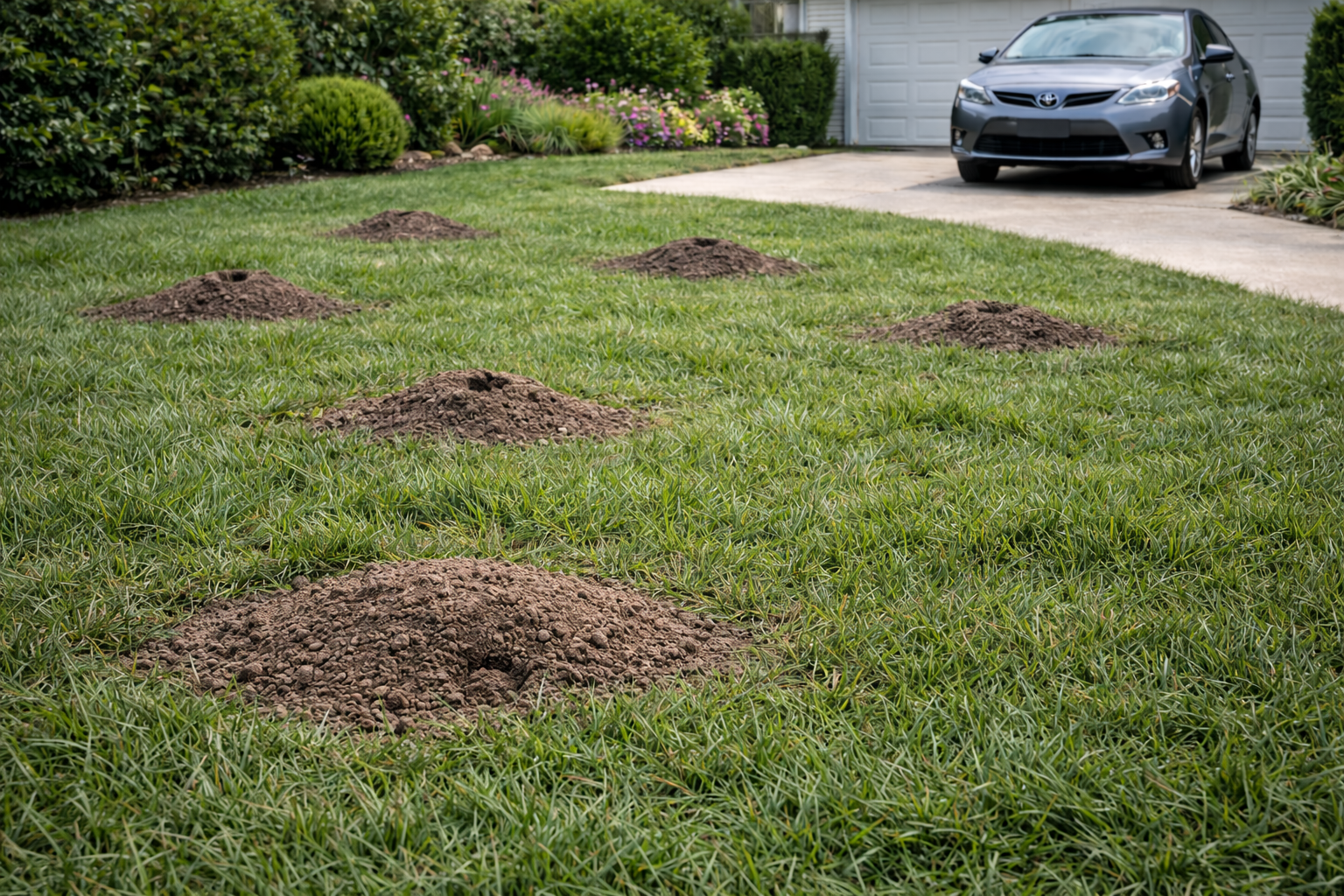
Gopher Activity in Tustin, CA

Gophers are a persistent presence throughout Tustin, California, where the combination of favorable soil conditions, abundant irrigation, and proximity to natural habitat creates an ideal environment for their populations. Residents across the city—from the older neighborhoods near Tustin High School to the more recently developed areas near the Tustin Legacy mixed-use development—regularly encounter evidence of gopher activity in lawns, gardens, and landscaped areas. Understanding why gophers thrive in Tustin and how to recognize their activity is essential for property owners seeking to protect their landscapes.

Why Tustin Has Significant Gopher Activity

Tustin's geographical location and environmental conditions make it particularly susceptible to gopher populations. The city sits in Orange County's central region, characterized by relatively mild temperatures year-round and an arid to semi-arid climate. Historically, Tustin's soil developed from alluvial deposits in the Santa Ana River basin, creating loamy and silty soil types that are moderately firm—ideal for tunnel construction. These soil conditions allow gophers to burrow effectively without the tunnels collapsing, which would occur in harder clay-heavy soils or loose sandy environments.

The extensive irrigation infrastructure throughout Tustin also contributes significantly to gopher activity. Residential neighborhoods, golf courses, parks, and commercial landscaping all rely on regular watering to maintain vegetation in the area's naturally dry climate. This consistent moisture softens the soil, making excavation easier for gophers and ensuring abundant food sources. Additionally, Tustin's proximity to undeveloped areas and open spaces—including portions near the Tustin Regional Park and surrounding county lands—provides natural gopher habitat from which populations can expand into residential and commercial properties. The nearby foothills to the east and southeastern portions of the city near Irvine further support wild gopher populations that naturally migrate toward human-modified landscapes offering reliable food and water.

Common Gopher Species in Tustin

The Botta's pocket gopher (Thomomys bottae) is the dominant gopher species found throughout Tustin and the broader Orange County region. Named for the distinctive fur-lined cheek pouches that extend from the mouth to the hips, Botta's pocket gophers are medium-sized rodents typically measuring 5 to 7 inches in body length, with tails adding an additional 1 to 2 inches. Their fur coloration varies from dark brown to tan, often matching local soil types, which provides camouflage when they briefly emerge from their tunnel systems.

Botta's pocket gophers are superbly adapted for subterranean life. They possess large, ever-growing incisors that continuously sharpen through use, powerful forelimbs with extended claws designed for excavation, and small eyes—vision is less critical underground than keen senses of smell and touch. These gophers are primarily solitary and territorial, with males and females occupying separate burrow systems except during brief breeding periods. In Tustin's yards, individual gophers typically maintain tunnel networks spanning between 200 and 500 linear feet, though occupied systems can vary considerably based on soil quality and food availability. A single residential lot may host one or multiple individuals depending on property size, landscaping density, and proximity to established populations.

When Gopher Activity Peaks in Tustin

Gopher activity in Tustin follows distinct seasonal patterns related to the region's climate and the animals' reproductive cycle. Winter and early spring—roughly January through March—represent the primary breeding season for Botta's pocket gophers. During this period, males become especially active as they extend their tunnel systems searching for females. Surface activity increases noticeably during these months, and property owners often observe fresh mounds appearing in lawns and gardens.

Spring rains significantly impact gopher behavior in Tustin. When winter and early spring precipitation occurs—typically between December and March—it saturates soil and creates conditions that trigger increased burrowing activity. Gophers may relocate portions of their tunnel systems to escape waterlogged areas, resulting in conspicuous above-ground movement and fresh mound creation. Late spring through summer brings periods of relative dormancy as breeding concludes and established gophers maintain existing tunnels while foraging.

Fall activity tends to increase again as gophers prepare for winter by extending and refining their tunnel systems and expanding food storage chambers. However, peak observable activity remains centered on late winter and early spring months. Tustin's irrigation schedules, which typically increase during spring months to support growing season landscaping, further encourage gopher activity during this window by maintaining soft, workable soil conditions.

Signs of Gopher Damage in Tustin Yards

Identifying gopher activity requires familiarity with the characteristic signs these animals leave in Tustin landscapes. The most obvious indicator is the presence of mounds—conical or crescent-shaped earth formations typically 3 to 6 inches in height and 4 to 8 inches in diameter. Gophers create mounds when excavating tunnels, pushing loosened soil to the surface. In Tustin yards, fresh mounds appear most commonly in irrigated lawn areas, vegetable gardens, and landscape beds where soil remains workable year-round.

Mound appearance differs from similar structures created by other soil-dwelling creatures. Gopher mounds are typically asymmetrical, with the tunnel opening positioned to one side rather than in the center as with mole mounds. The soil composing Tustin gopher mounds often differs in color and texture from surrounding surface soil, appearing as a distinct pile of excavated material. Over time, unmaintained mounds become vegetated and blend into the landscape, but actively used gopher tunnels produce fresh mounds periodically.

Beyond mounds, gophers cause characteristic plant damage. Vegetables and ornamentals may disappear entirely, pulled underground by gophers feeding from tunnel level. Above-ground vegetation often shows signs of being clipped at soil level. Roots of trees, shrubs, and perennials are damaged as gophers gnaw on them while burrowing, sometimes girdling stems and killing plants entirely. Irrigation systems suffer damage when burrowing activity ruptures lines and sprinkler heads. In Tustin's clay and loam soils, subsurface tunneling creates shallow channels visible as ridges beneath thinning lawn areas where tunnel roofs eventually collapse.

Landscape Considerations for Tustin Properties

Tustin's diverse neighborhoods reflect varied landscaping approaches, each with different vulnerabilities to gopher damage. Older residential areas, particularly those within walking distance of downtown Tustin and near heritage trees like the California redwoods and established fruit trees common in mid-century homes, often feature mixed plantings combining ornamentals with productive gardens. The Mediterranean-style landscaping prevalent in newer Tustin developments typically incorporates hardscape elements, drought-tolerant shrubs, and decorative stone, which generally experience less gopher damage than intensive garden environments.

Certain plants attract higher gopher interest than others. Vegetables including carrots, lettuce, beans, and root crops are preferred foods—a critical consideration for Tustin properties with kitchen gardens. Ornamental plants particularly vulnerable include young trees, roses, lavender, and groundcovers with shallow root systems. Established mature trees suffer less than newly planted specimens. Properties relying heavily on lawn coverage are especially susceptible to visible damage accumulation, as gopher mound creation and tunnel collapse create obvious disruptions to uniform turf.

Hardscape features—patios, pathways, and permanent structures—offer protection from gopher damage, as these animals avoid solid surfaces. Raised garden beds with hardware cloth barriers installed at the bottom provide excellent protection for vegetable production. Properties featuring rock gardens, decomposed granite mulching, and succulents typical of drought-conscious Tustin landscaping experience fewer gopher-related issues than those emphasizing extensive irrigation-dependent plantings. Understanding individual property vulnerabilities based on specific landscaping choices allows Tustin residents to make informed decisions about landscape design and maintenance strategies.