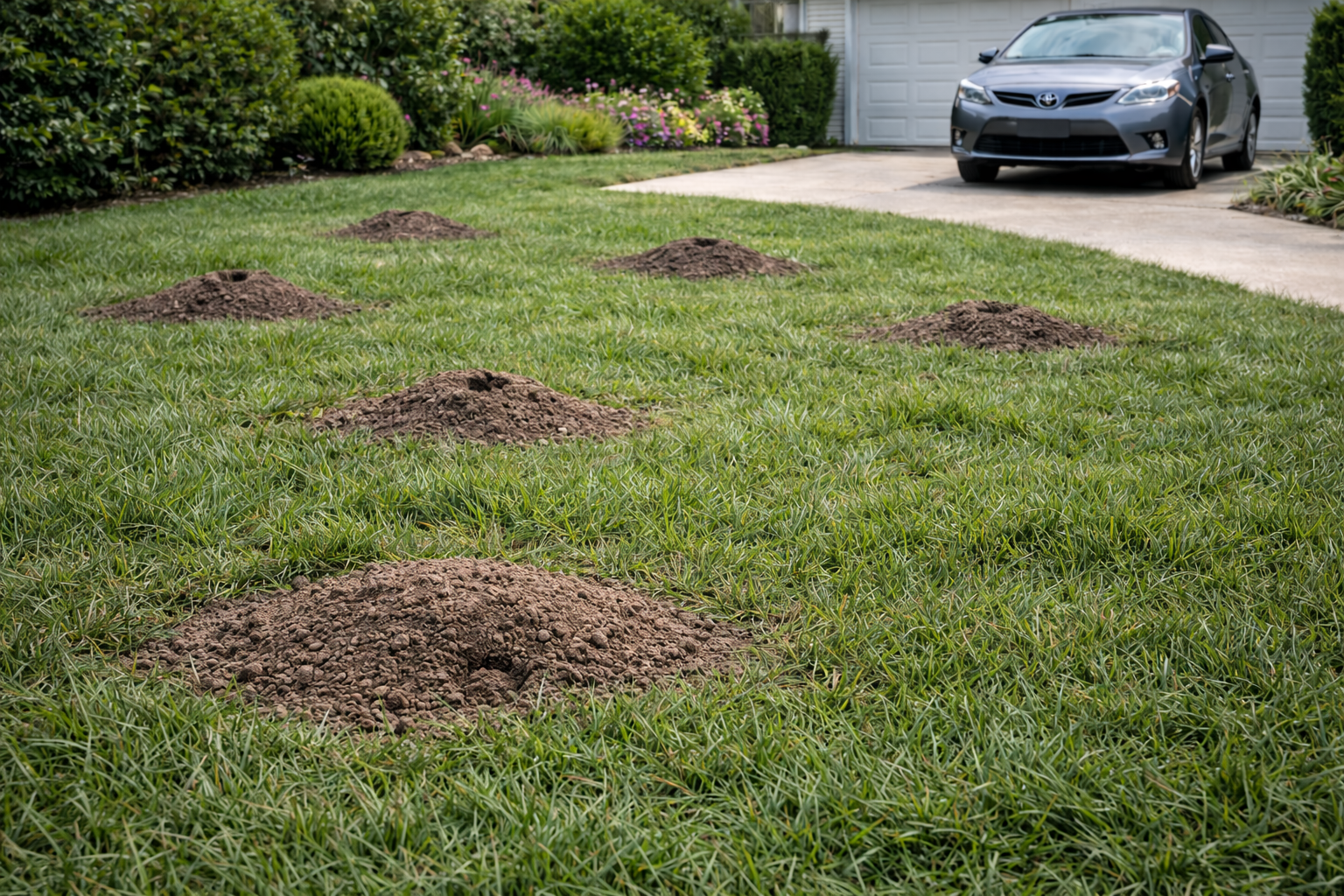
Gopher Activity in Upland, CA
Gophers are a persistent presence throughout Upland, California, particularly in residential areas where irrigated lawns and gardens provide ideal habitat. The San Gabriel Valley location, combined with the city's Mediterranean climate and extensive landscaping infrastructure, creates conditions that naturally attract and sustain pocket gopher populations. Property owners across Upland's neighborhoods frequently encounter evidence of gopher activity, from raised mounds in yards to damaged irrigation systems and compromised plant roots.
Why Upland Has Significant Gopher Activity
Upland's geographic position in San Bernardino County contributes significantly to gopher presence in the area. The city sits at the base of the San Gabriel Mountains, with elevations ranging from approximately 2,600 feet in residential areas to higher elevations toward the foothills. This foothill proximity means properties often border or back up to semi-wild areas where gopher populations thrive naturally. When suburban development encroaches on these spaces, gophers readily colonize human landscapes that offer abundant food and protective cover.
The soil composition throughout Upland heavily influences gopher activity patterns. Much of the area features sandy loam and clay loam soils typical of the San Gabriel Valley floor, which are ideal for burrowing. These soil types compact adequately to maintain tunnel structure while remaining workable enough for gophers to excavate efficiently. Properties with imported topsoil or amended garden beds may experience even higher gopher pressure, as the softened soil facilitates easier tunneling.
Irrigation is perhaps the single most significant factor attracting gophers to Upland properties. The semi-arid climate of Upland—with average annual rainfall around 15 inches concentrated primarily in winter months—necessitates extensive supplemental watering for landscaping. Residential irrigation systems, from automated sprinkler systems to drip lines and soaker hoses, keep soils consistently moist. This sustained soil moisture makes yards far more habitable for gophers than the surrounding dry foothills, essentially creating oases of suitable habitat.
Common Gopher Species in Upland
The Botta's pocket gopher (Thomomys bottae) is the dominant gopher species throughout Upland and the broader San Gabriel Valley region. This species, named after 19th-century naturalist Paolo Botta, is well-adapted to California's diverse terrain and has established robust populations across San Bernardino County. Adults typically measure 4.5 to 5.5 inches in body length, with relatively short tails and compact, muscular frames optimized for subterranean existence.
Physical characteristics of Botta's pocket gophers include small external ears and small eyes, both adaptations to underground life where vision is less valuable than tactile sensitivity. Their front feet feature robust claws specifically evolved for soil excavation. Coloration varies geographically, but Upland populations typically display dark brown to grayish-brown fur on the dorsal surface and lighter coloring on the ventral side. The species' name derives from the distinctive fur-lined cheek pouches that give pocket gophers their common name; these pouches serve as portable containers for transporting food and nesting material through tunnel systems.
Botta's pocket gophers are solitary animals except during breeding season, with individual gophers maintaining and defending extensive burrow networks that can span several hundred square feet. In Upland's residential areas, a single gopher may establish territories encompassing multiple adjacent properties, as the consistent irrigation and planted landscapes offer continuous food sources that reduce the territorial space needed for sustenance.
When Gopher Activity Peaks in Upland
Seasonal patterns in Upland gopher activity follow the region's breeding cycle and environmental conditions. The primary breeding season occurs from January through March, coinciding with winter and early spring when soil moisture is highest from seasonal rainfall. During these months, gopher populations expand as successful reproduction produces juvenile gophers that subsequently disperse to establish their own territories. Property owners often observe increased mounding activity during late winter and early spring as established gophers expand tunnels and newly independent gophers create new burrow systems.
Spring months—March through May—represent the peak season for visible gopher damage in Upland yards. Warming temperatures and the conclusion of winter rains create ideal conditions for gophers to intensify foraging and tunnel expansion activities. This period often coincides with the growing season for Upland landscaping, when plants are actively putting out new growth and roots, making them particularly vulnerable to gopher feeding damage.
Summer activity, while present, often decreases slightly in Upland due to reduced soil moisture as spring rains cease and summer heat dries upper soil layers. However, properties with well-maintained irrigation systems may sustain high gopher populations throughout summer, as artificial watering maintains the moist soil conditions gophers require. Late summer and early fall can bring a secondary period of increased activity as juvenile gophers from spring breeding reach territorial independence and seek suitable habitat.
Signs of Gopher Damage in Upland Yards
The most immediately obvious sign of gopher presence in Upland properties is the characteristic mounding pattern. Botta's pocket gophers create mounds by pushing excavated soil from their tunnel systems to the surface, typically forming crescent or horseshoe-shaped mounds 4 to 8 inches in diameter. These mounds differ from mole mounds in that they are more consolidated and feature a characteristic plugged hole on one side where the gopher pushes soil outward. Multiple mounds scattered across a lawn indicate established gopher territories.
Irrigation system damage represents a significant economic consequence of gopher activity in Upland. Gophers frequently tunnel along irrigation lines, disrupting emitter lines, soaker hoses, and underground PVC piping as they excavate. This damage not only reduces irrigation efficiency but can lead to localized flooding and water waste in specific yard areas. Property owners may notice unexplained wet spots, soggy soil zones, or areas where irrigation coverage has diminished, often indicating subsurface gopher tunnel activity near irrigation infrastructure.
Above-ground vegetation damage provides additional evidence of gopher presence. Gophers consume roots, bulbs, and young plants from below, often killing established trees, shrubs, and perennials by severing root systems. Homeowners in Upland may observe fruit trees or ornamental plantings that suddenly wilt and decline despite adequate water and care. Vegetable gardens may show missing or damage to root crops like carrots, potatoes, and radishes, as well as newly planted seedlings that disappear underground.
Landscape Considerations for Upland Properties
Upland's distinctive landscaping aesthetic reflects both the region's semi-arid climate and residents' desire for verdant, maintained outdoor spaces. The community features considerable landscape diversity, from drought-tolerant xeriscape designs popular in foothill neighborhoods to lush irrigated lawns and mixed plantings in valley-floor areas. Mediterranean-style landscapes incorporating drought-resistant shrubs like California lilac, manzanita, and toyon are increasingly common, particularly in developments near the foothills. Simultaneously, many established neighborhoods maintain traditional lawn and ornamental planting schemes that rely heavily on regular irrigation.
Certain landscaping choices create particular vulnerability to gopher damage in Upland properties. Irrigated turf grass lawns, while common, represent ideal gopher habitat through their combination of soft soil and consistent moisture. Foundation plantings featuring ornamental shrubs, roses, and flowering perennials are especially susceptible because gophers can access numerous food sources in concentrated areas. Newly installed trees and large shrubs are particularly at risk, as their root systems are tender and gophers actively seek developing vegetation for feeding. Vegetable gardens, orchards, and fruit-bearing trees and shrubs similarly attract intensive gopher activity.
Properties incorporating hardscape elements—patios, driveways, rock features, and paved areas—may experience reduced gopher activity in those specific zones, as pocket gophers cannot burrow through impermeable surfaces. However, these hardscape areas often fail to eliminate gophers entirely, as the animals maintain tunnel networks in surrounding landscape beds and lawn areas. Upland properties that balance hardscape elements with necessary softscape plantings create mixed conditions where gophers typically persist in vegetated zones while hardscaping provides some mitigation in heavily trafficked areas.
For professional gopher control in Southern California, visit Rodent Guys — serving Los Angeles, Orange, San Bernardino, and Riverside counties.