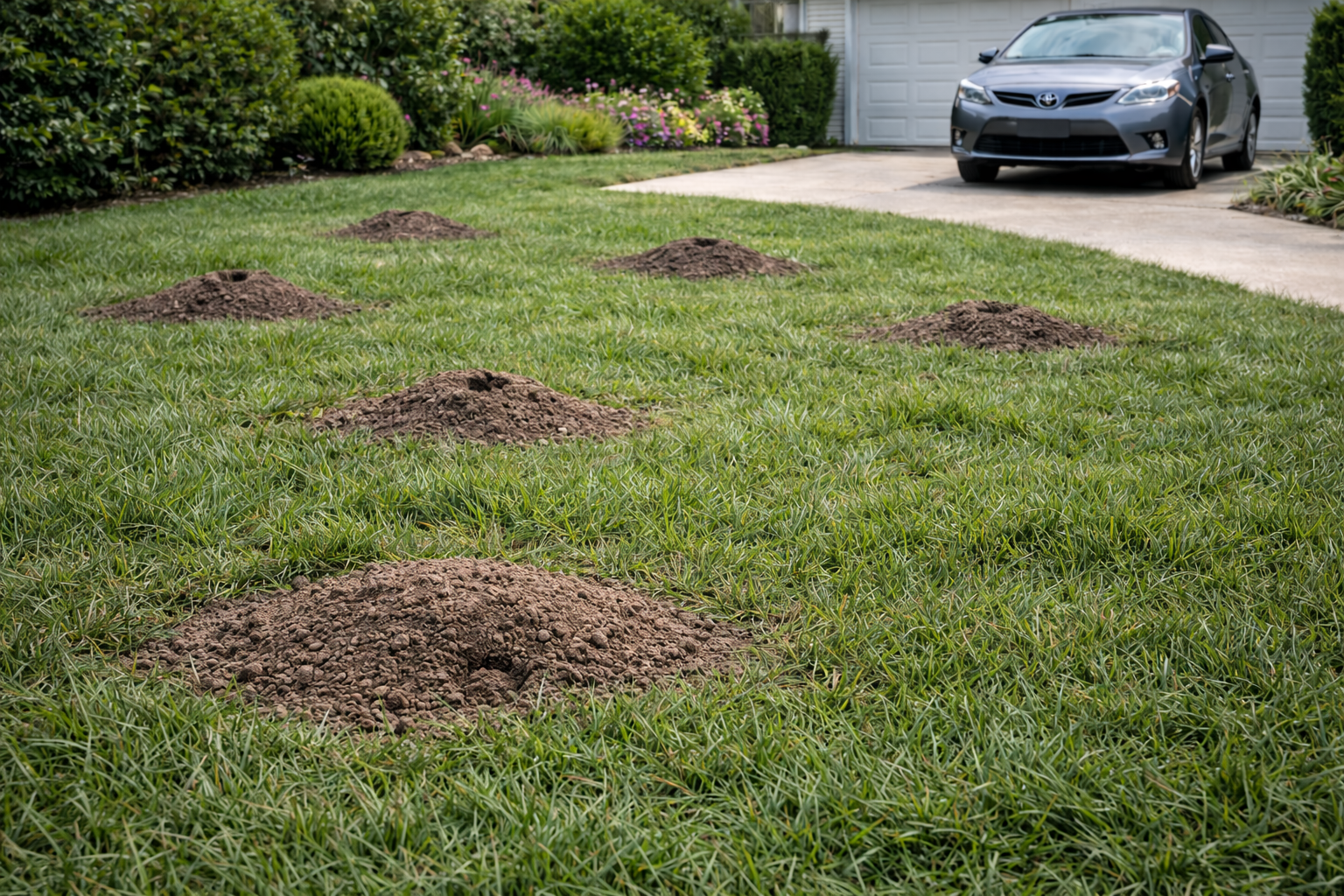
Gopher Activity in Van Nuys, CA
Van Nuys, located in the central San Fernando Valley, experiences consistent gopher activity throughout the year due to its ideal soil conditions, abundant irrigation systems, and proximity to undeveloped foothill areas. Residents and property managers across this densely populated neighborhood frequently encounter the characteristic mounds, tunnels, and vegetation damage associated with pocket gopher presence. Understanding the patterns of gopher behavior specific to Van Nuys helps property owners recognize problems early and take informed management decisions.
Why Van Nuys Has Significant Gopher Activity
The San Fernando Valley's geological composition creates an exceptionally favorable environment for pocket gopher populations. Van Nuys sits atop alluvial soils deposited by historic water flows from the Santa Susana Mountains to the north and the Hollywood Hills to the south. These soils—typically silt loam and fine sandy loam—are among the easiest substrates for gophers to excavate, requiring minimal energy expenditure for tunnel construction and maintenance. The soil structure allows for stable burrow systems that remain intact through seasonal changes.
Irrigation infrastructure throughout Van Nuys significantly amplifies gopher habitat quality. Most residential and commercial properties depend on supplemental watering year-round, given the semi-arid climate of the San Fernando Valley and the minimal rainfall averaging 15 inches annually. Consistent moisture from lawn sprinklers and landscape irrigation creates soft, workable soil conditions that gophers prefer for tunneling. Additionally, well-watered landscapes support dense vegetation—including alfalfa, clover, vegetables, and ornamental plants—providing abundant food sources directly above gopher burrow systems.
Van Nuys's geographic position near the southern boundary of the San Fernando Valley places many properties within a few miles of undeveloped foothill terrain, particularly the Santa Susana Mountains National Recreation Area and other protected open spaces. These wild areas maintain robust gopher populations that naturally expand into adjacent residential neighborhoods, especially as development pressure increases and natural habitat diminishes. The proximity of Van Nuys to these source populations ensures consistent reinfestation pressure on properties even after removal efforts.
Common Gopher Species in Van Nuys
The Botta's pocket gopher (Thomomys bottae) represents the dominant—and virtually only—gopher species encountered in Van Nuys and throughout the greater Los Angeles area. This species derives its name from the large, externally visible cheek pouches used for transporting soil and food materials during tunnel excavation and foraging activities. Adult Botta's pocket gophers typically weigh between 2 and 4 ounces and measure approximately 5 to 6 inches in body length, with a relatively short tail of 1 to 2 inches.
Physical identification characteristics include small ears, small dark eyes, and powerful front legs equipped with long, specialized claws designed for soil excavation. The fur coloration varies considerably across populations, ranging from dark brown to reddish-brown to tan, depending on local soil composition and regional genetics. Many Van Nuys populations display medium-brown coloring that often matches the local alluvial soils, providing natural camouflage during above-ground foraging.
Botta's pocket gophers maintain solitary burrow systems with multiple chambers serving different functions: sleeping areas, food storage compartments, and toilet chambers. Each territory typically spans 200 to 2,000 square feet, though this can expand or contract based on food availability and soil quality. In Van Nuys's well-irrigated, vegetable-rich neighborhoods, territories often remain relatively compact due to concentrated food resources, meaning fewer gophers can infest smaller properties compared to drier regions.
When Gopher Activity Peaks in Van Nuys
Gopher activity in Van Nuys follows pronounced seasonal patterns driven by breeding cycles and moisture availability. The primary breeding season occurs from January through March, coinciding with Southern California's winter rainy season and the emergence of fresh spring vegetation. During these months, male gophers expand their activities in search of mates, creating new tunnels and pushing up more visible mounds. Female gophers, preparing for pregnancy and lactation, intensify foraging behavior to accumulate fat reserves and consume nutrient-dense vegetation.
Spring rains in Van Nuys typically arrive between December and March, though precipitation remains variable and unpredictable. When significant rainfall occurs, soil moisture increases dramatically, facilitating tunnel expansion and new burrow construction. Gophers can excavate much more efficiently through moist soil than through dry, hard earth. This seasonal moisture window explains why Van Nuys residents often notice the highest concentration of fresh mounds and new damage during January through April.
Summer months (June through August) in Van Nuys bring hot, dry conditions with temperatures regularly exceeding 95 degrees Fahrenheit. Despite reduced rainfall, established irrigation systems maintain soil moisture in landscaped areas, keeping gopher populations active. However, activity may become less visible during peak summer heat, as gophers retreat deeper into cooler burrow systems during the hottest parts of the day. Fall months show moderate activity levels, with populations preparing for winter by accumulating food stores in underground chambers. Year-round activity remains possible in Van Nuys due to consistent irrigation, unlike northern regions where gophers enter dormancy during winter.
Signs of Gopher Damage in Van Nuys Yards
The most obvious indicator of gopher presence consists of fresh mounds of displaced soil scattered across lawns and garden areas. These mounds typically measure 2 to 6 inches in height and 4 to 8 inches in diameter, appearing as symmetrical or slightly irregular piles of finely textured soil. Unlike mole mounds, which tend to be linear ridges, gopher mounds remain more discrete and concentrated. Fresh mounds appear dark and moist in Van Nuys's typical morning conditions before sun exposure dries the surface.
Subsurface tunneling causes visible settling and depression patterns across lawns, particularly noticeable in properties with thin topsoil layers or newly seeded areas. Root damage to ornamental shrubs, roses, fruit trees, and vegetable gardens occurs as gophers consume plant material and sever root systems while tunneling. Entire plants may suddenly wilt or die despite adequate irrigation, indicating underground root consumption or tunnel damage disrupting water uptake.
Irrigation system damage represents a significant concern for Van Nuys properties relying on drip lines, soaker hoses, and underground supply lines. Gopher tunnels frequently intersect with irrigation infrastructure, and gnawing activity damages emitter tubing and supply lines, causing water to pool underground or creating dry zones in previously watered areas. Observable evidence includes sudden dry patches in otherwise well-watered lawns, water pooling in unexpected locations, or water running from burrow openings during irrigation cycles.
Landscape Considerations for Van Nuys Properties
Van Nuys's landscape character reflects both traditional Valley residential gardens and increasingly sophisticated drought-adapted designs responding to regional water constraints. Typical properties feature mixed hardscape (patio areas, concrete pathways, decorative rock) and softscape (turf grass, shrub borders, flowering perennials, and established trees). This mixed composition creates variable vulnerability to gopher damage. Lawns and garden beds suffer the most significant damage, while hardscaped areas with underlying concrete or gravel base layers provide some physical barriers, though gophers readily tunnel beneath these features to access adjacent planted areas.
Common Van Nuys landscape plantings particularly vulnerable to gopher damage include roses (extremely attractive to pocket gophers), citrus and fruit trees, vegetable gardens, and succulent plantings popular in water-conscious designs. Gophers consume root systems of young trees, causing permanent structural damage even when the tree survives the initial attack. Established shade trees—including the numerous coast live oaks, California peppers, and Aleppo pines found throughout Van Nuys—face less severe damage but may experience tunneling that affects stability.
Properties emphasizing native California vegetation, desert plantings, or low-water landscape designs sometimes experience reduced gopher problems simply due to less attractive food sources and less intensive irrigation. However, even drought-tolerant landscapes require periodic watering in Van Nuys's semi-arid climate, maintaining soil moisture conditions that support gopher populations. The neighborhood's dense development pattern and interconnected irrigation systems mean that nearby properties' watering practices influence gopher activity on individual parcels, making isolated management efforts challenging.
For professional gopher control in Southern California, visit Rodent Guys — serving Los Angeles, Orange, San Bernardino, and Riverside counties.