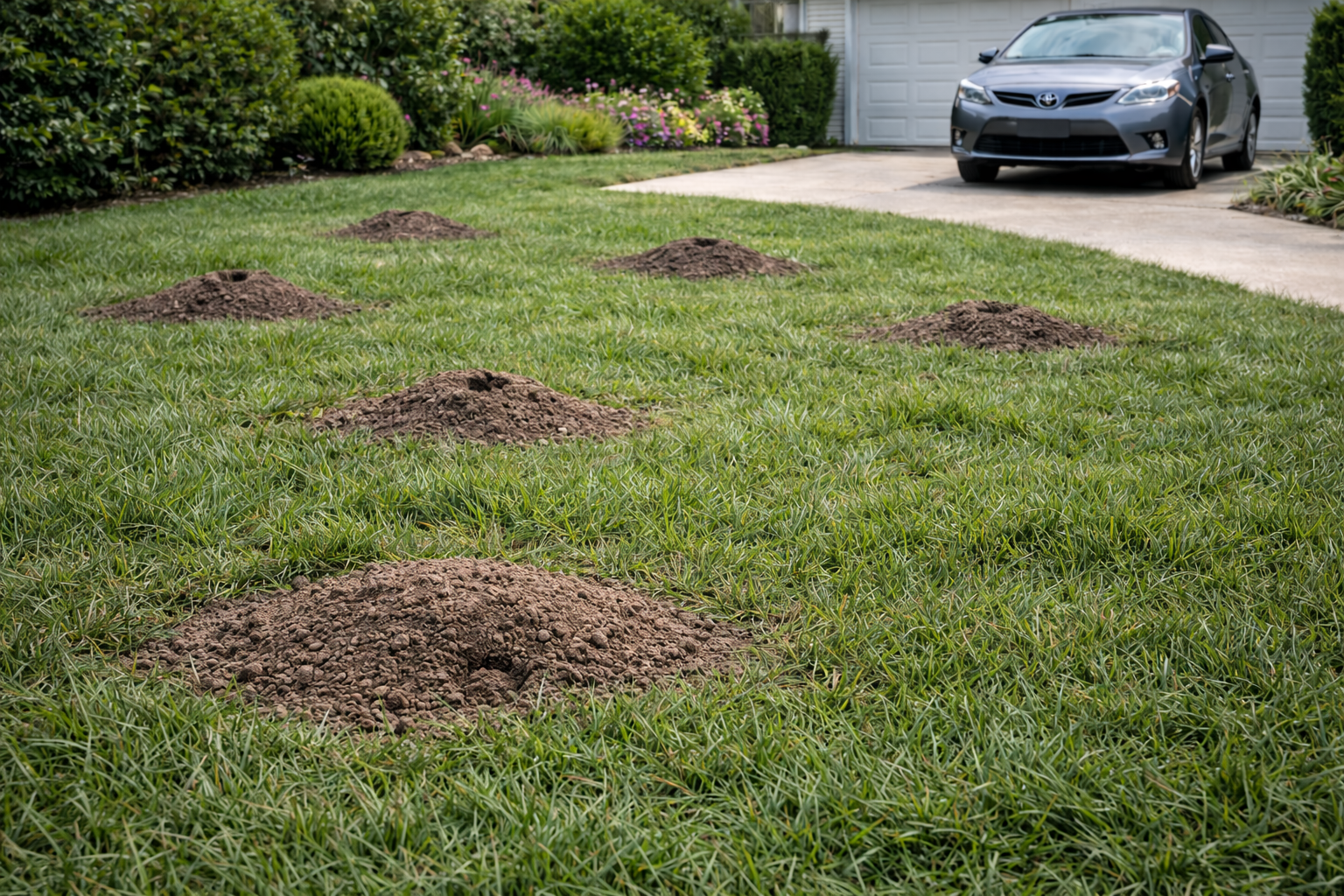
Gopher Activity in Walnut, CA

Walnut, California—a community located in Los Angeles County approximately 30 miles east of downtown Los Angeles—experiences year-round gopher activity that affects residential and commercial properties throughout the city. The combination of the San Gabriel Valley's climate, soil composition, and widespread irrigation infrastructure creates ideal conditions for pocket gopher populations to thrive. Property owners in Walnut regularly encounter evidence of gopher tunneling systems, from distinctive mounds in lawns to damage affecting landscaping and underground utilities.

Why Walnut Has Significant Gopher Activity

The geographic location and environmental characteristics of Walnut create particularly favorable conditions for gopher populations. The San Gabriel Valley sits at an elevation of approximately 400–600 feet above sea level, with predominantly clay loam and silty loam soils that are moderately easy for gophers to excavate. These soil types retain moisture effectively, which is essential for gopher survival, as the animals require damp conditions to prevent their skin from desiccating.

Walnut's climate contributes significantly to year-round gopher activity. The area experiences warm, dry summers with temperatures frequently exceeding 90°F and mild winters where temperatures rarely drop below freezing. This extended growing season and the absence of harsh winter conditions mean gophers can remain active throughout the year, unlike in northern regions where cold winters temporarily suppress activity. The region receives approximately 14–16 inches of annual precipitation, concentrated primarily between November and March, with summers remaining essentially dry.

The extensive irrigation infrastructure throughout Walnut—including residential landscape watering, maintained public parks, golf courses, and commercial properties—adds artificial moisture to the soil year-round. This irrigation keeps the soil conditions optimal for tunneling and allows gopher populations to sustain themselves even during the naturally dry months. Additionally, Walnut's proximity to natural open spaces and undeveloped foothill areas in the nearby San Gabriel Mountains means gopher populations have access to wild habitats where they can maintain broader genetic diversity and continuously disperse into residential neighborhoods.

Common Gopher Species in Walnut

The Botta's pocket gopher (Thomomys bottae) is the dominant and nearly exclusive gopher species found throughout Walnut and the greater San Gabriel Valley region. This species takes its name from the external cheek pouches, or "pockets," that line both sides of its mouth—specialized structures used exclusively for carrying food and nesting material.

Adult Botta's pocket gophers typically measure 6–8 inches in body length, with a short tail adding an additional 1–2 inches. Their bodies appear stout and cylindrical, an adaptation perfectly suited for underground burrowing. Their fur color generally ranges from light brown to dark brown, with considerable variation even within localized populations. The animal's front feet feature particularly enlarged claws—disproportionately large compared to the hind feet—that function as primary digging implements. Their eyes are small and poorly developed, as visual acuity provides limited advantage in underground tunnel systems where the animal spends the vast majority of its life.

In Walnut, Botta's pocket gophers inhabit both cultivated residential landscapes and native scrubland habitats. They demonstrate remarkable adaptability, thriving equally well in maintained lawns with regular irrigation and in drought-stressed native vegetation. The species is solitary and highly territorial; individual gophers maintain and actively defend tunnel systems that can extend 200 or more linear feet, encompassing multiple feeding areas and nesting chambers located several inches to several feet below the surface.

When Gopher Activity Peaks in Walnut

Gopher activity patterns in Walnut follow predictable seasonal cycles, though activity never truly ceases completely. The primary breeding season occurs from January through March, coinciding with cool temperatures and elevated soil moisture levels from winter rainfall. During this period, male gophers expand their tunnel systems and travel greater distances in search of females, resulting in increased surface disturbance and mound creation. Homeowners typically observe heightened activity during these months as animals tunnel through lawns and gardens.

Spring months from April through June represent a secondary peak in gopher activity. As temperatures warm and spring rains replenish soil moisture, juvenile gophers disperse from natal burrows to establish independent territories. This dispersal phase produces visible evidence of tunneling as young animals construct new burrow systems. Additionally, established gophers work to expand tunnel networks and repair winter damage, creating new mounds across properties.

Summer and early fall present moderately reduced activity levels, though gophers continue tunneling in irrigated areas. The artificial moisture from residential and commercial irrigation systems maintains soil conditions favorable for continued tunneling, preventing the complete inactivity that might occur in completely non-irrigated regions. Late fall through early winter shows somewhat reduced activity as gophers prepare for winter by stockpiling food in underground chambers and consolidating their tunnel systems. However, Walnut's mild winters never impose genuine dormancy or hibernation, so gophers remain active even during the coldest months, simply reducing the frequency of surface disturbance.

Signs of Gopher Damage in Walnut Yards

Gopher mounds represent the most immediately visible indicator of gopher activity. These mounds appear as fan-shaped or crescent-shaped piles of soil, typically ranging from 4–12 inches in diameter and 2–6 inches in height. In Walnut's landscaped yards, mounds frequently appear in lawns, garden beds, and around the perimeters of properties. Mounds differ from mole mounds in that they lack a central exit hole; instead, gophers plug tunnel entrances with soil after excavation. Clusters of mounds indicate established gopher activity, while scattered isolated mounds suggest recent dispersal by young animals establishing new territories.

Underground damage often becomes apparent before surface mounds are noticed. Gophers gnaw on roots and bulbs of landscape plants, causing seemingly healthy shrubs and perennials to suddenly wilt and die. Fruit trees, roses, and ornamental plantings commonly suffer significant damage. The animals also sever irrigation lines and plastic landscape edging while tunneling, leading to unexpected water loss and landscape degradation. Some property owners discover gopher damage only after observing sunken areas in lawns where tunnel roofs have collapsed, or after noticing plants that have toppled despite no apparent soil instability.

In Walnut's residential neighborhoods, gopher activity frequently concentrates in properties with established landscaping, mature trees, and active irrigation systems. The animals avoid sparse, compacted, or actively disturbed soils, so newly constructed properties typically experience colonization only after landscaping becomes established. Vegetable gardens and cultivated landscapes attract and sustain particularly dense gopher populations compared to native desert-adapted landscapes.

Landscape Considerations for Walnut Properties

Walnut's residential landscaping typically reflects the San Gabriel Valley's transitional character between coastal Southern California and the inland desert. Many properties feature mixed landscapes combining turf grass, ornamental shrubs, fruit trees, and hardscape elements like patios and decorative rock. This diversity creates varied habitat conditions that support gopher populations throughout the community. Properties maintained in high-water, high-maintenance landscapes with extensive irrigation attract and sustain larger gopher populations than properties featuring drought-adapted native plants with minimal supplemental water.

Certain plant species popular in Walnut landscaping prove particularly vulnerable to gopher damage. Root vegetables including carrots, parsnips, and turnips in vegetable gardens face severe depredation. Ornamental bulbs such as daffodils, tulips, and lilies sustain significant losses. Stone fruits including peach, plum, and apricot trees—historically common in San Gabriel Valley properties—suffer root damage that can girdle and kill young trees. Roses, a traditional component of Walnut landscaping, experience both root damage and stem damage from gopher gnawing.

Properties emphasizing hardscape elements—driveways, patios, walkways, and decorative stonework—experience gopher damage in different forms than purely softscape landscapes. Tunneling beneath hardscape can undermine surface stability, creating settling and cracking. Conversely, yards transitioning from turf to native plant landscaping typically experience reduced gopher pressure, as native plants require less irrigation and maintain less favorable tunnel conditions. The density of established gopher populations in specific Walnut neighborhoods correlates strongly with irrigation infrastructure density and landscape maintenance intensity.