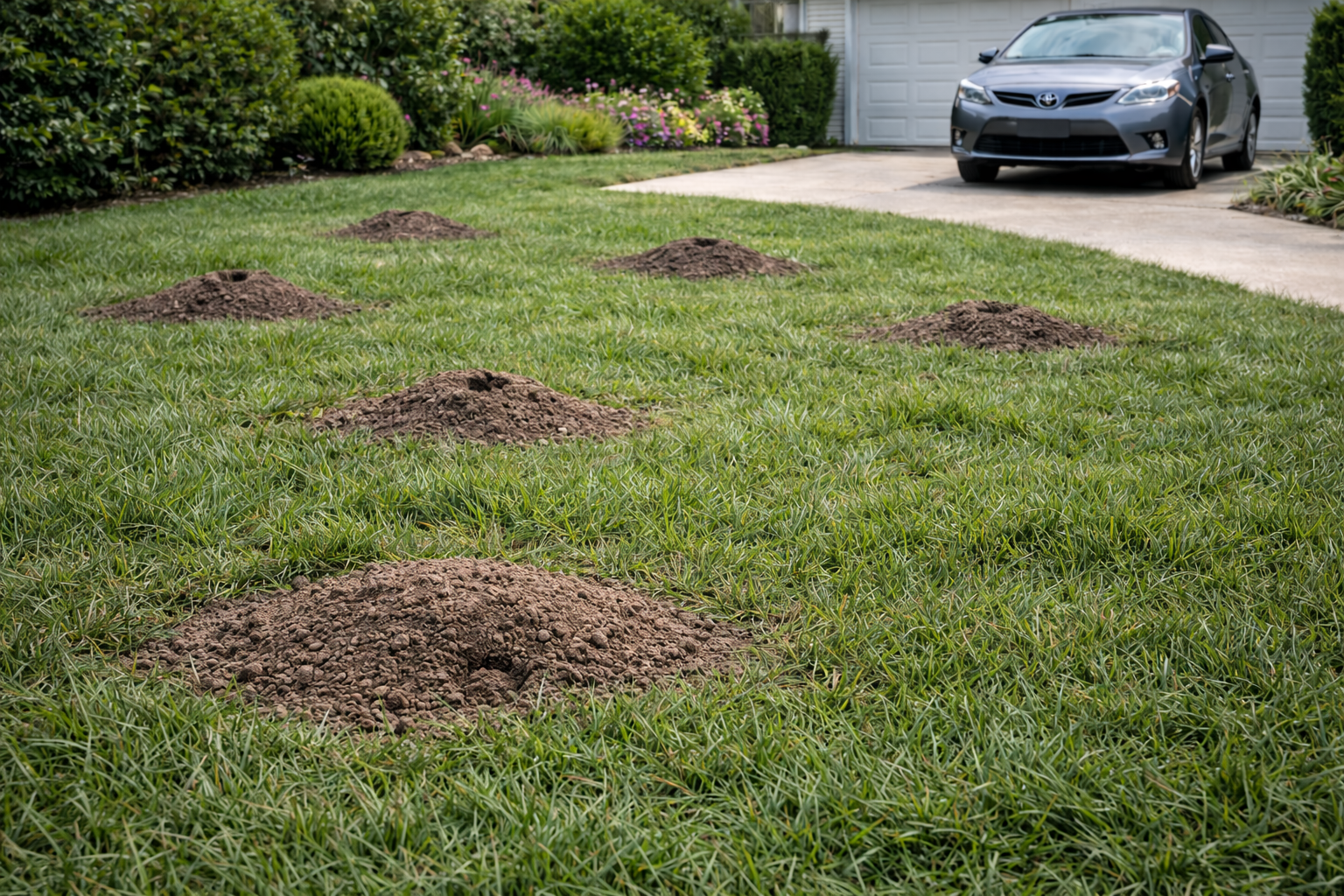
Gopher Activity in West Hills, CA
West Hills, located in the northwestern San Fernando Valley region of Los Angeles, experiences notable gopher activity due to its unique combination of soil composition, residential landscaping, and proximity to undeveloped foothill terrain. The community's transitional position between urban neighborhoods and the Santa Susana Mountains creates ideal conditions for pocket gopher populations to thrive. Property owners throughout West Hills regularly encounter evidence of gopher activity, from visible mounding in yards to damage to irrigation systems and ornamental plantings.
Why West Hills Has Significant Gopher Activity
Several interconnected environmental factors make West Hills particularly conducive to gopher colonization and persistence. The area's soil composition—predominantly composed of sandy loam and decomposed granite typical of the San Fernando Valley's geological formation—provides an ideal medium for burrowing. These soil types are neither too compacted nor too loose, allowing gophers to tunnel efficiently while maintaining structural integrity around their burrow systems.
West Hills' irrigation infrastructure plays a substantial role in supporting gopher populations. Most residential properties in the area rely on sprinkler systems and landscape irrigation to maintain plantings adapted to the region's semi-arid Mediterranean climate. The moisture from these irrigation systems creates favorable conditions for gophers, attracting them to areas where soil remains workable year-round and where moisture-dependent plant roots flourish. The consistent availability of water through residential irrigation contrasts sharply with the naturally drier surrounding hillsides, making landscaped areas particularly attractive.
The area's climate pattern—characterized by warm, dry summers and mild, occasionally wet winters—allows gophers to remain active throughout the year. Unlike colder regions where gophers enter dormancy, West Hills gophers can forage and tunnel continuously. Additionally, West Hills' position at the interface between developed neighborhoods and the Santa Susana Mountains means gopher populations in yards maintain connections to wild populations in adjacent undeveloped terrain. This geographic proximity ensures a constant supply of animals seeking to colonize new territories, particularly following seasonal population fluctuations in foothill habitats.
Common Gopher Species in West Hills
The Botta's pocket gopher (Thomomys bottae) represents the primary gopher species encountered throughout West Hills and the greater San Fernando Valley region. This rodent, named after the Spanish word "bota" (which refers to the animal's external cheek pouches), is distinctly adapted to the soil and climatic conditions of Southern California.
Adult Botta's pocket gophers typically measure between 5 and 7 inches in body length, with an additional 1 to 2 inches of tail. Their coloration ranges from brown to grayish-brown, with slight variations depending on local soil conditions—animals in areas with darker soils sometimes display darker pelage as a form of local adaptation. These rodents possess several specialized physical features that facilitate their subterranean lifestyle: small eyes and ears positioned high on the head, strong front legs with elongated claws, and external cheek pouches lined with fur that function as specialized carrying structures for soil and plant material.
Within West Hills, Botta's pocket gophers exploit the diverse habitat mosaic created by residential properties adjacent to native shrubland and grassland. They establish extensive burrow networks that can extend across multiple yards, connecting individual territories through subsurface tunnels. The burrow systems typically include feeding tunnels near the surface where gophers access plant roots, deeper storage chambers for cached food, and separate nesting areas. Individual gophers maintain territories that vary in size depending on soil quality and resource availability, ranging from approximately 200 to 2,000 square feet.
When Gopher Activity Peaks in West Hills
Gopher activity in West Hills demonstrates distinct seasonal patterns influenced by breeding cycles, moisture availability, and food resource abundance. The primary breeding season extends from January through March, corresponding with West Hills' rainy season when winter precipitation increases soil moisture and triggers germination of spring vegetation. During this period, male gophers expand their territories in search of breeding females, resulting in increased tunneling activity and more frequent surface mounding. Property owners often notice a sharp increase in visible gopher sign during February and March.
Following the breeding season, spring rains—typically occurring between February and April—create optimal conditions for gopher activity. The soil becomes more workable, plant growth accelerates, and gophers have abundant food resources. This combination triggers intense burrow construction and expansion, particularly noticeable in West Hills yards with active irrigation systems that extend moisture availability beyond natural rainfall patterns.
Summer months (June through August) bring reduced but persistent activity. West Hills' hot, dry summers stress the gopher population as soil becomes harder and plants enter dormancy or require deeper root systems to access moisture. However, irrigated residential landscapes remain attractive refuges, maintaining activity levels in yards with consistent water management. Fall months see variable activity levels depending on whether autumn rains arrive; typical West Hills drought conditions from September through December suppress gopher activity somewhat, though animals remain present and continue tunneling in irrigated areas. Winter activity generally subsides compared to spring, though mild West Hills temperatures allow year-round tunneling unlike cooler inland regions.
Signs of Gopher Damage in West Hills Yards
Property owners in West Hills can identify gopher presence through several characteristic signs, with fresh mounding representing the most obvious indicator. Gopher mounds appear as conical or crescent-shaped accumulations of soil, typically 3 to 6 inches in diameter and 2 to 4 inches in height. These mounds form when gophers push soil upward from subsurface burrows, particularly when constructing new tunnels or expanding existing networks. Unlike mole mounds, which tend toward uniform circular shape, gopher mounds often display asymmetrical crescent or kidney shapes because animals push soil to the side rather than directly upward.
Subsurface tunneling creates visible surface depressions and disrupts the integrity of lawns common in West Hills residential areas. As gophers excavate tunnels just beneath the surface, the overlying soil settles, creating visible ridges and valleys. In drought-stressed lawns typical of water-conscious West Hills properties, these surface tunnels become especially obvious as sunken trails crossing yards.
Direct damage to plant material provides additional identification evidence. Gophers clip desirable plants at the soil line, consuming young shoots and foliage. In West Hills landscapes featuring drought-tolerant ornamentals, desert roses, and native plantings, gophers selectively feed on preferred species. Property owners frequently discover their most valuable landscape plants severely damaged while less palatable species remain untouched. Additionally, gophers damage irrigation infrastructure—they gnaw through PVC and drip lines, causing system malfunctions and water waste. In West Hills properties with automated irrigation systems, unexplained valve failures and dry zones often result from gopher interference rather than mechanical failure.
Landscape Considerations for West Hills Properties
West Hills landscaping predominantly features a blend of native California vegetation, Mediterranean-adapted plants, and water-efficient xeriscaping—design approaches that inadvertently create favorable gopher habitat by combining desirable plants with moisture and soil conditions that support gopher populations. Common West Hills landscape plants, including ornamental grasses, flowering shrubs, and drought-tolerant perennials, often attract gophers seeking tender roots and nutritious plant material. Additionally, the area's typical landscape design incorporates mixed hardscape and softscape elements, with many yards featuring mulched planting beds adjacent to irrigated lawn areas—a configuration that provides gophers with both food and ideal burrowing substrate.
Certain plant species commonly incorporated into West Hills landscapes face particularly high gopher predation. These include young fruit trees, vegetable gardens, flowering bulbs, and tender perennials. The area's warm climate supports year-round cultivation of food gardens, making residential vegetable plots especially vulnerable to gopher damage. Conversely, some established native plants and xerophytic species demonstrate greater resistance, though no plant is completely gopher-proof.
West Hills properties featuring extensive hardscape—driveways, patios, and artificial turf—generally experience fewer gopher problems because these features eliminate suitable burrowing habitat and reduce available food resources. However, most West Hills residents desire aesthetically pleasing yards with living plants, creating an inherent tension between landscape preferences and gopher management. Understanding which plants attract gophers, how irrigation patterns influence activity, and recognizing early signs of infestation allows West Hills property owners to implement informed management decisions that balance environmental concerns with personal property protection.
For professional gopher control in Southern California, visit Rodent Guys — serving Los Angeles, Orange, San Bernardino, and Riverside counties.