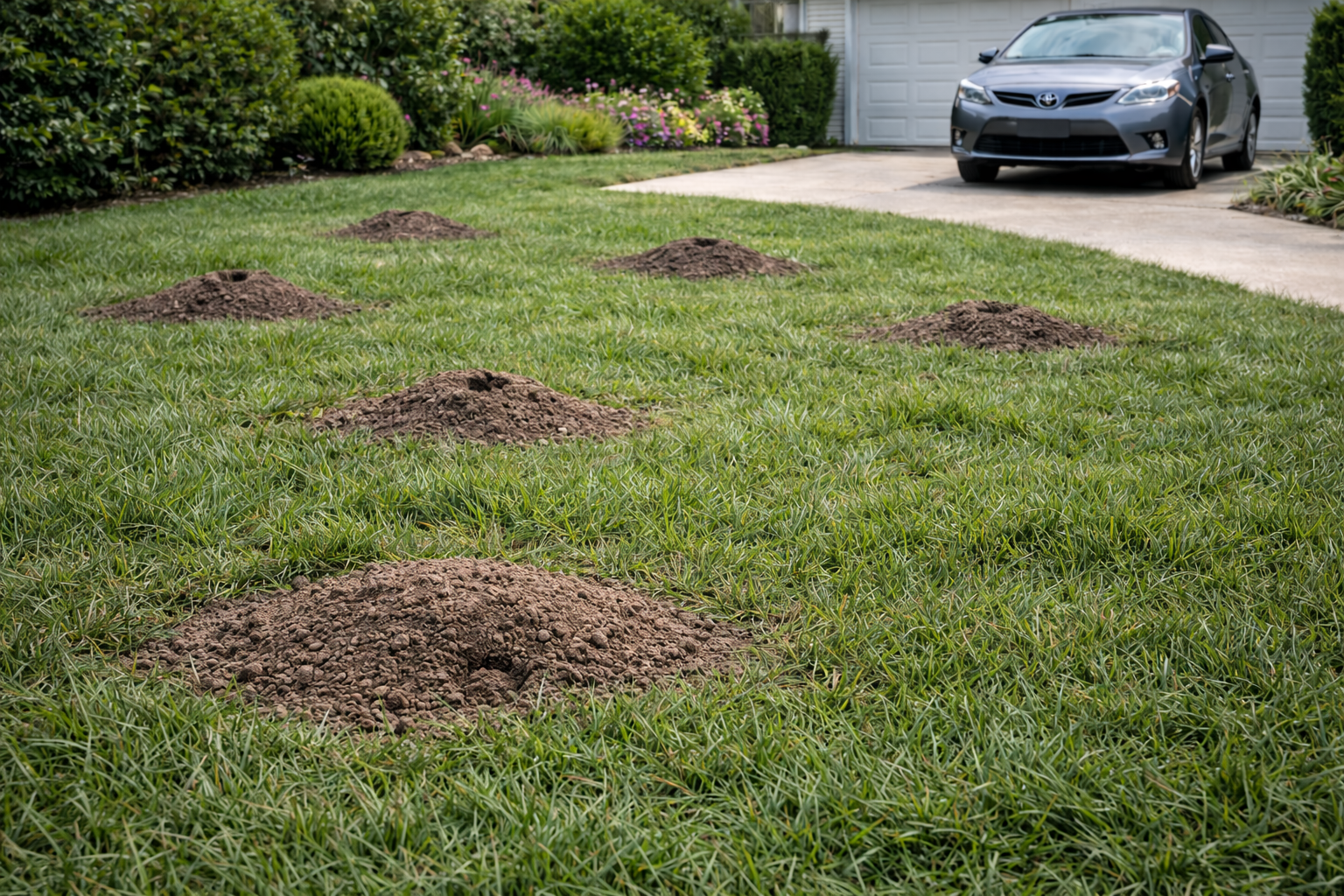
Gopher Activity in Whittier, CA
Gophers are a notable presence throughout residential and semi-rural areas of Whittier, a mid-sized city in Los Angeles County situated in the Gateway Cities region. The combination of favorable soil conditions, widespread residential landscaping, and proximity to undeveloped land creates an environment where gopher populations thrive year-round. Property owners across Whittier's diverse neighborhoods frequently encounter evidence of gopher activity, from characteristic mounding in lawns to damage in gardens and irrigation systems.
Why Whittier Has Significant Gopher Activity
Whittier's geographic and climatic characteristics make it particularly suitable for gopher populations. The city sits on alluvial plains with primarily sandy loam and clay loam soils that are relatively easy for gophers to excavate and tunnel through. These soil types, deposited by historical water movement from the San Gabriel River and its tributaries, provide ideal conditions for burrow construction and maintenance.
The local climate—Mediterranean with mild winters and warm, dry summers—allows gophers to remain active throughout most of the year. Winter temperatures in Whittier rarely drop below freezing, eliminating the hibernation period that limits gopher populations in colder regions. The city's annual rainfall averages 15 to 17 inches, concentrated primarily between November and March, which softens soil and promotes vegetation growth that gophers depend on for food.
Whittier's landscape design patterns have inadvertently supported gopher populations. Residential properties throughout neighborhoods like Uptown Whittier, East Whittier, and South Whittier feature extensive irrigation systems, planted ornamental gardens, fruit trees, and landscaped yards. These irrigated zones create persistent moisture and abundant food sources that sustain gopher colonies even during the dry summer months. Additionally, Whittier's proximity to larger undeveloped areas, including portions of the Puente Hills to the north and southeast, means wild gopher populations naturally expand into residential zones during population growth cycles.
Common Gopher Species in Whittier
The Botta's pocket gopher (Thomomys bottae) is the primary gopher species found in Whittier and throughout Los Angeles County. This species is well-adapted to the local soil and climate conditions and has established robust populations across the city's urban and suburban zones.
Botta's pocket gophers are medium-sized rodents, typically weighing between 2 and 4 ounces, with a body length of 5 to 7 inches plus a short, sparsely-haired tail. They possess powerful front legs with large claws specifically adapted for digging, small eyes suited to their underground lifestyle, and pronounced external cheek pouches—the "pockets"—used for carrying food and nesting materials. Their fur coloration varies but is generally brown or grayish-brown, providing camouflage in soil environments.
In Whittier, Botta's pocket gophers establish territories in both compacted urban soils and the naturally loose alluvial deposits common throughout the city. They create extensive burrow systems that can extend 100 feet or more, with multiple entrance and exit points. Individual gophers are generally solitary and territorial, though burrow systems sometimes overlap or connect. These animals are primarily herbivorous, feeding on roots, bulbs, tubers, and above-ground vegetation within reach of their burrow entrances. Their preference for plant material makes them particularly problematic in yards with gardens, landscaping, and irrigation infrastructure that gophers can readily access.
When Gopher Activity Peaks in Whittier
Gopher activity in Whittier shows distinct seasonal patterns influenced by the local climate and breeding cycles. The breeding season typically begins in January and extends through March, coinciding with Whittier's winter rainfall. During this period, male gophers expand their territory in search of mates, creating increased tunneling activity visible as new mounds appearing in yards and open areas. This breeding season represents the peak period for noticeable gopher signs on residential properties.
Spring months—March through May—mark a secondary activity peak as young gophers born during winter develop and begin establishing their own territories. Juvenile gophers disperse from maternal burrows, leading to visible tunneling and mounding across broader areas. This dispersal phase often coincides with Whittier's transition from the wet winter season to the drier spring and early summer, when soil conditions remain favorable for digging.
Summer and early fall bring slightly reduced surface activity as established gophers focus on maintaining existing burrow systems and pursuing moisture deeper underground during the region's dry months. However, in irrigated residential yards, gopher activity may remain steady or even increase throughout summer, as artificial water sources sustain both vegetation and gopher populations. Fall activity again increases slightly as animals prepare for winter by stockpiling food in underground chambers and repairing burrow systems before the winter rains arrive.
Signs of Gopher Damage in Whittier Yards
The most obvious indicator of gopher presence is the characteristic mound—a crescent or horseshoe-shaped pile of loose soil pushed up from burrow excavation. In Whittier's typical sandy loam soils, these mounds are usually 4 to 12 inches in diameter and 2 to 6 inches high. Unlike mole mounds, which are symmetrical and conical, gopher mounds have a distinctive asymmetrical shape created when the animal pushes soil out from an angled tunnel. Property owners across Whittier frequently observe multiple mounds appearing overnight in lawns, gardens, and landscaped areas.
Gophers cause substantial damage to irrigation systems common throughout Whittier properties. As they tunnel, they chew through plastic irrigation lines, creating leaks that waste water and compromise system functionality. Damage often occurs at depths of 6 to 18 inches, where irrigation lines typically run beneath turf and landscape plantings. The cost and effort required to locate and repair damaged irrigation lines creates ongoing maintenance challenges for property owners.
Above-ground vegetation damage includes wilting and death of plants, shrubs, and small trees as gophers sever roots or consume them from beneath the soil surface. Ornamental plants, vegetables, and fruit trees throughout Whittier neighborhoods show visible signs of gopher damage—stunted growth, yellowing foliage, or sudden collapse of previously healthy plants. In some cases, entire plants are pulled underground as gophers extract them from below. Lawn damage manifests as irregular patches of dead or dying grass corresponding to tunneling activity beneath the surface.
Landscape Considerations for Whittier Properties
Whittier's landscaping patterns reflect both Southern California aesthetic preferences and practical climate adaptations. Residential properties throughout the city feature combinations of turf grass, drought-tolerant plants, ornamental shrubs, citrus trees, and vegetable gardens—all of which are vulnerable to gopher damage. Many homes in established neighborhoods like Uptown Whittier and central residential zones have mature landscaping with irrigation systems installed decades ago, creating complex underground infrastructure that gophers readily exploit.
Certain plant species particularly attractive to Whittier gophers include roots of ornamental bulbs, vegetables like carrots and radishes, alfalfa where present on larger properties, and the tender roots of fruit trees including citrus, stone fruits, and avocados—species common in the region. Gophers also favor certain ground covers and succulent plants popular in contemporary Whittier landscaping. Conversely, some plants including California native species, certain cacti, and plants with toxic or strongly aromatic foliage receive less attention from gophers, though they are not entirely avoided.
The contrast between hardscape features like patios, pathways, and concrete areas versus soft landscape plantings influences gopher distribution on Whittier properties. Gophers concentrate tunneling activity in vegetated areas, around irrigation infrastructure, and in loose, easily-worked soils. Properties with extensive turf and dense plantings experience more visible gopher activity than those dominated by hardscape features. However, even heavily hardscaped properties may harbor gopher colonies in remaining planted areas, using them as foraging zones while maintaining burrows in adjacent undisturbed soil.
For professional gopher control in Southern California, visit Rodent Guys — serving Los Angeles, Orange, San Bernardino, and Riverside counties.