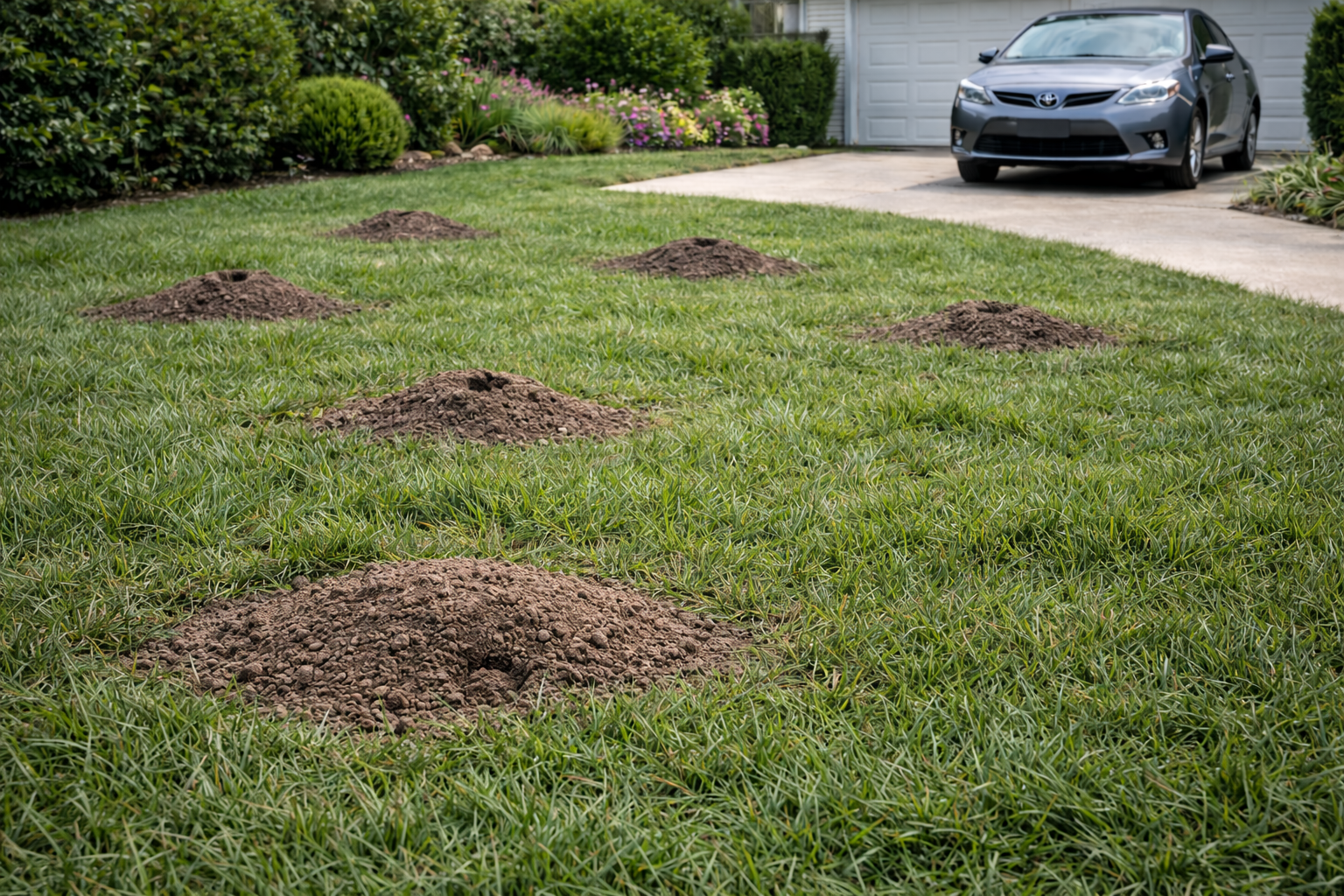
Gopher Activity in Woodland Hills, CA
Gophers are a persistent presence across Woodland Hills, a hillside community in the Santa Monica Mountains' foothills located in northwestern Los Angeles. The combination of the area's distinctive soil composition, year-round irrigation systems, and proximity to native chaparral habitat creates ideal conditions for pocket gopher populations to thrive in both residential yards and undeveloped spaces throughout the community.
Why Woodland Hills Has Significant Gopher Activity
Woodland Hills' geography and environmental conditions make it particularly suitable for gopher populations. The community sits at elevations ranging from approximately 500 to 2,000 feet above sea level, positioned in the transitional zone between developed residential areas and the Santa Monica Mountains' native shrubland. The underlying soil throughout most of Woodland Hills consists primarily of Ramona silty loam and Tujunga sandy loam—soil types that are moderately to highly suitable for burrowing activity. These soils have adequate structural integrity to maintain tunnel systems while remaining workable enough for gophers to excavate efficiently.
The region's semi-arid Mediterranean climate, characterized by dry summers and cool, wet winters, supports vegetation that gophers find attractive. Winter and early spring rainfall, typically occurring between November and April, stimulates root growth and herbaceous plant development that serves as primary food sources for pocket gophers. Additionally, the extensive use of irrigation systems in Woodland Hills yards maintains soil moisture year-round, extending the gopher's active period well beyond what naturally occurs in non-irrigated areas. This artificial water availability essentially creates favorable conditions during the typically dry summer months when gophers would normally experience reduced activity.
Woodland Hills' proximity to undeveloped chaparral habitat in the adjacent Santa Monica Mountains means gopher populations from native areas continuously move into residential zones, particularly in developments at the community's eastern and northeastern edges. The fragmented nature of residential lots interspersed with open space allows gophers to migrate between suitable habitats with minimal barriers.
Common Gopher Species in Woodland Hills
The Botta's pocket gopher (Thomomys bottae) is the primary gopher species active in Woodland Hills and throughout the Los Angeles basin. Named for Spanish naturalist Juan Vicente Botta, this species measures approximately 5 to 6 inches in body length, with a relatively short tail of 1 to 1.5 inches. Adults typically weigh between 2 and 3.5 ounces, though individuals in resource-rich environments may exceed this range. Botta's pocket gophers display coloration ranging from dark brown to grayish-brown dorsally, with lighter-colored undersides.
Physical characteristics unique to this species include prominent claws on the forefeet—specialized adaptations for excavating tunnel systems—and external cheek pouches that give the family its common name. These pouches extend from the mouth along the sides of the face and can be everted (turned inside-out) for cleaning. The eyes are small and positioned laterally, reflecting the species' primarily subterranean lifestyle where vision is less critical than tactile sensitivity.
In Woodland Hills specifically, Botta's pocket gophers construct burrow systems that often extend 200 feet or more horizontally, with depths varying based on soil characteristics and seasonal moisture availability. The species exhibits solitary behavior except during breeding season, with individual territories typically encompassing a quarter-acre or less in resource-rich residential landscapes. Gophers in Woodland Hills yards with established irrigation systems may maintain smaller territories due to increased food availability and optimal soil conditions year-round.
When Gopher Activity Peaks in Woodland Hills
Gopher activity in Woodland Hills follows seasonal patterns influenced by the region's precipitation cycle and breeding biology. The primary breeding season occurs between January and March, coinciding with increased winter and early spring rainfall that stimulates herbaceous plant growth. During this period, male gophers expand their range and excavation activity as they search for mates, resulting in noticeably increased mounding and tunneling activity visible throughout residential yards.
Activity remains elevated through late spring (April and May) as females establish and expand burrow systems in preparation for raising young. The second period of heightened activity occurs in late summer (August through October), when juvenile gophers disperse from maternal burrows to establish their own territories. This dispersal phase often coincides with the beginning of fall irrigation season in Woodland Hills, as property owners increase watering to combat the region's dry season, inadvertently creating favorable conditions that may attract gophers seeking optimal soil moisture.
During the driest summer months (June and July), gopher activity may appear to decrease in non-irrigated areas as soil compaction increases and food sources become scarce. However, in irrigated Woodland Hills yards, gophers typically remain active throughout summer because consistent moisture maintains suitable tunnel conditions and supports plant growth. The cool season from November through December shows variable activity levels depending on rainfall patterns that particular year. Winters with above-average precipitation typically produce more visible gopher activity, while drier winters may show reduced surface evidence despite ongoing subsurface tunneling.
Signs of Gopher Damage in Woodland Hills Yards
The most immediately recognizable sign of gopher activity is the characteristic mound of freshly excavated soil. These mounds appear throughout Woodland Hills yards as crescent or fan-shaped accumulations of soil, typically 3 to 6 inches in diameter and 2 to 4 inches in height. Gophers create mounds as they push loose soil from tunnel systems to the surface. The mound's shape indicates the direction of tunnel extension: the open side of the crescent shape faces the direction the tunnel extends.
Damage to irrigation infrastructure is particularly common in Woodland Hills properties because of the extensive network of drip lines, soaker hoses, and buried irrigation pipes throughout the community. Gophers tunneling through landscape beds frequently sever irrigation lines while excavating, creating water leaks that waste resources and may cause localized flooding or soil erosion. Affected irrigation lines typically show damage patterns consistent with gnawing rather than crushing, distinguishing gopher damage from other causes.
Plant damage manifests as irregular gnawing on roots, bulbs, and underground plant stems. Gophers in Woodland Hills yards frequently target vegetable gardens, ornamental bulbs, fruit tree roots, and succulent plants. Root damage may not become immediately apparent above ground; affected plants may appear stressed, stunted, or may suddenly wilt despite adequate watering. Trees in established landscapes may show girdled bark near the soil surface where gophers have fed on exposed roots or lower trunk areas. Additionally, subsidence or settling of soil surface occurs when extensive tunnel networks collapse, creating soft or spongy areas in lawns and landscape beds.
Landscape Considerations for Woodland Hills Properties
Woodland Hills' typical landscaping aesthetic emphasizes Mediterranean-inspired design featuring drought-tolerant plants, decorative rock, and hardscaping elements suited to the region's semi-arid conditions. This landscaping style actually creates mixed outcomes regarding gopher activity. While drought-tolerant shrubby plants like California buckwheat, sage species, and manzanita may be less attractive to gophers than tender herbaceous perennials, the substantial ground coverage these plants provide can mask gopher activity from property owners, allowing populations to establish undetected.
Landscape beds mulched with bark or wood chips—common in Woodland Hills properties—provide excellent protective cover for gophers expanding surface tunneling. The organic matter in these mulched areas also attracts some gopher food sources, including insects and the tender roots of landscape plantings. Conversely, hardscaped areas featuring decorative stone, decomposed granite, or pavers experience less gopher activity in direct proportion to their permeability and depth. Shallow hardscape materials may still allow gopher tunneling underneath, however.
Irrigation system design significantly impacts gopher vulnerability in Woodland Hills landscapes. Older properties with traditional spray irrigation systems typically experience more extensive gopher damage because the concentrated moisture and associated plant growth attract gophers to specific yard zones. Newer drip-irrigation systems, increasingly common in Woodland Hills due to conservation mandates and water restrictions, create more dispersed moisture patterns that may be less attractive to tunneling gophers, though localized damage still occurs along irrigation line routes.
Specific plant selection influences gopher activity patterns. Gophers in Woodland Hills show clear preferences for certain plants, including bulbs (especially tulips and daffodils), clover and legumes, carrots and root vegetables, young fruit tree roots, and tender succulents. Conversely, gophers typically avoid plants with toxic or unpalatable characteristics, including California poppies, foxgloves, digitalis species, and castor beans. However, avoidance planting strategies alone rarely eliminate gopher problems in Woodland Hills yards because the gophers' primary motivation is accessing accessible soil for tunnel expansion—food preference becomes secondary to suitable burrowing substrate.
For professional gopher control in Southern California, visit Rodent Guys — serving Los Angeles, Orange, San Bernardino, and Riverside counties.