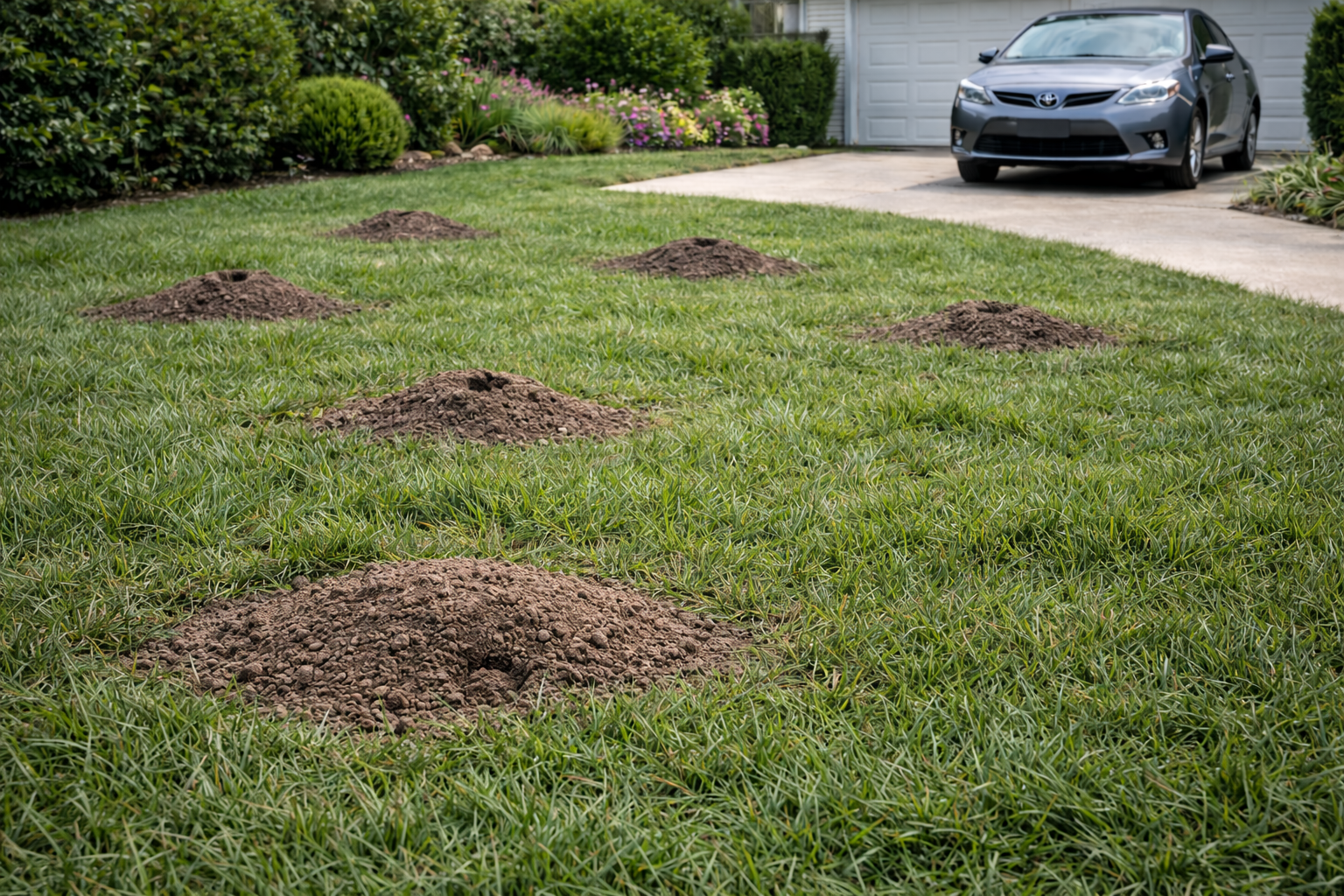
Gopher Activity in Yorba Linda, CA
Yorba Linda, located in northwestern Orange County, experiences regular gopher activity throughout residential and semi-rural areas. The combination of year-round mild climate, abundant irrigation systems, and proximity to undeveloped hillsides creates ideal conditions for pocket gopher populations. Property owners across neighborhoods from the foothills near the Santa Ana Mountains down through the valley floor frequently encounter evidence of gopher burrows and tunneling damage.
Why Yorba Linda Has Significant Gopher Activity
Yorba Linda's geographical position and environmental characteristics make it particularly susceptible to gopher colonization. The region sits at the transition zone between the Santa Ana foothills and the Orange County coastal plain, with elevations ranging from approximately 150 feet to over 1,000 feet in the northern hillside areas. This diverse topography creates multiple microhabitats suitable for pocket gopher establishment.
The soil composition throughout Yorba Linda varies considerably by location. Lower elevation properties typically feature silty loam and clay loam soils characteristic of the former floodplain of the Santa Ana River. These soil types are moderately workable for gopher burrowing, though not as easy to tunnel through as sandy loams. The hillside communities to the north and east encounter more clay-heavy soils mixed with decomposed granite and rocky substrates. Paradoxically, while rocky soil presents burrowing challenges, gophers often concentrate in areas where soil conditions become more favorable near landscaped zones.
The irrigation infrastructure throughout Yorba Linda—essential given the region's semi-arid climate with average annual rainfall near 12 inches—provides consistent soil moisture that supports both vegetation and gopher populations year-round. Residential irrigation systems in established neighborhoods, combined with maintained green spaces, create food sources and workable soil conditions even during dry months.
Proximity to undeveloped areas, particularly the foothills managed by the Irvine Company and various open space preserves, ensures continuous gopher populations moving into developed residential areas. The gradual transition from suburban development to wild chaparral habitat allows gophers to migrate seasonally toward irrigated properties.
Common Gopher Species in Yorba Linda
The Botta's pocket gopher (Thomomys bottae) is the dominant gopher species throughout Yorba Linda and the broader Orange County region. This medium-sized rodent measures approximately 4.5 to 6 inches in body length, with a relatively short tail of 1 to 1.5 inches. Botta's pocket gophers display brownish-gray fur coloration, though regional variations occur—Yorba Linda populations typically show tan to dark brown tones depending on soil composition in their specific area.
These gophers derive their common name from the fur-lined cheek pouches used to transport food and nesting material through their tunnel systems. They are solitary, highly territorial animals with individuals maintaining separate burrow networks except during breeding season. Adult males are considerably larger than females, which is readily apparent when gophers are directly observed, though such observation is rare given their primarily subterranean lifestyle.
Botta's pocket gophers construct extensive tunnel networks ranging from 100 to 300 feet, depending on food availability and soil conditions. In Yorba Linda's residential areas, gophers establish primary burrows near food sources—typically garden beds, lawns, and landscaped areas with favorable vegetation. They maintain multiple access points and nesting chambers within their territories, with tunnel depths varying from near-surface runways to deeper burrows reaching 3 feet or more during dry seasons when gophers seek subsurface moisture.
When Gopher Activity Peaks in Yorba Linda
Gopher activity in Yorba Linda demonstrates clear seasonal patterns driven by breeding cycles and rainfall patterns. The primary breeding season occurs from January through March, coinciding with the region's rainy season. During this period, soil moisture increases significantly, making tunnel construction and maintenance easier. Males become notably more active and mobile during breeding season, expanding their tunnel systems and occasionally moving between established burrows in search of receptive females.
The spring months of March through May typically show the highest visible gopher activity, as newly constructed mounds proliferate in residential yards. The combination of post-breeding population dispersal and the lush vegetation growth following winter rains creates abundant food sources. Young gophers born in late winter and early spring quickly become independent, further increasing the number of active individuals.
Late spring and early summer (May through July) see gophers concentrating their activity in areas with persistent irrigation, as natural soil moisture declines. During this transition period, property owners in Yorba Linda often notice increased mounding activity in irrigated lawn areas and garden beds. Summer months typically show reduced surface activity as gophers tunnel deeper seeking moisture and cooler soil temperatures.
Fall months bring renewed surface activity as gophers prepare burrow systems for the coming winter and begin storing food. However, the extended Orange County dry season (typically May through October) keeps gopher populations somewhat suppressed compared to early spring activity levels. Any significant rainfall during fall or early winter immediately stimulates gopher activity throughout the region.
Signs of Gopher Damage in Yorba Linda Yards
The most visible indicator of gopher presence is mound formation. Gophers create mounds by pushing excavated soil through tunnel openings, resulting in distinctive cone-shaped or horseshoe-shaped accumulations ranging from 2 to 6 inches high and 3 to 8 inches in diameter. In Yorba Linda's sandy loam soils, mounds tend toward the cone shape and often appear loosely packed. In clay-heavy soils common to northern hillside properties, mounds are more compacted and sometimes show a characteristic crescent shape as gophers push soil laterally.
Sunken areas or settling in lawns indicate tunnel collapse, a common occurrence after heavy irrigation or rainfall when soil moisture weakens tunnel roof structural integrity. These depressions, sometimes spanning several feet, frequently appear in the days following Yorba Linda's rare but significant rainstorms or after extended landscape irrigation cycles.
Root damage to ornamental plants and vegetables represents another major sign of gopher activity. Gophers feed on roots, bulbs, and tubers, and they clip vegetation at or below ground level while feeding. Property owners may notice plants wilting or dying despite adequate irrigation—investigation reveals severed root systems characteristic of gopher feeding activity. Vegetables commonly damaged in Yorba Linda gardens include carrots, potatoes, radishes, and various squash family plants.
Gophers sometimes damage irrigation systems directly by burrowing into drip lines, mainlines, and underground sprinkler components. Clay pipes, flexible drip tubing, and soft plastic fittings are particularly vulnerable. Sudden loss of water pressure in isolated lawn areas or unexpected wet spots near burrow mounds can indicate irrigation system compromise by gophers.
Landscape Considerations for Yorba Linda Properties
Yorba Linda's landscape design reflects both Mediterranean influences and the region's semi-arid climate. Modern properties increasingly feature drought-tolerant plantings with native California species, rock mulch, hardscape features, and reduced turf areas. Older established neighborhoods, particularly in central Yorba Linda near the downtown area, maintain more traditional water-intensive landscapes with extensive lawns, ornamental shrubs, and shade trees.
This diversity creates variable gopher vulnerability across the city. Properties with expansive lawn areas and extensive irrigation are highly attractive to gophers, providing both food through grass roots and ideal burrowing conditions through consistent soil moisture. Vegetable gardens and raised planting beds, common features in Yorba Linda's many acre-lot properties in the foothills, are particularly vulnerable to gopher exploitation.
Hardscape-dominant landscapes—featuring walkways, patios, rock mulch, and landscape boulders—naturally discourage gopher establishment by reducing accessible soil space and preferred food sources. Xeriscaping with deep-rooted native plants like California buckwheat, toyon, and sage species provides less attractive forage for gophers compared to shallow-rooted ornamental plants and lawn grasses.
Property size significantly influences gopher population dynamics in Yorba Linda. Larger properties typical of foothill neighborhoods offer more extensive burrow territory and diverse habitat niches, often supporting higher gopher densities. Smaller lots in more densely developed areas can become intensely utilized by individual gophers despite limited total area, particularly when concentrated irrigation systems maintain favorable conditions year-round.
For professional gopher control in Southern California, visit Rodent Guys — serving Los Angeles, Orange, San Bernardino, and Riverside counties.