Pet-Safe Gopher Control: Why Trapping Is the Only Safe Option for Pet Owners
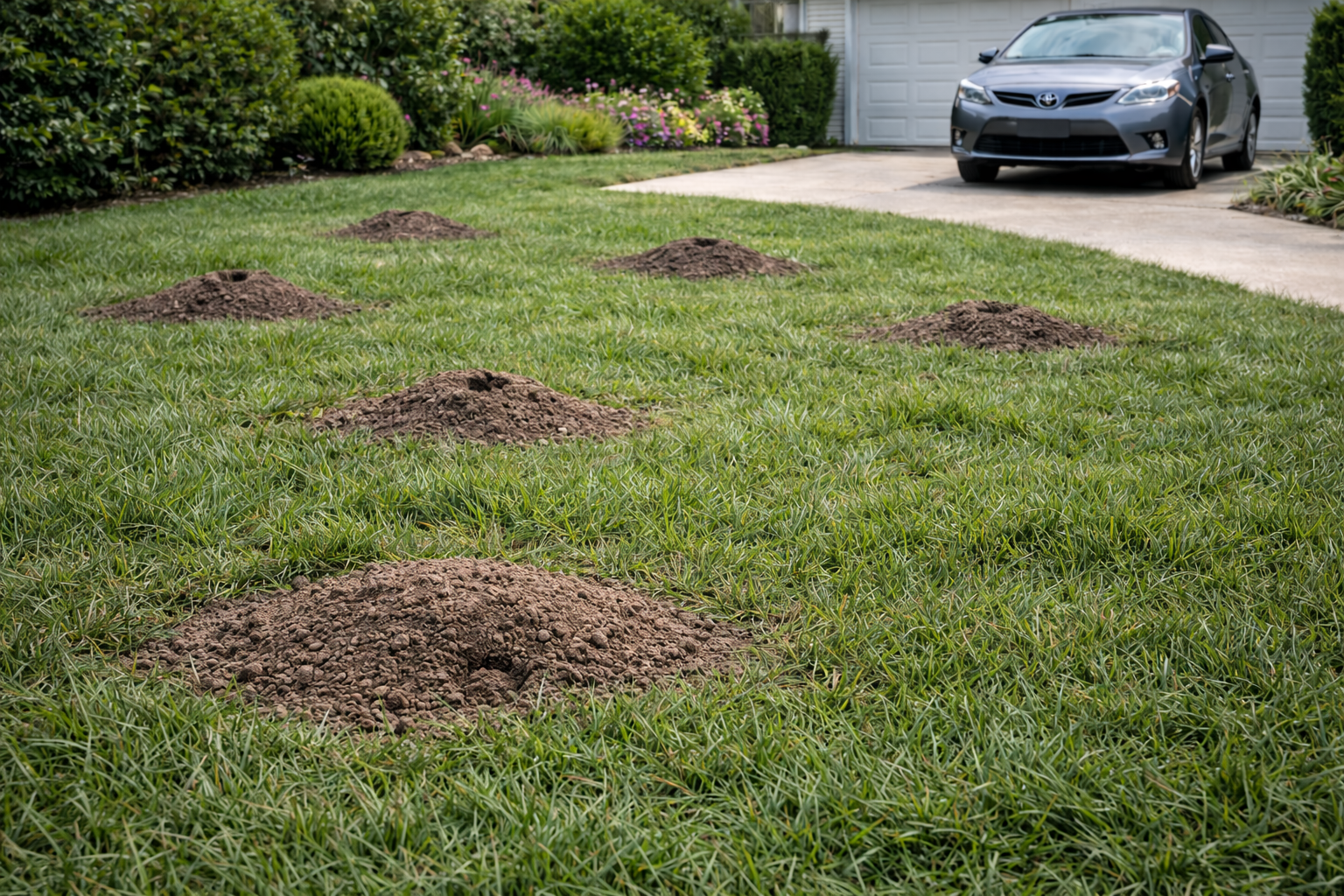
If you have dogs or cats, gopher poison bait is not an option. The risk of secondary poisoning — where a pet ingests a poisoned gopher or contacts bait — is too serious to ignore. Chemical-free trapping is the only method that eliminates gophers without risking your animals.
How Gopher Poison Harms Pets
Direct ingestion: Dogs readily dig up and eat bait stations or poisoned gophers near the surface. Zinc phosphide and strychnine — common gopher bait ingredients — are highly toxic to dogs and can be fatal in small amounts.
Secondary poisoning: A dog or cat that eats a recently poisoned gopher absorbs toxin from the carcass. Anticoagulant baits accumulate in tissue — a pet eating multiple poisoned gophers over several days may receive a lethal dose without any single exposure being obvious.
Indirect exposure: Unconsumed bait can be carried to the surface or exposed by rain. Children and pets can encounter loose bait days or weeks after application.
Chemical-Free Trapping: The Safe Alternative
Underground trapping uses no chemicals and leaves no residue in your yard. Traps are set inside the tunnel system, below ground, where pets cannot access them. The gopher is caught and removed — no poison enters your yard's ecosystem. This method is also safe for raptors, which are natural gopher predators and a valuable part of Southern California's ecosystem.
Questions to Ask Your Gopher Exterminator
Before hiring any exterminator, ask: Do you use poison bait or rodenticide? Are your methods safe for dogs and cats? Do you offer a guarantee? A reputable chemical-free exterminator answers all of these clearly and confidently.
Exactly How Underground Trapping Works — and Why It's Completely Pet-Safe
Professional underground gopher trapping places the trap directly inside the gopher's tunnel system, 12-18 inches below the soil surface. The tunnel entrance is covered with soil after trap placement, restoring the tunnel to the closed, dark environment gophers prefer. Pets cannot reach or interact with the trap at any point in the service cycle — the trap sits below ground where even digging dogs don't typically reach tunnel depth. No poison, no bait station, no chemical residue anywhere on the property's surface. The gopher is caught, removed, and the tunnel is filled in. That's the entire process.
Secondary Poisoning Risk from Anticoagulant Baits
Anticoagulant rodenticides — the active ingredient in most commercial gopher and rodent baits sold at home improvement stores — work by preventing blood clotting. A gopher that eats enough bait dies over 3-7 days as internal bleeding accumulates. During those 3-7 days, the gopher carries lethal quantities of anticoagulant in its tissue. If a dog or cat catches and eats that gopher — which pets readily do when they find a slow, disoriented animal — the pet absorbs a dose of anticoagulant. Cumulative exposure across multiple poisoned gophers can reach a lethal dose for the pet without any single ingestion seeming obvious.
Cats are particularly vulnerable because they hunt gophers above ground and readily consume them. Dogs — especially terriers, dachshunds, and other digging breeds — ingest bait directly by digging up bait stations or eating partially-consumed bait pellets carried to the surface by gophers.
Symptoms of Secondary Poisoning in Dogs and Cats
Anticoagulant rodenticide poisoning in pets typically appears 2-5 days after exposure. Early symptoms include lethargy, reduced appetite, weakness, and pale gums (from internal bleeding). Advanced symptoms include blood in urine or stool, nosebleeds, unexplained bruising, difficulty breathing (from lung bleeding), and collapse. Dogs may show joint pain and swelling as blood collects in joint spaces. If untreated, anticoagulant poisoning is often fatal within 5-10 days of exposure.
If you suspect your pet has ingested rodenticide or a rodenticide-poisoned animal, contact your veterinarian or pet poison hotline immediately. Vitamin K1 is the specific antidote but must be administered before significant internal bleeding occurs for best outcomes.
What to Tell Your Veterinarian
If you've used rodenticide on the property or your neighbors have, tell your veterinarian the specific product name and active ingredient if you know it (active ingredients include brodifacoum, bromadiolone, difethialone, diphacinone, and chlorophacinone among others). Different anticoagulants have different half-lives and treatment durations — second-generation anticoagulants like brodifacoum require weeks of vitamin K1 treatment, while first-generation products like diphacinone require shorter treatment. If you don't know the product, say so; standard treatment protocols cover both. Bring any remaining bait packaging with you.
Why Trapping Is the Only Truly Pet-Safe Professional Method
Several methods are marketed as "safer" alternatives to rodenticide bait, but only trapping eliminates pet exposure risk entirely. Repellents (castor oil, vibration stakes) don't remove gophers — they produce limited temporary deterrence at best. Carbon monoxide (CO2) treatment is safer than rodenticide but still involves chemicals introduced underground; residual exposure is possible if pets dig into treated tunnels shortly after service. Trapping uses no chemicals, no gas, no bait — there is nothing for pets to ingest, absorb, or contact. That's the entire point.
Why OC and LA Pet Owners Specifically Request Pet-Safe Methods
Orange County and Los Angeles County have some of the highest residential pet ownership rates in the United States. Combined with California's 2020 restrictions on second-generation anticoagulant rodenticides (AB 1788) and high public awareness of wildlife secondary poisoning, OC and LA homeowners are significantly more likely to explicitly request pet-safe and rodenticide-free pest control than homeowners in most other US regions. Rodent Guys service volume confirms this — approximately 80% of inbound OC and LA service calls mention pet-safety as a primary concern.
Pet-Safe Control Cost Comparison
Chemical-free trapping (pet-safe):
Rodenticide bait service (not pet-safe): Typical cost is lower upfront ($150-250 per treatment) but carries documented secondary poisoning risks. Hidden costs include potential veterinary bills (rodenticide poisoning treatment runs $1,500-5,000), pet hospitalization, and in worst cases the loss of a pet.
Professional chemical-free trapping is typically the least expensive option over any multi-year timeframe when considering total risk-adjusted cost for households with pets.