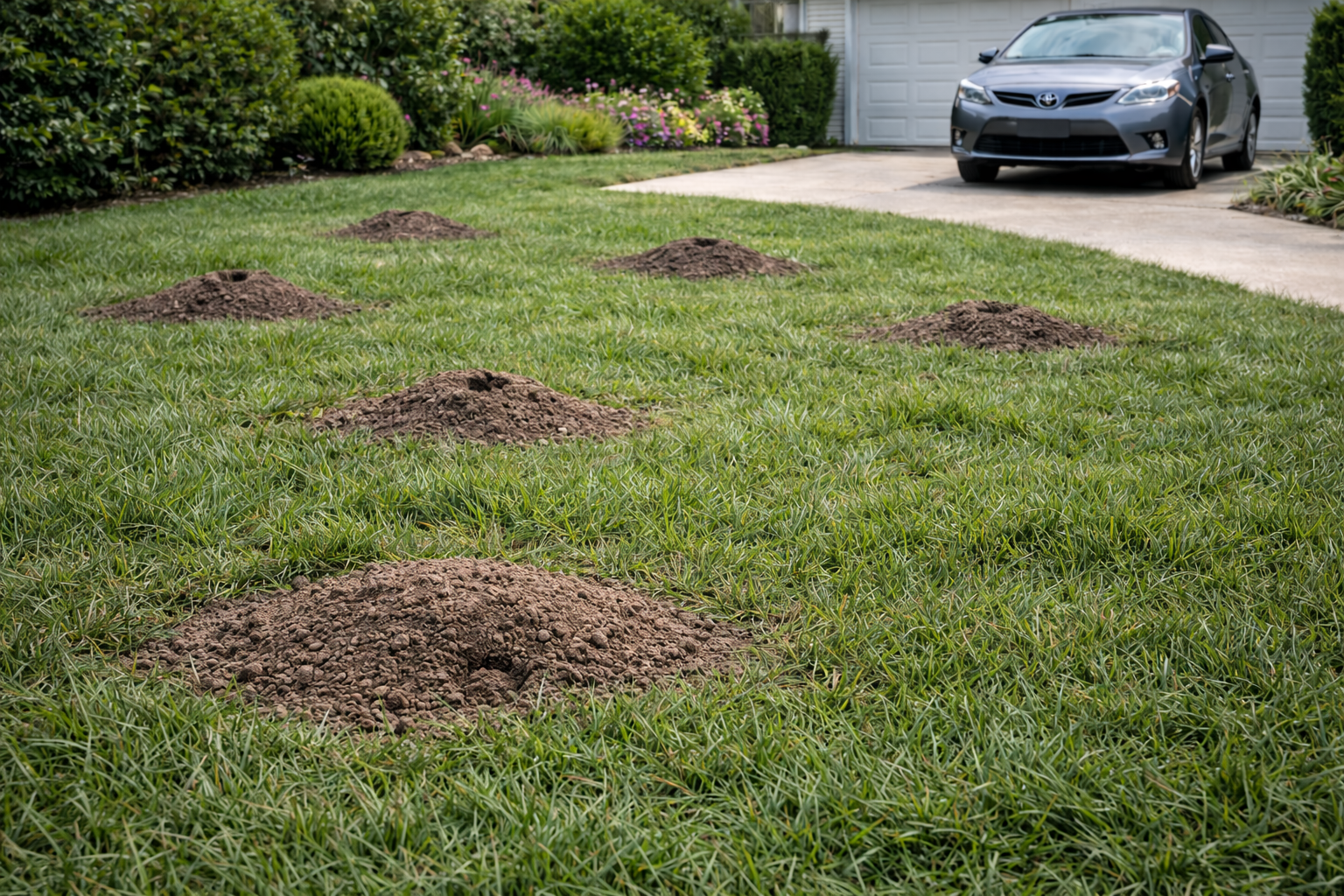
Gopher Activity in Goleta, CA
Goleta, situated in southern Santa Barbara County between the Pacific Ocean and the Santa Ynez Mountains, experiences substantial gopher populations that affect residential and commercial properties throughout the community. The combination of favorable soil conditions, year-round irrigation systems, and proximity to natural open spaces creates an ideal environment for pocket gophers to thrive. Understanding the patterns and causes of gopher activity helps property owners recognize problems early and make informed decisions about land management.
Why Goleta Has Significant Gopher Activity
Goleta's geography and environmental conditions align perfectly with pocket gopher ecology. The region sits atop predominantly sandy loam and clay loam soils that are ideal for burrowing—these soil types are neither too compacted nor too loose, allowing gophers to excavate extensive tunnel networks with manageable effort. The area's mild Mediterranean climate means gophers can remain active throughout much of the year, particularly during cooler months when soil moisture levels are optimal.
The Santa Barbara County Goleta Valley benefits from consistent agricultural and landscape irrigation systems. Residential properties, golf courses, parks, and commercial landscapes depend on regular watering to maintain vegetation in the semi-arid climate. This artificial moisture encourages earthworm and insect populations that gophers feed upon, while simultaneously softening soil to make tunneling easier. Additionally, Goleta's proximity to the Los Olivos foothills, the Ellwood area's native grasslands, and other semi-wild spaces means that gopher populations naturally migrate downslope toward developed neighborhoods where food and water availability increase. The transition zones between wild and developed land—particularly in areas like Goleta's western neighborhoods—experience particularly heavy gopher activity as animals expand their range into suitable suburban habitat.
Common Gopher Species in Goleta
The Botta's pocket gopher (Thomomys bottae) is the dominant gopher species found throughout Goleta and Santa Barbara County. This medium-sized rodent typically measures 6 to 8 inches in body length, with adults weighing between 2 and 4 ounces. Botta's pocket gophers possess distinctive external cheek pouches used for transporting food and soil, small eyes adapted for underground life, and powerful front legs equipped with long claws designed for excavation. Their fur color varies across local populations but commonly ranges from dark brown to grayish-brown, providing camouflage in the region's native soils.
Botta's pocket gophers are solitary, territorial animals that spend the vast majority of their lives underground within self-constructed burrow systems. Unlike social rodent species, individual gophers aggressively defend their tunnel networks from intruders, which means a single property may host multiple separate gopher territories rather than one large colony. These animals are herbivorous and primarily feed on roots, bulbs, tubers, and underground portions of plants—though they will opportunistically eat above-ground vegetation when accessible through burrow openings. In Goleta's cultivated landscapes, gophers particularly favor garden vegetables, ornamental bulbs, tree roots, and landscaping plants. Their preference for moist soil and high-moisture plant matter means properties with active irrigation systems consistently attract gopher activity.
When Gopher Activity Peaks in Goleta
Gopher activity in Goleta follows distinct seasonal patterns influenced by the region's climate and breeding cycles. The breeding season runs from January through March, during which male gophers become highly active and mobile as they search for mates. This period typically coincides with Goleta's winter rainy season, when soil moisture increases and plant growth accelerates, providing abundant food resources. Activity during breeding season often intensifies in established neighborhoods like Fairview, Goleta East, and along Hollister Avenue, where property owners frequently report new mounding and burrowing activity.
Spring and early summer (April through June) represent a secondary activity peak as young gophers disperse from maternal burrows and establish their own territories. Goleta's spring rains, typically occurring in March and April, soften the soil and trigger fresh vegetation growth, further encouraging gopher expansion into new areas. Throughout the summer months, activity typically decreases as soil dries and available food becomes more concentrated in irrigated zones, confining gophers to specific properties receiving regular water. Fall and early winter bring moderate activity levels as animals prepare for breeding season and cooler temperatures create more favorable burrowing conditions. Property owners should expect heightened gopher presence from December through May, with particular vigilance warranted during the January-March breeding season when territorial aggression drives male gophers to excavate new tunnels and cross properties in search of mates.
Signs of Gopher Damage in Goleta Yards
The most visible indicator of gopher presence is the appearance of characteristic mounds scattered across lawns and landscaped areas. Botta's pocket gophers create mounds by pushing excavated soil straight upward from their burrow tunnels, resulting in volcano-shaped piles typically 3 to 6 inches high and 4 to 8 inches in diameter. These fresh mounds appear noticeably darker than surrounding soil due to moisture content and often contain visible soil particles. Unlike gopher mounds, mole hills—created by a different burrowing animal—tend to be more symmetrical and contain finer, more compacted soil.
Beyond surface mounding, gopher tunneling causes subsurface damage that weakens soil structure and damages plant roots. Property owners frequently observe wilting, yellowing, or sudden plant death in areas where gophers have severed root systems. Vegetable gardens and ornamental plantings in Goleta neighborhoods often show signs of root damage before owners discover the gopher tunnels responsible. Gophers also create surface ridges and raised trails as they burrow just beneath the soil surface while foraging, particularly visible in lawns and along garden beds. Additionally, active burrow openings—holes approximately one-half to one inch in diameter—appear where gophers access their tunnel networks. Damaged irrigation lines and drip systems frequently accompany heavy gopher activity, as burrowing animals inadvertently sever water delivery systems while excavating their tunnel networks. In Goleta's older neighborhoods with established oak trees and large shrubs, root damage from gopher tunneling can accumulate over years, potentially destabilizing plants during winter storms or drought periods.
Landscape Considerations for Goleta Properties
Goleta's diverse neighborhoods feature varying landscape styles reflecting both the region's Mediterranean climate and residents' individual preferences. Coastal-influenced properties in areas like Goleta's marine terraces often showcase native plants, drought-resistant landscaping, and minimal irrigation, which generally support lower gopher populations than heavily irrigated properties. Conversely, inland areas and neighborhoods closer to the valley floor—including residential sections along Santa Felicia Drive and properties in central Goleta—frequently maintain ornamental gardens, turf lawns, and diverse plantings that require consistent watering and attract significant gopher activity.
Certain landscaping choices substantially increase gopher pressure. Root vegetables, bulbs, and tender perennials prove particularly attractive to local gopher populations. Fruit trees, including the citrus varieties common in Goleta yards, face root damage from burrowing activity. Ornamental bulbs such as tulips and daffodils, popular in Santa Barbara County gardens, rank among gophers' preferred foods. Conversely, properties emphasizing hardscape features—including patios, pathways, and rock gardens—generally experience less gopher activity since concrete and stone prevent burrow excavation. Xeriscaped landscapes with native plants adapted to Goleta's natural rainfall patterns and minimal irrigation create less favorable gopher habitat than lush, continuously irrigated landscapes. The transition between native open space and residential development—particularly visible in western Goleta neighborhoods near the foothills—represents a zone where gopher pressure remains consistently high due to the availability of both wild plant communities and supplemental residential irrigation. Understanding these landscape dynamics allows property owners to make informed decisions about planting selections, irrigation management, and overall yard design relative to local gopher populations.
For professional gopher control in Southern California, visit Rodent Guys — serving Los Angeles, Orange, San Bernardino, and Riverside counties.