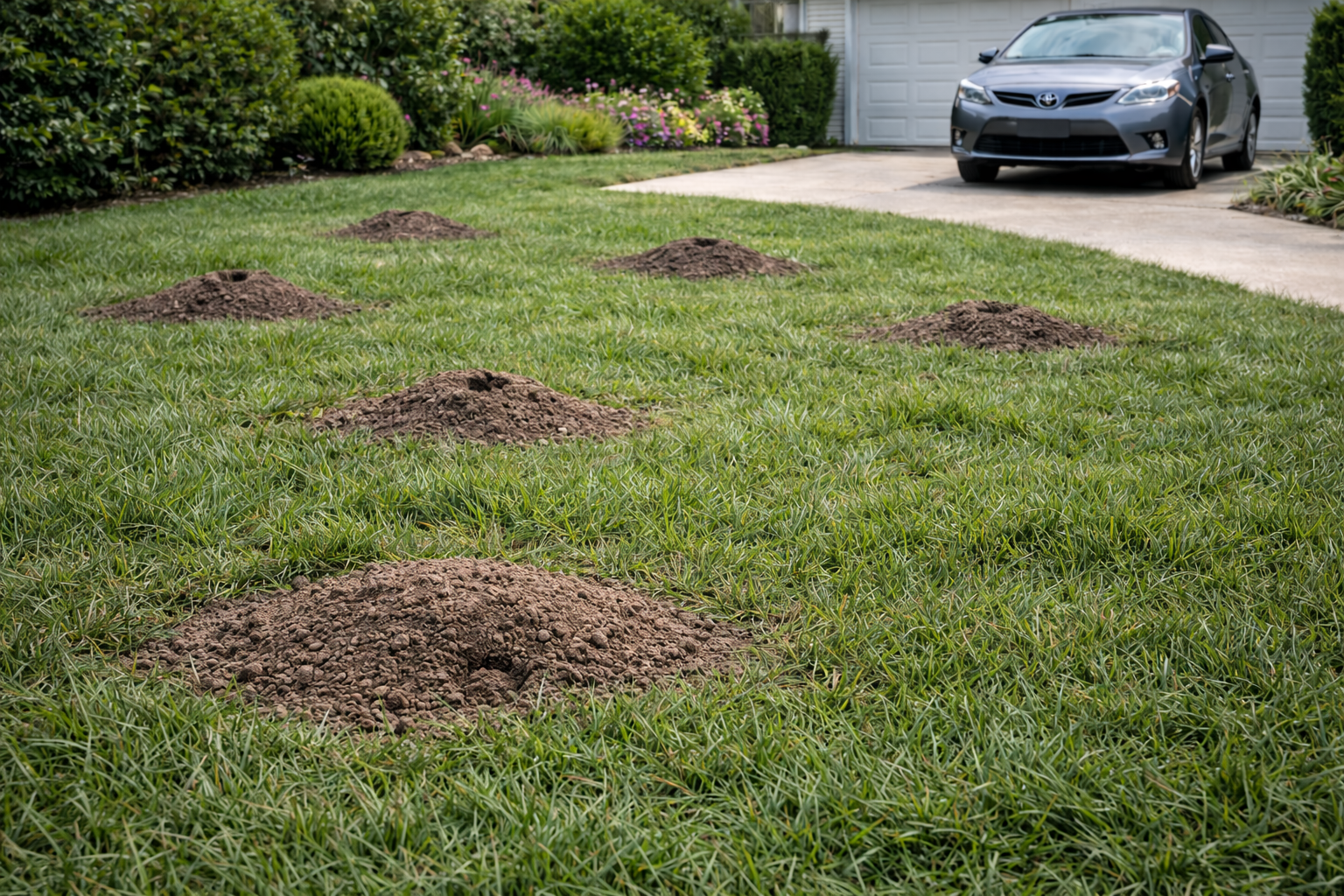
Gopher Activity in Ventura, CA

Gophers are a persistent presence throughout Ventura County, with activity particularly noticeable in residential areas, agricultural zones, and transitional landscapes between developed and undeveloped land. The combination of Ventura's Mediterranean climate, extensive irrigation infrastructure, and proximity to natural habitat makes the region suitable for year-round gopher populations. Property owners across Ventura frequently encounter evidence of burrowing activity, from characteristic mounds in yards to damage affecting landscaping and irrigation systems.

Why Ventura Has Significant Gopher Activity

Ventura's geography and environmental conditions create ideal circumstances for gopher populations to thrive. The county's soil composition varies considerably across different zones, but much of the residential and agricultural land features sandy loam and silty loam soils—exactly the type of substrate that pocket gophers find easiest to excavate. The coastal plain and inland valleys where Ventura's communities are concentrated offer workable soil conditions that allow gophers to construct extensive burrow networks with minimal effort.

The region's extensive irrigation systems, particularly in areas near the Ventura River watershed and in neighborhoods with established landscaping, provide reliable moisture that keeps soil at an optimal consistency for burrowing. Gophers require fairly moist soil to tunnel effectively, and Ventura's irrigation practices—common in residential yards with drought-tolerant plantings and maintained gardens—create persistent subsurface moisture. The Mediterranean climate pattern brings winter and early spring rains that further soften soil and increase gopher activity during these seasons.

Ventura's position adjacent to the Ojai Valley, the Santa Paula area, and proximity to Los Padres National Forest means that wild gopher populations exist in surrounding natural areas. As suburban development continues to expand northward and eastward from the coast, gophers from undeveloped land gradually colonize new residential properties. The transition zones where development meets chaparral and oak woodland habitat experience particularly active gopher populations as animals disperse from natural areas into yards and gardens offering concentrated food sources.

Common Gopher Species in Ventura

The Botta's pocket gopher (Thomomys bottae) is the predominant gopher species throughout Ventura County and Southern California. These are medium-sized rodents, typically weighing between 2 and 4 ounces, with robust, compact bodies adapted for subterranean life. Botta's pocket gophers possess powerful forelimbs with long claws optimized for digging, small external ears, and small eyes—sensory adaptations reflecting their underground existence.

Coloration in Ventura's Botta's pocket gophers typically ranges from dark brown to grayish-brown, with considerable individual variation. The animals possess elongated incisor teeth that continue growing throughout their lives, requiring constant wear through use in gnawing roots, bark, and soil particles. Their most distinctive feature is the pair of external cheek pouches—the source of the "pocket" in their common name—which they use to transport food, nesting material, and soil through their burrow systems.

In Ventura specifically, Botta's pocket gophers inhabit gardens, yards, parks, and landscaped properties across the coastal plain and into the foothills. They prefer areas with adequate vegetation for food and soils soft enough to allow efficient burrow construction. Unlike some rodent species that concentrate in specific habitat types, Botta's pocket gophers adapt readily to human-modified landscapes as long as soil and moisture conditions permit underground tunneling.

When Gopher Activity Peaks in Ventura

Gopher activity in Ventura follows predictable seasonal patterns tied to breeding cycles and environmental conditions. The primary breeding season extends from January through March, during which male gophers actively disperse to find mates, creating increased surface activity visible to property owners. This winter and early spring period coincides with Ventura's seasonal rainfall pattern, when winter storms soften soil and increase subsurface moisture to levels that gophers prefer.

Following the winter breeding season, newly independent juveniles disperse from maternal burrow systems during spring and early summer, establishing their own territories. This secondary activity period—typically March through June—results in new mounds appearing in yards and gardens as young gophers excavate burrows in previously undisturbed areas. The combination of breeding activity, juvenile dispersal, and optimal soil conditions makes spring the season when Ventura residents typically notice the most visible gopher damage.

Summer activity generally decreases in Ventura as irrigation demands intensify and gophers concentrate their tunneling in zones where moisture persists, often along irrigation lines and under landscape plants receiving regular water. Fall activity picks up modestly as gophers prepare for winter and spring breeding seasons by expanding food caches and refurbishing burrow systems. Winter rains maintain subsurface moisture even as above-ground activity becomes less visible, allowing gophers to tunnel continuously through the cooler months. Year-round activity remains possible in Ventura due to the region's mild climate and persistent irrigation, though seasonal peaks are most pronounced in late winter and spring.

Signs of Gopher Damage in Ventura Yards

The most obvious evidence of gopher activity consists of mounds of fresh soil appearing in yards, gardens, and landscaped areas. These characteristic mounds form when gophers excavate burrow systems and push soil to the surface, creating crescent or cone-shaped accumulations typically 6 to 12 inches in diameter and 2 to 6 inches tall. In Ventura's sandy soils, these mounds remain visible for extended periods, whereas in clay-heavy areas, they may erode more quickly through weathering and irrigation water.

Beyond surface mounds, gopher damage manifests in subsurface tunneling that affects irrigation systems and plant roots. Gophers tunnel along drip irrigation lines and soaker hoses, sometimes severing them while excavating lateral passages. Ventura homeowners maintaining drought-resistant landscapes with drip systems frequently encounter water distribution failures coinciding with gopher burrow construction. Plant damage includes the characteristic cutting of roots below the soil surface—gophers clip plant roots while foraging, a behavior distinct from the clipping and consumption patterns of above-ground herbivores.

Gophers occasionally enter gardens and yards to feed on bulbs, root vegetables, and tubers, though this behavior occurs less frequently than tunneling damage. The consumption or burial of young plants in raised beds and vegetable gardens sometimes occurs when gophers tunnel underneath and pull roots downward into their burrow systems. Wilting, yellowing, or sudden death of plants in previously healthy landscaping often indicates root damage from gopher activity rather than disease or irrigation problems.

Landscape Considerations for Ventura Properties

Ventura's landscape character varies considerably across neighborhoods and geographic zones, with distinct vegetation preferences and vulnerabilities to gopher activity. Coastal neighborhoods and foothills areas frequently feature native oak woodlands preserved alongside modern landscaping, creating mixed habitat that supports gophers. The region's popular xeriscaping practices—incorporating California native plants, drought-tolerant species, and low-water irrigation—create landscapes that actually support robust gopher populations once the animals establish burrow systems.

Common Ventura landscape plants include California buckwheat, sage species, toyon, manzanita, and various native shrubs that gophers tolerate but do not prefer. However, ornamental plantings popular in residential settings—including fruit trees, vegetable gardens, flowering plants with bulbs, and ornamental grasses—attract gopher feeding and root damage. Properties featuring irrigated lawn, whether traditional fescue or drought-tolerant alternatives, tend to experience more gopher activity than predominantly native plant landscapes, because the consistent moisture supports more robust root development in preferred food plants.

Hardscape elements affect gopher colonization patterns in Ventura yards. Properties with extensive patios, decking, concrete, and rock-based xeriscaping generally experience less active gopher presence than properties with continuous soil and vegetated areas. However, gophers readily tunnel beneath hardscape structures, sometimes undermining patios or creating surface collapses when tunnels become unstable. The relationship between landscape design and gopher activity suggests that property features—irrigation type, plant selection, soil coverage, and maintenance practices—substantially influence the likelihood and intensity of gopher problems.