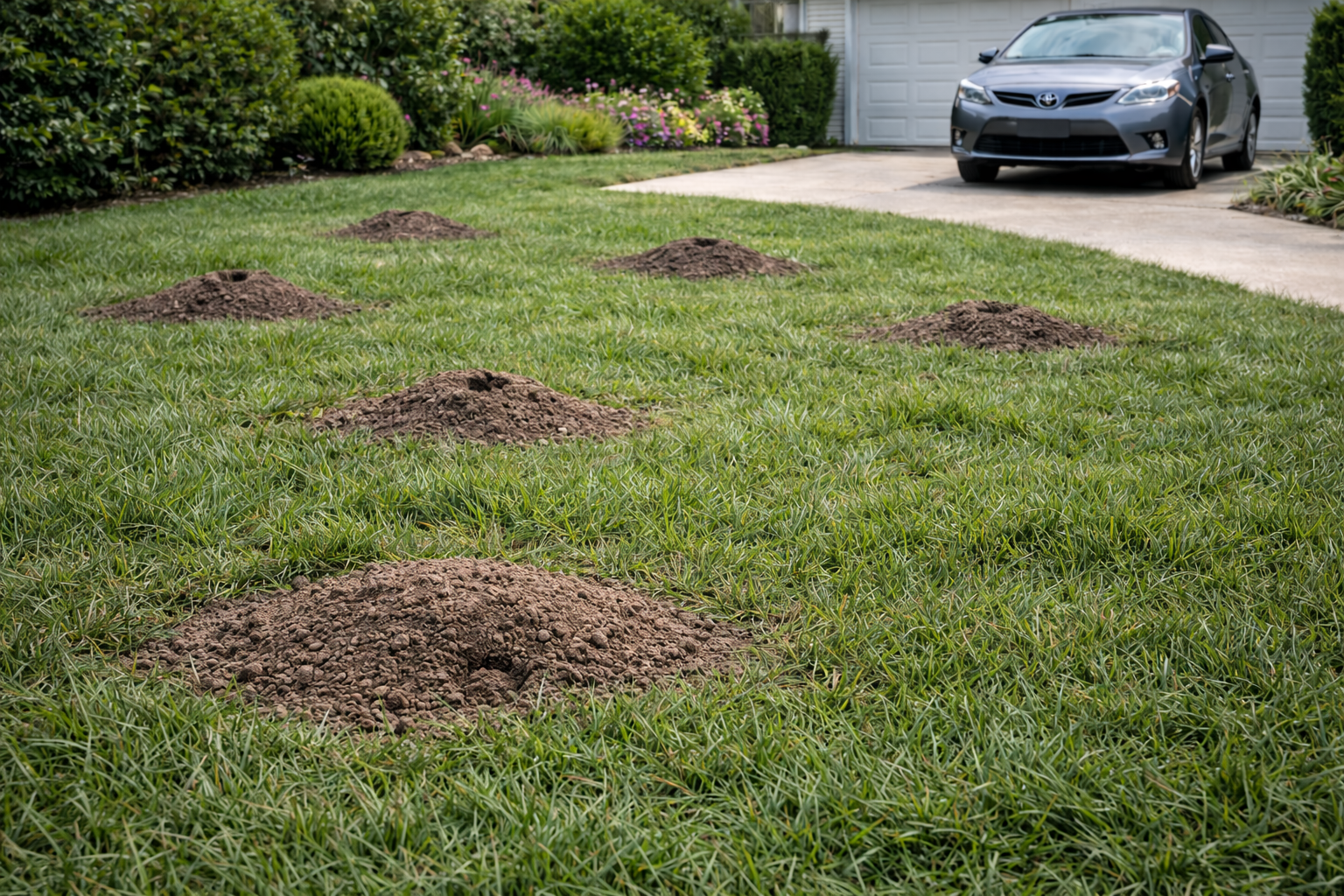
Gopher Activity in Carpinteria, CA

Carpinteria, located along Santa Barbara County's coast between Montecito and Summerland, experiences notable gopher activity throughout the year. The combination of Mediterranean climate, agricultural heritage, and residential landscaping creates ideal conditions for pocket gophers to thrive. Property owners in Carpinteria frequently encounter evidence of gopher tunneling in gardens, lawns, and irrigated landscape beds.

Why Carpinteria Has Significant Gopher Activity

Carpinteria's geography and environmental conditions make it particularly susceptible to gopher populations. The region sits on the coastal terrace of Santa Barbara County, with soil composition ranging from sandy loam near the beach to deeper clay-loam mixtures inland toward the foothills. This soil profile—especially the loose, workable materials found in most residential yards—allows gophers to tunnel with minimal energy expenditure. The soil in many Carpinteria neighborhoods, particularly around the Bailard Road and Ortega Hill areas, contains sufficient organic matter and moisture retention to support robust vegetation, which gophers find attractive.

The Mediterranean climate contributes significantly to year-round gopher presence. Carpinteria receives approximately 15-17 inches of annual rainfall, concentrated primarily between November and March. During the wetter winter months, soil conditions soften, making burrowing easier. The mild summers mean that subsurface temperatures remain moderate enough for sustained activity, unlike inland desert regions where extreme heat can slow tunneling behavior.

Water availability plays a critical role in gopher population density. Carpinteria's residential neighborhoods rely heavily on irrigation systems to maintain lawns and ornamental plantings. Landscape irrigation in spring and summer sustains plant roots that gophers consume, essentially creating a reliable food source throughout the dry season. Properties with drip irrigation systems, common in Carpinteria's water-conscious landscape design, inadvertently maintain moist soil conditions that gophers prefer.

The proximity of developed areas to open space also influences gopher distribution. The Santa Ynez Mountains rise immediately north of Carpinteria, and uncultivated chaparral habitat extends throughout the foothills. Gophers inhabit these wild areas naturally and gradually colonize adjacent residential zones as development expands. Properties bordering undeveloped land or adjacent to agricultural fields experience higher colonization rates than those in fully urbanized blocks.

Common Gopher Species in Carpinteria

The Botta's pocket gopher (Thomomys bottae) is the primary gopher species found throughout Carpinteria and Santa Barbara County. This rodent earned its "pocket" designation from external fur-lined cheek pouches that extend from mouth to shoulders, used for carrying food and nesting materials underground. Adult Botta's pocket gophers typically measure 5-7 inches in body length with tails adding another 1-2 inches. Coloration varies across populations, but Carpinteria individuals generally display brown to gray fur, sometimes with lighter undersides.

Botta's pocket gophers possess several anatomical adaptations for subterranean life. Their eyes are small and function poorly in dim tunnel conditions; instead, gophers rely heavily on tactile whiskers and olfactory organs to navigate burrow systems. Front teeth are permanently sharp, continuously growing throughout the animal's life. Front limbs are notably powerful with elongated claws, specialized for excavating soil and moving earth backward out of developing tunnels. Their bodies are compact and cylindrical, allowing efficient movement through confined spaces.

In Carpinteria's environment, Botta's pocket gophers construct elaborate burrow systems that may extend 50-200 feet horizontally and penetrate 3-4 feet vertically, depending on soil composition and water availability. A single gopher typically occupies multiple tunnel segments across different areas of a property, with distinct sections for nesting, food storage, and waste. Gophers are largely solitary except during breeding season, with each individual maintaining exclusive territorial boundaries against intruders of the same species.

When Gopher Activity Peaks in Carpinteria

Gopher activity in Carpinteria follows distinct seasonal patterns tied to local rainfall, temperature, and food availability. Winter months—particularly January through March—represent the peak breeding season for pocket gophers throughout Southern California. During this period, male gophers become more active and mobile, actively expanding burrow systems and traveling greater distances to locate mates. Females prepare nesting chambers in anticipation of litters, which typically number 3-5 pups. January rainfall often triggers soil softening that facilitates increased tunneling and expansion of existing burrow networks.

Spring activity intensifies as young gophers emerge from natal burrows and begin establishing independent territories. The combination of saturated soil from winter storms and rapidly growing spring vegetation creates conditions that sustain high gopher activity through May. Carpinteria's spring rains—though variable year to year—encourage fresh plant growth in lawns and gardens, providing abundant forage for both established and juvenile populations. Homeowners typically notice increased surface mounding and fresh tunnel construction during March and April.

Summer represents a relative lull in surface activity, though gophers continue underground operations. As Carpinteria's dry season progresses and irrigation becomes necessary to maintain landscape vegetation, soil moisture decreases in some areas, potentially driving gophers deeper into burrow systems. However, properties with active irrigation systems maintain conditions favorable for continued gopher presence. Fall typically shows renewed activity in September and October as temperatures moderate slightly and plants prepare for winter dormancy, presenting gophers with different food sources.

Signs of Gopher Damage in Carpinteria Yards

Identifying gopher presence requires recognizing multiple signs characteristic of pocket gopher activity. The most obvious indicator is fresh mounding—piles of loose soil appearing in lawns, garden beds, or hardscape margins. Gopher mounds in Carpinteria's sandy-loam soils typically measure 2-4 inches in diameter and 3-6 inches in height, though dimensions vary with soil texture. Unlike mole mounds, which are often symmetrical and cone-shaped, gopher mounds appear irregular with an offset plug where the gopher pushed earth upward while working laterally through its burrow.

Subsurface tunnel systems create visible evidence of gopher activity beyond mounds. Shallow tunnels near the soil surface appear as ridges running across lawns and garden areas. These superficial runs, used temporarily during active feeding periods, collapse under foot traffic or when weather conditions change. Gophers create these shallow tunnels specifically to access vegetation roots and shoots without fully emerging above ground, allowing them to feed safely from predators while remaining partially protected underground.

Plant damage provides additional confirmation of gopher presence. Young shrubs and trees in Carpinteria landscapes may show sudden wilting or death despite adequate irrigation, often resulting from gophers severing roots below ground level. Disappearance of low-growing plants, vegetables, or newly planted garden specimens indicates gopher harvesting. Gophers clip plant materials and transport them into burrows for consumption or storage. In established landscapes featuring native plants or mature specimens, damage may appear less dramatic but still identifiable through missing sections of bark at the soil line or partially exposed roots where gophers have been feeding.

Landscape Considerations for Carpinteria Properties

Carpinteria's landscape aesthetic reflects its coastal Mediterranean character, with properties commonly featuring a mixture of native California plants, ornamental exotics, and irrigated turf areas. The typical Carpinteria residential lot includes lawn sections suitable for recreational use, foundation plantings of evergreen shrubs, specimen trees, and increasingly, California native plant selections that reduce water dependency. Many properties in established neighborhoods like Ortega Hill maintain mature landscaping featuring oaks, pines, and coastal sage scrub-type plants. Newer construction and renovated properties often incorporate xeriscaping principles, replacing water-intensive turf with drought-tolerant shrubs and hardscape features.

Certain plant categories show particular vulnerability to gopher damage in Carpinteria environments. Newly installed plants, regardless of species, attract intense gopher interest because tender roots and shoots are relatively accessible. Vegetable gardens and food-producing plants (citrus, avocado, berry varieties) sustain concentrated gopher damage because rodents actively consume the edible portions. Ornamental bulbs and tubers—popular in cottage-style Carpinteria gardens—face predation from gophers that actively excavate around bulbs for their nutritive value. Herbaceous perennials with shallow root systems and tender shoots are more susceptible than deeply rooted woody shrubs or trees.

Hardscape features (patios, pathways, and retaining walls) may show indirect gopher impact through tunnel subsidence. As gopher burrow systems undermine soil support, adjacent hardscape elements can settle unevenly, creating trip hazards or compromising aesthetic appearance. Properties that transition between soft landscape (turf and planting beds) and hardscape areas are particularly susceptible to tunneling beneath paved surfaces. The transition zones around drip irrigation lines and foundation areas of Carpinteria homes frequently show gopher activity concentrated near these linear features.