Gopher Activity in Oxnard, CA

Oxnard, located in Ventura County along California's central coast, experiences consistent gopher activity throughout residential and agricultural areas. The combination of the region's Mediterranean climate, extensive irrigation infrastructure, and proximity to natural open spaces creates ideal conditions for pocket gopher populations. Property owners in neighborhoods ranging from south Oxnard near the coastal plains to inland areas near the Oxnard Plain frequently encounter evidence of gopher tunneling.

Why Oxnard Has Significant Gopher Activity

The Oxnard area presents multiple environmental factors that support robust gopher populations. The region's soil composition—predominantly silt loam and clay loam across the Oxnard Plain—provides ideal burrowing substrate that is neither too compacted nor too loose. These soil types, formed from sedimentary deposits of the Ventura River watershed, allow gophers to tunnel efficiently while maintaining structural integrity around their burrows.

Irrigation infrastructure proves critical to gopher populations in Oxnard. The extensive agricultural irrigation systems serving the region's strawberry fields, citrus groves, and nurseries maintain soil moisture year-round, which softens soil and makes excavation easier for burrowing rodents. Even residential properties benefit from landscape irrigation in the drier months of May through September, creating moist conditions that attract gophers seeking accessible habitat.

Oxnard's Mediterranean climate—characterized by mild winters and dry summers—allows gopher populations to remain active throughout the year. Unlike inland desert or mountain regions with severe winter dormancy, Oxnard's moderate temperatures mean gophers can forage and expand tunnel systems in virtually every month. The coastal influence moderates temperature extremes while maintaining adequate soil moisture for extended breeding seasons.

Proximity to undeveloped natural areas enhances local gopher populations. The Oxnard Plain borders expansive agricultural lands and open spaces that maintain native gopher colonies. As development encroaches on these areas, gopher populations naturally expand into adjacent residential neighborhoods seeking similar soil and vegetation conditions.

Common Gopher Species in Oxnard

The Botta's pocket gopher (Thomomys bottae) represents the predominant gopher species throughout Oxnard and surrounding Ventura County areas. This species is smaller than many other pocket gopher varieties found in California, typically weighing between three and five ounces with a body length of four to six inches, though external cheek pouches can appear considerably larger when filled with soil or vegetation.

Botta's pocket gophers display dark brown to grayish-brown coloration on their dorsal surface, with slightly lighter coloring on the ventral side. Their distinguishing features include small, rounded ears positioned low on the head, small dark eyes adapted for subterranean life, and powerful forelimbs with extended claws specifically evolved for soil excavation. The species name honors the pocket structure—internal cheek pouches lined with fur that extend from mouth to shoulder, used exclusively for transporting soil and plant material rather than food storage.

In Oxnard's specific habitat, Botta's pocket gophers prefer the well-irrigated, relatively level terrain of residential gardens, nurseries, and agricultural properties across the coastal plain. They demonstrate less affinity for rocky foothill areas that characterize regions immediately north and east of Oxnard, which explains their concentration in the basin and valley areas surrounding the city proper. The species exhibits remarkable adaptability to cultivated landscapes, thriving equally in native sage scrub habitats and ornamental gardens.

When Gopher Activity Peaks in Oxnard

Gopher activity in Oxnard demonstrates distinct seasonal patterns, though year-round tunneling occurs due to the region's moderate climate. Activity visibly peaks during spring months from February through April, corresponding with the Botta's pocket gopher breeding season. During this period, males actively tunnel and expand burrow systems seeking females, while females prepare multiple nesting chambers within main burrows for litters typically ranging from two to six offspring.

Secondary activity increases follow Oxnard's winter and early spring rainfall patterns. The region typically receives between fifteen and eighteen inches of annual precipitation, with the heaviest rainfall concentrated between November and March. Following significant rain events, soil moisture increases and becomes more workable for gopher excavation. Gophers respond by intensifying tunnel construction, which explains why property owners often notice fresh mounding activity in March and April following the region's peak rainy season.

Summer months (June through August) present paradoxical conditions in Oxnard. While natural moisture declines sharply during the dry season, residential irrigation systems maintain artificially moist soil conditions in landscaped yards. This irrigation-dependent moisture creates pockets of gopher habitat throughout neighborhoods that would otherwise become unsuitable. Consequently, gopher activity continues through summer in irrigated properties while declining in non-irrigated areas.

Fall months (September through November) show moderate activity levels as gophers prepare for winter breeding season by expanding food caches and refining burrow systems. Winter activity declines somewhat but continues consistently due to Oxnard's mild average temperatures rarely dropping below fifty degrees Fahrenheit.

Signs of Gopher Damage in Oxnard Yards

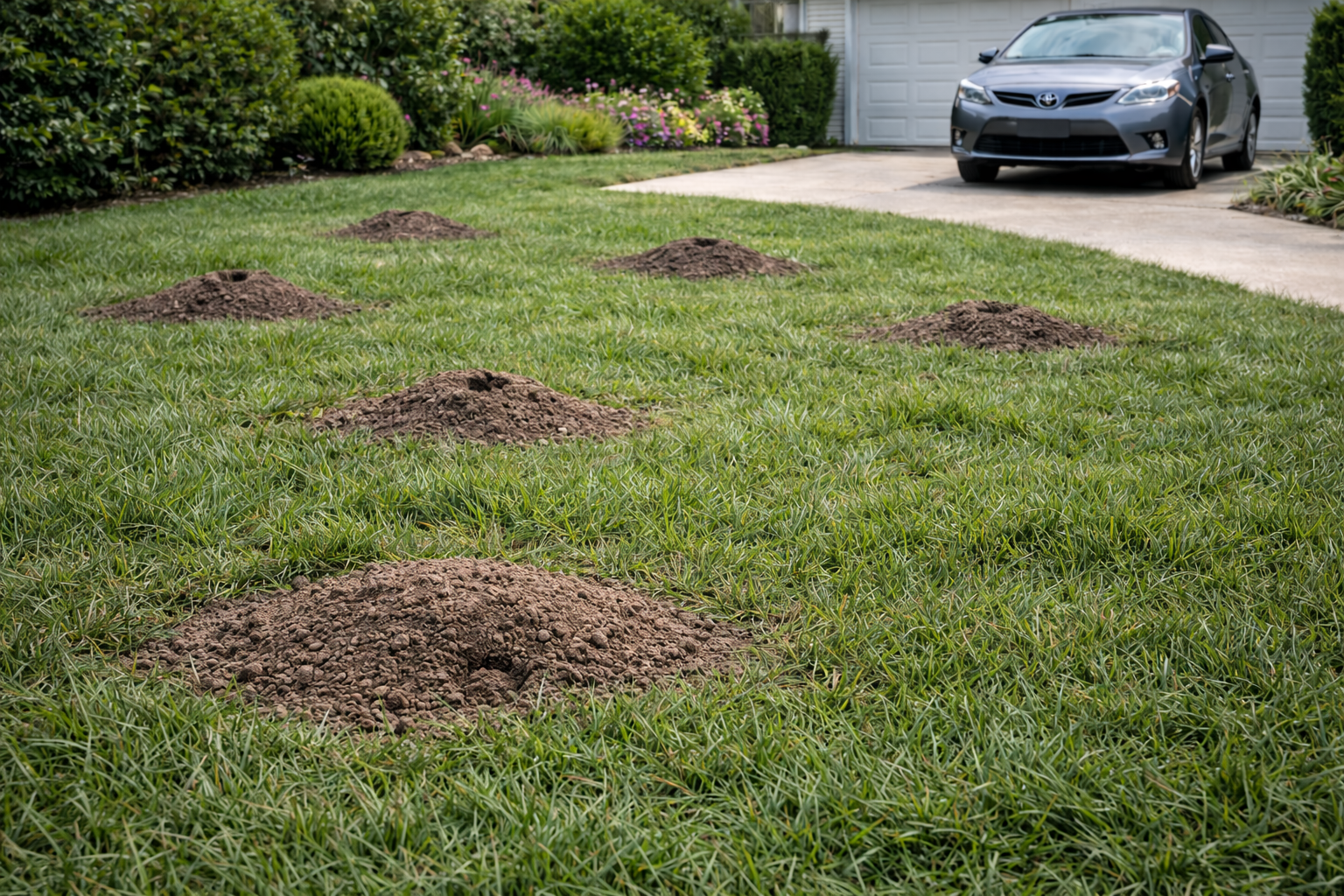
The most visible indication of gopher presence involves the characteristic mounding patterns created during tunneling. Gophers excavate extensive tunnel networks and must dispose of displaced soil by pushing it to the surface, creating distinctive fan-shaped or crescent-shaped mounds typically three to six inches in height and six to twelve inches in diameter. These mounds appear scattered irregularly across lawns and garden beds, often concentrated in areas receiving regular irrigation where soil conditions remain optimal for tunneling.

Property owners should distinguish gopher mounds from mole mounds, which appear more conical and centered, whereas gopher mounds display the characteristic asymmetrical shape. In Oxnard's residential areas, gopher mounds frequently appear in drought-stressed lawns adjacent to well-irrigated zones, indicating gophers following moisture gradients through the landscape.

Gopher damage to underground irrigation systems represents a secondary concern in Oxnard properties. As gophers tunnel through landscaping, they inevitably encounter drip irrigation tubing, landscape drain lines, and occasionally shallow water lines. The damage occurs both directly through gnawing and indirectly through soil displacement around vulnerable infrastructure. Property owners who experience sudden changes in irrigation coverage or unexplained soft spots in landscaping should consider gopher tunneling as a potential cause.

Above-ground damage manifests through selective plant destruction and wilting. Gophers feed on tender plant roots, bulbs, and tubers accessible through their tunnel systems. In Oxnard gardens, this particularly affects root vegetables like carrots and potatoes, ornamental bulbs, young tree roots, and herbaceous perennials. Affected plants appear stunted, yellowed, or will suddenly despite adequate irrigation.

Landscape Considerations for Oxnard Properties

Oxnard's predominant landscaping aesthetic reflects its coastal Mediterranean climate and agricultural heritage. Many properties maintain combinations of drought-resistant native plantings, succulent gardens, ornamental grasses, and irrigated traditional lawns. This diversity creates varied gopher habitat preferences across the neighborhood spectrum. Native coastal sage scrub plantings attract gophers seeking natural vegetation, while turf areas benefit from regular irrigation that maintains moist burrowing conditions year-round.

Certain commonly planted species in Oxnard gardens face particular vulnerability to gopher damage. Shallow-rooted ornamental plants like lantana, sage varieties, and flowering perennials suffer significant root damage. More serious impacts occur to fruit and vegetable gardens where gophers can devastate entire beds of root crops, bulbs, and young transplants. Established trees with deep root systems prove more resistant, though gophers can still girdle roots of younger specimens.

Hardscape elements—pathways, patios, and ground-level structures—provide indirect benefits by reducing available burrowing habitat. Properties with extensive hardscaping relative to soft landscape areas typically experience lower gopher pressure. Conversely, properties with large expanses of irrigated turf or soft landscape beds present continuous suitable habitat. The contrast between Oxnard neighborhoods with Mediterranean hardscape-heavy designs and those featuring expansive lawns directly correlates with observed gopher population densities in different microhabitats throughout the city.