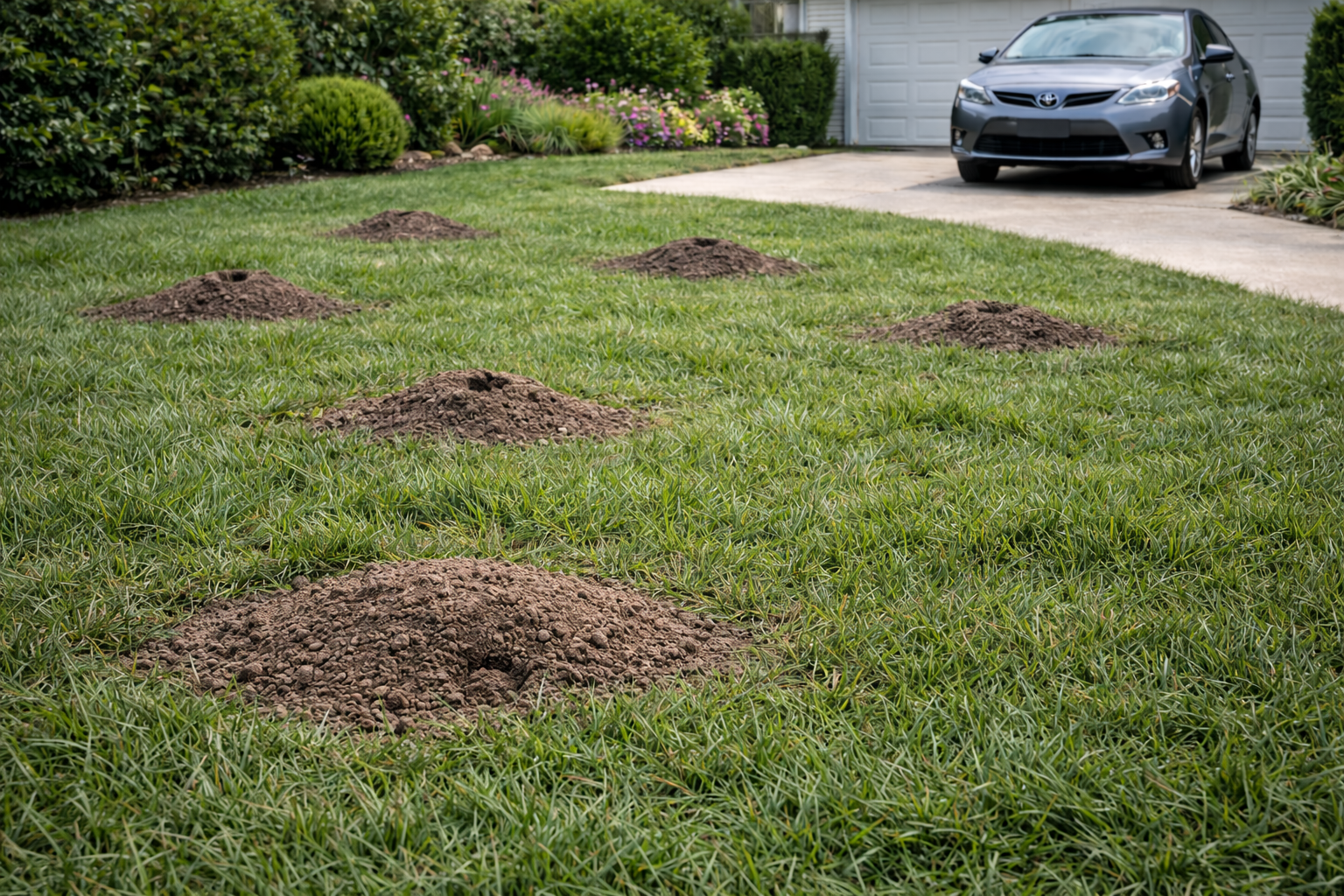
Gopher Activity in Camarillo, CA

Gophers are a persistent presence throughout Camarillo, a city located in southwestern Ventura County roughly 40 miles northwest of Los Angeles. The combination of the region's Mediterranean climate, extensive residential landscaping, and proximity to undeveloped coastal scrubland creates ideal conditions for sustained gopher populations. Property owners throughout Camarillo's neighborhoods—from the hillside communities near the Conejo Grade to the flat developments south of Carmen Drive—regularly encounter evidence of burrowing activity.

Why Camarillo Has Significant Gopher Activity

Camarillo's geography and environmental conditions establish a particularly favorable setting for gopher populations. The city sits on a coastal plain with varying soil compositions, including sandy loam and clay loam soils that gophers find relatively easy to excavate. The underlying geological substrate transitions toward the Santa Rosa Valley to the east, where softer alluvial deposits predominate—conditions that actively encourage burrowing.

The regional climate contributes substantially to year-round gopher activity. Camarillo experiences mild winters with average January temperatures around 45–60°F and rarely experiences hard freezes that might reduce gopher populations. Summers remain temperate due to marine influence, with average July highs in the mid-70s. This moderate climate means gophers maintain relatively consistent activity throughout the year, though specific peaks occur seasonally.

Water availability represents another critical factor sustaining gopher populations. Residential properties throughout Camarillo depend heavily on irrigation to maintain landscaping in the region's semi-arid environment. Golf courses, parks, and maintained gardens all provide abundant moisture that softens soil and supports the vegetation gophers consume. The proximity to the California State University Channel Islands campus and its extensive grounds, along with numerous neighborhood parks and recreational areas, creates continuous habitat corridors.

Additionally, Camarillo's situation at the edge of developed areas means that undisturbed habitat remains relatively accessible. The Camarillo Open Space, portions of state lands to the north and east, and the broader network of Ventura County open spaces support wild gopher populations that regularly recolonize developed properties. Natural drainage patterns from the Santa Rosa Valley funnel gophers toward lower-elevation residential areas.

Common Gopher Species in Camarillo

The Botta's pocket gopher (Thomomys bottae) represents the dominant and essentially only gopher species established in Camarillo and throughout most of Ventura County. This rodent has adapted broadly to the region's environmental conditions and established robust populations across the diverse habitats that characterize the area.

Botta's pocket gophers display characteristic features that distinguish them from other burrowing rodents in the region. Adults typically measure 6 to 8 inches in body length, with relatively short tails accounting for only 1 to 1.5 additional inches. Their fur coloration generally ranges from dark brown to reddish-brown, though variation exists across local populations. The species possesses notably small eyes and ears—adaptations reflecting their primarily subterranean lifestyle—along with large, powerful front claws and externally visible cheek pouches used for transporting food and nesting material.

Within Camarillo specifically, Botta's pocket gophers demonstrate strong preference for well-irrigated areas with established vegetation. Residential yards with mixed plantings, turf areas, and regular watering attract and support higher populations than surrounding drier landscapes. The species readily colonizes both sandy and clay-based soils prevalent throughout Camarillo, though individuals show preference for soils that neither become waterlogged nor remain excessively compacted. The presence of preferred food sources—particularly roots, bulbs, and tender shoots of ornamental plants—reinforces occupation of specific properties.

When Gopher Activity Peaks in Camarillo

Gopher activity in Camarillo follows distinct seasonal patterns tied to breeding cycles and environmental conditions. The primary breeding season extends from January through March, coinciding with Camarillo's cooler, wetter winter months. During this period, male gophers expand their range searching for females, and females prepare nesting chambers, resulting in increased visible surface activity and fresh mound construction. Property owners frequently observe the most obvious signs of gopher presence during February and March.

Spring rains further stimulate gopher activity throughout the region. Camarillo typically receives between 14 and 16 inches of annual precipitation, with the majority falling between November and April. Following significant rainfall, soil moisture increases substantially, making excavation easier and stimulating growth of vegetation that gophers consume. The combination of breeding activity and improved soil conditions during spring creates a secondary peak in gopher-related property damage.

Summer months bring reduced rainfall and drier soil conditions. While gopher activity doesn't cease, it becomes less visible as animals focus on maintaining established burrow systems in harder, drier earth. Fall represents a transitional period during which gophers strengthen their burrow networks and increase food storage in preparation for winter. The second half of the year generally shows less dramatic surface evidence of gopher presence compared to the January-through-May window, though persistent activity remains constant.

Signs of Gopher Damage in Camarillo Yards

The most recognizable indicator of gopher activity throughout Camarillo yards consists of fresh mounds of excavated soil. These crescent or horseshoe-shaped accumulations appear suddenly in lawns, garden beds, and landscaped areas as gophers push soil from tunnel systems to the surface. Camarillo properties with regular irrigation demonstrate more frequent fresh mounding since softened soil moves more easily through tunnels. Unlike mole mounds, which form symmetrical cones of loosely packed soil, gopher mounds display flatter profiles and more concentrated soil volume.

Gopher burrows create subsurface damage that becomes apparent over time. Tunnel networks undermine turf areas, causing sections of otherwise healthy lawn to collapse under foot traffic or settle unevenly. Irrigation lines running through affected yards frequently suffer puncture damage, resulting in water loss and reduced system efficiency. Because Camarillo properties depend substantially on irrigation, such damage carries real operational and financial consequences.

Plant damage provides another important diagnostic sign. Gophers consume the roots, bulbs, and tender shoots of numerous ornamental plants common to Camarillo landscaping. Young trees and shrubs sometimes disappear entirely overnight as gophers consume root systems from below ground. Vegetable gardens suffer particular damage, with root vegetables like carrots and potatoes becoming entirely consumed. Herbaceous perennials, flowering bulbs, and ground covers all fall prey to gopher feeding activity. The characteristic damage pattern—plants wilting or disappearing without visible surface damage—clearly distinguishes gopher activity from aboveground herbivores.

Landscape Considerations for Camarillo Properties

The predominant landscaping aesthetic throughout Camarillo reflects the region's Mediterranean climate and semi-arid conditions. Numerous properties feature combinations of drought-tolerant shrubs, ornamental grasses, succulent plantings, and limited turf areas concentrated near homes. Other properties maintain more traditional landscape designs with established trees, mixed perennials, and turf. This diversity in landscaping approaches creates varying levels of gopher vulnerability across different properties.

Certain commonly planted species throughout Camarillo demonstrate particular susceptibility to gopher damage. Native oaks (coast live oak and California white oak) appear throughout the region's older neighborhoods, and their seedlings and young trees attract intense gopher attention. Fruit trees—particularly citrus, apple, and stone fruits—established in residential yards face ongoing root-feeding pressure. Flowering bulbs, popular in Camarillo gardens, suffer systematic destruction. Roses, a traditional landscaping choice in many neighborhoods, frequently show gopher damage to root systems. Mediterranean herbs and shrubs like lavender, rosemary, and myrtle, while generally less vulnerable than tender perennials, still sustain occasional damage.

The contrast between softscape (planted areas) and hardscape (paved surfaces, structures) significantly influences gopher population sustainability on specific properties. Yards with extensive turf, diverse plant material, and regular irrigation provide maximum gopher habitat and support higher population densities. Conversely, properties dominated by hardscape with minimal planting areas naturally support fewer gophers. The design philosophy increasingly prevalent in water-conscious Camarillo landscaping—emphasizing hardscape, drought-tolerant plants, and reduced irrigation—inherently reduces gopher activity compared to traditionally planted yards.