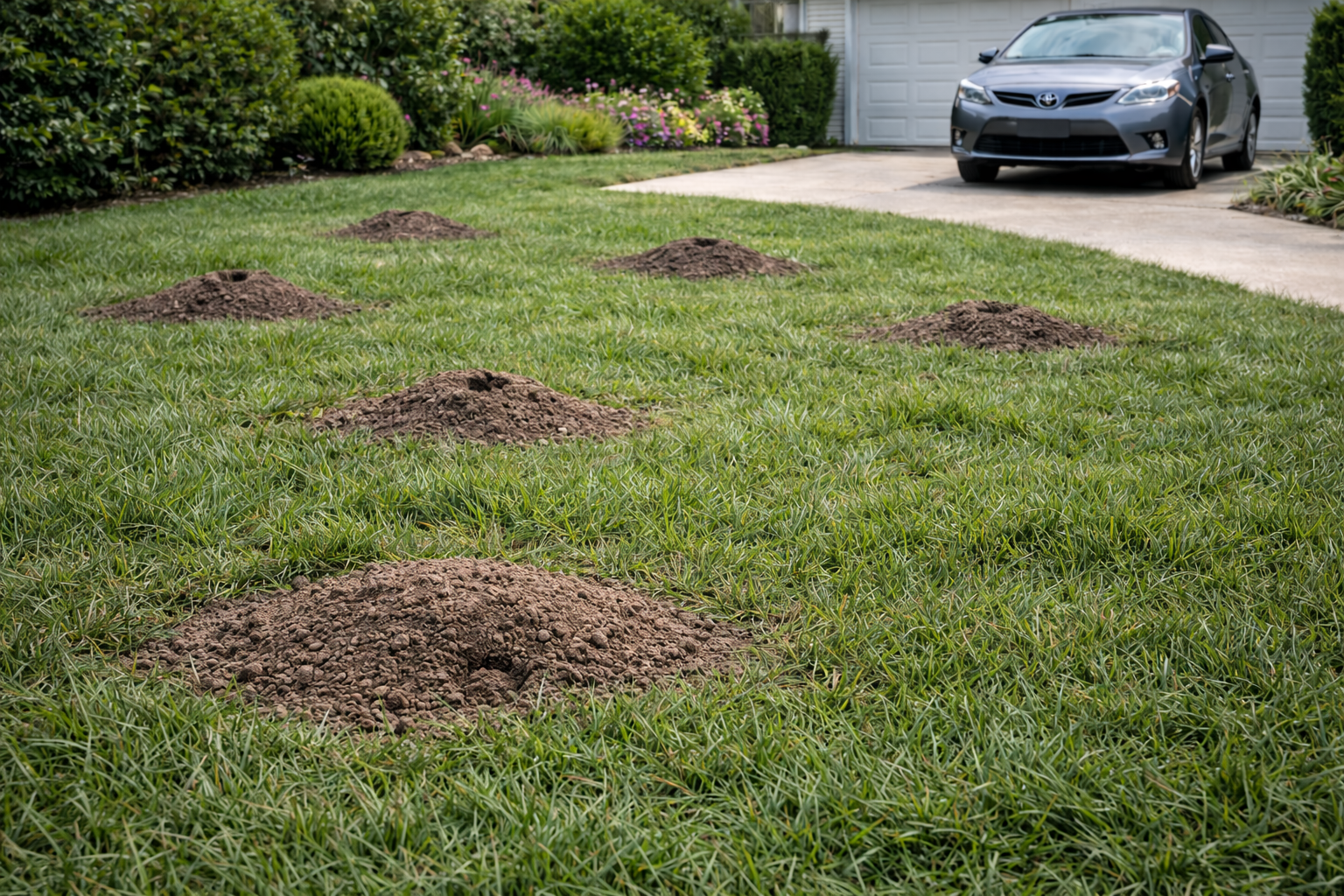
Gopher Activity in Rancho Santa Margarita, CA

Rancho Santa Margarita, nestled in the rolling hills of south Orange County, experiences consistent gopher activity throughout the year. The community's combination of well-irrigated residential properties, transitional oak woodland areas, and clay-rich soils creates an ideal environment for pocket gopher populations. Understanding gopher behavior and seasonal patterns is essential for property owners in this region.

Why Rancho Santa Margarita Has Significant Gopher Activity

The landscape surrounding Rancho Santa Margarita presents multiple factors that support robust gopher populations. The area sits at elevations between 800 and 1,200 feet, characterized by Pleasanton and Capistrano soil series—predominantly clay loam and silty clay loam soils that are easier for gophers to excavate than sandier coastal properties. These soil types retain moisture well, which gophers require for tunnel stability and to prevent their burrow systems from collapsing.

Residential landscaping throughout Rancho Santa Margarita relies heavily on supplemental irrigation. The community receives approximately 12 inches of annual rainfall, concentrated between November and March. Homeowners maintain year-round irrigation systems to sustain turf, shrubs, and ornamental plantings common in neighborhoods like Los Flores, Modjeska Canyon, and the central residential areas. This consistent soil moisture, combined with nutrient-rich landscaping, makes yards exceptionally attractive to foraging gophers.

The community's proximity to San Onofre State Park, the Santa Margarita Ecological Reserve, and adjacent chaparral lands means that gopher populations have natural refugia and continuous population pressure from wild areas. Unlike coastal Orange County communities that experienced significant habitat loss, Rancho Santa Margarita maintains wildlife corridors that support transient and resident gopher populations moving between developed and undeveloped land.

Common Gopher Species in Rancho Santa Margarita

Botta's pocket gopher (Thomomys bottae) is the primary gopher species found throughout Rancho Santa Margarita and the surrounding inland Orange County region. This species is well-adapted to the local soil and climate conditions and has successfully colonized virtually every residential block in the community.

Botta's pocket gophers are medium-sized rodents measuring 5 to 7 inches in body length, with relatively short tails rarely exceeding 2 inches. Their fur color varies based on local soil composition; in Rancho Santa Margarita's clay-rich areas, individuals typically display brownish or grayish-brown pelage that provides camouflage in disturbed soil. The species derives its common name from external, fur-lined cheek pouches that extend from the mouth to the shoulder region—adaptations allowing individuals to transport soil, roots, and seeds back to underground chambers without using their teeth.

Botta's pocket gophers possess powerful forelimbs and elongated claws specifically adapted for digging. Their eyes and ears are proportionally small, reflecting adaptations to underground life where vision and hearing are less important than tactile sensory systems. The species maintains extensive burrow networks that can extend 150 feet or more across a single property, with separate chambers for nesting, food storage, and waste areas. In Rancho Santa Margarita's residential settings, individual gophers establish territories that often overlap multiple adjacent properties.

When Gopher Activity Peaks in Rancho Santa Margarita

Gopher activity in Rancho Santa Margarita follows predictable seasonal patterns that align with local climate and reproductive cycles. Winter breeding season occurs from January through March, when males actively search for mates and create new tunnels across properties. During this period, mounding activity intensifies noticeably, and property owners frequently report fresh surface activity after winter rains.

Spring months (March through May) represent peak activity season. Winter and spring precipitation—Rancho Santa Margarita typically receives its heaviest rainfall between December and February—softens soils to optimal conditions for tunneling. The growth flush of spring vegetation provides abundant food resources including tender plant roots, bulbs, and shoots. Young gophers from winter breeding emerge and establish independent territories, leading to increased surface disturbance and visible mounding across yards.

Summer activity decreases relative to spring, though gophers remain active in irrigated landscapes. The consistent supplemental watering that maintains Rancho Santa Margarita's suburban aesthetic keeps soils workable even during the dry season (typically June through October). Fall months (September through November) show modest activity increases as gophers prepare winter food stores and strengthen burrow systems before breeding season. Year-round irrigation means that gopher populations sustain activity across all seasons, unlike properties in unirrigated or drought-stressed regions.

Signs of Gopher Damage in Rancho Santa Margarita Yards

Identifying gopher activity requires recognizing characteristic signs distinct from other burrowing animals common to Orange County. The most obvious indicator is the presence of mounds—irregular soil accumulations pushed to the surface as gophers excavate tunnels. Rancho Santa Margarita's clay-rich soils produce distinctive, often tower-like mounds with crescent or horseshoe-shaped ridges where soil was forced sideways from the burrow entrance. These mounds typically measure 4 to 8 inches in diameter and 2 to 4 inches in height, though dimensions vary with soil type and moisture content.

Damage to irrigation systems represents a significant secondary indicator of gopher presence. Gophers tunnel through PVC and drip irrigation lines while foraging for roots and moisture. Property owners in Rancho Santa Margarita frequently discover severed irrigation tubing, creating water waste and dry patches in otherwise irrigated areas. Underground lines throughout the community's subdivisions—serving properties in areas like Dove Canyon, Esencia, and older neighborhoods—become vulnerable to gopher tunneling activity.

Plant damage manifests as sudden wilting, death, or severing of roots below the soil surface. Gophers consume roots of trees, shrubs, and garden plants from below, and property owners often discover plants that have weakened or died despite adequate water and apparent soil health. Ornamental plants commonly grown in Rancho Santa Margarita—including oak trees, ceanothus, toyon, and California lilac—sometimes show signs of gopher root feeding, particularly on younger, more vulnerable specimens.

Landscape Considerations for Rancho Santa Margarita Properties

Rancho Santa Margarita's residential landscaping aesthetic significantly influences gopher habitat suitability. The community developed as a master-planned community with design guidelines encouraging Mediterranean and California native plant palettes. This approach created neighborhoods with visible soft-landscaping—turf areas, foundation plantings, and ornamental beds that provide both cover and food resources for gopher populations. Properties throughout Rancho Santa Margarita typically maintain a mix of hardscape (patios, pathways, driveways) and softscape, with mature trees and shrubs providing long-term gopher foraging opportunities.

Certain plants common in Rancho Santa Margarita landscapes show greater vulnerability to gopher damage. Tree species including coast live oak, California sycamore, and non-native ornamentals like liquidambar and crape myrtle can suffer significant root damage. Shrubs frequently damaged include California privet, mixed flowering shrubs, and young specimens of manzanita and buckwheat. Root vegetables and bulbs in any vegetable garden or ornamental display become immediate gopher targets once tunnels reach those areas.

Hardscape features—retaining walls, decorative rock, permeable pavers—provide limited protection but can discourage gopher activity by replacing soil volume. Properties with extensive patios, pool areas, and constructed features tend to show reduced gopher damage compared to heavily planted lots. However, Rancho Santa Margarita's community character emphasizes green space and mature landscaping, meaning most residential properties maintain sufficient softscape to support active gopher populations regardless of hardscape percentage.