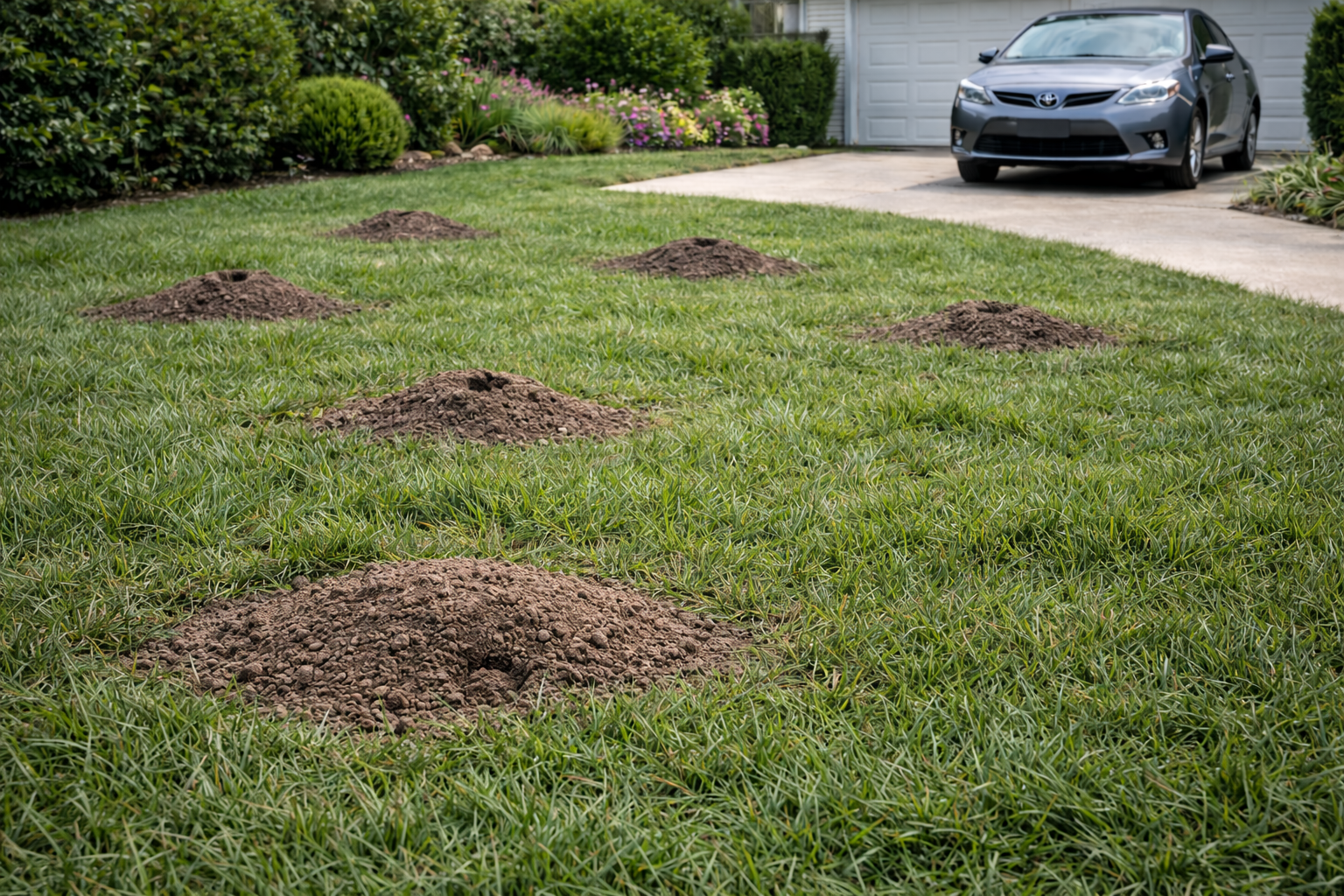
Gopher Activity in Beaumont, CA

Gophers are a persistent presence throughout Beaumont, California, a city located in Riverside County at the western edge of the San Gorgonio Pass. The combination of irrigated residential landscapes, sandy loam soils, and proximity to native chaparral and desert scrub creates ideal conditions for pocket gopher populations to establish and thrive. Property owners throughout Beaumont's neighborhoods regularly encounter evidence of gopher tunneling, particularly during spring and early summer months.

Why Beaumont Has Significant Gopher Activity

Beaumont's geographical and environmental characteristics make it exceptionally favorable for gopher populations. The city sits at an elevation of approximately 2,400 feet, positioned where the Transverse Ranges meet the San Gorgonio Pass, creating a transition zone between desert and mountain environments. This location experiences a semi-arid climate with mild winters and hot, dry summers, with most precipitation occurring between November and March.

The soil composition across Beaumont consists primarily of sandy loam and gravelly soils derived from alluvial deposits and weathered granite. These soil types are ideal for gopher burrowing—they are neither too compact nor too loose, allowing efficient tunnel construction without excessive cave-in risk. The presence of extensive irrigation systems throughout residential neighborhoods, particularly for lawns and ornamental landscaping, maintains soil moisture levels that attract and sustain gopher populations even during the dry season.

Additionally, Beaumont's proximity to undeveloped land and natural areas surrounding the city provides a continuous source of gopher colonization. The native vegetation in surrounding chaparral and desert scrub areas supports established gopher populations that periodically expand into residential zones. The relatively new expansion of suburban development in Beaumont over the past several decades means that many properties were recently converted from natural gopher habitat, with populations simply adapting to landscaped yards.

Common Gopher Species in Beaumont

The Botta's pocket gopher (Thomomys bottae) is the dominant species found throughout Beaumont and the broader Riverside County region. This gopher is smaller than some eastern species, typically measuring 6 to 8 inches in body length with a sparsely haired tail approximately 1.5 to 2 inches long. The fur coloration ranges from dark brown to grayish-brown, providing effective camouflage in Beaumont's sandy soils and arid landscape.

Botta's pocket gophers possess several anatomical adaptations perfectly suited to their burrowing lifestyle. Their front feet have elongated claws used for excavating soil, while their powerful jaw muscles and ever-growing incisors allow them to cut through roots and rocky soil. The name "pocket gopher" derives from external, fur-lined cheek pouches used to transport food and nesting material within their tunnel systems—a single gopher may carry remarkable quantities of vegetation in these pouches during foraging trips.

In Beaumont specifically, Botta's pocket gophers establish territories ranging from 200 to 2,000 square feet, depending on soil quality and food availability. Individual gophers spend the majority of their lives underground in tunnel systems that can extend 50 to 200 feet in length. These solitary animals are primarily herbivorous, feeding on underground plant parts, roots, tubers, and bulbs accessible through their tunneling activities, though they also consume above-ground vegetation when available at tunnel entrances.

When Gopher Activity Peaks in Beaumont

Gopher activity in Beaumont follows seasonal patterns closely tied to the region's precipitation and temperature cycles. The most intensive activity occurs during late winter and spring—from January through April—when breeding season coincides with increased soil moisture from winter rains and optimal conditions for tunneling. During this period, gophers are particularly active as they expand territories, establish new burrow systems, and construct nests for breeding.

Spring rainfall in Beaumont typically increases soil moisture and stimulates vegetation growth, providing abundant food resources that encourage gopher movement and expansion. As temperatures warm in April and May, surface activity becomes more apparent as gophers push fresh mounds and extend tunnel systems. Summer months (June through September) experience reduced activity due to Beaumont's extremely hot, dry conditions; gopher tunneling becomes deeper as surface soils dry out, and animals spend more time in cooler subsurface chambers.

Fall activity (October through November) increases again as temperatures moderate and occasional precipitation begins. However, this secondary peak is typically less pronounced than spring activity. Understanding these seasonal patterns helps residents anticipate when gopher presence will be most noticeable on their properties, though gophers remain active year-round in Beaumont, simply at varying intensity levels. Winter months bring occasional activity even during dormant periods, as gophers continue accessing food caches and adjusting burrow systems beneath insulated soil layers.

Signs of Gopher Damage in Beaumont Yards

The most obvious indicator of gopher presence is the appearance of characteristic mounds throughout a property. These fan-shaped or crescent-shaped soil mounds, typically 3 to 6 inches in diameter and 1 to 3 inches in height, are created when gophers push excavated soil upward during tunnel construction. In Beaumont's sandy soils, these mounds appear relatively loose and granular compared to mounds in heavier clay soils found in other regions. The mound shape often indicates the direction of the tunnel beneath, with the apex typically offset from the actual tunnel entrance plug.

Beyond mounding, gophers cause extensive damage to Beaumont's landscaped properties through selective plant destruction. Ornamental shrubs, young trees, and vegetable gardens suffer from root severing and plant material consumption. Gophers consume plant roots from beneath the soil surface, leaving no visible bite marks above ground but causing sudden wilting and plant death. The damage pattern often appears random to property owners unfamiliar with gopher behavior, as animals target specific plant parts underground that humans cannot observe.

Irrigation system damage represents another significant concern for Beaumont properties. Gophers tunnel through irrigation lines, puncturing drip tubing and damaging underground pipes. This damage typically manifests as sudden irrigation failure in specific yard zones or unexpected increases in water consumption. Additionally, gophers undermine hardscape features including walkways, patios, and retaining walls by tunneling beneath these structures, creating settling and cracking. Grass areas show patterns of dead patches corresponding to tunnel locations, and surface soil appears collapsed or uneven where tunnels are located near the surface.

Landscape Considerations for Beaumont Properties

Beaumont's landscaping aesthetic reflects its semi-arid climate and location within Southern California's inland region. Most well-maintained properties incorporate drought-tolerant plantings including desert shrubs, ornamental grasses, and succulent species suited to the region's hot, dry conditions. However, many Beaumont yards also feature irrigated lawn areas and traditional ornamental plantings, creating diverse landscapes where gopher vulnerability varies considerably.

Certain landscape plants common in Beaumont are particularly susceptible to gopher damage. Vegetable gardens and root crops prove especially attractive, with gophers readily consuming carrot, lettuce, and bean crops. Young fruit trees, ornamental trees including coast live oak, California pepper, and desert willow species, and flowering shrubs such as roses, ceanothus, and manzanita frequently suffer gopher damage. Conversely, some plants appear resistant or less palatable, including plants with toxic or strongly scented foliage—though gopher avoidance of specific plants varies among individuals and situations.

Landscape design choices influence gopher pressure significantly. Properties featuring extensive softscape areas, including lawns and planted beds with irrigated soil, provide optimal habitat and food access. Hardscape-dominant landscapes with patios, walkways, and xeriscaping present fewer gopher attractions but remain vulnerable to burrowing beneath hardscape features. Beaumont properties can modify their susceptibility through thoughtful plant selection, adjusting irrigation practices to reduce overall soil moisture, installing physical barriers around vulnerable plantings, and maintaining landscape diversity that includes less-palatable species.