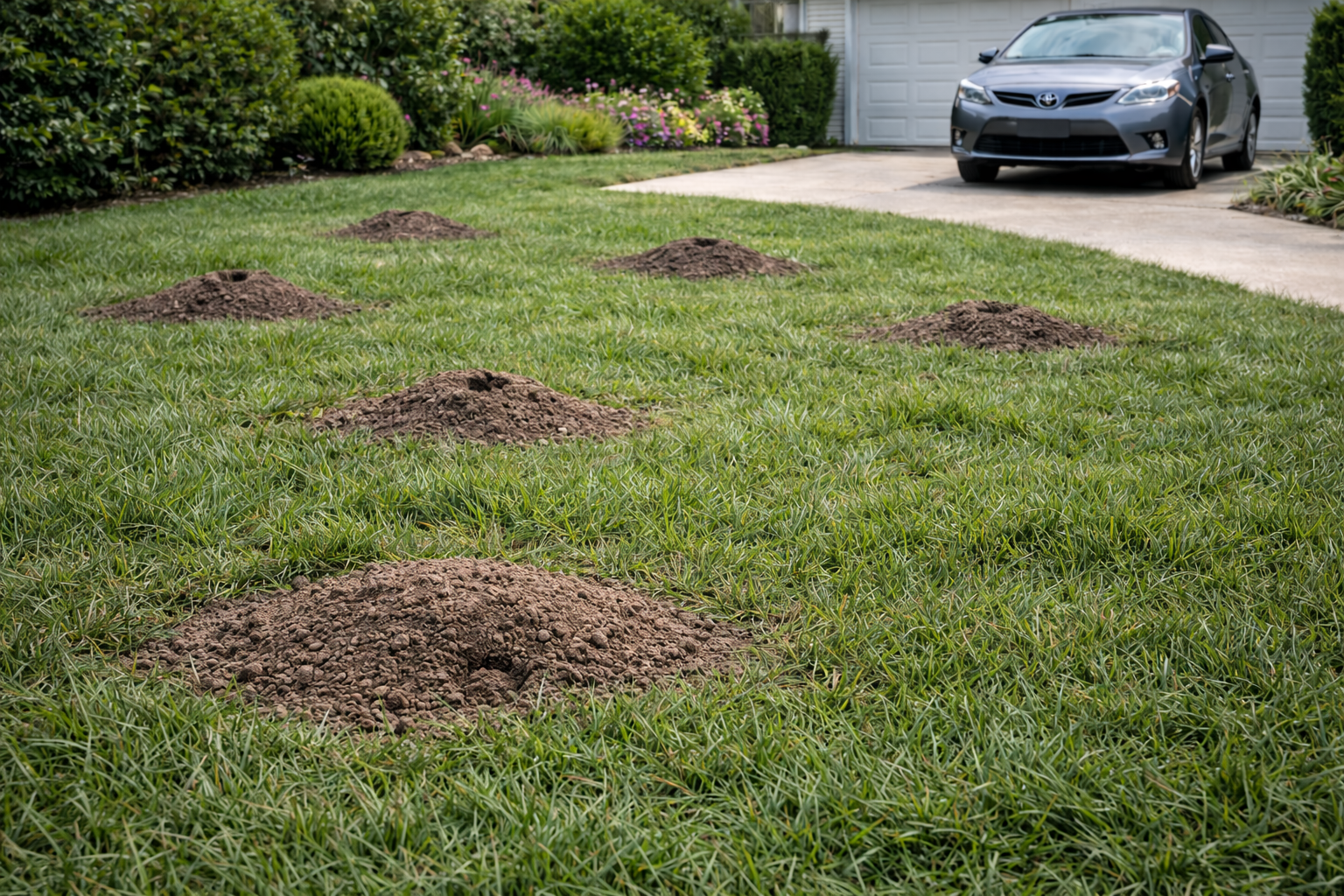
Gopher Activity in Calimesa, CA

Gophers are a persistent presence throughout Calimesa, the small community nestled in northwestern Riverside County between the San Bernardino Mountains and the San Jacinto foothills. Property owners across residential neighborhoods and surrounding agricultural areas regularly encounter evidence of gopher tunneling systems, particularly in spring and early summer when soil moisture and vegetation growth create ideal conditions for these burrowing rodents. Understanding gopher behavior, seasonal patterns, and local environmental factors that encourage their activity helps residents recognize problems early and make informed decisions about management strategies.

Why Calimesa Has Significant Gopher Activity

Calimesa's geography and climate create exceptionally favorable conditions for gopher populations. The region's sandy loam and sandy clay soils, which dominate much of the valley floor and residential areas, are ideal for digging and tunnel construction. Unlike harder clay soils in some nearby regions, these soil types allow gophers to excavate extensive burrow systems with relatively little energy expenditure. The soil composition also provides adequate moisture retention during seasonal fluctuations, supporting the underground vegetation roots that constitute the primary food source for pocket gophers.

The community's elevation of approximately 2,200 feet, combined with its proximity to both the San Bernardino Mountains to the north and the Santa Rosa Mountains to the southeast, creates a transitional zone between foothill chaparral and valley grassland ecosystems. This ecological position means that wild gopher populations inhabit the surrounding undeveloped land, and individual gophers frequently colonize nearby residential properties and landscaped areas. Additionally, Calimesa's irrigated residential landscaping—common throughout the community's established neighborhoods—provides reliable moisture that extends the growing season for landscape plants and underground vegetation year-round, offering gophers abundant food sources that would not be available in the surrounding natural chaparral.

Common Gopher Species in Calimesa

The Botta's pocket gopher, scientifically identified as Thomomys bottae, is the predominant gopher species throughout Calimesa and the surrounding Riverside County region. This medium-sized rodent measures approximately 7 to 9 inches in body length, with relatively short, dark fur that ranges from brown to grayish-brown coloring. The species derives its common name "pocket gopher" from the external fur-lined cheek pouches, which the animal uses to transport soil, roots, and other materials through its tunnel system.

Botta's pocket gophers possess distinctive anatomical adaptations for subterranean life. Their front feet feature elongated claws—particularly enlarged on the middle digits—that function as specialized digging instruments. The eyes are small and relatively underdeveloped, reflecting the species' primarily underground lifestyle where vision provides minimal advantage. The tail is characteristically short and sparsely haired, often appearing pink or flesh-colored rather than furred.

In the Calimesa area, Botta's pocket gophers inhabit a wide range of microhabitats, from cultivated gardens and landscaped yards to native shrubland on surrounding hillsides. Individual gophers maintain solitary burrow systems except during brief breeding periods. The animals are primarily herbivorous, consuming roots, tubers, bulbs, and underground stems of both native and cultivated plants. Surface vegetation is pulled downward into tunnels, where it is consumed below ground, leaving evidence of plant disappearance without surface feeding marks.

When Gopher Activity Peaks in Calimesa

Gopher activity in Calimesa follows distinct seasonal patterns closely linked to soil moisture availability and vegetation growth cycles. Activity typically increases noticeably during winter and early spring months, particularly following the region's periodic heavy rainfall events. Calimesa's Mediterranean climate brings most precipitation between November and March, and the moisture from these winter rains softens soil and stimulates growth of underground plant parts—tubers, bulbs, and roots—that constitute primary gopher food sources.

The breeding season for Botta's pocket gophers in Southern California generally extends from January through March, with peak mating activity occurring in late winter. During this period, males expand their tunnel systems dramatically while searching for females, and overall gopher activity and visibility of fresh mounds increases substantially. Following successful breeding, females prepare nest chambers and gestation tunnels, requiring additional excavation activity.

Spring rains, which may occur sporadically through April and May in Calimesa, further stimulate gopher activity as they create optimal soil conditions for tunneling and plant growth. Summer activity typically decreases as soil dries and moisture-dependent vegetation growth slows, though established gopher populations may remain active year-round in irrigated residential landscapes. Fall activity may increase again slightly as gophers prepare for winter, though this pattern is less pronounced than spring activity.

Signs of Gopher Damage in Calimesa Yards

The most visible evidence of gopher activity in Calimesa yards consists of fresh mounds—irregular piles of excavated soil pushed to the surface as gophers enlarge and maintain their tunnel systems. Unlike the more symmetrical mounds created by moles, gopher mounds appear as somewhat chaotic heaps, often with a lateral or offset appearance. Mounds typically measure 4 to 8 inches in diameter and 3 to 5 inches in height, though dimensions vary considerably. Fresh mounds appear darker in color and contain moist soil, while older mounds become drier, lighter in color, and eventually blend into surrounding soil.

Gophers in Calimesa residential areas frequently damage underground irrigation lines, creating water waste and dry zones in otherwise irrigated landscapes. Gophers may tunnel through drip lines and poly tubing while foraging, puncturing systems and redirecting water flow. Over time, these punctures multiply, reducing irrigation efficiency and sometimes creating unexpected wet spots or muddy areas in yards.

Plant damage provides another clear indicator of gopher presence. Young trees, shrubs, and vegetable plants may be killed when gophers consume roots and underground stems. Affected plants often wilt suddenly and fail despite adequate irrigation. In vegetable gardens common throughout Calimesa neighborhoods, gophers may consume entire crops of root vegetables underground, with gardeners discovering the problem only upon harvest. Gnaw marks on roots and severed plant stems found in tunnels confirm gopher activity.

Landscape Considerations for Calimesa Properties

Typical Calimesa residential landscaping emphasizes water-wise native and adapted plants suited to the region's semi-arid climate and sandy soils. Common landscape features include California native shrubs such as ceanothus species, manzanita varieties, and toyon, combined with ornamental grasses and drought-tolerant perennials. Rock mulches, decomposed granite, and hardscape elements dominate many properties, reflecting both aesthetic preferences and practical water conservation in this foothill community. Simultaneously, fruit trees and vegetable gardens remain popular among Calimesa residents, adding cultivated elements to the native plant palette.

Gophers show variable preferences regarding landscape plantings. Root vegetables—carrots, turnips, potatoes—attract heavy feeding pressure. Bulbs such as daffodils, tulips, and hyacinths are consumed readily, though some bulb species contain compounds that deter gophers. Native shrubs vary in susceptibility; while gophers may consume roots of various ceanothus and manzanita species, they do not damage all native plantings equally. Tree damage depends on tree species, age, and root system configuration. Young trees with tender roots are more vulnerable than established specimens with developed root systems.

Hardscape-heavy landscapes with extensive rock, paving, and limited soil planting areas naturally discourage gopher colonization compared to properties with extensive vegetated areas and deep soil zones. However, even heavily hardscaped Calimesa properties may develop gopher problems if underlying conditions—soil type and adjacent undeveloped land—favor gopher populations. Irrigation infrastructure in landscaped yards provides reliable moisture that extends conditions favorable to gophers compared to naturally drier periods in surrounding native habitat.