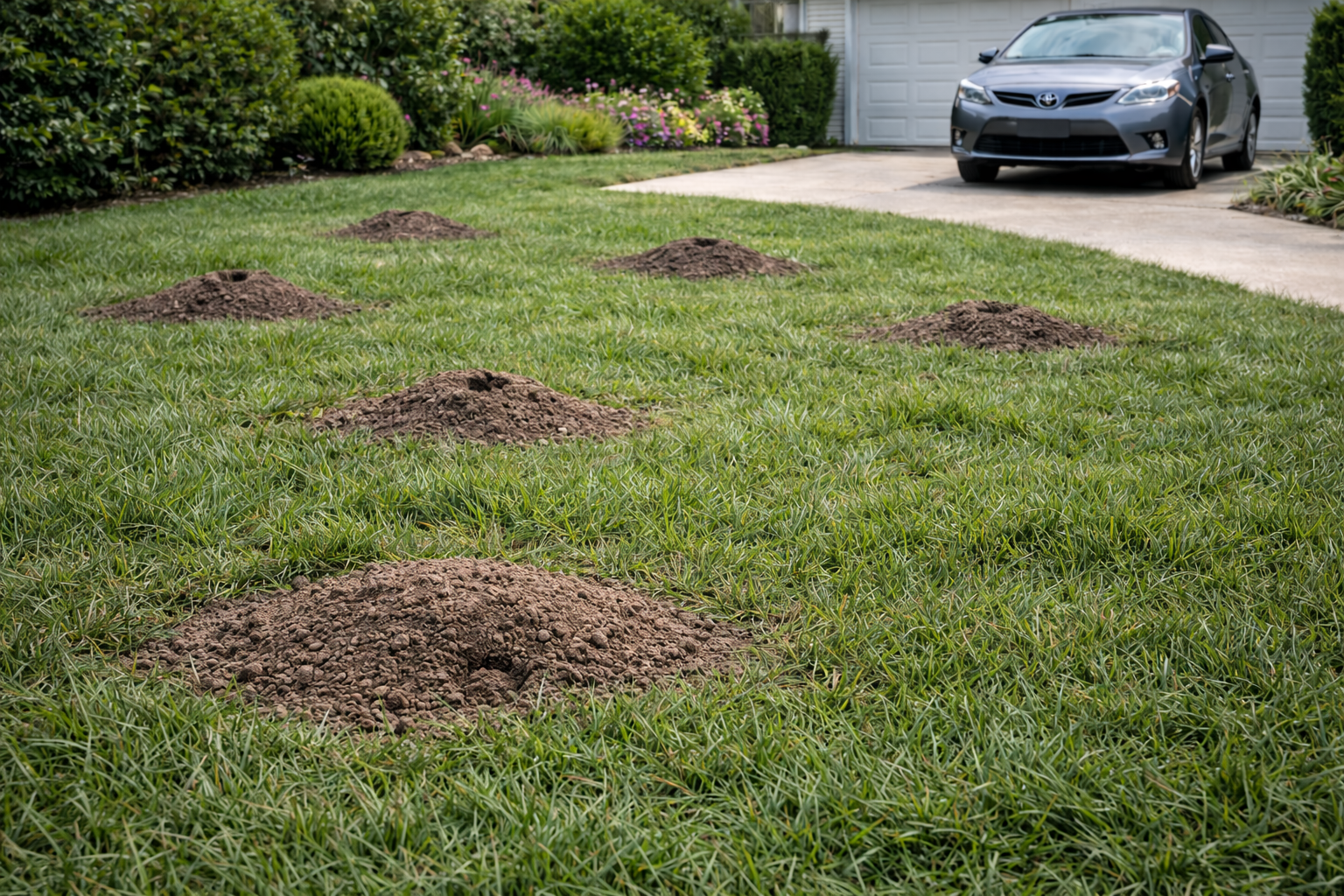
Gopher Activity in Costa Mesa, CA
Costa Mesa, situated in central Orange County with a population of approximately 113,000 residents, experiences persistent gopher activity across residential neighborhoods, parks, and commercial properties. The city's Mediterranean climate, combined with extensive irrigation infrastructure and proximity to native habitat areas, creates ideal conditions for gopher populations to thrive year-round. Understanding gopher behavior and presence in Costa Mesa helps property owners recognize problems early and make informed decisions about their landscapes.
Why Costa Mesa Has Significant Gopher Activity
Costa Mesa's geography and environmental conditions make it particularly susceptible to gopher colonization. The city sits atop alluvial soils deposited by the Santa Ana River system, which historically flowed through Orange County. These soils—primarily sandy loams and silty loams—are ideal for burrowing because they compact moderately and don't require excessive moisture to maintain tunnel structure. The soil composition allows gophers to excavate extensive tunnel networks with relatively minimal effort compared to clay-heavy or rocky terrain.
Irrigation patterns in Costa Mesa amplify gopher habitat suitability. The city's Mediterranean climate features hot, dry summers and mild winters, making supplemental watering essential for most landscaping. Homeowners, parks departments, and commercial property managers maintain year-round irrigation systems throughout residential areas like Westcliff, Bay View, and the Downtown Costa Mesa neighborhood. Irrigated soil remains workable and nutrient-rich, attracting gophers seeking both moisture and abundant plant material. Additionally, Costa Mesa's proximity to the San Joaquin Marsh and Upper Newport Bay—significant coastal wetland complexes just south and southeast of the city—provides natural gopher populations a relatively short dispersal distance into developed areas. Native grassland and wetland vegetation in these protected areas supports sustainable gopher populations that occasionally expand territory into adjacent neighborhoods.
Common Gopher Species in Costa Mesa
The Botta's pocket gopher (Thomomys bottae) represents the primary gopher species found throughout Costa Mesa and surrounding Orange County communities. This medium-sized rodent typically weighs between 2 and 4 ounces and measures 5 to 7 inches in body length, with a short tail comprising roughly one-third of total length. Botta's pocket gophers possess stocky, cylindrical bodies perfectly adapted for subterranean existence—their front legs are positioned forward on the body, and their massive front teeth extend continuously throughout life. The species derives its common name from externally opening fur-lined cheek pouches used for transporting food and nesting material.
Botta's pocket gophers in Costa Mesa display coloration typically ranging from dark brown to yellowish-brown, with occasional lighter individuals occurring in specific populations. Their eyes and ears are relatively small, reflecting reduced reliance on vision in underground environments where tactile sensation and hearing dominate sensory input. Unlike ground squirrels or voles that occasionally appear above ground, Botta's pocket gophers remain almost exclusively subterranean throughout their lives. They construct individual territories spanning roughly 200 to 2,000 square feet depending on food availability and soil conditions. In Costa Mesa's well-irrigated residential properties featuring dense plantings and vegetable gardens, gopher territories may cluster densely, with multiple individuals inhabiting single city blocks.
When Gopher Activity Peaks in Costa Mesa
Gopher activity in Costa Mesa follows distinct seasonal patterns driven by breeding cycles and environmental conditions. The breeding season occurs primarily from January through March, corresponding to increasing day length and soil moisture levels following winter rains. During breeding season, both male and female gophers expand tunnel systems and increase foraging activity, making their presence more conspicuous to property observers. Spring rains—typically occurring between December and April in Costa Mesa—soften soil and stimulate vegetation growth, prompting increased gopher movement and territorial expansion. Activity peaks usually manifest during March and April when young gophers disperse from maternal burrows seeking unoccupied territory.
Summer months (June through September) in Costa Mesa present a paradoxical situation. While heat and reduced natural moisture stress gophers, continued irrigation maintains soil workability and abundant vegetation. Gophers remain active but may spend increased time at deeper tunnel levels where soil temperature remains moderate. Fall months bring gradually cooling temperatures and occasionally increased rainfall, stimulating renewed surface activity. Winter activity depends heavily on rainfall patterns—years with substantial precipitation see continued moderate activity, while drought years witness reduced visible evidence of gophering despite sustained subsurface populations. Year-round irrigation in Costa Mesa properties essentially extends the natural "active season," meaning gophers may demonstrate notable activity during months when wild populations experience reduced movement.
Signs of Gopher Damage in Costa Mesa Yards
Identifying gopher presence requires recognizing multiple damage indicators since gophers remain mostly hidden. The most obvious sign involves fresh mounding—gophers excavate soil from tunnel systems and push it to the surface, creating characteristic conical mounds 4 to 12 inches in diameter. Unlike mole mounds, which appear volcano-shaped with a centered opening, gopher mounds typically display plugged centers where gophers have backfilled tunnel entrances with soil. In Costa Mesa yards, fresh mounds appear during active periods, particularly spring and early summer. Property owners should distinguish between recent activity (mounds appearing within days or weeks) and older, weathered mounds indicating historical but possibly inactive tunneling.
Vegetation damage provides secondary identification evidence. Gophers consume plant roots and underground portions of herbaceous plants, causing sudden wilting or death of shrubs, ornamentals, and garden plants without obvious above-ground cause. Citrus trees common in older Costa Mesa neighborhoods suffer root damage from gopher gnawing. Gophers also clip vegetation at ground level while foraging, though this behavior occurs less frequently than root consumption. Irrigation system damage represents another significant indicator—gophers tunneling near underground lines may rupture PVC piping or drip-irrigation components, causing unexpected water loss and irregular wet patches in yards. Observant Costa Mesa property owners sometimes notice ground subsidence or collapse when tunnel systems deteriorate, creating weak spots that sink under foot traffic or vehicle weight.
Landscape Considerations for Costa Mesa Properties
Costa Mesa's neighborhoods display diverse landscaping approaches reflecting the city's evolution from agricultural roots to suburban and urban development. Many established neighborhoods feature traditional Southern California Mediterranean landscaping incorporating drought-tolerant shrubs, mature fruit trees, and groundcovers supplemented by irrigation. Newer developments in Costa Mesa increasingly emphasize lower-water-use plantings including California native plants, ornamental grasses, and succulent-focused designs. Unfortunately, both approaches create gopher habitat attractiveness through different mechanisms. Fruit trees—particularly citrus, stone fruits, and nuts—represent prime gopher targets due to their nutrient-rich roots and persistent presence through seasons. Ornamental shrubs including roses, bougainvillea, and pyracantha suffer significant root damage from gopher activity. Vegetable gardens, present in many Costa Mesa residential lots, attract gophers seeking tender root crops including carrots, potatoes, and onions.
Hardscape elements—concrete patios, pathways, and raised planting beds—actually provide some protection against gopher invasion when properly installed. Costa Mesa properties incorporating extensive hardscaping with strategic planting pockets demonstrate reduced gopher problems compared to softscape-dominated yards. Raised beds elevated twelve or more inches above native soil prove largely gopher-resistant if sidewalls extend fully to the container bottom without soil contact. However, in-ground gardens and directly planted ornamentals require more proactive protection strategies. Native plants including California poppies, sage species, and toyon offer some gopher resistance due to evolved defensive chemistry, making them reasonable choices for Costa Mesa properties in gopher-prone areas. Understanding individual plant susceptibility helps Costa Mesa property owners make strategic landscape decisions that complement broader pest management approaches.
For professional gopher control in Southern California, visit Rodent Guys — serving Los Angeles, Orange, San Bernardino, and Riverside counties.