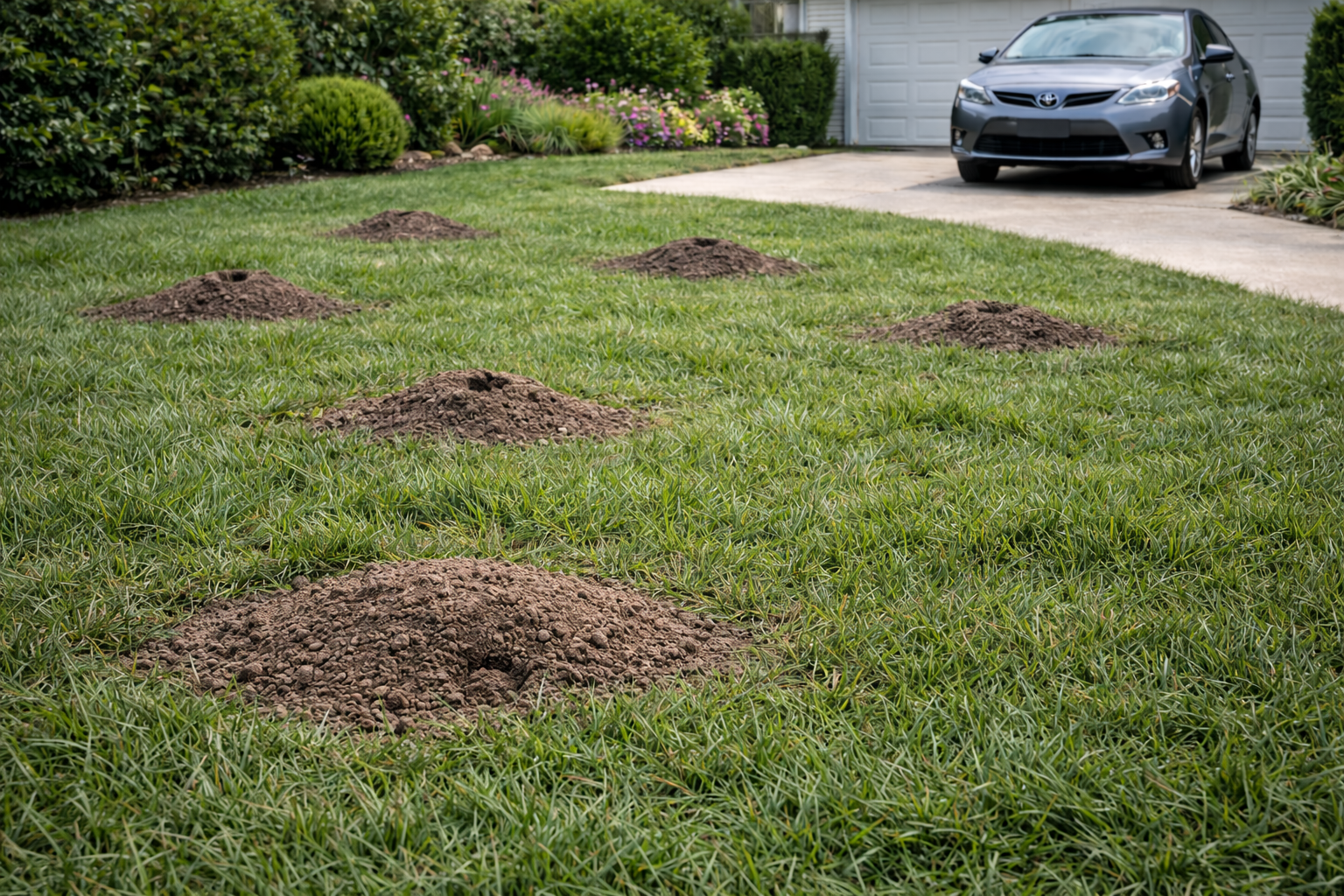
Gopher Activity in Fountain Valley, CA
Gophers are a persistent presence throughout Fountain Valley, a planned community in central Orange County situated between the Santa Ana River to the north and the Bolsa Chica ecological reserve to the south. The combination of well-irrigated residential landscapes, sandy loam soils, and proximity to undeveloped coastal plains makes this city an ideal habitat for pocket gophers. Property owners throughout neighborhoods from the western sections near Harbor Boulevard to the eastern areas bordering Talbert Avenue frequently encounter evidence of gopher tunneling and mounding activity.
Why Fountain Valley Has Significant Gopher Activity
Fountain Valley's geographic and environmental characteristics create exceptionally favorable conditions for gopher populations. The city's underlying soil composition—primarily sandy loam with clay content typical of Orange County's coastal plain deposits—allows gophers to tunnel efficiently while maintaining structural integrity in their burrow systems. This soil type, formed from ancient marine and alluvial sediments, is neither too compact nor too loose, making excavation manageable for the animals while still supporting substantial tunnel networks.
The extensive irrigation infrastructure throughout Fountain Valley contributes significantly to gopher activity levels. Developed in the 1950s as a master-planned community, Fountain Valley features residential zones with irrigated lawns, gardens, and landscaped common areas. This artificial moisture makes the soil workable year-round and supports abundant plant roots—a primary food source for gophers. Additionally, the Mediterranean climate of coastal Orange County, characterized by mild winters with occasional rain and dry summers, allows gophers to remain active throughout the year, though activity patterns shift seasonally.
Proximity to natural areas and agricultural lands surrounding Fountain Valley serves as a continuous population source. The Bolsa Chica Ecological Reserve and other preserved wetland areas to the south, combined with agricultural properties inland, harbor established gopher populations. As development continues and natural habitats experience pressure, gophers naturally expand into adjacent residential neighborhoods seeking food and space.
Common Gopher Species in Fountain Valley
The Botta's pocket gopher (Thomomys bottae) is the predominant gopher species found throughout Fountain Valley and the broader Orange County region. This medium-sized rodent typically measures 5 to 7 inches in body length, with a tail adding another 1 to 2 inches. Botta's pocket gophers display fur ranging from tan to dark brown, with darker coloration common in Fountain Valley populations. They possess small eyes and ears positioned high on their heads, a characteristic adaptation for their subterranean lifestyle where vision and hearing are less critical than in surface-dwelling species.
The species derives its common name from the external fur-lined cheek pouches—called "pocket" pouches—that extend from the mouth back along the sides of the face. These pouches allow gophers to collect and transport food back to underground chambers without making multiple surface trips, thereby reducing exposure to predators. The front feet feature elongated claws specifically adapted for digging, while the relatively short hind legs provide leverage during burrowing activities.
Within Fountain Valley, Botta's pocket gophers occupy virtually all landscaped properties and extend into undeveloped parcels where soil conditions permit tunneling. They show no particular preference for elevation within the city's relatively flat terrain, though they avoid areas with compacted clay soils or shallow groundwater. Individual gophers maintain territory-based burrow systems, with males occupying larger ranges than females, particularly during breeding season.
When Gopher Activity Peaks in Fountain Valley
Gopher activity in Fountain Valley exhibits distinct seasonal patterns influenced by local climate and breeding cycles. The breeding season typically occurs from January through March, corresponding with the rainy season when soil moisture increases and underground vegetation growth accelerates. During these months, male gophers expand their tunnel systems searching for mates, leading to increased surface mounding activity. Property owners throughout Fountain Valley frequently observe their most significant mound accumulation during February and March.
Spring rains, though modest by national standards, trigger substantial activity increases. Fountain Valley receives approximately 12 to 13 inches of annual precipitation, concentrated primarily between November and March. These relatively predictable winter rains soften soil that has hardened during the dry season, making tunneling easier and more efficient. Gophers exploit this window of favorable conditions by expanding established burrow systems and establishing new territories.
Late spring through early summer, as irrigation systems activate and landscape plants enter growing phases, supports continued high activity levels. The combination of abundant roots and consistently available moisture maintains favorable foraging conditions throughout summer months, though intense heat may cause temporary reduction in surface activity. Fall months show moderate activity as gophers prepare for winter and consolidate territories. Even during drier periods, the extensive landscape irrigation maintained throughout Fountain Valley's residential areas sustains gopher populations at relatively consistent levels.
Signs of Gopher Damage in Fountain Valley Yards
Fresh gopher mounds represent the most obvious indicator of active gopher presence in Fountain Valley properties. These mounds appear as crescent-shaped or circular piles of loose soil, typically 4 to 8 inches in diameter and 2 to 4 inches high, distributed across lawns and garden beds. Unlike mole mounds, which often appear as linear ridges, gopher mounds tend toward more discrete piles pushed up from vertical shaft entrances. A single active gopher may create multiple mounds within a property over the course of weeks.
Underground tunneling causes visible surface subsidence and creates hazards for people and equipment. Collapsed burrow systems manifest as sunken areas or soft spots in lawns where tunnels have weakened soil structure. Garden beds and landscaped areas show particular vulnerability. The irrigation lines buried throughout Fountain Valley properties frequently intersect gopher tunnels, leading to water leaks, localized flooding, and damage to drip irrigation equipment. Property owners often discover gopher activity only after noticing unexpected water pooling or increased water bills.
Plant damage serves as another critical indicator. Gophers feed on plant roots, bulbs, and underground stems, causing sudden wilting or death of landscape plantings. Favorite targets include ground covers, young shrubs, and herbaceous perennials common in Fountain Valley landscapes. Unlike above-ground herbivores, gophers consume roots from below, making the damage less obvious until the plant expires. Container plants placed directly on soil can be undermined or have their root systems severed by nearby tunneling activity.
Landscape Considerations for Fountain Valley Properties
Fountain Valley's residential character and planning guidelines have created a landscape aesthetic dominated by irrigated plants, open lawns, and mixed hardscape elements. The city's position in Orange County's coastal plain supports Mediterranean and California native plant palettes alongside conventional temperate zone ornamentals. Many properties feature drought-tolerant plants such as California buckwheat, toyon, and ceanothus, while others maintain traditional turf grass lawns interspersed with specimen shrubs and shade trees.
Gophers demonstrate clear preferences among landscape plants found throughout Fountain Valley. They show strong attraction to young citrus trees, which may be found on some residential properties, consuming roots and bark. Ground covers including ivy, vinca, and sedum face significant predation pressure. Herbaceous perennials such as salvias and daylilies commonly planted in Fountain Valley gardens are particularly vulnerable during establishment phases. Conversely, gophers show little interest in many mature trees, including coast live oaks and other established shade species.
The contrast between softscape and hardscape elements influences gopher activity patterns within individual properties. Areas with extensive hardscaping—patios, pathways, and permeable pavers—remain largely gopher-free since soil depth and disturbance patterns discourage tunnel establishment. Properties with dense lawn coverage and continuous planting beds provide ideal habitat. Transition zones between landscaped areas and natural or undeveloped spaces frequently show elevated activity as gophers move between territories. Understanding these landscape-related patterns helps explain why gopher activity varies significantly even within single neighborhoods of Fountain Valley.
For professional gopher control in Southern California, visit Rodent Guys — serving Los Angeles, Orange, San Bernardino, and Riverside counties.