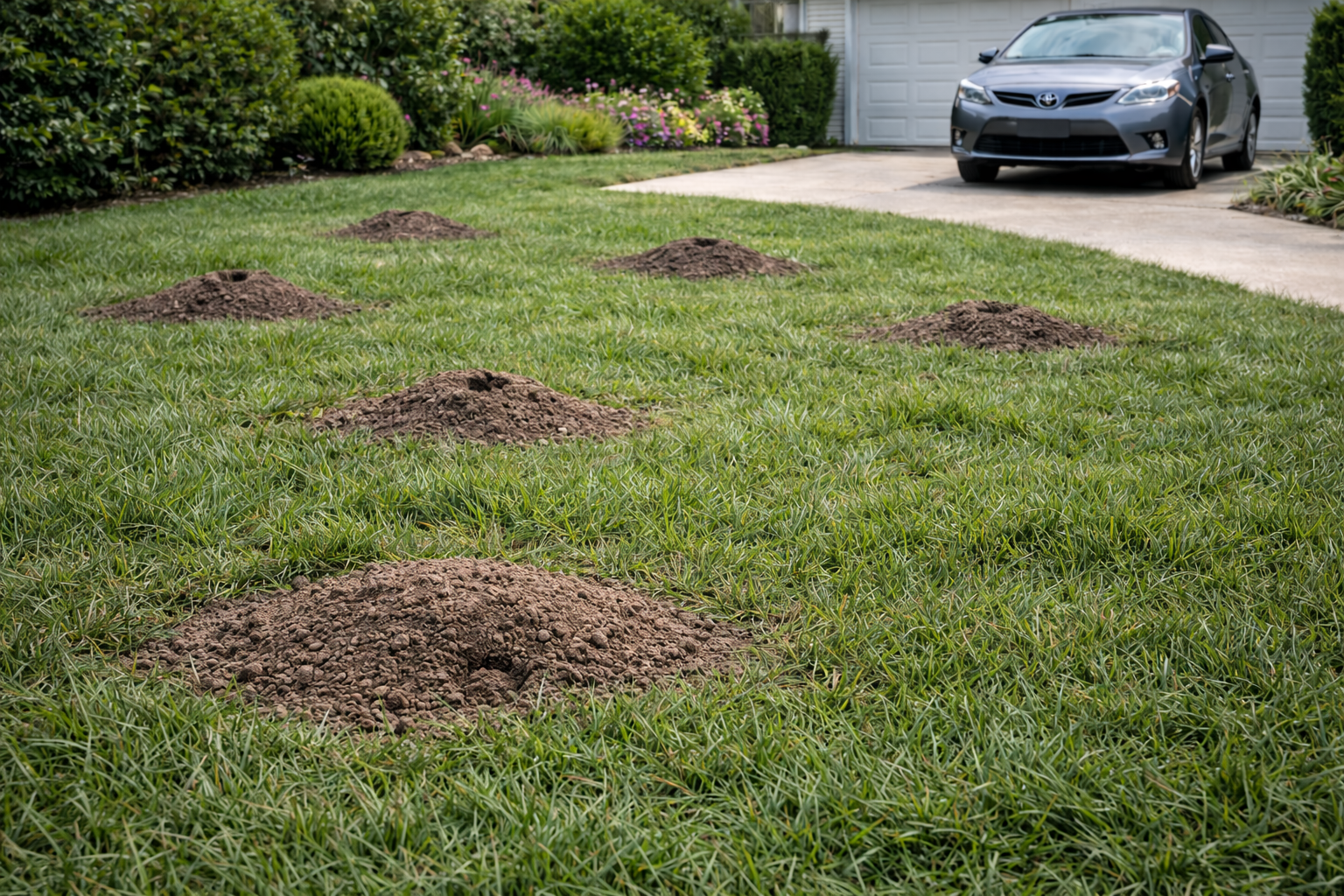
Gopher Activity in Highland Park, CA

Highland Park, nestled in the northeastern foothills of Los Angeles, experiences consistent gopher activity throughout the year due to its ideal combination of soil composition, moisture availability, and residential landscaping. The neighborhood's elevation ranging from approximately 400 to 800 feet above sea level, combined with its proximity to the San Rafael Hills and arroyos that feed into the Los Angeles River watershed, creates conditions that support robust gopher populations. Residents and property managers in this historic community frequently encounter evidence of burrowing activity, particularly in yards with established irrigation systems and ornamental plantings.

Why Highland Park Has Significant Gopher Activity

The geology and hydrology of Highland Park make it particularly susceptible to gopher colonization. The neighborhood sits on alluvial soils deposited from the San Rafael Hills, characterized by a mix of sandy loam and clay composition that is neither too compacted nor too loose—ideal conditions for tunnel construction and maintenance. Highland Park's elevation places it in a transitional zone where rainfall patterns are somewhat more reliable than in lower-elevation Los Angeles areas, with average annual precipitation around 14-15 inches concentrated primarily between November and March.

The prevalence of residential irrigation systems throughout Highland Park's neighborhoods—including the tree-lined streets in the historic core near York Boulevard and the established residential zones south of Avenue 50—provides year-round moisture that sustains gopher populations even during dry months. Additionally, Highland Park's position adjacent to the San Rafael Hills Open Space Preserve and various riparian corridors means that gophers have nearby wild populations that can recolonize residential areas. The neighborhood's mix of vacant lots, older properties with minimal maintenance, and gardens with diverse plantings creates a mosaic of favorable habitat. Unlike some neighboring areas that have undergone extensive hardscaping, Highland Park retains substantial soft landscaping that supports active gopher tunneling systems.

Common Gopher Species in Highland Park

The primary gopher species found in Highland Park is the Botta's pocket gopher (Thomomys bottae), a medium-sized rodent weighing between 2 and 5 ounces with a body length of 5 to 7 inches. These animals exhibit the characteristic features of pocket gophers: small eyes, short rounded ears barely visible above the fur, powerful front legs with large claws, and distinctly protruding front teeth adapted for burrowing and gnawing. Their fur typically ranges from light brown to dark brown, sometimes with reddish tones, and provides excellent camouflage in the local soil environment.

Botta's pocket gophers are solitary, territorial animals that maintain individual burrow systems rather than colonies. In Highland Park's residential areas, individual gophers establish tunnel networks that can extend across multiple properties, typically staying within an area of approximately one-third acre. They are most active during morning and late afternoon hours, though they burrow throughout the day. These gophers are herbivorous and feed on roots, tubers, and underground plant parts, which explains their particular attraction to yards containing fruit trees, ornamental roots, and vegetable gardens. The species is native to California and has inhabited the Los Angeles basin for millennia, but modern residential development and landscaping practices have actually expanded available habitat compared to the native chaparral and grassland ecosystems that once dominated Highland Park's landscape.

When Gopher Activity Peaks in Highland Park

Gopher activity in Highland Park follows seasonal patterns influenced by rainfall, temperature, and reproductive cycles. The most dramatic activity occurs between January and March, coinciding with the gopher breeding season and typically heavier winter rains that soften soil and increase root growth. During these months, fresh mounds appear regularly in yards, and existing tunnel systems expand as gophers prepare for reproduction and take advantage of improved digging conditions.

Spring activity intensifies following the March-April rains that are characteristic of Highland Park's Mediterranean climate pattern. As temperatures warm and plants begin active growth, gophers find abundant fresh roots and shoots, driving increased foraging and tunnel expansion. Summer activity moderates somewhat due to harder, drier soil conditions, though gophers remain active in irrigated yards where soil moisture remains consistent. The arrival of fall rains in October and November triggers another activity surge as gophers prepare for winter and respond to renewed plant growth. Even during the drier summer months typical of Highland Park's climate, properties with established irrigation systems—common throughout the neighborhood's residential areas—continue to experience significant gopher activity because the artificial moisture maintains favorable burrowing and foraging conditions year-round. Winter months from December through January show variable activity depending on rainfall patterns, though gopher presence remains constant.

Signs of Gopher Damage in Highland Park Yards

The most visible evidence of gopher activity in Highland Park yards is the characteristic mound formation. These mounds appear as crescent or horseshoe-shaped piles of soil, typically 3 to 8 inches in diameter and 2 to 4 inches high, scattered across lawns and garden beds. Gophers create these mounds by pushing soil vertically from their tunnels to the surface; the distinctive shape results from the direction of the push. Unlike mole mounds, which are cone-shaped and typically centered on a hole, gopher mounds are asymmetrical with the hole offset to one side.

Beyond surface mounding, gophers cause damage to irrigation infrastructure common throughout Highland Park's established neighborhoods. The underground drip lines, soaker hoses, and in-ground sprinkler systems that support the area's ornamental plantings and street trees are frequently punctured or dislodged by gopher tunneling, leading to water loss and uneven irrigation. Gophers also directly damage landscape plants by severing roots and consuming underground portions of trees, shrubs, and perennials. Fruit trees and ornamental varieties popular in Highland Park's gardens—including citrus, stone fruits, and decorative flowering trees—are particularly vulnerable. Visible symptoms include sudden wilting, yellowing foliage, or complete death of plants despite apparently adequate watering. In some cases, plants become partially exposed as soil settles following tunnel creation beneath the root zone. Gophers occasionally cause structural concerns by undermining foundations, hardscape installations, or compacted soil surfaces, though this is less common than landscape damage.

Landscape Considerations for Highland Park Properties

Highland Park's landscaping traditions reflect its history as a late-19th and early-20th-century streetcar suburb, resulting in distinctive plantings that may either attract or withstand gopher activity. The neighborhood's tree-lined streets feature substantial mature specimens including coast live oak, California pepper trees, and various ornamental species established over decades. Many private properties maintain similar aesthetic with mixed plantings of native and adapted species, ornamental shrubs, and ground covers arranged in the informal, layered style characteristic of early Los Angeles residential design. The prevalence of soft landscaping—lawns, planting beds, and gardens—rather than extensive hardscaping creates abundant habitat for gophers throughout Highland Park's residential zones.

Properties with established irrigation systems, nearly universal in Highland Park's more developed areas, experience enhanced gopher activity compared to drought-tolerant or minimally irrigated properties. The consistency of soil moisture that supports the neighborhood's ornamental plantings simultaneously supports active gopher populations. Certain plant species are particularly vulnerable to gopher damage, including fruit and nut trees, root vegetables, ornamental bulbs, and tender herbaceous perennials. Conversely, some established native California plants—including California buckwheat, toyon, and various sage species—are less attractive to gophers, though they still represent viable tunnel routes. Hardscaped elements such as patios, driveways, and concrete walkways interrupt gopher movement and can protect small areas but do not provide neighborhood-scale control. Properties throughout Highland Park that combine significant soft landscaping with regular irrigation therefore represent optimal habitat, while those transitioning toward xeriscaping and hardscape experience reduced gopher activity over time.