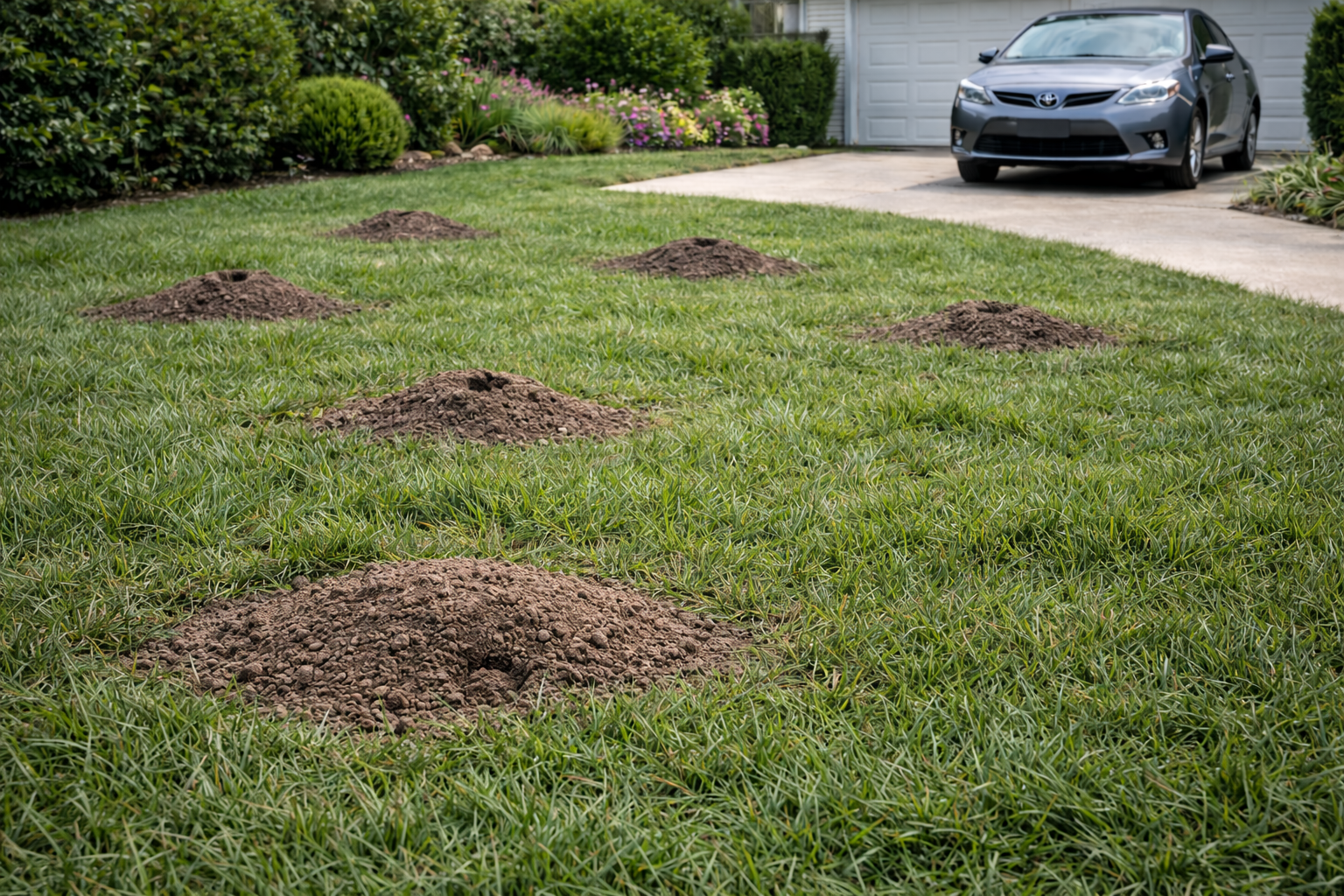
Gopher Activity in La Crescenta, CA

La Crescenta, nestled in the foothills between the San Gabriel Mountains and the Los Angeles basin, experiences consistent gopher activity throughout the year. The combination of residential properties with established landscaping, proximity to undeveloped hillside habitat, and favorable soil conditions creates an environment where pocket gophers thrive. Property owners in neighborhoods ranging from the lower valley floor near the Crescenta Valley High School area to the hillside communities above Foothill Boulevard frequently encounter evidence of gopher tunneling and mounding.

Why La Crescenta Has Significant Gopher Activity

The geological and environmental characteristics of La Crescenta make it particularly suitable for pocket gopher populations. The area's soils, derived from the alluvial deposits of the San Gabriel River system and decomposed granite from the adjacent mountains, consist primarily of sandy loam and gravelly compositions that are ideal for burrowing. These soil types allow gophers to excavate extensive tunnel networks with minimal resistance, unlike harder clay-predominant soils found in other Los Angeles County communities.

The region's Mediterranean climate—with warm, dry summers and mild, wet winters—supports year-round gopher activity. Annual rainfall in La Crescenta averages approximately 15 inches, concentrated between November and March. This seasonal precipitation encourages spring growth in landscaping and native vegetation, providing abundant food resources when gopher populations are most active during breeding season. Additionally, the extensive irrigation systems installed in residential yards maintain soil moisture throughout the dry summer months, creating perpetually favorable burrowing conditions that would otherwise be challenging during drought periods.

La Crescenta's position at the interface between urban development and wild habitat amplifies gopher presence. The foothill canyons and undeveloped slopes of the San Gabriel Mountains, visible from most residential areas, harbor significant gopher populations in native chaparral and sage scrub ecosystems. As these wild populations fluctuate seasonally, individuals disperse into adjacent residential neighborhoods, particularly in autumn and early winter when natural food sources in the hills become scarce.

Common Gopher Species in La Crescenta

The Botta's pocket gopher (Thomomys bottae) represents the primary gopher species affecting La Crescenta properties. Named after the Spanish word "bota" (a pouch), Botta's pocket gophers possess external cheek pouches used for transporting soil and food materials—a distinctive feature that differentiates them from other burrowing rodents. Adult individuals typically measure 5 to 6 inches in body length, with an additional 1 to 2 inches of tail, and weigh between 2 and 4 ounces, making them relatively small but highly effective excavators.

These gophers exhibit coloration ranging from tan to brown to nearly black, though La Crescenta populations tend toward medium brown hues. Their fur is fine and short, adapted to reduce friction in narrow burrows. The species possesses prominent front teeth and powerful forelimbs with long claws—anatomical specializations reflecting their subterranean lifestyle. Unlike ground squirrels or moles that may be mistaken for gophers, Botta's pocket gophers spend the vast majority of their time underground, emerging only occasionally and remaining within immediate proximity of burrow entrances.

In La Crescenta's residential setting, Botta's pocket gophers occupy territories ranging from 200 to 2,000 square feet, depending on food availability and soil quality. Properties with mature trees, extensive gardens, and established turf grass provide optimal habitat. The sandy loam and gravelly soils prevalent throughout La Crescenta neighborhoods—from the developed areas near Foothill Boulevard to the hillside communities with panoramic basin views—all support stable gopher populations with minimal seasonal migration.

When Gopher Activity Peaks in La Crescenta

Gopher activity in La Crescenta exhibits distinct seasonal patterns driven by reproductive cycles and environmental conditions. The breeding season extends from January through March, with peak mating activity occurring in February. During this period, male gophers increase movement and tunneling as they search for mates, resulting in elevated mounding activity visible across yards throughout the community. Homeowners typically report the most dramatic landscape disturbance during these winter and early-spring months.

Spring rains, concentrated between February and April in La Crescenta's climate pattern, stimulate germination of grasses, forbs, and plant roots that constitute primary gopher food sources. Increased plant growth combined with elevated soil moisture creates ideal burrowing conditions, maintaining high activity levels through April and May. Summer activity persists but typically at reduced intensity as gophers focus on consuming stored vegetation and adjusting tunnel systems to account for lower soil moisture. Supplemental irrigation common in La Crescenta's residential landscaping partially mitigates summer slowdowns by maintaining attractive food sources and workable soil conditions.

Autumn represents a secondary activity peak as gophers expand tunnel networks and establish larger food stores in preparation for winter. This activity surge becomes particularly noticeable in September and October. Dispersal of young gophers from natal territories also occurs during autumn months, explaining why property owners sometimes observe sudden gopher colonization of previously unaffected yards. Winter activity declines modestly but continues throughout the season, particularly during and following the region's intermittent rain events.

Signs of Gopher Damage in La Crescenta Yards

The most conspicuous indicator of gopher presence is fresh mounding—the characteristic piles of excavated soil appearing in yards throughout La Crescenta. These mounds typically measure 2 to 4 inches in height and 4 to 6 inches in diameter, appearing as distinct dome-shaped or crescent-shaped formations across lawns, garden beds, and landscaping areas. Unlike mole mounds, which are often riddled with surface ridges and represent pushed-up soil, gopher mounds result from excavated material deposited from subsurface tunnels. The lateral displacement of soil creates a distinctive appearance recognizable throughout La Crescenta neighborhoods.

Subsurface tunnel damage often exceeds the visible mounding damage in significance. Gopher burrow systems undermine irrigation lines, a particularly serious concern given the extensive drip and sprinkler irrigation systems installed throughout La Crescenta's properties. Tunnels directly damage poly tubing and emitter lines, reducing irrigation efficiency and creating dry spots in landscaping. Burrowing beneath foundation irrigation systems can redirect water away from intended plantings, leading to landscape decline and expensive irrigation troubleshooting. Gophers may also damage subsurface cables and conduits, though this represents a secondary concern compared to irrigation impacts.

Above-ground plant damage reflects gophers' voracious herbivory. Young trees and shrubs experience stem girdling when gophers access root collars from tunnel systems, severing vascular tissues and killing otherwise healthy plants. Vegetable and ornamental gardens suffer rapid decimation as gophers consume roots, bulbs, and tubers. Mature landscapes in La Crescenta neighborhoods demonstrate selective vulnerability—some plants remain largely untouched while adjacent species disappear entirely, reflecting gophers' dietary preferences. Roses, tulips, carrots, and young fruit trees rank among the most vulnerable ornamental species in the region.

Landscape Considerations for La Crescenta Properties

La Crescenta's landscape character reflects the region's Mediterranean climate and the particular preferences of foothill and hillside communities. Properties in lower elevation neighborhoods near Foothill Boulevard typically feature Mediterranean-style landscaping with drought-tolerant shrubs, ornamental grasses, and mature oak or sycamore trees interspersed with irrigated lawns. Hillside properties above Foothill Boulevard often maintain more naturalistic landscaping that integrates with the adjacent chaparral ecosystem. Both landscape styles present vulnerabilities to gopher damage, though for different reasons.

Irrigation-dependent landscapes common in the lower La Crescenta neighborhoods create year-round food availability and optimal burrowing conditions that sustain dense gopher populations. Turf grass—still prevalent in many residential yards despite the region's water constraints—requires consistent subsurface moisture that aligns perfectly with gopher habitat preferences. Mature landscape trees, frequently featured in established La Crescenta properties, develop extensive root systems that attract gophers seeking nutritious root materials. Mediterranean shrubs, while generally less vulnerable than herbaceous plants, still suffer root damage and occasionally experience root collar girdling from gopher activity.

Hardscape elements such as pathways, patios, and rock gardens provide limited direct deterrent value, though areas with extensive rock or concrete coverage typically experience lower gopher activity simply because fewer suitable tunnel locations exist. Many hillside La Crescenta properties incorporate dry creek beds, rock outcroppings, and decorative boulders that partially interrupt tunnel networks. However, gophers readily burrow around and beneath such features, limiting their practical effectiveness. Properties transitioning toward xeriscape design with reduced irrigation and expanded hardscape coverage naturally experience declining gopher activity, though established populations may persist for extended periods before gradually diminishing through natural mortality and dispersal to more suitable habitat.