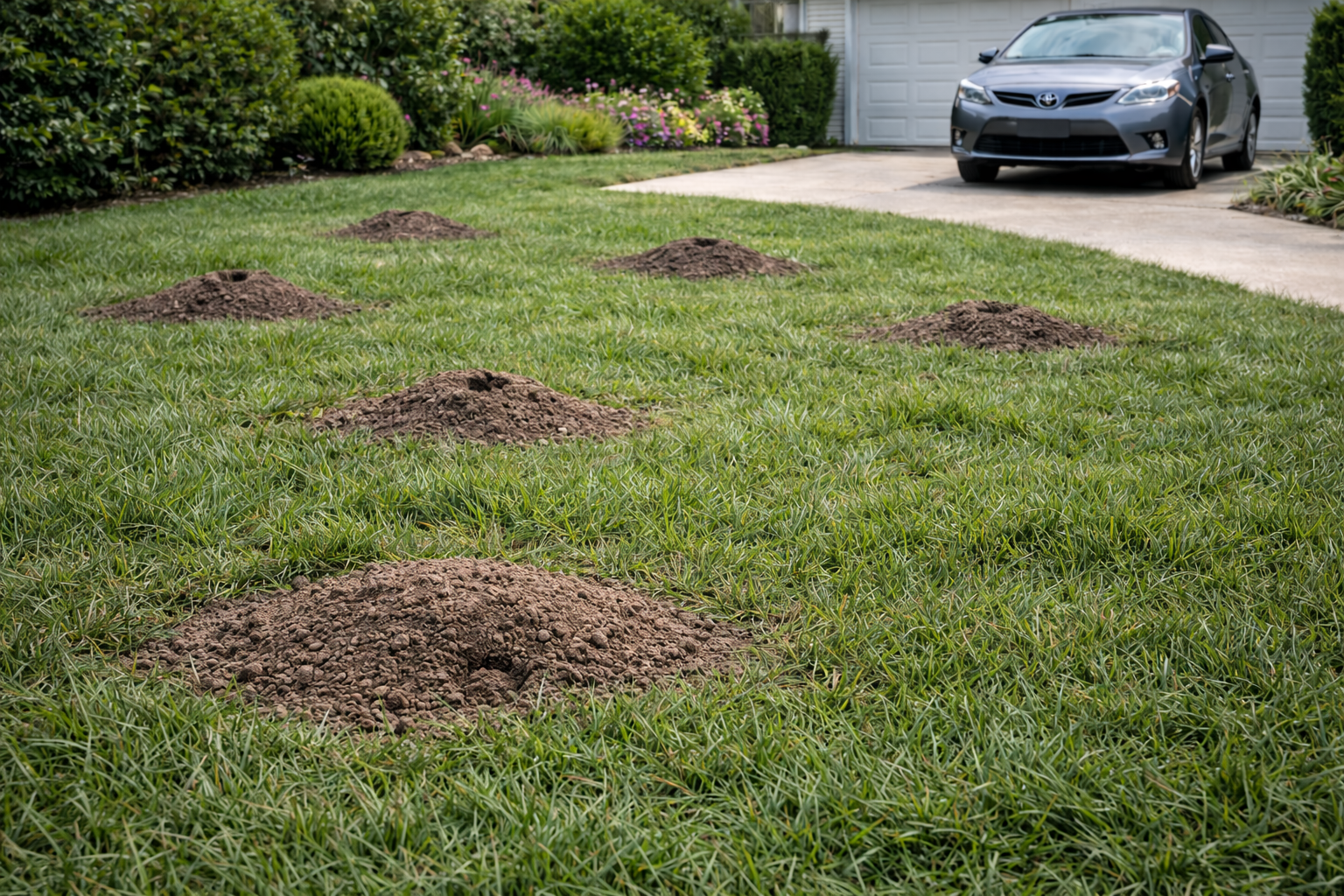
Gopher Activity in Mission Hills, CA
Mission Hills, located in the northwestern San Fernando Valley region of Los Angeles, experiences notable gopher activity throughout the year. The community's combination of residential landscaping, proximity to undeveloped hillside terrain, and favorable soil conditions creates an environment where gophers thrive. Property owners in this area frequently encounter evidence of gopher burrowing, making understanding local gopher behavior and ecology essential for managing land effectively.
Why Mission Hills Has Significant Gopher Activity
Mission Hills' geographic position and environmental characteristics make it particularly suitable for gopher populations. The community sits at the edge of the San Fernando Valley, with the Santa Susana Mountains forming its northern and western boundaries. This proximity to wild chaparral and grassland habitat means gophers have access to both undeveloped foraging areas and residential properties with cultivated landscapes.
The soil composition throughout Mission Hills consists primarily of alluvial deposits and sandy loam, which gophers find relatively easy to excavate. These soil types, common across the San Fernando Valley floor, present minimal resistance to burrowing compared to clay-heavy or rocky substrates. The valley's annual rainfall pattern—concentrated primarily between November and March—creates seasonal moisture variations that influence soil workability and gopher activity intensity.
Irrigation infrastructure represents another significant factor in gopher abundance. Many Mission Hills properties maintain year-round landscape irrigation for drought-tolerant plants, shrubs, and turf areas, providing consistent soil moisture that supports gopher tunneling and the vegetation they consume. Additionally, Mission Hills' elevation range from approximately 1,100 to 1,600 feet above sea level creates microclimatic zones that support diverse vegetation types, increasing food availability for foraging gophers across different neighborhoods and property types.
Common Gopher Species in Mission Hills
The Botta's pocket gopher (Thomomys bottae) is the predominant gopher species throughout Mission Hills and the greater San Fernando Valley region. These medium-sized rodents typically weigh between 2 and 4 ounces and measure approximately 5 to 7 inches in body length, with relatively short, hairless tails that measure 1 to 2 inches. Their fur coloration ranges from light gray to brown, often matching the local soil color, which provides camouflage in their subterranean environment.
Botta's pocket gophers derive their common name from the external fur-lined cheek pouches they use to transport food and nesting materials through their tunnel systems. These pouches extend from their mouth to their shoulders and can expand significantly when filled. The species features distinctly large front incisors adapted for gnawing through soil and plant roots, small eyes positioned high on their heads, and powerful front legs equipped with long claws specialized for digging.
In Mission Hills specifically, Botta's pocket gophers occupy both the developed residential areas and adjacent native habitat. They demonstrate notable adaptability, thriving equally well in maintained landscapes as in wild chaparral environments. Their presence in Mission Hills is year-round, though activity levels and visibility fluctuate seasonally. The species is primarily solitary, with individuals maintaining individual burrow systems that they defend from other gophers except during brief mating periods.
When Gopher Activity Peaks in Mission Hills
Gopher activity in Mission Hills follows predictable seasonal patterns tied to rainfall, temperature, and breeding cycles. The peak activity period occurs during late winter and early spring, typically from January through April. This timing coincides with the region's rainy season, when soil moisture increases significantly, making excavation easier and plant growth accelerating following winter dormancy.
The breeding season for Botta's pocket gophers in Mission Hills occurs primarily from January through March. During this period, males expand their tunnel systems and become more mobile as they search for mates, resulting in visible surface activity, fresh mound formation, and increased vegetation damage. Females produce litters of 2 to 6 young in spring, and juvenile gophers disperse from natal burrows during late spring and early summer, creating temporary increases in surface activity as young animals establish their own tunnel systems.
Spring rains in Mission Hills, generally occurring between February and April, soften soil conditions and stimulate plant growth, making this season ideal for gopher foraging and tunnel expansion. Summer activity typically declines as soil hardens with reduced precipitation and plants mature, though gophers remain active in irrigated landscapes. Fall activity remains relatively low until winter moisture returns. Understanding these seasonal fluctuations helps property owners recognize when gopher presence is most likely and when fresh damage occurs most frequently on Mission Hills properties.
Signs of Gopher Damage in Mission Hills Yards
The most visible indicator of gopher presence is the characteristic mound structure they create while excavating tunnels. Mission Hills property owners frequently observe these mounds in both front and backyards, particularly in areas with maintained landscaping and irrigation. Gopher mounds typically appear as crescent or horseshoe-shaped soil formations, usually 4 to 8 inches in diameter and 2 to 6 inches high, created when animals push excavated soil to the surface. Unlike moles, which create ridged surface tunnels, gophers create discrete mounds from subsurface burrowing.
Underground tunnel systems cause extensive damage to irrigation components common in Mission Hills landscapes. Gophers regularly sever drip irrigation lines, soaker hoses, and landscape water systems as they excavate their burrows, resulting in water waste and compromised irrigation efficiency. Property owners often discover irrigation failures before noticing surface mounds, making water system damage a primary indicator of gopher activity in this community.
Direct vegetation damage is another significant sign of gopher presence. Gophers consume roots, bulbs, and lower plant stems from below ground, causing plants to wilt, yellow, and die without obvious above-ground cause. In Mission Hills, this damage commonly affects shrubs, young trees, herbaceous plants, and turf areas. Root crops and vegetables in raised garden beds represent particularly attractive food sources. When gophers girdle plant roots or consume underground portions of stems, affected plants display rapid decline despite adequate irrigation and no visible pest activity on leaves or stems.
Landscape Considerations for Mission Hills Properties
Mission Hills' residential character reflects typical San Fernando Valley landscaping patterns, with properties featuring combinations of drought-tolerant plants, ornamental shrubs, mature trees, and maintained turf areas. Mediterranean-style landscapes—incorporating sage species, California buckwheat, toyon, and similar native shrubs—are increasingly common as water conservation concerns influence local landscaping choices. These drought-adapted plants appeal to current property owners throughout Mission Hills neighborhoods, yet such landscapes still attract gopher activity, particularly when irrigation is applied to maintain plant establishment and growth.
Certain plants demonstrate particular vulnerability to gopher damage in Mission Hills environments. Root vegetables, bulbs, and tender perennials including dahlias, tulips, and marigolds attract concentrated gopher foraging. Newly planted shrubs and trees are especially susceptible because their tender root systems and bark provide nutritious food compared to established woody vegetation. Ornamental grasses, sedums, and agave species commonly used in Mission Hills xeriscaping may also suffer damage depending on local gopher population density and available food alternatives.
Properties incorporating hardscape features—flagstone patios, brick pathways, concrete driveways—typically experience different gopher damage patterns than softer landscape areas. While gophers may tunnel beneath hardscape features, causing settling and damage to paving surfaces, these areas generally discourage surface activity compared to planted zones. Mission Hills property owners increasingly recognize that landscape design choices, irrigation infrastructure, and plant selection directly influence gopher habitat suitability and the extent of potential damage across their properties.
For professional gopher control in Southern California, visit Rodent Guys — serving Los Angeles, Orange, San Bernardino, and Riverside counties.