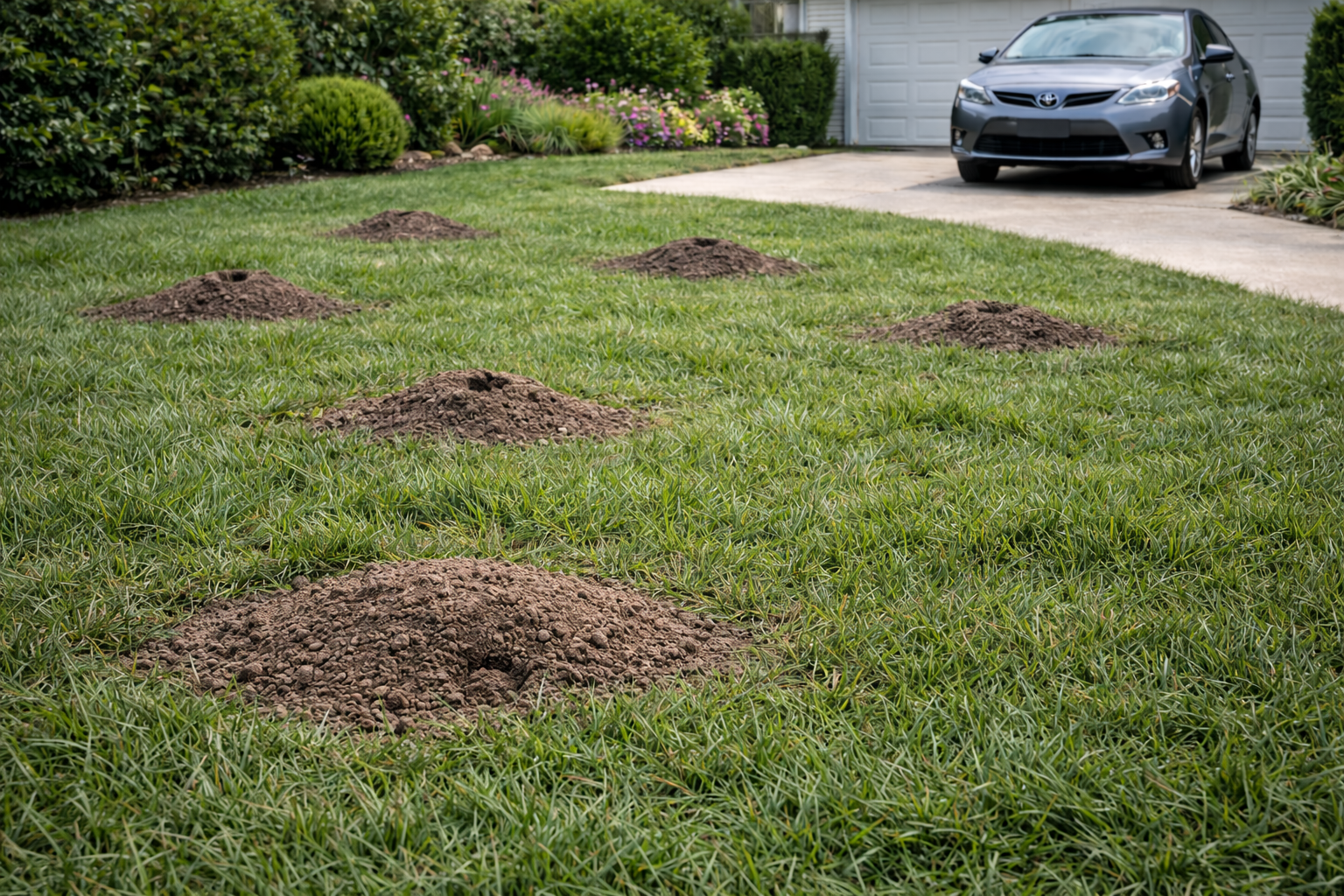
Gopher Activity in Bell, CA
Bell, California, a small city in Los Angeles County located in the southeastern portion of the metropolitan area, experiences persistent gopher activity throughout the year. The combination of residential landscaping, municipal irrigation systems, and proximity to undeveloped habitat creates an environment where gophers thrive and frequently cause property damage. Understanding the local gopher ecology in Bell helps property owners recognize the conditions that attract these burrowing rodents and identify the signs of their presence.
Why Bell Has Significant Gopher Activity
The geographic location and environmental characteristics of Bell make it particularly susceptible to gopher infestations. Situated in the Los Angeles Basin with elevation ranging from approximately 240 to 280 feet above sea level, Bell sits on alluvial soils deposited by the San Gabriel River system. These soils—typically silt and clay loams—are ideal for burrowing because they hold their shape when tunneled yet remain soft enough for gophers to excavate without extreme effort. The soil composition directly influences gopher population density in the area.
Bell's climate contributes significantly to year-round gopher activity. With average annual temperatures ranging from the low 50s Fahrenheit in winter to the mid-80s in summer, the area rarely experiences freezing conditions that would drive gophers deeper underground for extended periods. Winter temperatures typically remain mild enough that gophers can continue foraging and expanding tunnel systems. The city receives approximately 15 inches of annual precipitation, concentrated primarily between November and March, which softens soil and makes digging easier during these months.
Residential and commercial properties throughout Bell feature extensive irrigation infrastructure designed to maintain landscaping in the semi-arid Southern California climate. These irrigation systems create pockets of consistently moist soil that gophers find attractive. Additionally, the proximity of Bell to undeveloped open spaces, particularly areas along the Los Angeles River and nearby properties managed for flood control, provides source habitat from which gophers colonize residential neighborhoods. Gophers readily disperse from these natural areas into adjacent developed land where food and suitable soil conditions exist.
Common Gopher Species in Bell
The Botta's pocket gopher (Thomomys bottae) is the primary gopher species found in Bell and throughout most of Los Angeles County. This species is well-adapted to the varied soil conditions and urban environments characteristic of the region. Adult Botta's pocket gophers typically measure between 5 and 7 inches in body length, with a tail adding another 1 to 1.5 inches. Their fur ranges from dark brown to reddish-brown, providing effective camouflage in the local soil environment.
Botta's pocket gophers possess several physical characteristics that make them distinctive. They have small eyes relative to body size, reflecting their underground lifestyle where vision is less critical than other sensory capabilities. Their front feet feature prominent claws extending nearly a quarter-inch, specialized for excavation work. The teeth of Botta's pocket gophers grow continuously throughout their lives, which is typical among rodents. These animals possess fur-lined cheek pouches—the origin of the name "pocket" gopher—which they use to transport food and nesting material through their tunnel systems.
In Bell specifically, Botta's pocket gophers occupy gardens, landscaped yards, golf courses, parks, and undeveloped properties. They prefer areas with adequate soil depth and vegetation for food. The species demonstrates flexibility in habitat use, which explains its success in urban settings like Bell. Individual gophers establish territories ranging from roughly 200 to 2,000 square feet depending on soil quality and food availability. This territoriality means that multiple gophers often inhabit neighborhoods in Bell, each maintaining separate burrow systems that occasionally intersect.
When Gopher Activity Peaks in Bell
Gopher activity in Bell exhibits clear seasonal patterns tied to breeding cycles, soil conditions, and food availability. The primary breeding season for Botta's pocket gophers in Southern California occurs between January and March. During this period, male gophers expand their tunnel systems and increase surface activity while seeking mates. Residents of Bell often notice more fresh mounds appearing during these early months of the year, coinciding with the animal's reproductive behavior.
Spring rains, typically occurring between February and April in the Los Angeles area, dramatically increase gopher activity throughout Bell. These rains soften soil, making tunnel expansion and new burrow construction significantly easier. Simultaneously, spring vegetation growth provides abundant food, motivating gophers to expand their feeding territories. April and May typically represent peak activity months for visible damage in Bell properties, as accumulated burrowing from the breeding season and spring expansion becomes evident.
Summer months (June through August) see somewhat reduced surface activity as hot, dry conditions prevail in Bell. Gophers retreat to deeper tunnel sections where soil moisture remains higher and temperatures stay cooler. However, irrigation systems sustaining landscaping in Bell properties create artificial areas of soil moisture that can maintain gopher activity even during dry periods. Fall (September through November) brings moderate activity levels as temperatures cool and occasional autumn rainfall occurs. Winter activity continues at moderate levels in Bell, distinguishing the region from colder areas where gophers become nearly dormant. The mild Bell climate essentially allows gopher activity to continue year-round, unlike more northern locations where winter provides a respite from burrow-related damage.
Signs of Gopher Damage in Bell Yards
Property owners throughout Bell can identify gopher presence through several distinctive signs. The most obvious indicator is the appearance of fresh mounds of soil pushed up by gophers excavating burrows. These mounds appear as crescent or horseshoe-shaped heaps of loose earth, typically 3 to 6 inches in diameter, scattered irregularly across lawns and garden areas. The soil in these mounds often appears lighter in color than surface soil, having been brought up from deeper layers. Fresh mounds may appear overnight or over a few days, and their proliferation indicates active tunneling in the immediate vicinity.
Beyond visible mounding, gopher activity creates subsurface tunnel damage that weakens soil structure in Bell yards. Settling and collapse of tunnels create soft, spongy areas underfoot that become apparent when walking across affected lawns. These weak zones pose minor safety hazards and indicate extensive underground burrow networks. In areas with established gopher populations, tunnels can create raised ridges in the soil surface as gophers push through soil rather than excavating it completely. Landscaped areas in Bell frequently show these telltale ridge patterns running through planting beds and across lawns.
Plant damage provides another key indicator of gopher presence in Bell properties. Gophers consume roots of established plants, often killing ornamental shrubs, trees, and vegetables from below ground level without visible explanation. A healthy-appearing plant may suddenly wilt and die as gophers sever its root system. Vegetable gardens in Bell experience particular damage, with gophers consuming planted seeds, seedlings, and root vegetables like carrots, potatoes, and bulbs underground. Irrigation damage occurs as gopher tunnels intersect with drip lines and buried irrigation pipes, causing water to pool in tunnels and compromising system efficiency. Gardeners in Bell may notice unexpected wet spots in yards or sudden changes in plant health corresponding with gopher tunnel locations.
Landscape Considerations for Bell Properties
Bell properties typically feature landscaping styles adapted to the region's semi-arid climate and urban context. Many residential and commercial properties in Bell incorporate drought-tolerant native and adapted plants reflecting water conservation principles increasingly common throughout Southern California. Common landscaping includes California native shrubs such as ceanothus, toyon, and sage species, alongside adapted Mediterranean plants like rosemary, lavender, and ornamental grasses. Mixed hardscape and softscape designs featuring decorative rock, mulch, pavers, and gravel accent planting beds while reducing water demands. These landscape choices influence gopher activity patterns and vulnerability to damage.
Certain plants favored in Bell landscaping prove particularly vulnerable to gopher damage. Newly planted trees and shrubs experience high mortality rates when gophers access their root systems during establishment. Fruit trees, particularly young citrus and stone fruit varieties planted in some Bell properties, suffer significant root damage from gopher activity. Root vegetables and ornamental bulbs planted in Bell gardens—including carrots, potatoes, tulips, and daffodils—attract gophers as food sources. Conversely, plants with strong, fibrous root systems or unpalatable foliage experience less gopher predation, making them comparatively safer choices for Bell properties known to have gopher activity.
The ratio of hardscape to softscape influences gopher management effectiveness in Bell. Properties with extensive paving, mulch areas, and rock-covered beds provide less favorable habitat than those dominated by continuous lawn and planting beds. Gophers require adequate soil for burrowing and prefer areas with consistent vegetation for food; therefore, hardscape-heavy landscapes experience reduced gopher activity. However, irrigation systems serving even minimal softscape elements in Bell can attract and sustain gopher populations if soil conditions otherwise support burrowing. Understanding these landscape factors helps Bell property owners make informed decisions about plant selection and yard design relative to their local gopher activity levels.
For professional gopher control in Southern California, visit Rodent Guys — serving Los Angeles, Orange, San Bernardino, and Riverside counties.