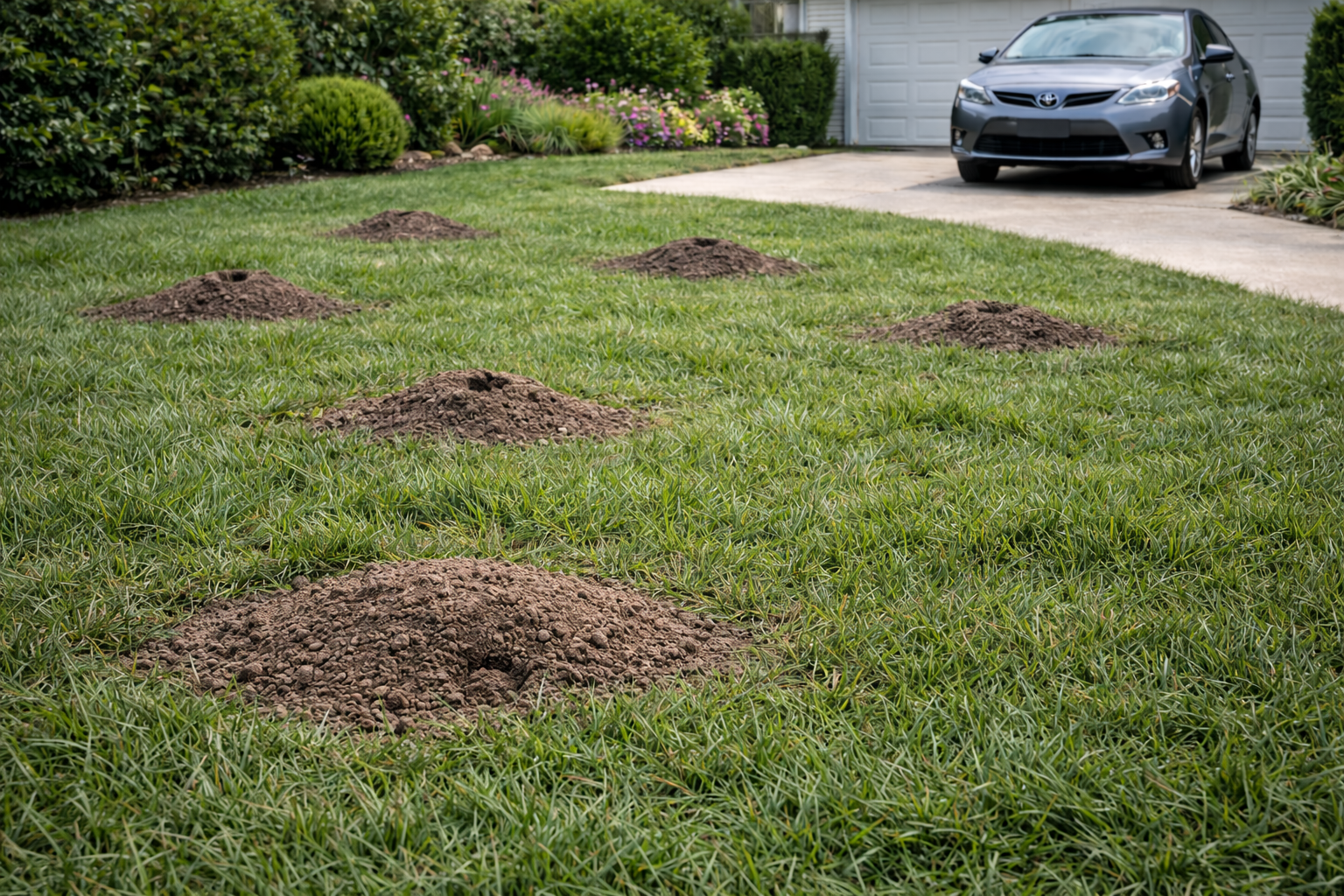
Gopher Activity in Bloomington, CA
Bloomington, located in San Bernardino County in the Inland Empire region of Southern California, experiences regular gopher activity throughout the year. The city's combination of residential properties, agricultural land, and proximity to undeveloped terrain creates ideal conditions for pocket gopher populations. Property owners in Bloomington frequently encounter evidence of gopher presence, from characteristic mounding patterns to subsurface tunnel systems that can affect irrigation infrastructure and landscaping.
Why Bloomington Has Significant Gopher Activity
The geographical and environmental characteristics of Bloomington directly contribute to robust gopher populations in the area. Situated in the San Bernardino Valley at approximately 1,500 feet elevation, the city experiences a semi-arid climate with winters mild enough to allow year-round gopher activity, unlike higher elevation or more northern regions where freezing temperatures limit winter burrowing.
Bloomington's soil composition plays a crucial role in supporting gopher populations. The valley floor features sandy loam and alluvial soils that are relatively easy to excavate, making tunnel construction less metabolically demanding for pocket gophers. These soil types retain adequate moisture for root growth without becoming compacted or waterlogged, providing the optimal texture for extensive burrow systems.
Irrigation infrastructure throughout Bloomington—from residential landscape irrigation to broader agricultural water delivery systems—creates a consistent moisture gradient that attracts and sustains gophers. The availability of supplemental water in yards and parks means vegetation remains available even during dry months, eliminating the seasonal food scarcity that might limit populations in purely non-irrigated settings. Additionally, Bloomington's proximity to the San Bernardino National Forest and undeveloped hillsides to the north provides a natural gopher reservoir from which animals continuously disperse into residential and commercial areas.
Common Gopher Species in Bloomington
The pocket gopher species found throughout Bloomington and the broader Inland Empire is Botta's pocket gopher, scientifically known as Thomomys bottae. This species is native to California and well-adapted to the region's climatic and soil conditions. Understanding the physical characteristics and behavior of Botta's pocket gophers helps property owners identify activity on their land.
Botta's pocket gophers are medium-sized rodents, typically measuring 5 to 6 inches in body length with a relatively short tail of about 1 to 1.5 inches. They possess small eyes and ears, reflecting their subterranean lifestyle where vision and hearing are less critical than tactile sensory organs. Their front legs are relatively short and powerful, equipped with large claws adapted for digging. Coloration varies from light tan to dark brown, depending on individual genetics and local soil pigmentation—gophers from the darker soils of certain Bloomington neighborhoods often display darker fur that matches their native burrow substrate.
These gophers are solitary animals outside of brief mating periods, with each individual maintaining a territory that can extend across 200 to 2,000 square feet depending on food availability and soil conditions. In Bloomington's residential areas where landscaping provides concentrated food sources, territories tend toward the smaller end of this range. Botta's pocket gophers remain active year-round, though their surface activity and burrowing intensity varies seasonally.
When Gopher Activity Peaks in Bloomington
Gopher activity in Bloomington follows distinct seasonal patterns influenced by breeding cycles and moisture availability. The breeding season for Botta's pocket gophers typically occurs from January through March, coinciding with Bloomington's winter rainy season. During this period, soil moisture increases, making digging easier and stimulating increased root growth and plant emergence—precisely the conditions that drive heightened mating activity and territorial behavior among males.
Spring represents the secondary peak in visible gopher activity. As temperatures warm from March through May, gophers increase their surface foraging and tunnel expansion activities. Fresh mounding becomes particularly noticeable during this window, especially following irrigation cycles or rainfall when soil conditions are optimal for excavation. Property owners in Bloomington commonly observe the greatest number of new mounds appearing between April and June.
Summer activity, while present, becomes less conspicuous as gophers retreat deeper into their burrow systems where soil moisture and cooler temperatures persist. However, in irrigated yards—which is most of Bloomington's residential landscape—activity remains substantial throughout summer. Fall and winter show variable activity patterns; in non-irrigated areas, activity may decline as plants senesce and soil moisture decreases, but in landscape-irrigated properties, the presence of year-round green vegetation and available moisture sustains consistent gopher presence. The relative mildness of Bloomington winters, with freezing temperatures being uncommon, means underground populations never experience the winter dormancy that affects gophers in colder climates.
Signs of Gopher Damage in Bloomington Yards
Property owners in Bloomington can identify gopher presence through several distinctive damage patterns and visual indicators. The most obvious sign is the characteristic mounding pattern—fresh, crescent-shaped or circular mounds of loose soil appear at the surface where gophers push excavated material upward from tunnel systems. These mounds typically range from 3 to 6 inches in height and 6 to 12 inches in diameter, with the material appearing considerably lighter in color than the surrounding topsoil due to exposure of subsurface soil.
Gophers in Bloomington commonly damage subsurface irrigation systems, a critical concern given the reliance on drip irrigation and underground sprinkler lines throughout the city's residential areas. Gophers gnaw through plastic irrigation tubing and drip lines while creating their burrow networks, leading to water loss, uneven landscape irrigation, and increased water bills. Property owners may notice suddenly dry sections of previously well-irrigated landscape, often accompanied by gopher mounds in the affected area.
Plant damage provides another indicator of gopher activity. Gophers feed on roots and bulbs, causing sudden wilting or death of ornamental plants, vegetables, and lawn areas. Unlike some other burrowing animals, pocket gophers rarely bring plants to the surface; instead, they clip vegetation at or below ground level while feeding. This creates the appearance of plants mysteriously disappearing or dying without visible above-ground damage.
Landscape Considerations for Bloomington Properties
The predominant landscaping style throughout Bloomington reflects the city's semi-arid climate and urban character. Properties typically feature combinations of traditional turf grass, drought-tolerant ornamental shrubs, decorative rock mulch, and hardscape elements such as patios and walkways. This mix of soft and hardscape creates variable gopher pressure across different property types. Turf areas and planting beds with accessible root systems attract gopher activity, while expansive hardscape and concrete surfaces provide gopher-free zones.
Certain plant species commonly found in Bloomington yards demonstrate particular vulnerability to gopher damage. Bulbous plants such as tulips, daffodils, and crocuses are especially attractive to gophers, as are young trees and shrubs with tender roots. Vegetable gardens—increasingly common in Bloomington's residential neighborhoods—provide high-value food sources that concentrate gopher activity. Conversely, some plant species show greater resistance to gopher feeding pressure, though their presence does not eliminate gopher activity in landscaped areas.
The layout of irrigation infrastructure in Bloomington properties significantly influences gopher distribution. Concentrated irrigation zones in planting beds and turf areas create moisture-rich corridors that facilitate gopher tunnel construction and provide optimal foraging habitat. Understanding these patterns helps property owners anticipate where gopher activity will likely manifest, particularly in spring months when new burrow system expansion occurs.
For professional gopher control in Southern California, visit Rodent Guys — serving Los Angeles, Orange, San Bernardino, and Riverside counties.