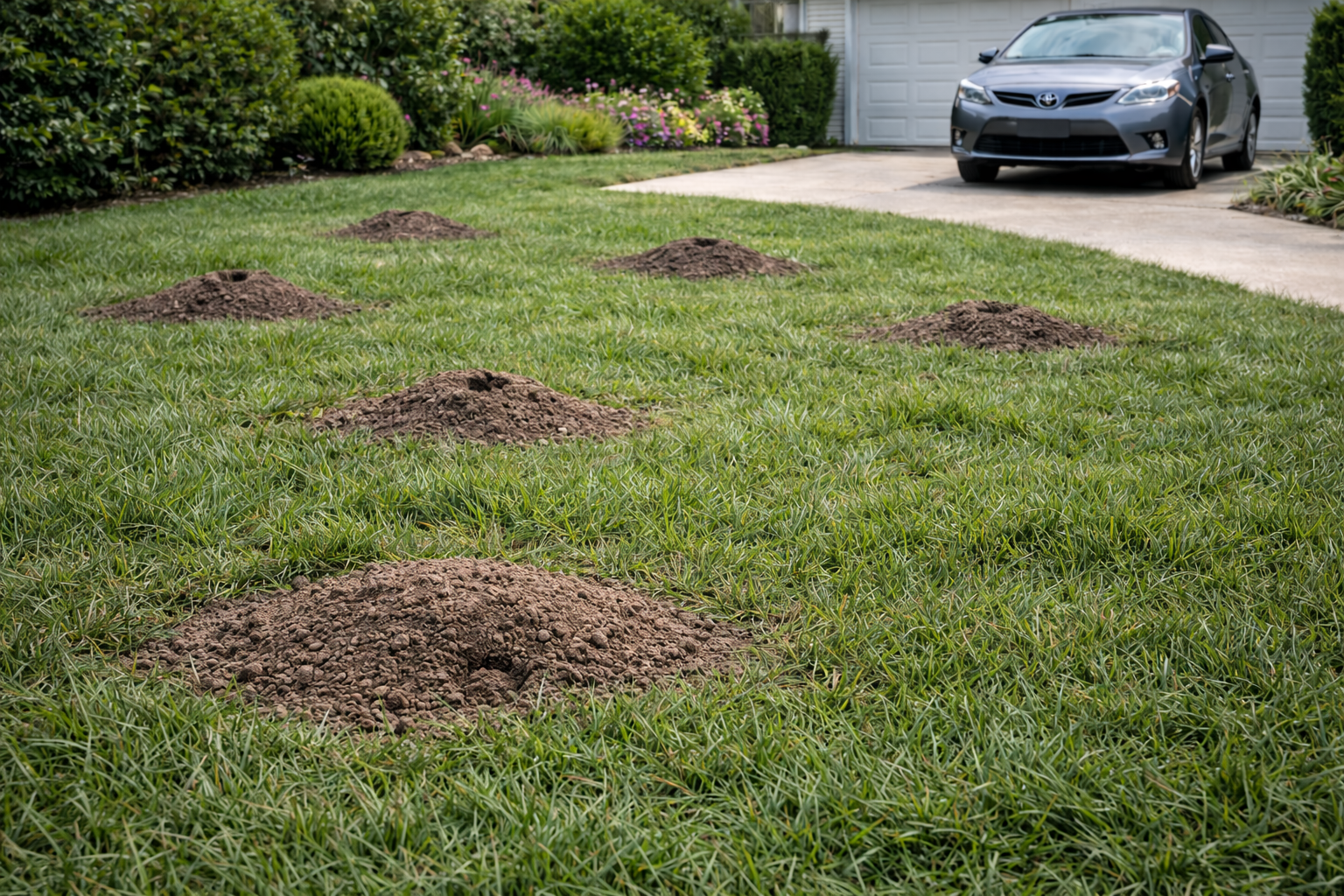
Gopher Activity in Moorpark, CA
Moorpark, located in Ventura County between Simi Valley and Thousand Oaks, experiences substantial gopher activity throughout the year. The combination of the town's semi-arid Mediterranean climate, well-irrigated residential properties, and proximity to undeveloped chaparral and grassland areas creates ideal conditions for pocket gopher populations. Residents and property managers across Moorpark regularly encounter evidence of gopher tunneling in yards, gardens, and landscaped areas.
Why Moorpark Has Significant Gopher Activity
Moorpark's geography and environmental conditions make the area particularly attractive to pocket gophers. The town sits at approximately 1,100 to 1,400 feet elevation on the northern edge of Ventura County, with soil composition ranging from clay-loam to sandy loam—both types that gophers can tunnel through effectively. The local terrain transitions from developed residential neighborhoods to open grassland and chaparral within short distances, allowing gopher populations from natural areas to expand into cultivated spaces.
The region's Mediterranean climate features wet winters and dry summers. While Moorpark receives approximately 18 to 20 inches of annual rainfall (concentrated between November and March), the widespread use of landscape irrigation systems in residential and commercial properties maintains soft soil conditions year-round. This artificial moisture availability extends the gopher breeding season and supports multiple generations per year. Additionally, Moorpark's prevalence of ornamental landscaping—featuring plants, shrubs, and trees that gophers find palatable—provides consistent food sources that encourage population establishment. The town's elevation and proximity to the Santa Susana Mountains mean that gopher habitat extends continuously from undeveloped ridges and canyons directly into suburban neighborhoods.
Common Gopher Species in Moorpark
The Botta's pocket gopher (Thomomys bottae) is the primary gopher species found throughout Moorpark and the broader Ventura County region. This species is named after the Spanish word "bota," referring to the animal's large, fur-lined cheek pouches used for carrying food and nesting material. Adult Botta's pocket gophers typically measure 5 to 7 inches in body length, with short, sparsely haired tails and stocky, muscular bodies adapted for burrowing.
Botta's pocket gophers in the Moorpark area display coloration ranging from light tan to dark brown, often matching the local soil hues. The species possesses small eyes and ears, reduced to accommodate their subterranean lifestyle, and their front feet feature large claws specialized for excavation. Individual gophers maintain extensive tunnel systems, sometimes spanning several hundred feet, with multiple surface mounds marking different tunnel sections. These gophers are primarily solitary and territorial, with each burrow system typically occupied by a single individual except during the breeding season. The species' preference for well-draining, workable soil aligns perfectly with Moorpark's residential landscaping, where amended garden beds and consistently irrigated lawns provide ideal burrowing substrate.
When Gopher Activity Peaks in Moorpark
Gopher activity in Moorpark follows distinct seasonal patterns tied to the region's climate and the animal's reproductive cycle. Breeding season occurs primarily between January and March, coinciding with Moorpark's winter rains when soil moisture reaches optimal levels. During this period, male gophers expand their tunneling range while searching for females, resulting in noticeably increased mound activity across properties.
Spring months (March through May) represent peak visibility for gopher damage in Moorpark yards. Young gophers born during winter dispersal activity create new tunnel systems as they establish independent territories, and the combination of spring irrigation schedules and seasonal vegetation growth attracts gopher feeding activity. Summer (June through August) sees reduced but continuous gopher tunneling, as hot, dry conditions make soil harder and gophers expend less energy expanding burrows. Fall months bring a secondary period of increased activity as gophers prepare winter food caches and strengthen burrow systems before cooler weather arrives. Winter itself may show reduced surface activity, but gophers continue tunneling beneath the soil surface, particularly in irrigated yards where moisture keeps soil workable.
Signs of Gopher Damage in Moorpark Yards
Identifying gopher activity requires understanding the distinctive signs these animals leave in Moorpark landscapes. The most obvious indicator is the appearance of soil mounds—crescent or circular raised areas of loose earth pushed up from tunnel entrances. Unlike moles, which create ridged surface tunnels, gophers typically create isolated mounds without connecting ridges on the surface. Moorpark homeowners often notice these mounds appearing overnight in lawns, garden beds, and landscaped areas.
Beyond mounding, property damage manifests in several ways throughout Moorpark properties. Gophers regularly damage underground irrigation lines by tunneling through drip systems and sprinkler lines, leading to water waste and dry spots in landscapes. Plant damage occurs as gophers feed on roots, bulbs, and underground plant materials—particularly affecting vegetables, ornamental shrubs, and young trees. In Moorpark yards with established gardens, gophers may girdle roots just below the soil surface, causing plants to wilt and die despite adequate water and visible health above ground. Subsurface tunneling can also destabilize soil beneath hardscape features like patios and walkways, creating sinkholes or uneven surfaces. Clusters of mounds in specific areas indicate concentrated gopher activity and suggest multiple individuals or an active breeding area requiring attention.
Landscape Considerations for Moorpark Properties
Moorpark's dominant landscape design reflects Southern California Mediterranean and drought-conscious aesthetics, with a mix of hardscape elements, native plantings, and ornamental gardens. Many properties feature expanses of irrigated lawn combined with landscape beds containing shrubs, ornamental grasses, and trees selected for drought tolerance and low-maintenance characteristics. This combination of softscape and irrigation infrastructure creates particularly attractive habitat for gopher populations.
Several plants commonly found in Moorpark landscaping are especially vulnerable to gopher damage. Underground root vegetables and bulbs—including carrots, potatoes, onions, and ornamental bulbs—suffer high damage rates. Ornamental shrubs like privet, photinia, and certain euonymus species become gnawed and damaged when gophers access root systems. Young fruit and nut trees, increasingly popular in Moorpark yards pursuing food-producing landscapes, frequently experience root damage and girdling from gopher activity. Conversely, some plants demonstrate greater gopher resistance, including heavily scented plants like lavender and rosemary, which many Moorpark residents successfully maintain despite gopher presence. Properties with extensive hardscape—pavers, concrete, and rock mulch—experience less gopher activity than those with predominately planted areas, though gophers can still tunnel under and around hardscape elements to access surrounding softscape zones.
For professional gopher control in Southern California, visit Rodent Guys — serving Los Angeles, Orange, San Bernardino, and Riverside counties.