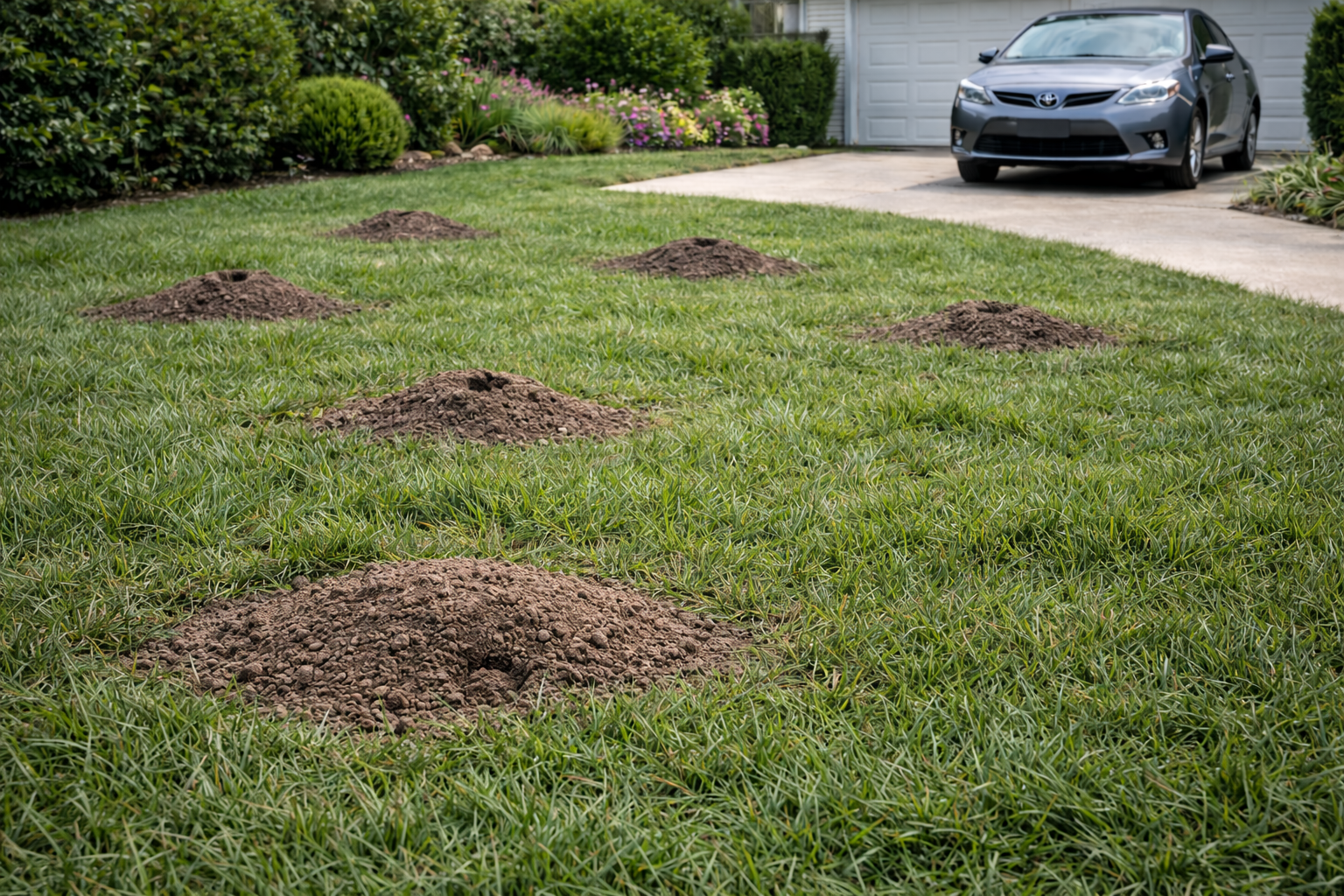
Gopher Activity in Canoga Park, CA
Canoga Park, located in the San Fernando Valley region of Los Angeles, experiences notable gopher activity throughout the year. The combination of residential landscaping, proximity to natural open spaces, and favorable soil conditions creates an ideal environment for pocket gopher populations. Understanding gopher behavior and ecology in this specific area helps residents recognize activity patterns and assess potential property impacts.
Why Canoga Park Has Significant Gopher Activity
Canoga Park's geography and environmental characteristics create favorable conditions for gopher populations. The neighborhood sits in the San Fernando Valley, an alluvial plain with deep, well-developed soils ideal for burrowing. The predominant soil types—sandy loam and loamy soils—are easier for gophers to excavate than clay-heavy substrates, allowing them to tunnel with minimal energy expenditure. These soil conditions extend across most residential properties, from the foothills near the Santa Susana Mountains to the flatter valley floor areas near the Los Angeles River.
Irrigation systems throughout Canoga Park further support gopher populations. The extensive use of landscape irrigation—necessary for maintaining ornamental plantings and lawns in the semi-arid San Fernando Valley climate—creates moisture that keeps soil workable year-round. Gophers require adequate soil moisture for tunnel maintenance and food access, making irrigated properties particularly attractive. Additionally, Canoga Park's proximity to natural open spaces, including portions of the Santa Susana Mountains to the north and the Los Angeles River watershed to the south, provides refugia and corridors for gopher movement. The area experiences warm, dry summers and mild winters, with annual precipitation averaging around 15 inches concentrated in winter months. This climate pattern allows gophers to remain active throughout most of the year, with reduced activity only during the driest summer periods.
Common Gopher Species in Canoga Park
The Botta's pocket gopher (Thomomys bottae) is the primary gopher species found throughout Canoga Park and the broader San Fernando Valley region. This species is smaller than the valley pocket gopher, with adults typically weighing 2 to 4 ounces and measuring 4.5 to 6.5 inches in body length. Botta's pocket gophers display variable coloration—typically brown, gray, or reddish-brown—with darker fur on the back and lighter fur on the undersides. They possess distinctive external fur-lined cheek pouches, external ears, and visible incisor teeth that protrude slightly beyond the mouth when it is closed.
Within Canoga Park, Botta's pocket gophers inhabit residential yards, vacant lots, and landscaped areas where soil conditions permit tunneling. They are solitary animals except during breeding season, with each individual maintaining its own burrow system. A single gopher may occupy a territory ranging from 300 to 2,000 square feet depending on soil quality, food availability, and environmental conditions. In Canoga Park's residential settings, where irrigated soil remains relatively consistent and food resources are abundant, individual territories tend toward the smaller end of this range. Gophers are primarily herbivorous, feeding on roots, bulbs, tubers, and underground plant parts they encounter while tunneling, along with aboveground vegetation accessed through burrow openings.
When Gopher Activity Peaks in Canoga Park
Gopher activity in Canoga Park follows distinct seasonal patterns influenced by the area's climate and the animals' reproductive biology. The primary breeding season occurs from January through March, with peak mating activity in February and early March. During this period, males actively search for females, resulting in increased tunneling activity and more visible surface mounds. This is often the season when Canoga Park residents first notice gopher problems, as fresh mounding becomes obvious in yards, gardens, and landscaped areas.
Spring months from April through May represent another period of elevated activity. The winter rains that characterize the San Fernando Valley climate create ideal soil moisture conditions, and spring plant growth provides abundant food resources. Young gophers born during the winter breeding season become active and begin establishing their own territories, further increasing visible activity. Summer months typically see reduced gopher activity as irrigation and occasional June gloom moisture become primary soil moisture sources, though irrigation-dependent properties maintain activity throughout this period. Fall months show moderate activity levels as gophers prepare for winter and take advantage of fall-planted vegetation. Winter activity levels vary depending on soil moisture conditions and temperature fluctuations, but gophers generally remain somewhat active even during cooler months in Canoga Park due to the area's relatively mild winters.
Signs of Gopher Damage in Canoga Park Yards
The most visible indicator of gopher presence is fresh mounding—the characteristic crescent or horseshoe-shaped dirt mounds that appear in Canoga Park yards. These mounds result from gophers pushing soil to the surface while constructing or maintaining their tunnel systems. The mounds typically measure 4 to 8 inches in diameter and 2 to 4 inches in height, though dimensions vary. Unlike mole mounds, which are volcano-shaped and pushed up from directly below, gopher mounds appear pushed to one side, often showing a visible plug where the gopher tamped down soil from inside its tunnel. Multiple fresh mounds in a yard indicate active burrow systems and recent gopher activity.
Gophers cause damage to Canoga Park properties through multiple mechanisms. Tunneling directly damages irrigation lines, which is particularly problematic given the area's reliance on landscape irrigation. Gophers consume roots and bulbs, weakening or killing shrubs, trees, and ornamental plantings common in San Fernando Valley landscapes. Roses, fruit trees, native California shrubs, and root vegetables are particularly vulnerable. Surface damage appears as wilted plants, dying sections of lawns, and exposed root systems. Gophers also create visible surface runs—compacted pathways on the soil surface—as they move between burrow entrance holes while foraging. In Canoga Park properties with extensive landscaping, these runs often follow irrigation lines or connect multiple areas of fresh mounding. Identifying these various signs helps distinguish gopher activity from other yard disturbances.
Landscape Considerations for Canoga Park Properties
Canoga Park properties display diverse landscaping styles reflecting the neighborhood's varied residential character. Older properties often feature mature trees, established shrub borders, and traditional lawn areas, while newer developments incorporate drought-tolerant native plantings or modern hardscape designs. The climate influences landscaping choices, with many properties incorporating California-adapted species like California live oak, coast live oak, California pepper trees, and drought-tolerant shrubs such as California buckwheat, coyote brush, and manzanita. Ornamental landscaping throughout the area includes roses, flowering shrubs, and vegetable gardens—all particularly vulnerable to gopher activity.
Properties with soft landscaping (plants, lawns, mulch) are significantly more attractive to gophers than those emphasizing hardscape features like concrete patios, rock gardens, and paved areas. In Canoga Park, properties with extensive irrigation and diverse plantings support larger or more active gopher populations. Root vegetables, bulbs, and newly planted shrubs and trees face especially high vulnerability. Established trees with deep root systems experience less damage, though gophers can still girdle roots below the soil surface. Properties near the Santa Susana foothills or those with natural soil gardens typically experience more consistent gopher pressure than those with highly modified landscapes. Understanding these landscape factors helps Canoga Park residents assess their property's attractiveness to gophers and recognize why certain yards experience repeated activity.
For professional gopher control in Southern California, visit Rodent Guys — serving Los Angeles, Orange, San Bernardino, and Riverside counties.