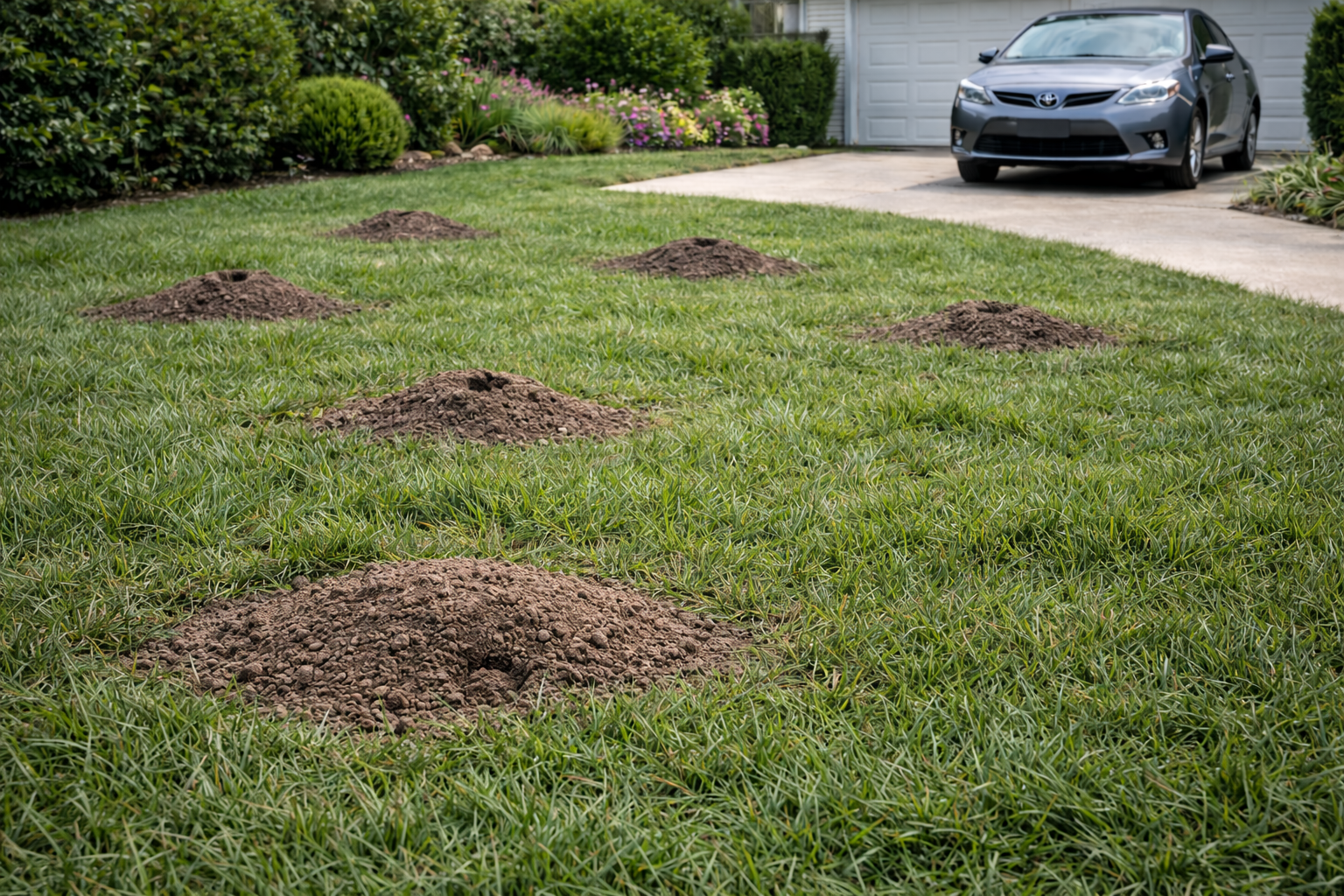
Gopher Activity in Hidden Hills, CA

Hidden Hills, situated in the northwestern corner of Los Angeles County's equestrian community, experiences consistent gopher activity that reflects both its unique geography and residential landscape design. The presence of pocket gophers in this exclusive hilltop community is not incidental but rather a direct result of environmental conditions that favor their proliferation. Understanding gopher behavior and distribution patterns in Hidden Hills helps residents recognize both the ecological role these animals play and the practical challenges they present to property maintenance.

Why Hidden Hills Has Significant Gopher Activity

The topography and soil composition of Hidden Hills create ideal conditions for gopher habitation and burrowing activity. The community sits atop rolling hills with predominantly sandy loam and clay loam soils that are neither too compacted nor too loose—precisely the soil texture that pocket gophers prefer for tunnel construction. These soils, formed from weathered granite and other parent materials common to the Santa Monica Mountains foothills, allow gophers to excavate extensive burrow systems with relative ease compared to harder clay substrates found in surrounding areas.

Hidden Hills' position within the Mediterranean climate zone of Southern California means moderate year-round temperatures with cool, wet winters and warm, dry summers. This climate pattern supports the growth of landscaping vegetation that remains green through much of the year, providing consistent food sources for gophers. The community's extensive use of irrigation systems—necessary to maintain the manicured estates and horse properties that define Hidden Hills—creates perpetually moist soil conditions that gophers find particularly attractive for tunneling and foraging.

Additionally, Hidden Hills' proximity to undeveloped open space and the Santa Monica Mountains preserves natural gopher populations in surrounding areas. The transition zones between developed residential property and preserved habitat serve as corridors for gopher movement, allowing populations from wild areas to naturally colonize nearby yards and gardens. This geographic positioning means that even properties with excellent exclusion practices may experience periodic gopher activity from neighboring burrow systems.

Common Gopher Species in Hidden Hills

The Botta's pocket gopher (Thomomys bottae) is the primary gopher species inhabiting Hidden Hills and the broader greater Los Angeles region. This rodent derives its common name from the fur-lined external cheek pouches used to transport food and nesting material through underground tunnels. Adult Botta's pocket gophers typically measure 5 to 6 inches in body length, with additional tail length of roughly 1 to 1.5 inches. Their coloration ranges from dark brown to yellowish, though individuals in Hidden Hills most commonly display medium to dark brown pelage that blends effectively with local soils.

Botta's pocket gophers possess several anatomical adaptations perfectly suited to subterranean life. Their eyes are small and their ears are reduced to simple openings, reducing vulnerability to dirt accumulation during burrowing. Powerful front legs and large claws enable efficient excavation, while their loose skin allows freedom of movement within confined tunnel spaces. The characteristic cheek pouches can expand remarkably, allowing a single gopher to transport substantial quantities of food in a single trip through its burrow system.

In Hidden Hills specifically, Botta's pocket gophers occupy gardens, landscaped yards, and the maintained grounds surrounding residential estates. They show a preference for areas with irrigation and cultivated vegetation over native chaparral, making developed properties more attractive habitat than adjacent hillside areas. The availability of ornamental plants, vegetables, and landscape plantings in Hidden Hills properties provides substantially more reliable food sources than native vegetation, concentrating gopher populations in residential zones rather than distributing them evenly across available habitat.

When Gopher Activity Peaks in Hidden Hills

Gopher activity in Hidden Hills follows seasonal patterns that correlate with breeding cycles and environmental conditions. The primary breeding season extends from January through March, during which male gophers increase territorial behavior and tunnel system expansion. This late-winter breeding period coincides with peak rainfall in the Hidden Hills area, when winter storms moving in from the Pacific deposit moisture that softens soils and encourages rapid plant growth. The combination of these factors creates the year's most active gopher burrowing period.

Spring months (April and May) represent the second peak activity period, driven by the presence of young gophers dispersing from maternal burrow systems and seeking their own territories. Juvenile gophers, independent for the first time, create new tunnel networks and cause visible surface disturbance as they establish themselves in available habitat. This spring activity often appears more dramatic than winter burrowing because multiple young gophers create numerous small mounds across properties rather than older, established gophers expanding existing tunnel systems.

Summer and early fall show reduced but persistent gopher activity in Hidden Hills. As landscape vegetation enters dormancy periods and irrigation becomes less frequent during drought-conscious management, food availability decreases slightly. However, gophers maintain active burrow systems and continue foraging throughout these months. Late fall activity increases again as gophers prepare for winter and respond to fall rains that stimulate herbaceous plant growth. Understanding these seasonal peaks helps property owners in Hidden Hills anticipate when activity is most likely and when landscape damage becomes most visible.

Signs of Gopher Damage in Hidden Hills Yards

The most obvious evidence of gopher activity in Hidden Hills consists of surface mounds—crescent or fan-shaped accumulations of excavated soil appearing suddenly in lawns and landscaped areas. These mounds result from gophers pushing soil upward through tunnel openings while underground, creating distinctive patterns that differ from the conical mounds produced by moles. Gopher mounds in Hidden Hills yards typically measure 4 to 8 inches in diameter and 2 to 4 inches in height, though size varies considerably depending on soil type and gopher size.

Irrigation system damage represents another significant gopher impact in Hidden Hills properties, where extensive drip systems, underground lines, and automatic sprinkler networks are standard. Gophers tunnel through irrigation trenches and gnaw on both rigid PVC lines and flexible tubing, creating leaks that disrupt water distribution and increase utility costs. The damage often goes unnoticed initially, manifesting as unexpected dry spots in landscaping or unusually high water bills before the underlying cause becomes apparent.

Plant damage caused by gophers takes several forms visible in Hidden Hills landscapes. Surface feeding, where gophers emerge to clip nearby vegetation, removes portions of herbaceous plants and can girdle shrub bases. Underground feeding occurs when gophers consume plant roots and bulbs directly from their burrow systems. Prized landscape plantings including roses, ornamental shrubs, and bulb plantings frequently suffer damage in Hidden Hills yards. In properties maintaining vegetable gardens, gophers cause substantial crop losses by consuming roots and underground plant portions before harvesting becomes possible.

Landscape Considerations for Hidden Hills Properties

Hidden Hills' distinctive character depends largely on its landscaping aesthetic—expansive maintained properties featuring specimen plantings, manicured lawns, and Mediterranean-inspired gardens. This landscape style, while visually appealing and consistent with the community's upscale residential character, creates particularly attractive conditions for gopher populations. The combination of irrigated softscape areas (lawns and ornamental plantings) interspersed with hardscape elements (driveways, patios, and pool decking) reflects broader Southern California trends while simultaneously establishing ideal gopher habitat.

Certain plantings favored in Hidden Hills landscapes prove especially vulnerable to gopher activity. Roses, lavender, salvia, and California native ornamental shrubs commonly used in regional landscapes provide both above-ground and underground food sources. Fruit trees, including citrus varieties that grow well in Hidden Hills' climate, attract gophers through both root systems and fallen fruit. Vegetables and herbs planted in landscape settings or dedicated garden spaces face substantial predation pressure from gopher populations. Conversely, hardscape-heavy landscapes featuring paved areas, rock gardens, and architectural elements with minimal vegetation experience reduced gopher activity simply through reduced habitat value.

The extensive use of irrigation throughout Hidden Hills properties—necessary to maintain landscape aesthetics in a region receiving limited summer rainfall—inadvertently optimizes soil conditions for gopher burrowing and survival. Moist, well-aerated soil resulting from regular watering cycles allows easier tunnel construction than harder, drier soils. This irrigation necessity reflects the climate realities of Hidden Hills' Mediterranean climate pattern, where summer drought stress would otherwise eliminate many ornamental plantings. Property owners must therefore balance aesthetic and horticultural goals against the reality that these landscaping practices simultaneously favor gopher populations.