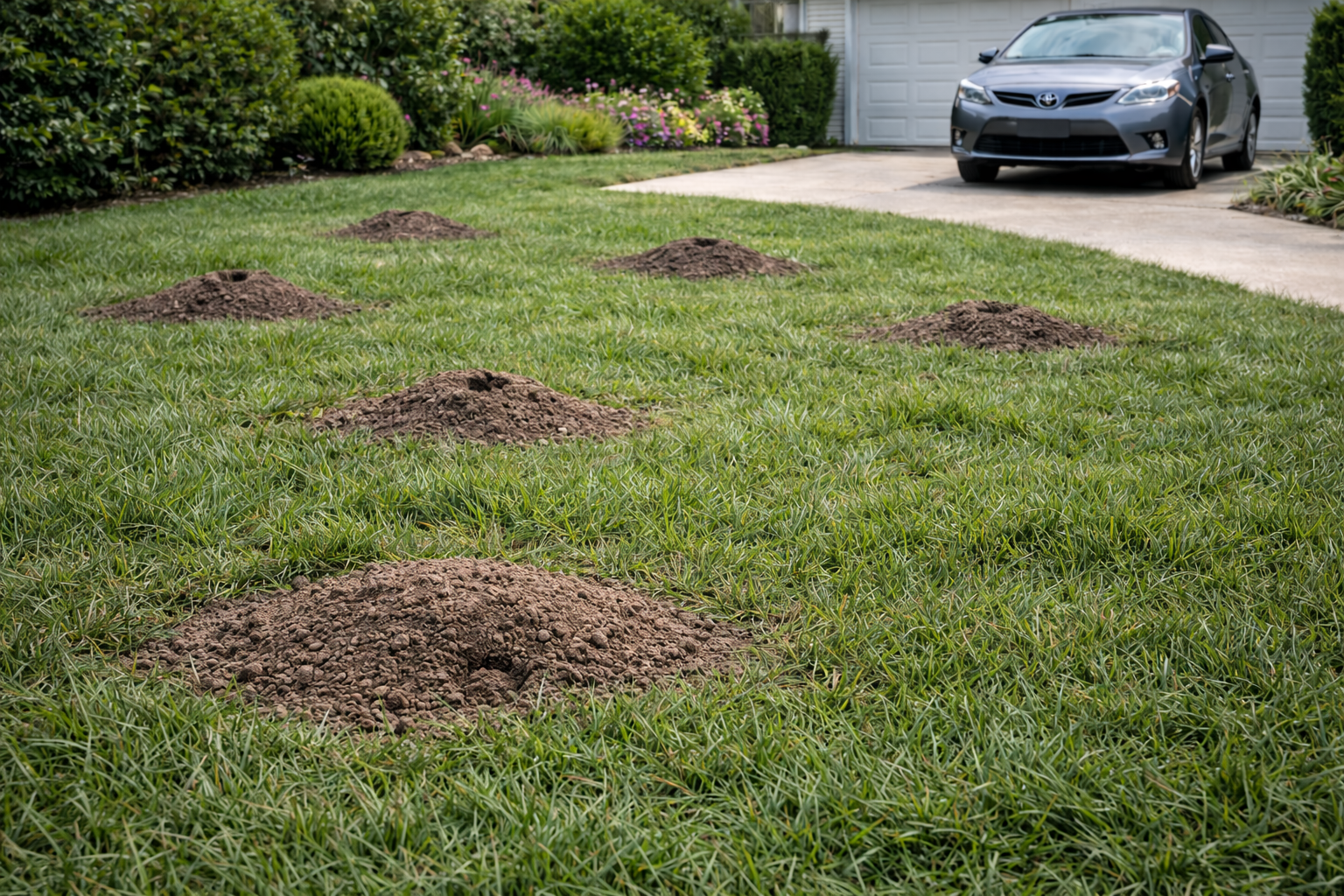
Gopher Activity in Highgrove, CA

Highgrove, located in Riverside County's San Bernardino Valley, experiences persistent gopher activity throughout residential and agricultural areas. The combination of irrigated properties, sandy loam soils, and proximity to native scrubland creates ideal conditions for pocket gopher populations. Property owners in this community frequently encounter visible mounding, damaged irrigation systems, and compromised landscaping as a result of underground burrowing activity.

Why Highgrove Has Significant Gopher Activity

The Highgrove area sits within the San Bernardino Valley's transitional zone between developed residential neighborhoods and the broader Inland Empire agricultural landscape. This geography directly influences gopher populations in several ways. The region's soil composition—primarily sandy loam with seasonal clay layers—provides ideal burrowing conditions. Unlike denser clay soils found in some neighboring areas, Highgrove's substrate allows gophers to excavate extensive tunnel systems with relatively modest energy expenditure.

Irrigation infrastructure throughout Highgrove proves equally significant. Most residential properties rely on supplemental water delivery via sprinkler systems, drip lines, and landscape irrigation. This consistent moisture availability transforms otherwise semi-arid terrain into hospitable habitat. Gophers require accessible water sources and soft soil conditions for tunneling; Highgrove's irrigation systems inadvertently satisfy both requirements year-round.

The local climate reinforces gopher habitat suitability. Highgrove experiences hot, dry summers with minimal precipitation and mild winters rarely dropping below freezing. This pattern allows gophers to remain active throughout the year, with reduced dormancy periods compared to colder regions. Additionally, Highgrove's location approximately 10-15 miles north of the San Jacinto Wildlife Area and within the broader context of regional open space means gopher populations possess continuous corridors for movement and expansion into developed properties.

Common Gopher Species in Highgrove

The Botta's pocket gopher (Thomomys bottae) represents the dominant gopher species throughout Highgrove and the broader San Bernardino Valley. This species derives its common name from its large, external cheek pouches, which the animal uses to transport food and nesting material through tunnel systems.

Physical characteristics of Botta's pocket gophers align with regional variations. Highgrove populations typically measure 5 to 7 inches in body length, with tails adding another 1 to 2 inches. Coloration ranges from brown to tan, occasionally appearing darker in individuals inhabiting areas with richer soil. Their front legs feature disproportionately large claws adapted for excavation—a feature immediately apparent upon examination of individual specimens. Small eyes and reduced ear visibility reflect adaptation to subterranean existence; these adaptations make gophers well-suited to life beneath Highgrove's yards and gardens.

Within Highgrove specifically, Botta's pocket gophers establish territories across diverse substrate types. They thrive in irrigated residential yards, community gardens, parks, and the margins of agricultural parcels. Population densities fluctuate seasonally, with spring months typically showing increased surface activity as breeding populations expand and young gophers disperse. The species' ability to colonize disturbed soil—including newly installed landscape beds and areas affected by construction—means gopher populations in Highgrove neighborhoods can expand rapidly following development or significant landscaping changes.

When Gopher Activity Peaks in Highgrove

Gopher activity in Highgrove follows predictable seasonal patterns shaped by local climate and reproductive cycles. The breeding season extends from January through March, corresponding with winter rains and increasing soil moisture. During this period, gophers intensify tunneling activity to establish territories and prepare nesting chambers. Property owners typically observe increased mounding during February and March as gophers excavate more aggressively and dispose of displaced soil.

Spring represents the most visually apparent season for gopher activity across Highgrove. As temperatures warm and landscape irrigation resumes at higher levels following winter reductions, gopher populations become highly mobile. Young gophers born during winter breeding disperse seeking territories, creating temporary population surges. April through June typically shows peak mounding activity in yards and gardens, with some secondary activity extending through early summer.

Summer activity (July-August) moderates somewhat as heat increases and irrigation becomes less predictable in some areas, though well-maintained lawns and gardens continue supporting active populations. Fall and early winter (September-December) show variable activity depending on rainfall patterns. Years with autumn precipitation demonstrate renewed gopher activity, while dry falls may see temporary lulls in burrowing intensity.

Year-round activity remains possible in Highgrove, particularly in properties with consistent irrigation. The region's frost-free winters eliminate the dormancy periods characteristic of colder climates, allowing continuous gopher tunnel maintenance, foraging, and reproduction.

Signs of Gopher Damage in Highgrove Yards

Identifying active gopher populations requires familiarity with characteristic damage patterns and physical evidence specific to burrowing activity. The most obvious sign involves mounding—the distinctive cone-shaped or crescent-shaped soil mounds that appear across lawns and garden beds. Highgrove's sandy loam soil produces particularly visible mounds that can reach 6-12 inches in height and 12-18 inches in diameter. These mounds represent displaced excavation material from tunnel construction and maintenance activities.

Surface tunneling creates another recognizable pattern. Gophers occasionally create raised ridges of soil as they burrow just beneath the surface, pushing up vegetation and disrupting turf. In Highgrove's typical residential yards, these ridges often appear in spring and correspond with the wettest soil conditions. They frequently run in linear patterns from one area to another, representing major tunnel thoroughfares rather than random burrowing.

Damage to irrigation systems constitutes a significant concern for Highgrove property owners. Gophers tunnel through buried drip lines, soaker hoses, and PVC irrigation pipes while foraging and establishing territories. This damage results in water leaks, reduced irrigation efficiency, and visible wet patches across otherwise dry yard sections. Some Highgrove residents have reported substantial irrigation repair costs directly attributable to gopher damage.

Plant damage manifests differently depending on gopher feeding habits. Gophers consume root systems of landscape plants, vegetables, and young trees. Common damage appears as wilting plants with severed or partially consumed roots. In Highgrove yards, roses, young fruit trees, ornamental shrubs, and vegetable gardens represent particularly vulnerable categories. Additionally, gophers consume vegetation pulled into burrows from the surface—a behavior that can strip newly planted seedlings overnight.

Landscape Considerations for Highgrove Properties

Highgrove's landscape character reflects both the region's semi-arid climate and decades of human development. Most residential properties incorporate some combination of turf lawn, drought-tolerant shrubs, fruit trees, and hardscape elements. This typical composition influences how gopher activity manifests and which plants face greatest vulnerability.

Turf grass dominates many Highgrove properties, particularly in established neighborhoods. Gophers create mounds and ridges in turfed areas, disrupting appearance and creating maintenance challenges. Some property owners view gopher mounding as primarily aesthetic; others recognize that persistent burrowing destabilizes turf and creates entry points for secondary pest issues. The sandy loam soil characteristic of Highgrove allows relatively easy turf establishment but provides minimal resistance to gopher tunneling.

Landscape plants commonly found in Highgrove yards show variable vulnerability to gopher activity. Young citrus trees, pomegranates, and stone fruit trees frequently suffer root damage in properties with active gopher populations. Vegetable gardens prove particularly susceptible; gophers readily consume carrots, turnips, potatoes, and other underground vegetables. Conversely, some established shrubs—particularly those with deep, woody root systems—tolerate gopher presence more effectively than shallow-rooted ornamentals.

Hardscape elements including patios, walkways, and decorative stonework typically remain unaffected by gophers directly. However, gopher burrowing beneath hardscape creates subsidence and settling issues. Highgrove property owners report cracked patios, sunken walkways, and shifted pavers resulting from extensive tunneling beneath these features. Spacing between gopher activity and hardscape elements requires consideration during landscape design and modification.

Raised bed gardening represents a landscape strategy employed by some Highgrove gardeners to minimize gopher access. Elevated beds reduce but do not eliminate gopher damage, as determined populations can tunnel upward into raised structures. Conversely, continuous hardscape groundcovers, decorative rock, and decomposed granite present less attractive habitat than traditional mulch or landscape bark, making these materials somewhat less conducive to active gopher presence.