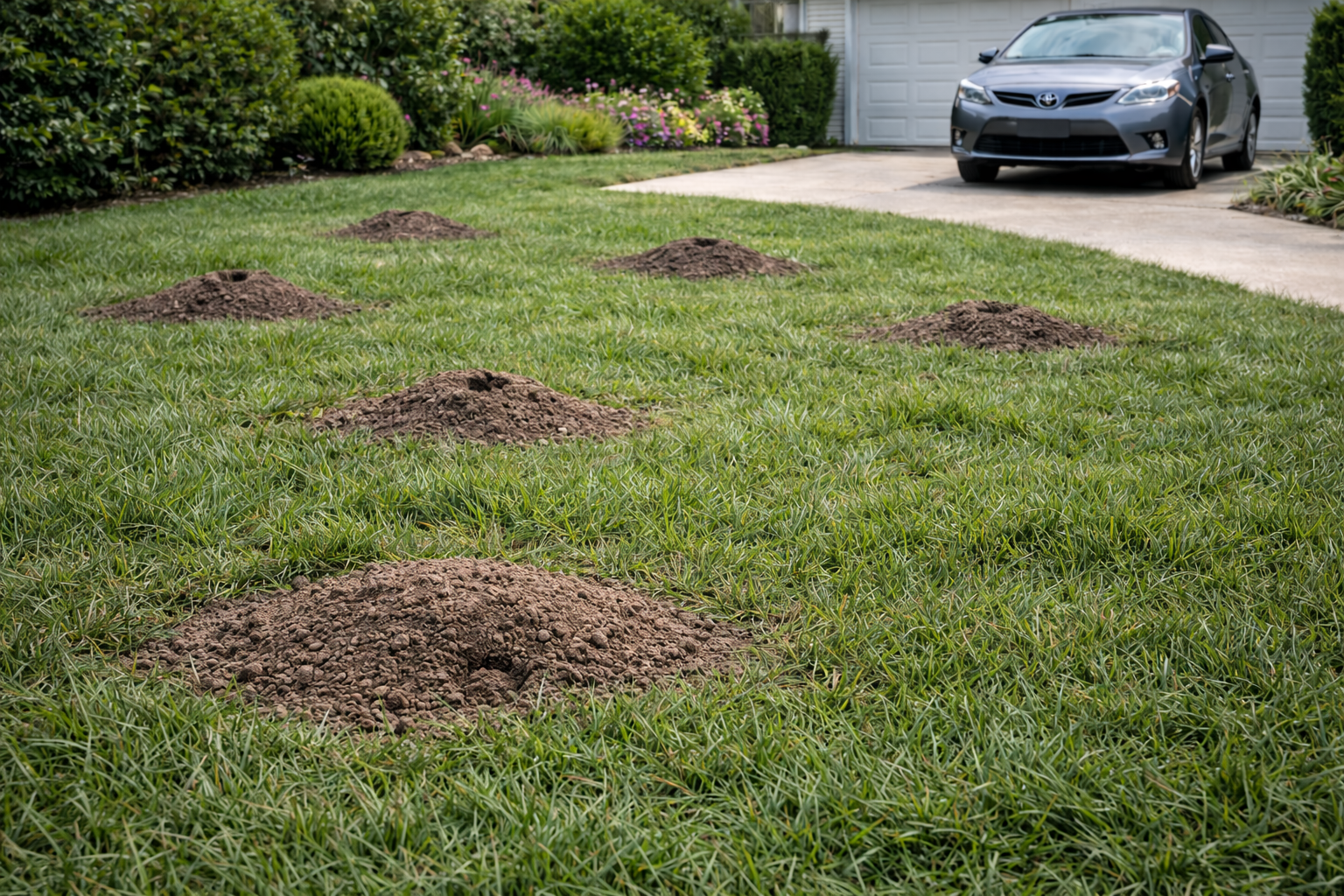
Gopher Activity in Irwindale, CA
Irwindale, located in the San Gabriel Valley within Los Angeles County, experiences notable gopher activity throughout the year. The city's combination of irrigated properties, favorable soil conditions, and proximity to natural habitat zones creates an environment where pocket gophers thrive. Property owners in Irwindale frequently encounter evidence of gopher tunneling systems in residential yards, parks, and landscaped areas.
Why Irwindale Has Significant Gopher Activity
Several geographic and environmental factors contribute to persistent gopher populations in Irwindale. The city sits in the San Gabriel Valley floor, an agricultural region historically known for extensive irrigation systems. Modern residential properties in Irwindale maintain ornamental landscaping and turf areas that require regular watering, creating ideal subsurface moisture conditions that gophers seek.
The soil composition throughout Irwindale consists primarily of alluvial deposits—loose, friable materials that are exceptionally easy for gophers to excavate. These soils, deposited over centuries by the San Gabriel River system, lack the compacted clay layers that might impede burrowing animals. The valley's elevation, ranging from approximately 400 to 700 feet above sea level in residential zones, provides excellent drainage while maintaining sufficient moisture at shallow depths where gophers construct their tunnel networks.
Irwindale's semi-arid climate, with average annual rainfall around 15 inches concentrated in winter months, necessitates year-round irrigation for most landscaping. This artificial moisture regime mimics ideal gopher habitat conditions. Additionally, Irwindale's position at the northeastern edge of the Los Angeles metropolitan area places it adjacent to the San Gabriel Mountains foothills and natural chaparral zones where pocket gophers maintain established populations. Property owners living near the city's boundaries, particularly along areas bordering unincorporated county land or county parks, may experience higher gopher activity rates due to wildlife dispersal patterns.
Common Gopher Species in Irwindale
The Botta's pocket gopher (Thomomys bottae) represents the predominant gopher species throughout the San Gabriel Valley and Irwindale specifically. This medium-sized rodent measures approximately 5 to 6 inches in body length, with relatively small external ears and small eyes—adaptations reflecting its underground lifestyle. Coloration typically ranges from brownish-gray to dark brown, providing camouflage within soil environments.
Botta's pocket gophers are solitary animals, with each individual maintaining and defending its own extensive tunnel system. A single gopher's burrow network can encompass several hundred square feet of area beneath a property's surface. These animals possess large, heavily muscled forelimbs with prominent claws adapted for soil excavation, and their lips close behind their prominent front teeth, preventing soil from entering their mouths while digging.
In Irwindale, Botta's pocket gophers inhabit both maintained residential properties and adjacent natural areas. They show no preference for specific neighborhood locations within the city, though properties with more extensive landscaping and irrigation may support higher population densities. Unlike some gopher species that occupy higher elevation forests or coastal sage scrub exclusively, Botta's pocket gophers demonstrate remarkable habitat flexibility, thriving equally well in suburban yards with manicured lawns and in natural wildland zones. This adaptability has made them the successful colonizer of human-modified landscapes throughout Southern California.
When Gopher Activity Peaks in Irwindale
Gopher activity in Irwindale follows seasonal patterns influenced by breeding cycles and precipitation patterns typical of the San Gabriel Valley. The primary breeding season extends from January through March, when males actively expand their tunnel systems while seeking females. During this period, property owners often observe increased mound-building activity, with gophers excavating and pushing soil to the surface more frequently than other times of year.
Late winter and early spring represent critical activity windows, as gophers respond to increased soil moisture from the region's typical rainfall concentration in February and March. Irwindale's winter rains, though modest by national standards, penetrate the valley's alluvial soils and trigger increased soil invertebrate populations—the primary food source for gophers. Enhanced invertebrate availability motivates gophers to expand existing tunnels and construct new burrow systems throughout their territories.
Spring months (April and May) show continued elevated activity as gopher populations establish post-breeding distributions. Summer months, from June through September, see somewhat reduced surface activity as the combination of heat and irrigation systems allows gophers to maintain deeper, more stable burrow systems with adequate moisture. Fall activity may increase slightly as gophers prepare food caches and reinforce tunnel structures before winter.
Interestingly, winter activity does not cease entirely in Irwindale's mild climate. Unlike gophers in colder regions that may enter periods of reduced activity, Irwindale's pocket gophers remain active throughout the year, though winter surface evidence may be less apparent due to saturated soil conditions that collapse tunnel roof structures more readily.
Signs of Gopher Damage in Irwindale Yards
The most visible indicator of gopher presence consists of characteristic soil mounds appearing in yards and landscaped areas. Gopher mounds in Irwindale typically measure 4 to 8 inches in height and 8 to 12 inches in diameter, composed of loose, excavated soil pushed to the surface through vertical tunnel shafts. These mounds often appear in irregular patterns across properties, reflecting the extensive underground tunnel networks gophers construct.
A distinguishing feature of gopher mounds involves their characteristic plug or hole visible at the mound's peak or side. Gophers typically leave small openings or plugged tunnels at mound sites, differentiating them from mole mounds, which gophers produce only when actively tunneling in a particular location. Property owners noticing fresh mounds with loose, friable soil can reasonably conclude recent gopher activity.
Damage to irrigation systems represents a significant concern for Irwindale property owners. Gopher tunneling can rupture drip lines, impact sprinkler systems, and disrupt underground water delivery infrastructure. The cost of repairing damaged irrigation systems often exceeds the cost of addressing surface landscaping damage.
Plant damage from gophers occurs both above and below ground. Gophers will gnaw on plant roots and underground stems, causing wilting and death of established shrubs, young trees, and perennials. Ground-level damage may include gnawed bark on small tree trunks. Selective damage to vegetable gardens and ornamental plantings frequently indicates gopher activity, as these animals demonstrate clear preferences for certain plant species while avoiding others entirely.
Landscape Considerations for Irwindale Properties
Irwindale's residential landscape character reflects the broader San Gabriel Valley aesthetic: a mix of Spanish Colonial Revival, contemporary, and ranch-style homes typically surrounded by decorative drought-tolerant plantings, fruit trees, and maintained turf areas. Many properties feature a combination of hardscape elements—patios, walkways, decorative rock—interspersed with softscape vegetation.
The prevalence of ornamental landscaping in Irwindale creates substantial gopher habitat. Drought-tolerant shrubs like California lilac, toyon, and sage plantings require subsurface irrigation infrastructure, while fruit trees—apples, citrus varieties, stone fruits—commonly planted in Irwindale yards depend on irrigation. Gophers cause particular damage to young fruit tree plantings, attacking roots before trees develop sufficient size and structural integrity to resist damage.
Turf areas, installed across numerous Irwindale properties despite the region's semi-arid classification, require consistent moisture. This irrigation directly benefits gopher populations by maintaining ideal soil conditions for tunneling year-round. Gophers may selectively remove desirable turf grass species while leaving others, creating uneven lawn conditions.
Vegetable gardens, increasingly common in Irwindale as residents pursue food self-sufficiency, suffer significant gopher predation. Root vegetables like carrots and potatoes, along with newly planted vegetable transplants, face high vulnerability. Properties featuring raised beds and container gardening systems may experience lower gopher damage rates, as these systems limit subsurface access for tunneling animals. Understanding Irwindale's landscape preferences and gopher vulnerabilities allows property owners to make informed decisions about plant selection and garden design strategies.
For professional gopher control in Southern California, visit Rodent Guys — serving Los Angeles, Orange, San Bernardino, and Riverside counties.