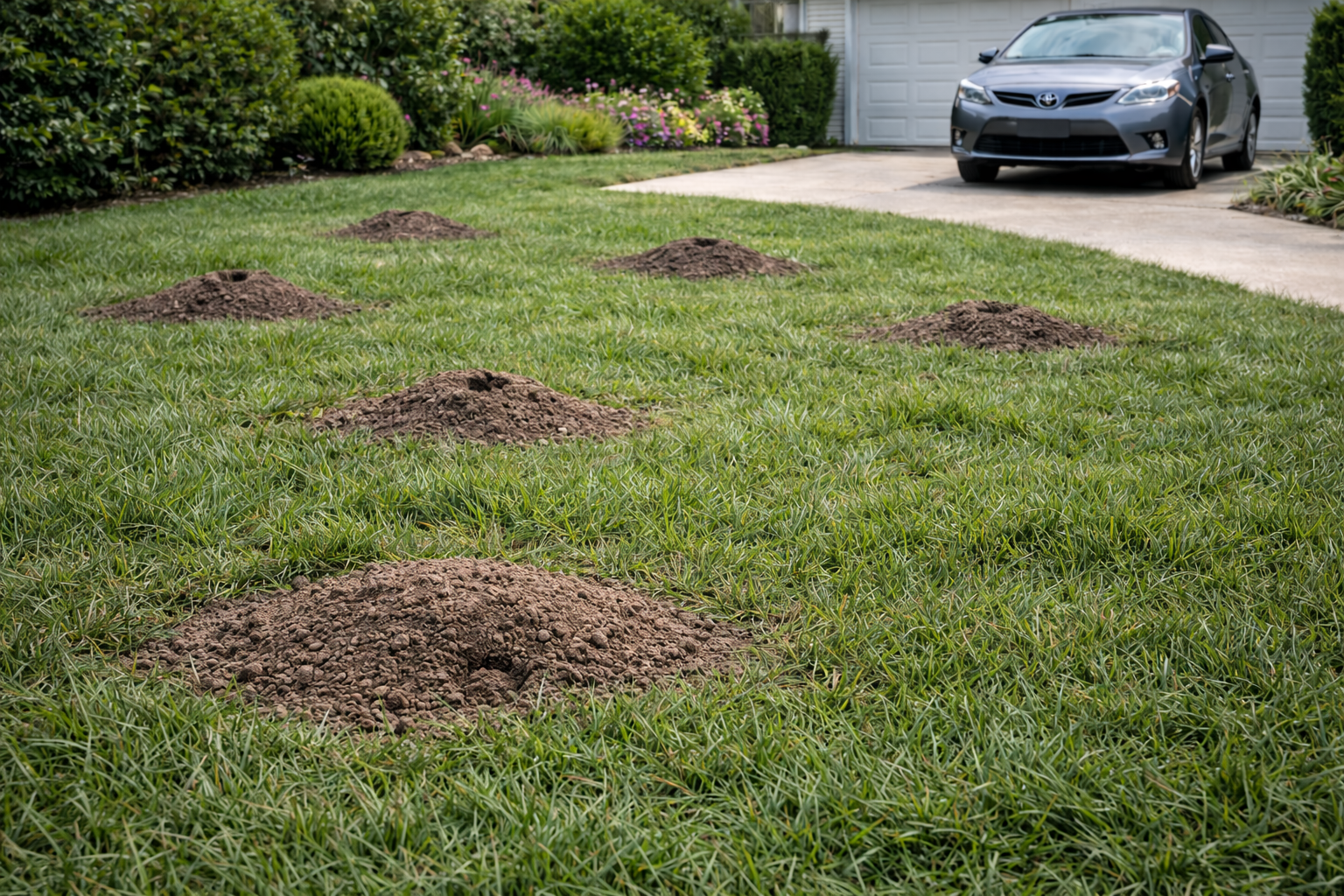
Gopher Activity in Laguna Hills, CA

Laguna Hills, nestled in the rolling coastal foothills of southern Orange County, experiences considerable gopher activity throughout the year. The combination of ideal soil conditions, residential landscaping, and proximity to undeveloped canyon lands creates an environment where pocket gophers thrive. Property owners in this affluent community frequently discover evidence of gopher tunneling in their yards, particularly in areas with established gardens and irrigation systems.

Why Laguna Hills Has Significant Gopher Activity

The geological and environmental characteristics of Laguna Hills make it particularly susceptible to gopher populations. The region sits atop the San Joaquin Hills formation, characterized by sandy loam and clay soils that are ideal for burrowing. These soil types, combined with the area's Mediterranean climate, support year-round vegetation that gophers depend on for food.

Laguna Hills receives approximately 12 to 14 inches of annual rainfall, concentrated primarily between November and March. This seasonal precipitation pattern, along with the widespread use of automated irrigation systems throughout residential neighborhoods, maintains soil moisture levels that gophers prefer. The softened earth created by consistent watering makes tunnel construction significantly easier for these burrowing rodents.

The town's location adjacent to the Laguna Coast Wilderness Park and other protected canyon areas means that gopher populations from undisturbed habitat naturally expand into residential zones. Properties near major open spaces—including areas around Aliso and Wood Canyons Wilderness Park to the north—tend to experience more frequent gopher colonization. Additionally, Laguna Hills' emphasis on native plant landscaping and drought-resistant gardens paradoxically attracts gophers, as these plants often produce the types of roots and bulbs that constitute the rodents' preferred diet.

Common Gopher Species in Laguna Hills

The Botta's pocket gopher (Thomomys bottae) represents the primary gopher species found throughout Laguna Hills and the greater Orange County region. This medium-sized rodent measures approximately 5 to 7 inches in body length, with fur coloration ranging from dark brown to grayish-brown, depending on local soil types. The species derives its common name "pocket gopher" from the fur-lined cheek pouches that the animal uses to transport food and nesting materials through its tunnel system.

Botta's pocket gophers possess several physical adaptations perfectly suited to their subterranean lifestyle. Their front feet display notably enlarged claws designed for excavating soil, while their small eyes and ears reflect their underground existence where vision and hearing provide limited advantage. Their teeth remain continuously open to the air, even when the mouth is closed, allowing gophers to excavate without inhaling dirt.

Within Laguna Hills, Botta's pocket gophers establish territories across residential yards, golf courses, and community green spaces. Individual gophers typically maintain solitary tunneling systems that can span 200 to 600 feet of underground passages. The species shows particular abundance in the low-elevation neighborhoods along El Toro Road, Laguna Hills Drive, and throughout the community's numerous planned developments where uniform landscaping and irrigation create optimal conditions.

When Gopher Activity Peaks in Laguna Hills

Gopher activity in Laguna Hills follows predictable seasonal patterns tied to breeding cycles and environmental conditions. The primary breeding season extends from January through March, during which male gophers expand their tunnel networks searching for mates. This period typically corresponds with the tail end of the region's rainy season, when soil moisture is highest and digging conditions are optimal. Property owners frequently observe the most dramatic gopher mounding activity during these months.

Activity generally declines through the hot, dry months of June through September, when Laguna Hills experiences its characteristic Mediterranean drought. During this period, gophers spend more time foraging and less time excavating new tunnels. However, this apparent decrease in activity often proves misleading, as established populations remain active underground, particularly in yards with maintained irrigation systems that create pockets of moist soil.

Fall and early winter bring renewed surface activity as soil begins to moisten again and gophers prepare for the breeding season. October through December represents the second-most-active period for gopher tunneling in Laguna Hills. Throughout the year, even during apparent lulls in visible activity, gophers continuously maintain their tunnel networks and forage for available roots, tubers, and bulbs.

Signs of Gopher Damage in Laguna Hills Yards

The most obvious indicator of gopher presence consists of the distinctive mounds that appear across Laguna Hills properties. These mounds, typically 4 to 6 inches tall and 6 to 8 inches in diameter, appear as rounded heaps of excavated soil. Unlike mole mounds that form symmetrical, cone-shaped structures, gopher mounds display a characteristic crescent or horseshoe shape when viewed from above. A single gopher may create dozens of mounds across a property during active tunneling periods.

Gopher tunneling beneath the surface causes widespread damage to irrigation systems common throughout Laguna Hills. The rodents frequently collapse or sever buried drip irrigation lines, creating dry patches in otherwise regularly watered areas. This damage often escapes notice until plants begin showing severe water stress during dry periods.

Direct plant damage manifests in multiple ways throughout Laguna Hills yards. Gophers pull plants down into their tunnels from below, consuming bulbs, roots, and underground stems. Homeowners may discover prized flowering bulbs, vegetable gardens, and landscape plantings suddenly disappearing at the soil line. Young trees and shrubs experience particular vulnerability, as gophers gnaw bark from roots and lower trunks. Established plants may wilt unexpectedly despite adequate irrigation, indicating root damage from tunneling activity beneath the soil surface.

Landscape Considerations for Laguna Hills Properties

The typical Laguna Hills residential landscape reflects Southern California aesthetic preferences combined with water-conservation imperatives. Many properties feature combinations of native coastal sage scrub plants, drought-tolerant ornamentals, and Mediterranean species selected for their resilience in the region's climate. Common landscape plantings include California poppies, sage varieties, toyon, manzanita, and various succulent species. Additionally, many Laguna Hills properties maintain irrigated gardens containing more moisture-demanding plants, creating contrasting microclimates within the same yard.

Gophers display particular preference for certain plants commonly found in Laguna Hills landscapes. Bulbs and tubers—including tulips, daffodils, and various lily species—attract gopher attention intensely. Root crops such as carrots and beets prove equally vulnerable. Even drought-tolerant plants become targets when gophers encounter succulent roots and tubers. Certain ornamental plants including alyssum, clover, and various legumes provide both above-ground forage and underground root systems that gophers consume.

The architectural character of Laguna Hills neighborhoods influences gopher activity patterns. Areas with extensive hardscaping—including patios, walkways, and stone features—experience less gopher damage simply because fewer opportunities exist for tunneling. In contrast, properties emphasizing softscape with expansive lawns, mulched planting beds, and dense vegetation provide ideal gopher habitat. The balance between hardscape and softscape therefore significantly influences the degree of gopher activity any individual property experiences in Laguna Hills.