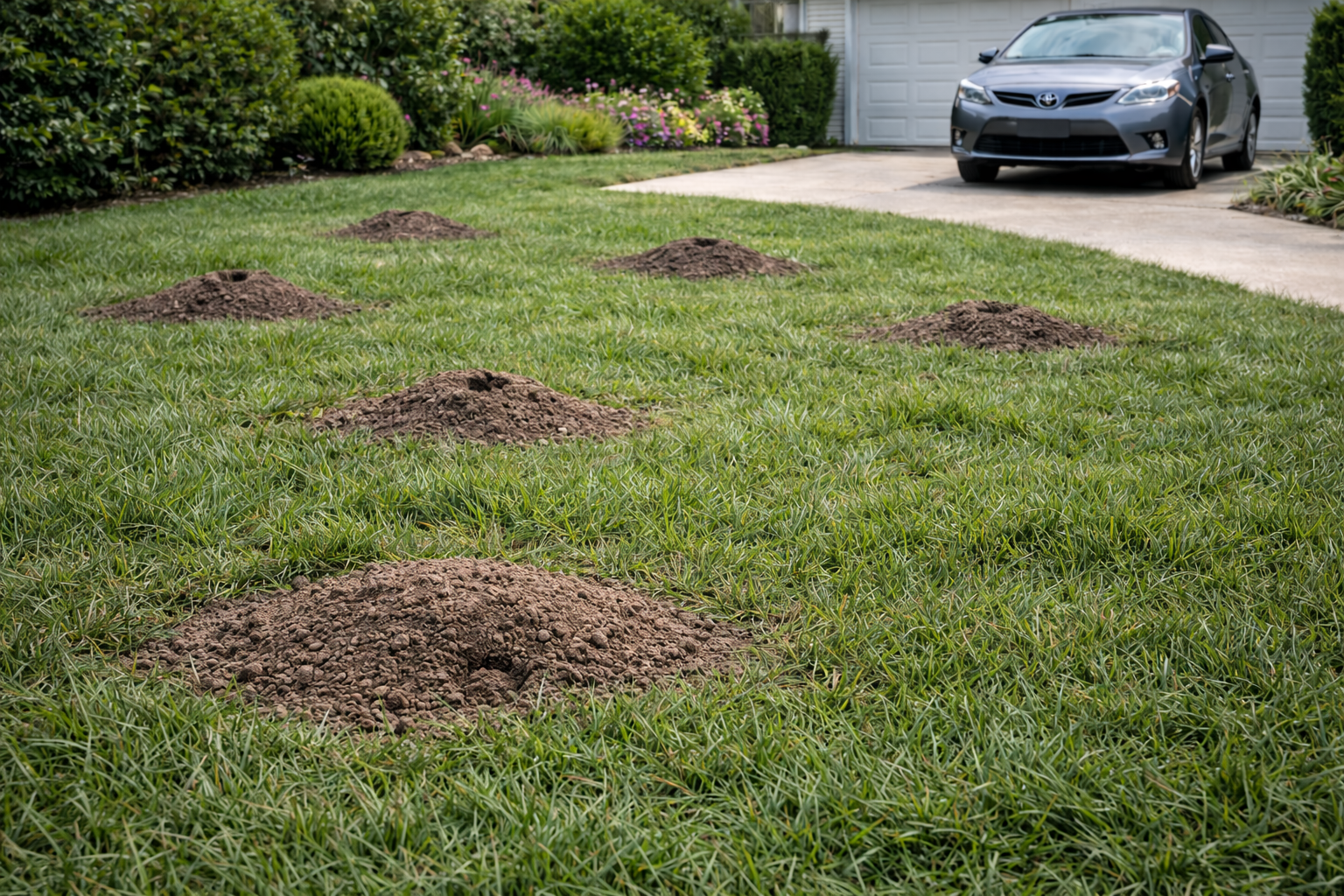
Gopher Activity in Lennox, CA
Gophers are a persistent presence throughout Lennox, a small unincorporated community in Los Angeles County situated between Inglewood and Manhattan Beach. The combination of residential properties, irrigated gardens, and proximity to coastal sage scrub habitats creates ideal conditions for sustained gopher populations. Property owners in Lennox regularly encounter evidence of burrowing activity, from distinctive mounds in lawns to damaged irrigation systems and compromised plant roots.
Why Lennox Has Significant Gopher Activity
Several interconnected factors contribute to Lennox's suitability as gopher habitat. The area's soil composition—dominated by fine sandy loam with clay components derived from ancient marine deposits—is particularly conducive to burrowing. These soils are workable without being so hard that excavation becomes prohibitively difficult for pocket gophers. The texture allows gophers to create stable tunnel systems that persist across seasons.
Lennox's Mediterranean climate, characterized by warm, dry summers and mild, wet winters, aligns perfectly with gopher activity patterns. Rainfall averages approximately 13 inches annually, concentrated between November and March. This seasonal water availability triggers vegetation growth that sustains gopher populations through nutrient-dense plant material. The mild winters mean that gophers do not enter true hibernation, remaining active throughout the year in search of food and mates.
Residential irrigation systems—ubiquitous across Lennox properties from Lennox Boulevard to the neighborhoods near Del Amo Boulevard—provide supplemental water that extends the growing season for gophers' preferred vegetation. This artificial water availability essentially lengthens the period during which tender plant growth is accessible. Additionally, Lennox's location at the northern edge of the Palos Verdes Peninsula places it in proximity to undeveloped coastal sage scrub areas that serve as natural gopher reservoirs, ensuring continuous recolonization of managed landscapes.
Common Gopher Species in Lennox
The gopher species encountered throughout Lennox is Thomomys bottae, commonly known as Botta's pocket gopher. This species is native to California and represents the primary burrowing rodent affecting residential and commercial properties across Los Angeles County. Botta's pocket gophers are medium-sized rodents, typically weighing between 2 and 4 ounces, with bodies measuring 5 to 7 inches in length, not including the tail.
These gophers possess several distinctive physical characteristics that aid in identification. Their fur ranges from dark brown to nearly black, with occasional lighter patches along the sides and belly. The animals have small, rounded ears positioned high on the head and relatively small eyes—adaptations reflecting their underground lifestyle where vision is less critical than tactile and olfactory senses. The front feet feature elongated claws, particularly pronounced on the middle digits, which function as primary digging tools. The tail is relatively short and hairless, often appearing pinkish.
Botta's pocket gophers derive their name from externally opening cheek pouches, which they use to transport food and nesting material through their tunnel systems. In Lennox, these gophers occupy diverse habitats ranging from well-maintained residential gardens to vacant lots and the transitional zones where urban development meets native vegetation. They prefer areas with established vegetation, adequate moisture, and loose soil—conditions abundantly available throughout Lennox's residential neighborhoods and parks.
When Gopher Activity Peaks in Lennox
Gopher activity in Lennox exhibits distinct seasonal patterns driven by reproductive cycles and environmental conditions. The breeding season extends from January through March, coinciding with the region's peak rainy period. During these months, male gophers become more active and mobile as they search for females, often venturing through tunnels and across the surface in ways that increase their visibility to property owners. This behavioral shift makes gopher presence more apparent during early spring, even though animals remain active year-round.
Spring months—March through May—bring accelerated vegetation growth following winter rainfall. This renewed abundance of tender plants, succulent roots, and fresh shoots represents peak food availability, driving intense foraging activity. Gophers expand their tunnel networks rapidly during this period, and property owners frequently notice increased mounding activity. The construction of new tunnels and the deposit of excavated soil occurs with particular frequency as populations adjust to the seasonal resource glut.
Summer and early fall bring a temporary slowdown in surface activity as gophers focus on deeper, cooler portions of their tunnel systems. However, this apparent reduction in activity reflects behavioral changes rather than population decline. The arrival of fall rains in October and November triggers another increase in surface and tunneling activity as gophers prepare for the winter breeding season. Property owners in Lennox should expect observable gopher activity from November through May, with less conspicuous but still significant activity throughout the summer months.
Signs of Gopher Damage in Lennox Yards
The most visible indicator of gopher presence consists of distinctive mounds of excavated soil scattered across lawns and landscaped areas. These mounds typically measure 3 to 5 inches in height and 4 to 8 inches in diameter, appearing as crescent or fan-shaped accumulations. Lennox property owners with grass-dominated landscapes frequently observe multiple mounds appearing overnight, particularly following rainfall or irrigation events. The mounds themselves contain no visible hole; gophers typically seal their tunnel openings after depositing soil material at the surface.
Subsurface damage often exceeds visible surface indicators. Gopher tunneling compromises irrigation system integrity, damaging PVC piping, drip lines, and sprinkler heads common throughout Lennox's water-conservation-conscious residential properties. Elevated or sunken areas in lawns and garden beds indicate tunnel collapse. Plant damage appears as mysteriously wilted or dying vegetation, with investigation revealing roots severed by gopher tunneling or consumption. Vegetable gardens and ornamental plantings suffer particular damage as gophers feed on roots while remaining underground, making the animal invisible during feeding.
In established landscapes prevalent throughout Lennox neighborhoods, gophers preferentially target roots of fruit trees, shrubs, and perennial plantings. They may girdle plant stems by consuming bark and cambium at the soil surface, particularly affecting young trees and newly established specimens. Potted plants left on soil surfaces may be undermined as gophers tunnel beneath them, destabilizing the containers and accessing the potted plant's root system.
Landscape Considerations for Lennox Properties
Lennox's residential landscape characteristics create varying levels of vulnerability to gopher damage. Dominant local landscaping styles include low-water xeriscaping with rock mulch and drought-tolerant species, traditional lawn-and-shrub configurations, and increasingly, native coastal sage scrub plantings reflecting ecological restoration awareness. Each approach presents distinct gopher management considerations.
Rock mulch landscapes, common throughout Lennox as properties transition toward water-conservation practices mandated by regional water authorities, paradoxically provide ideal conditions for gopher expansion. Loose rock mulch allows easy tunnel construction and conceals mounding activity. Beneath the rock layer, soil conditions remain consistently moist from occasional watering and moisture retention, supporting robust gopher populations. Traditional turf grass areas experience obvious mounding but allow easier detection of tunnel systems. Mixed perennial beds combining shrubs, groundcovers, and seasonal plantings demand frequent irrigation in Lennox's Mediterranean climate, conditions that sustain high gopher populations.
Plant species selection significantly influences damage susceptibility. Soft-rooted plants including vegetables, young fruit trees, and tender perennials suffer disproportionate damage. Gophers readily consume roots of alfalfa, clover, and legume-family plants. Conversely, established woody shrubs, Mediterranean natives adapted to Lennox's climate, and plants with defended chemical compounds experience less consumption pressure. Native species such as California buckwheat, toyon, and sage varieties demonstrate greater resistance to gopher damage than non-native ornamentals.
Hardscape elements—pathways, patios, and structural features—do not prevent gopher tunneling but do restrict mounding visibility. Properties balancing hardscape and softscape features may support equally robust gopher populations while experiencing less obvious surface disruption. Understanding that subsurface damage continues regardless of surface appearance represents a critical insight for Lennox property stewardship.
For professional gopher control in Southern California, visit Rodent Guys — serving Los Angeles, Orange, San Bernardino, and Riverside counties.