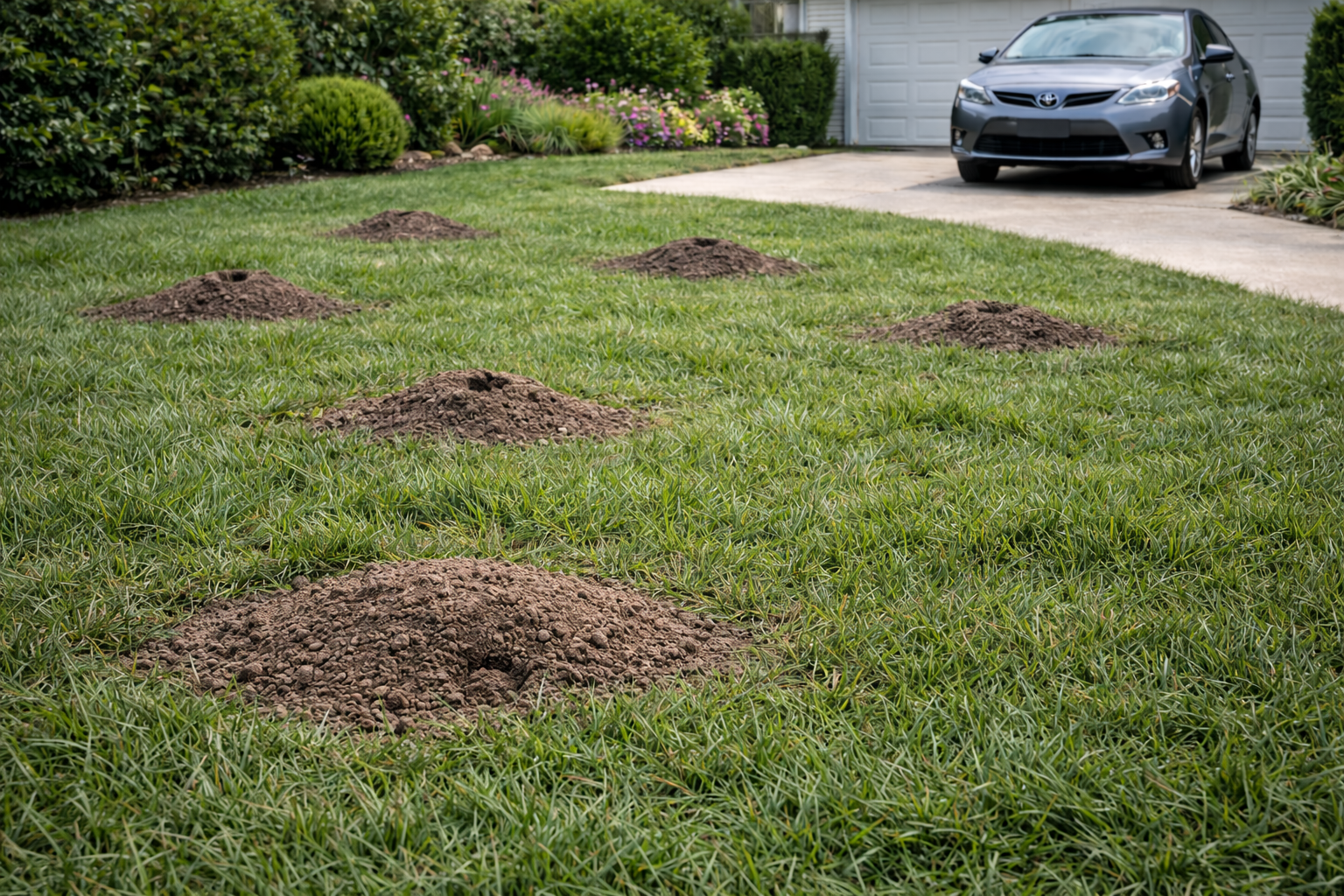
Gopher Activity in Los Alamitos, CA
Los Alamitos, situated in northwestern Orange County, experiences notable gopher activity due to its favorable soil conditions, established residential landscaping, and proximity to undeveloped land corridors. The community's blend of single-family homes, manicured yards, and irrigated gardens creates an ideal environment for gopher populations to establish and thrive. Understanding the patterns and indicators of gopher presence is essential for property owners in this region.
Why Los Alamitos Has Significant Gopher Activity
The Los Alamitos area's susceptibility to gopher infestations stems from multiple interconnected environmental and geographical factors. The underlying soil composition throughout the region consists primarily of sandy loam and fine sandy loam, which gophers find exceptionally easy to excavate. These soil types, common in northwestern Orange County, offer minimal resistance to burrowing and tunnel construction, allowing gophers to expand their underground networks with relatively little effort.
The local irrigation infrastructure amplifies gopher activity significantly. Most residential properties in Los Alamitos maintain sprinkler systems that keep lawns and garden beds consistently moist. Gophers require access to water, and the year-round availability of irrigated landscapes eliminates the water scarcity that might otherwise limit population density. Additionally, the region's Mediterranean climate—characterized by mild, wet winters and warm, dry summers—aligns perfectly with gopher breeding and foraging cycles.
Los Alamitos borders agricultural lands and natural habitat corridors that serve as source populations for gophers. The proximity to undeveloped areas in surrounding regions means gophers can continuously recolonize residential properties. The established tree canopy and diverse plantings throughout neighborhoods provide abundant food sources, from tree roots to vegetable gardens, further sustaining gopher populations year after year.
Common Gopher Species in Los Alamitos
The Botta's pocket gopher (Thomomys bottae) is the primary gopher species encountered throughout Los Alamitos and the broader Orange County region. This medium-sized rodent typically measures between 4.5 and 9 inches in body length, with a relatively short tail that rarely exceeds 1.5 inches. Adults generally weigh between 2 and 4 ounces, making them substantial enough to cause considerable damage despite their modest size.
Botta's pocket gophers possess several distinctive physical characteristics that aid in identification. Their fur coloration ranges from light tan to dark brown, often matching the soil color of their local habitat—a natural adaptation that provides camouflage when above ground. The species derives its common name "pocket gopher" from the fur-lined cheek pouches (or pockets) that the animal uses to transport food and nesting material back to underground burrow systems.
These gophers are solitary, territorial animals that spend the majority of their lives underground. Each individual typically maintains a burrow system spanning 200 to 600 square feet, though larger territories are not uncommon. In Los Alamitos, where soil conditions are favorable and food sources abundant, gophers can maintain relatively permanent territories year after year. The visible mounds that appear in lawns and gardens represent only a fraction of the actual tunnel network existing beneath the surface.
When Gopher Activity Peaks in Los Alamitos
Gopher activity in Los Alamitos follows predictable seasonal patterns tied to the local climate and breeding cycle. Activity typically intensifies during late winter and early spring, specifically from January through March, when gophers enter their primary breeding season. During this period, males expand their movements searching for mates, and females prepare nesting chambers and food caches in anticipation of pregnancy and offspring care.
Spring rains, which generally occur between February and April in the Los Alamitos area, trigger increased gopher tunneling activity. The moisture softens soil, making excavation less energy-intensive and allowing gophers to expand their burrow systems more readily. Property owners frequently notice the most visible mounding activity during and immediately following these rain events. The abundance of fresh vegetation growth following spring precipitation also concentrates gopher feeding activity in specific areas of yards and gardens.
Secondary activity peaks can occur in fall as gophers prepare for winter, though this period is typically less pronounced than spring activity. Summer represents a relative lull in visible activity, though gophers continue tunneling and foraging underground. During the hot, dry months, gophers focus on accessing moisture deeper in the soil profile and tend to remain in established tunnel systems rather than creating new surface disturbance. Year-round irrigation in Los Alamitos, however, can maintain gopher activity even during typically quieter seasons by sustaining both soil moisture and plant growth.
Signs of Gopher Damage in Los Alamitos Yards
The most obvious indicator of gopher presence is the characteristic mounding pattern visible in lawns and garden beds. Fresh gopher mounds appear as crescent or fan-shaped ridges of soil, typically 3 to 6 inches in diameter and 2 to 4 inches in height. These mounds are created when gophers push soil directly upward from their tunnels, a behavior distinct from the chimney-like structures created by other burrowing rodents. In Los Alamitos yards, mounds often appear after irrigation or rain when soil moisture facilitates easier excavation.
Underground tunnel damage frequently causes more significant problems than the visible mounds themselves. Gopher burrows compromise irrigation system integrity, causing leaks and water loss. Flexible PVC irrigation lines are particularly vulnerable to puncture and crushing. Underground tunneling also creates air pockets and voids beneath the soil surface, leading to uneven ground settling and tripping hazards. Property owners may notice areas of lawn that suddenly collapse or develop depressions corresponding to tunnel locations.
Plant damage serves as another critical indicator of gopher activity. Gophers feed on roots, bulbs, and underground plant parts from beneath the soil surface, causing plants to wilt and die suddenly without obvious above-ground explanation. Young trees and shrubs common in Los Alamitos landscaping—including fruit trees, ornamental trees, and newly planted specimens—are particularly vulnerable. Vegetable gardens experience severe damage as gophers consume root vegetables, bulbs, and planted seeds. Surface feeding evidence, where gophers pull plants down into their burrows, may also be observed in garden areas.
Landscape Considerations for Los Alamitos Properties
Los Alamitos residential properties typically feature a mix of traditional Southern California landscaping styles, combining irrigated turf areas with drought-tolerant plantings, specimen trees, and mixed shrub borders. This landscape diversity creates varied opportunities for gopher exploitation. Established lawns, particularly those maintained with regular irrigation, provide ideal habitat and food sources. The combination of green vegetation and consistently moist soil beneath most Los Alamitos properties creates nearly year-round foraging conditions for gopher populations.
Certain plant species common in the region are particularly attractive to gophers and more susceptible to damage. Citrus trees, stone fruits, and other deciduous fruit trees prevalent in Los Alamitos yards face significant root damage. Ornamental trees such as liquidambar, crape myrtles, and various palm species suffer when gophers tunnel near their root systems. Vegetable and herb gardens attract gophers intensely, as the tender plants, succulent roots, and loose, regularly disturbed soil create optimal conditions. Conversely, some plants possess characteristics that make them less palatable—native shrubs with tough root systems and certain succulents are less frequently damaged.
The balance between softscape (lawn and planted areas) and hardscape (paved surfaces, patios, and structures) influences gopher activity patterns on Los Alamitos properties. Yards with extensive hardscape features and minimal turf or planting areas naturally support fewer gophers. However, the typical Los Alamitos property maintains substantial softscape to maximize functional outdoor space, inadvertently providing habitat connectivity that allows gopher populations to persist. Understanding which landscape features attract or discourage gophers helps property owners make informed decisions about yard design and maintenance strategies.
For professional gopher control in Southern California, visit Rodent Guys — serving Los Angeles, Orange, San Bernardino, and Riverside counties.