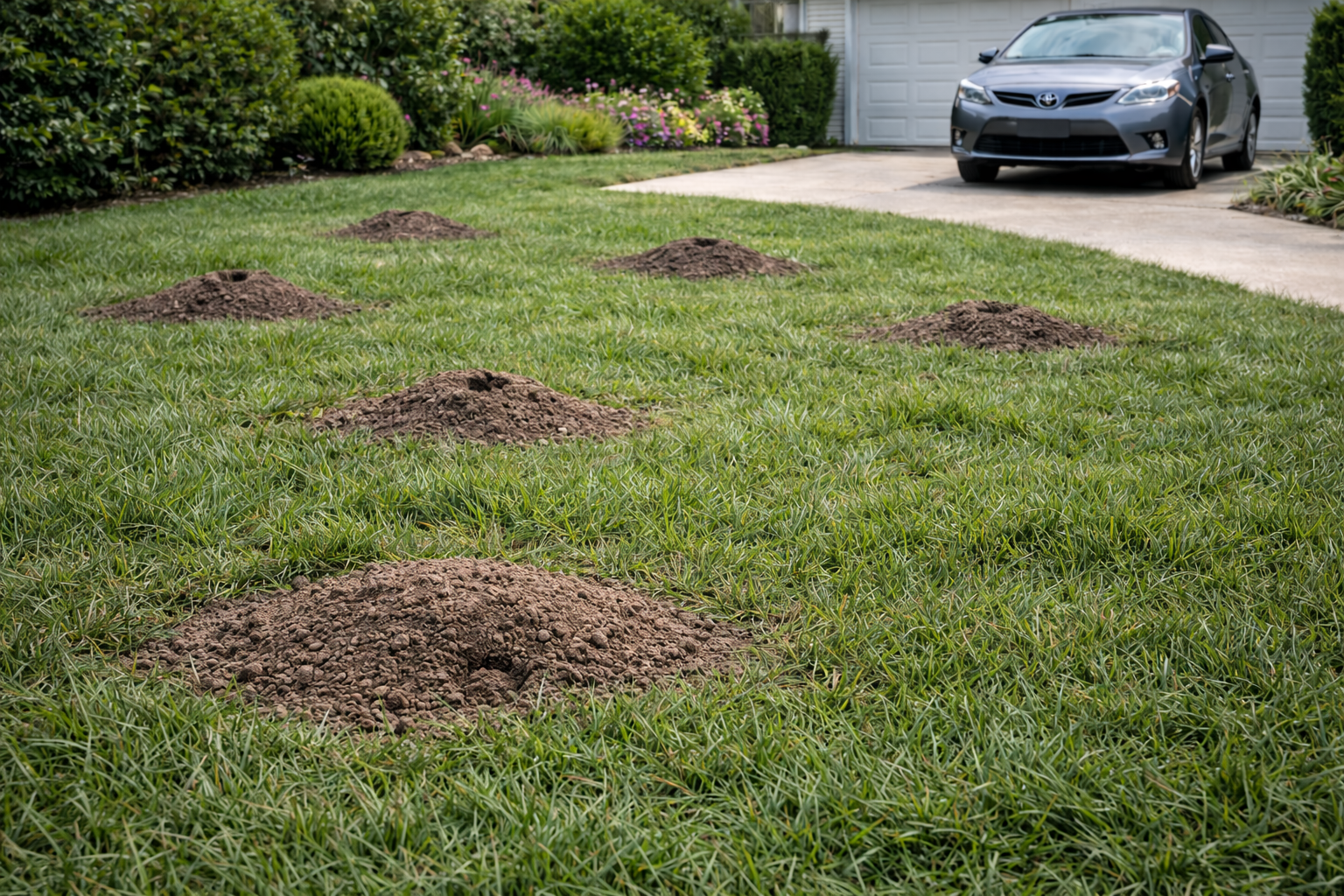
Gopher Activity in Simi Valley, CA
Simi Valley, located in western Ventura County at the edge of Los Angeles County, experiences consistent gopher activity throughout the year. The combination of the valley's Mediterranean climate, extensive residential irrigation systems, and proximity to undeveloped chaparral lands creates an ideal habitat for pocket gophers. Property owners across neighborhoods from the developed eastern portions near Cochran Street to the more rural western areas bordering the Santa Susana Mountains frequently encounter evidence of gopher burrowing.
Why Simi Valley Has Significant Gopher Activity
Simi Valley's geography and environmental conditions make it particularly susceptible to gopher populations. The valley floor consists primarily of sandy loam and clay loam soils, which are ideal for burrowing animals. These soil types allow gophers to tunnel efficiently while maintaining structural integrity in their tunnel systems. The valley's elevation, ranging from approximately 700 feet in the eastern portions to over 2,000 feet in western areas near the Santa Susana Mountains, creates varied microclimates that support gopher populations across different zones.
The extensive irrigation infrastructure throughout Simi Valley's residential and commercial properties provides consistent moisture that gophers require. Landscaped yards with regular watering systems create underground conditions that remain moist and workable throughout the year, even during the region's dry summers. The presence of nearby wild areas—including sections of the Santa Susana Mountains, undeveloped chaparral lands, and open space preserves—serves as a continuous population source. These wild populations naturally migrate into developed areas seeking food and suitable habitat. Additionally, Simi Valley's relatively mild winters mean that gophers remain active throughout the year rather than entering deep hibernation, maintaining steady burrowing pressure on properties.
Common Gopher Species in Simi Valley
The Botta's pocket gopher (Thomomys bottae) is the predominant species found throughout Simi Valley. These medium-sized rodents typically measure 6 to 8 inches in body length, with tail lengths of approximately 1.5 to 2 inches. Botta's pocket gophers are characterized by their stocky build, small eyes, and large front teeth used for excavating soil. Their fur coloration ranges from light tan to dark brown, often matching the soil colors in their local habitat. Pocket gophers derive their name from the fur-lined cheek pouches used to transport soil and food materials.
These gophers are solitary animals with individual territory sizes typically ranging from 500 to 2,000 square feet, depending on soil quality and food availability. Within Simi Valley's various neighborhood settings—from the developed areas of the Tierra Blanca district to properties in Madera and Sycamore Creek neighborhoods—gophers establish burrow systems that can include multiple tunnels and chambers. They are primarily herbivorous, feeding on plant roots, bulbs, tubers, and above-ground vegetation. The species' adaptability to various habitat types, from agricultural land to residential properties, has allowed them to thrive throughout Simi Valley. Their fossorial nature means they spend most of their time underground, making direct observation relatively uncommon despite their significant presence.
When Gopher Activity Peaks in Simi Valley
Gopher activity in Simi Valley exhibits distinct seasonal patterns influenced by the region's Mediterranean climate. The primary breeding season occurs from January through March, coinciding with Simi Valley's rainy season. During these months, increased soil moisture softens the earth, making tunneling easier and reducing the energy expenditure required for excavation. This period also corresponds with the germination of spring vegetation, providing abundant food sources for breeding females and their developing young. Property owners frequently notice increased mound activity during winter and early spring months as gophers actively expand their burrow systems and forage more extensively.
Spring rains, typically occurring between November and April, create optimal conditions for gopher activity. These rains raise soil moisture levels throughout the upper soil profile, allowing gophers to burrow more efficiently. Following the peak breeding season, juvenile gophers typically emerge and disperse in late spring and early summer, seeking their own territories. This dispersal period, usually occurring in May and June, often results in visible mound activity as young gophers establish new burrow systems across properties. During Simi Valley's hot, dry summers (June through September), surface activity may appear reduced, but gophers continue tunneling in deeper, moister soil layers. Fall months bring renewed activity as cooling temperatures and occasional early rains make near-surface burrowing more favorable again. Year-round activity occurs in irrigated landscapes, where maintained soil moisture negates seasonal dry periods.
Signs of Gopher Damage in Simi Valley Yards
The most visible sign of gopher activity is the characteristic mounding pattern in yards and landscaped areas. Gophers in Simi Valley create distinctive crescent or horseshoe-shaped mounds as they push excavated soil from their burrows. These mounds typically measure 3 to 6 inches in height and 8 to 12 inches in diameter, though dimensions vary based on soil type. Unlike mole mounds, which are rounded and compact, gopher mounds appear more irregular with a depression or hole offset to one side where soil was pushed upward. Property owners across Simi Valley neighborhoods—from Tarantin Drive areas to properties near Regan Road—frequently observe multiple mounds in a single yard, indicating established gopher territories.
Gophers cause significant damage to irrigation systems common throughout Simi Valley properties. Underground irrigation lines are frequently gnawed and compromised, leading to water leakage and system inefficiency. The damage typically occurs as gophers tunnel through areas where buried drip lines and sprinkler laterals are installed. Plant damage is another primary concern, particularly affecting prized landscaping elements. Gophers pull plants downward into their burrows, consuming roots and causing plants to wilt and die. Vegetable gardens suffer substantial losses, and ornamental plantings frequently show signs of being partially uprooted. Root vegetables, bulbs, and tuberous plants are especially vulnerable. Additionally, gophers feed on the bark of young trees and shrubs from beneath the soil surface, sometimes girdling them completely. Visible wilting, yellowing, and sudden plant death in otherwise healthy yards often indicate gopher feeding activity.
Landscape Considerations for Simi Valley Properties
Simi Valley's landscaping aesthetic typically emphasizes drought-tolerant plants and water-wise designs, reflecting the region's semi-arid climate and California's water conservation priorities. Many properties feature Mediterranean-style landscaping with native shrubs, ornamental grasses, and succulent plants. Popular landscape elements include California native species such as California lilac (Ceanothus), toyon, sage varieties, and drought-tolerant groundcovers. These plantings offer relatively fewer underground food sources compared to traditional turf and vegetable gardens, yet remain vulnerable to gopher damage during burrowing activities. Properties with more intensive landscaping—including lawns, flower beds, and vegetable gardens—experience higher gopher pressure.
The contrast between hardscaped and softscaped areas influences gopher distribution across Simi Valley properties. Areas with extensive patios, concrete walkways, and driveways present physical barriers to burrowing. Conversely, properties with substantial lawn areas, mulched beds, and garden spaces provide ideal habitat. The valley's common use of wood chips and bark mulch in landscaped beds creates loose soil conditions that gophers find particularly suitable for tunneling. Irrigation system density directly correlates with gopher activity; properties with extensive underground irrigation experience greater population pressure. Elevated planter boxes and container gardening offer protection from gopher damage in ways that in-ground plantings cannot achieve. Property owners seeking to minimize gopher attraction often reduce soil disturbance, minimize irrigation in certain zones, and select hardscape features that limit burrowing habitat. However, complete exclusion in a valley with such significant wild gopher populations remains challenging without comprehensive professional management approaches.
For professional gopher control in Southern California, visit Rodent Guys — serving Los Angeles, Orange, San Bernardino, and Riverside counties.