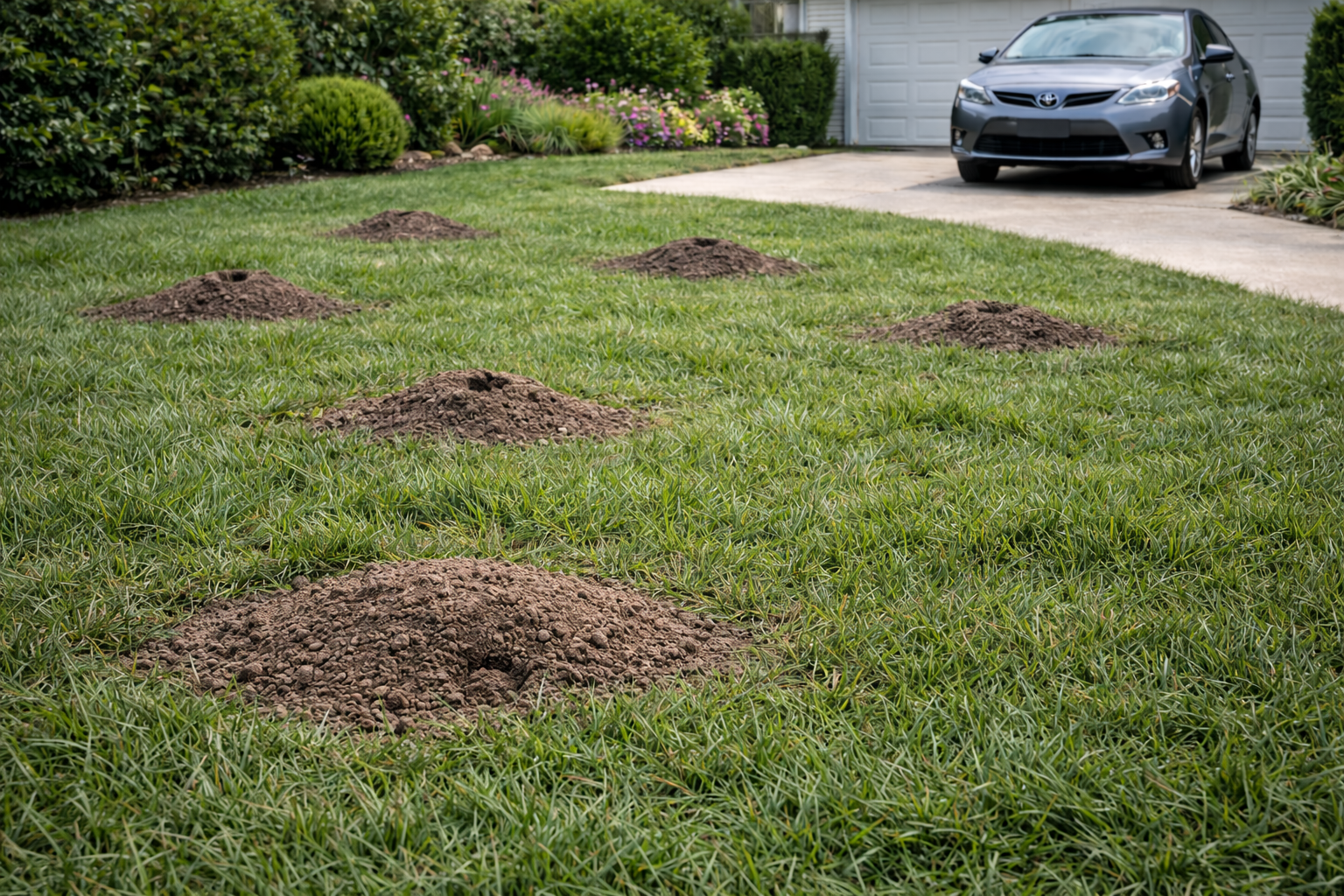
Gopher Activity in San Jacinto, CA
San Jacinto, located in Riverside County in Southern California's Inland Empire, experiences notable gopher activity throughout the year. The combination of the region's sandy loam soils, agricultural heritage, and residential landscaping creates an ideal environment for pocket gopher populations. Understanding gopher behavior and seasonal patterns helps residents and property managers recognize and respond to their presence effectively.
Why San Jacinto Has Significant Gopher Activity
San Jacinto's geographical and environmental characteristics make it particularly suitable for gopher populations. The town sits at approximately 2,400 feet elevation in the San Jacinto Valley, surrounded by the San Jacinto Mountains to the north and east. The region's soil composition consists primarily of sandy loam and gravelly materials derived from alluvial deposits, which are ideal for burrowing. These soils are loose enough to excavate easily but retain sufficient structure to support tunnel systems without collapse.
The irrigation infrastructure throughout San Jacinto's residential and agricultural areas provides consistent moisture that gophers require. Many properties in town utilize irrigation for landscaping and gardens, creating underground water sources that attract and sustain gopher populations. The region receives approximately 15-18 inches of annual precipitation, with most rainfall occurring between November and March. This seasonal pattern of winter and early spring moisture encourages gopher activity during breeding and foraging periods.
Proximity to undeveloped areas also contributes to San Jacinto's gopher presence. The surrounding foothills and open space provide natural habitat corridors, allowing gophers to move between wild populations and residential areas. Properties on the town's edges, particularly those adjacent to the San Jacinto Wildlife Area or overlooking undeveloped valley land, experience more frequent gopher colonization than central neighborhoods.
Common Gopher Species in San Jacinto
The Botta's pocket gopher (Thomomys bottae) is the primary species found throughout San Jacinto and the broader Inland Empire region. These rodents typically measure 5 to 8 inches in body length, with a tail adding another 1 to 2 inches. Their fur varies in color from light brown to dark gray, with some individuals displaying nearly black coats. Botta's pocket gophers have small eyes, large front teeth designed for gnawing, and prominent claws adapted for excavation.
The name "pocket gopher" refers to externally-lined cheek pouches that these animals use to transport food and nesting materials. These pouches extend from the mouth backward along the sides of the face and can hold substantial quantities of seeds, roots, and plant matter. Unlike ground squirrels or chipmunks, pocket gophers are solitary creatures that spend most of their lives underground in their tunnel systems.
Botta's pocket gophers are found throughout San Jacinto's diverse landscapes—from yards and gardens in residential neighborhoods to agricultural properties and undeveloped hillsides. They demonstrate remarkable adaptability to different soil types, though they show preference for the sandy loam predominant in the San Jacinto Valley. Individual gophers maintain and defend territories ranging from 200 to 2,000 square feet, depending on soil quality and food availability. Their presence is almost exclusively indicated through surface signs rather than direct observation, as they rarely emerge above ground.
When Gopher Activity Peaks in San Jacinto
Gopher activity in San Jacinto follows distinct seasonal patterns influenced by the region's climate and the animals' reproductive cycles. Winter months, particularly January through March, represent peak breeding season for pocket gophers. During this period, males actively tunnel and seek mates, resulting in increased surface mound construction and expansion of tunnel systems. Females also become more active as they establish nesting burrows and prepare for spring litters.
Spring activity accelerates with San Jacinto's seasonal rainfall pattern. February and March typically bring the most precipitation to the region, softening soil and activating vegetation growth. These conditions trigger intense gopher foraging and tunnel expansion. As surface plants green up and provide fresh food sources, gophers consume greater quantities of vegetation and seeds, increasing their visible impact on yards and gardens.
Summer months bring relative decreases in surface activity as San Jacinto's temperatures climb and soils dry considerably. However, gophers remain active underground, utilizing deeper burrow systems and feeding on stored roots and tubers. Fall cooling trends initiate another uptick in activity as gophers prepare for winter and take advantage of late-season plant growth. Property owners typically notice the most dramatic gopher presence from late winter through spring, with secondary peaks in early fall as juvenile gophers disperse from parental territories to establish their own burrow systems.
Signs of Gopher Damage in San Jacinto Yards
The most obvious indicator of gopher presence in San Jacinto yards is the appearance of surface mounds. These characteristic mounds are crescent or horseshoe-shaped, typically 3 to 6 inches in diameter and 1 to 3 inches high. Unlike mole mounds, which are cone-shaped and formed from below, gopher mounds result from the animal pushing loose soil directly upward while creating or maintaining tunnel entrances. A single active gopher may create multiple mounds across its territory within several days.
Beyond surface mounds, gophers cause damage to landscape irrigation systems. Many San Jacinto properties rely on drip irrigation or buried irrigation lines for landscaping and gardens. Gopher tunnels frequently intersect these systems, puncturing lines and reducing irrigation efficiency. Property owners may notice unexpected dry spots in otherwise well-irrigated areas, signaling underground line damage caused by gopher activity.
Plant damage represents another common gopher impact in San Jacinto yards. Gophers gnaw on roots and bulbs underground, often killing plants from below without obvious surface symptoms. Plants may suddenly wilt and die despite adequate water and apparent surface health. In vegetable and ornamental gardens, gophers consume young plants, seeds, and root crops. Herbaceous plants like lettuce, carrots, and potatoes are particularly vulnerable. Trees and shrubs may show bark damage or become destabilized as gophers tunnel near their root systems, potentially causing them to lean or topple during wind events.
Landscape Considerations for San Jacinto Properties
San Jacinto's landscape aesthetic reflects a blend of Inland Empire horticultural traditions, with many properties featuring combinations of decorative vegetation, fruit trees, and water-conscious plantings suited to the semi-arid climate. Desert-adapted species like mesquite, acacia, and various cacti coexist with established shade trees such as liquidambars and crape myrtles in residential neighborhoods. Ground covers, ornamental grasses, and drought-resistant shrubs have become increasingly common as water conservation awareness grows throughout the region.
These landscape choices create varying levels of gopher vulnerability. Herbaceous plants and those with shallow root systems face greater risk of underground damage than deep-rooted trees or woody shrubs with established root systems. Gardens containing root vegetables, bulbs, or young perennials attract gophers more readily than areas dominated by mature woody plants. Lawns and irrigated turf areas, common in San Jacinto's older residential neighborhoods, provide both food and the moist soil conditions gophers prefer.
Properties utilizing extensive hardscaping—patios, walkways, and other constructed surfaces—present fewer gopher foraging opportunities than those with predominantly softscape landscapes. However, gophers readily tunnel beneath hardscapes, potentially undermining structural stability over time. Strategic landscape design that incorporates barriers, reduces irrigation in vulnerable areas, or emphasizes deep-rooted woody plants can minimize attractive gopher habitat while maintaining aesthetic and functional yard goals appropriate to San Jacinto's desert-adjacent environment.
For professional gopher control in Southern California, visit Rodent Guys — serving Los Angeles, Orange, San Bernardino, and Riverside counties.