Gopher Activity in Valley Glen, CA

Valley Glen, a residential neighborhood in the San Fernando Valley region of Los Angeles, experiences consistent gopher activity throughout the year. The combination of well-maintained residential landscapes, irrigation systems, and proximity to undeveloped areas creates an ideal environment for pocket gophers. Understanding gopher behavior and seasonal patterns in this specific community helps property owners recognize problems early and make informed decisions about management.

Why Valley Glen Has Significant Gopher Activity

Valley Glen's geography and environmental conditions make it particularly susceptible to gopher colonization. The neighborhood sits in the San Fernando Valley, an expansive basin with distinct soil composition that favors burrowing rodents. The area's soil contains a mix of clay and sandy loam, which is easily excavated and holds tunnel structure well—ideal conditions for pocket gophers to establish extensive burrow systems.

The irrigation infrastructure throughout Valley Glen's residential properties contributes significantly to gopher presence. Homeowners maintain lawns, gardens, and landscaping that require regular watering, creating consistently moist soil conditions that gophers prefer. This moisture softens the soil, making tunneling less energy-intensive. Additionally, irrigated landscapes contain abundant food sources including roots, bulbs, and tender plant material that gophers actively seek.

Valley Glen's climate pattern of warm, dry summers and mild winters means gophers remain active year-round, unlike in colder regions where winter dormancy reduces activity. The San Fernando Valley receives approximately 15 inches of annual rainfall, concentrated primarily in winter months (November through March). This seasonal rainfall cycle influences gopher breeding and activity patterns, with spring months typically showing peak tunnel expansion as soil moisture increases and food availability rises.

The neighborhood's proximity to natural habitat areas, including nearby open space and less-developed parcels, provides a continuous source of gopher colonization. Once established in one yard, gophers spread to adjacent properties through connected underground networks or by surface movement, particularly during breeding season.

Common Gopher Species in Valley Glen

The Botta's pocket gopher (Thomomys bottae) is the predominant species found throughout Valley Glen and the broader San Fernando Valley region. This species is well-adapted to the valley's soil conditions and climate. Adult Botta's pocket gophers typically measure 5 to 7 inches in body length, with a relatively short tail of 1 to 1.5 inches. Their coloring ranges from grayish-brown to reddish-brown, with fur that appears coarse and dense.

Botta's pocket gophers possess several distinctive physical characteristics that make identification possible. Their front feet feature prominent claws used for excavation, and they have small eyes and ears, adaptations suited to underground life where vision is less critical. The name "pocket" gopher refers to external cheek pouches used for transporting food and nesting material through tunnels. These pouches are lined with fur and can expand significantly, allowing gophers to move substantial amounts of plant material.

In Valley Glen's residential environment, Botta's pocket gophers create burrow systems that typically remain within individual properties or extend into adjacent yards. Their tunneling activity varies with soil conditions—in the valley's harder clay-heavy soil, gophers work more actively in irrigation-softened areas. Individual gophers maintain territories of roughly 200 to 2,000 square feet, with burrow networks extending 100 to 200 feet horizontally and reaching depths of 12 feet or more. The species is solitary, meaning each burrow system typically contains a single adult gopher except during brief breeding periods.

When Gopher Activity Peaks in Valley Glen

Gopher activity in Valley Glen follows predictable seasonal patterns tied to the region's climate and the species' reproductive cycle. Winter months (December through February) mark the breeding season for Botta's pocket gophers, despite the relatively cool temperatures. During this period, males expand their territories and create more extensive tunnel networks while seeking females. Homeowners may notice increased mounding activity during winter as gophers excavate new passages while establishing breeding territories.

Spring months (March through May) represent peak activity season in Valley Glen. Increased rainfall during early spring softens soil conditions, making excavation easier and less energy-demanding. This timing coincides with the birth and growth of juvenile gophers, which require abundant food resources. Newly independent young gophers disperse during spring, creating opportunities for colonization of previously unaffected yards. The combination of softer soil, increased available moisture, and higher food availability makes spring the period when property owners most frequently report new gopher problems.

Late spring through early summer (May through July) shows moderating activity as the valley's dry season progresses. Harder soil conditions and reduced irrigation create less favorable conditions for tunneling, though gophers don't cease activity entirely. Summer heat and dry conditions actually intensify gophers' need for irrigation water, so yards receiving supplemental watering continue to experience activity.

Fall months (September through November) bring another activity increase as gophers prepare for winter and take advantage of autumn rainfall patterns. This period typically shows secondary peaks of mounding before winter breeding season begins. Understanding these seasonal patterns helps Valley Glen property owners anticipate when monitoring efforts should intensify and when new damage is most likely to appear.

Signs of Gopher Damage in Valley Glen Yards

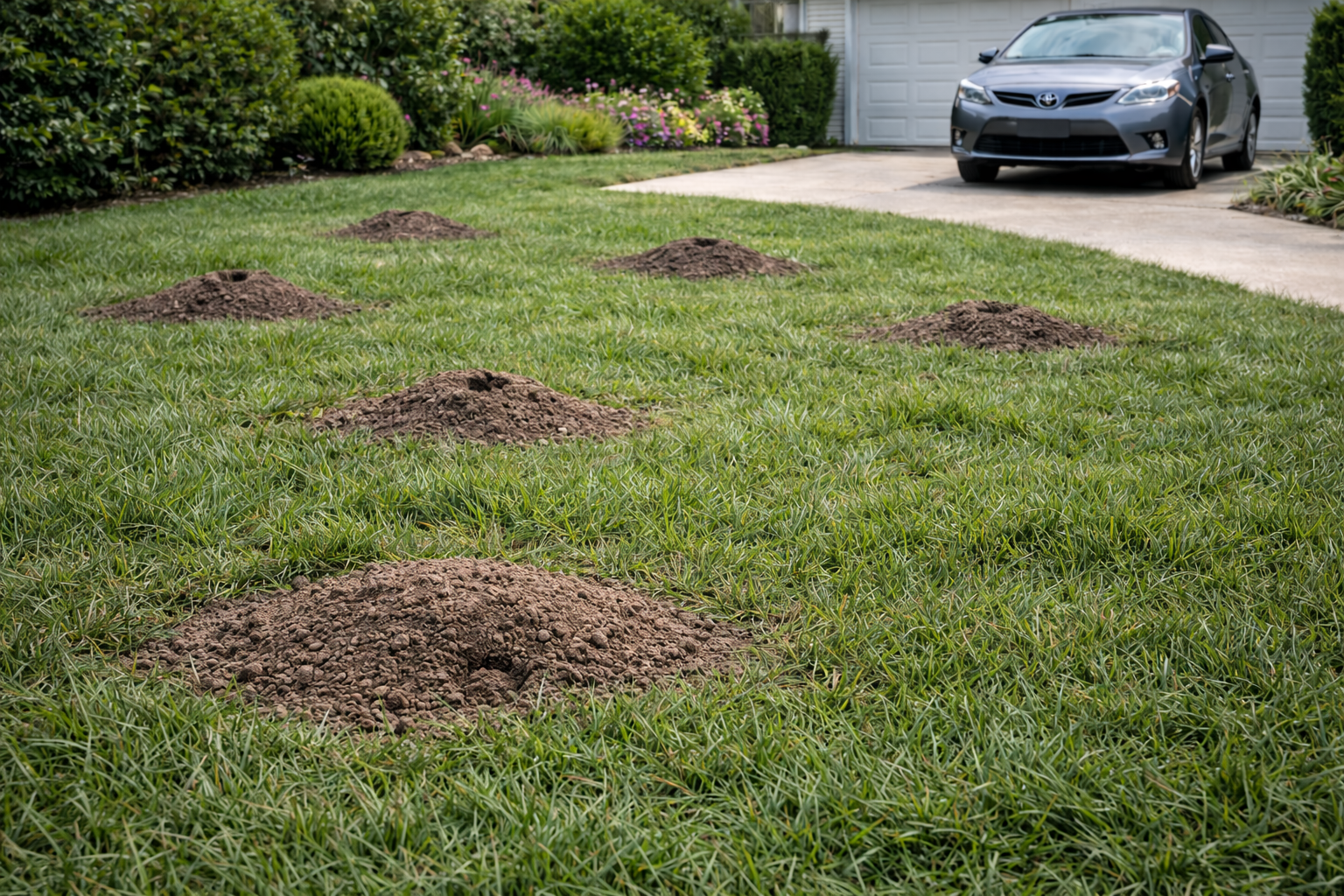
The most visible indicator of gopher presence is fresh mounding activity. Valley Glen property owners will notice small, conical mounds of soil pushed to the surface, typically 6 to 12 inches in diameter. These mounds appear somewhat randomly distributed across lawns and gardens, though they often cluster near areas with soft, well-irrigated soil. Fresh mounds have a distinctive appearance with loose, finely textured soil that contrasts with surrounding compacted earth. Multiple mounds appearing within days indicates active colonization and ongoing tunneling.

Subsurface tunnel damage often precedes visible mounding. Property owners may notice soft, spongy areas in lawns where tunnel networks lie just below the surface. Walking across these areas creates depressions, and irrigation water may pool in tunneled zones rather than percolating normally into soil. Damage to underground irrigation systems represents another significant problem in Valley Glen's irrigation-dependent landscapes. Gophers often intersect drip irrigation lines and lateral sprinkler lines while excavating, creating leaks and system failures. Water loss accelerates, and portions of yards may suddenly receive insufficient water.

Plant damage provides additional evidence of gopher activity. Gophers clip roots and pull plants underground, particularly young tree and shrub plantings common in Valley Glen's newer landscaping. Occasionally, fresh vegetation disappears overnight as gophers pull plants into tunnels to consume them. Mature landscape plants may suddenly wilt despite adequate irrigation when gopher tunneling damages root systems. Vegetable gardens suffer particularly notable damage, with gophers consuming roots, bulbs, and planted seedlings while creating an unsightly network of surface tunnels within garden beds.

Landscape Considerations for Valley Glen Properties

Valley Glen's residential landscape aesthetic reflects the broader San Fernando Valley character, dominated by Mediterranean and California drought-resistant landscaping mixed with traditional irrigated lawns and gardens. Many properties maintain mature shade trees including sycamores, liquidambars, and coast live oaks, interspersed with ornamental plantings and groundcovers. Irrigation systems support this diverse landscape, with a combination of spray irrigation for lawn areas and drip systems for landscaped beds. This variety of landscape features creates multiple vulnerabilities to gopher activity.

Certain plants commonly found in Valley Glen yards attract gophers disproportionately. Vegetables including carrots, potatoes, and root vegetables face particular risk. Ornamental plants with fleshy roots, such as sweet potato vine and certain dahlia varieties, are also vulnerable. Landscape favorites like roses, fruit trees, and young shade tree plantings suffer significant damage from gopher tunneling that disrupts root systems even when the plants aren't actively eaten. Some established native plantings, including certain California lilac and manzanita varieties, prove less attractive to gophers, potentially offering an alternative approach to property management.

Hardscape features—concrete patios, pathways, and stone edging—can experience damage as gophers tunnel beneath and alongside these structures. Subsidence and cracking sometimes result from tunnel activity undermining hardscape installations. Areas with extensive hardscaping relative to soft landscaping experience reduced gopher activity, as gophers cannot burrow through concrete and stone. Properties transitioning from extensive lawn areas to drought-resistant hardscape landscapes often see declining gopher problems as the preferred habitat diminishes.

Valley Glen's mix of older established properties and newer infill development creates variations in landscape vulnerability. Older neighborhoods often contain larger, more mature landscape installations with well-established plant roots that can better withstand gopher activity, though larger properties also provide more total habitat for gopher colonization. Newer properties with fresh landscaping plantings and newly installed irrigation systems face particularly acute vulnerability during the first few years following installation, when plants are establishing and gophers can cause rapid, visible damage.