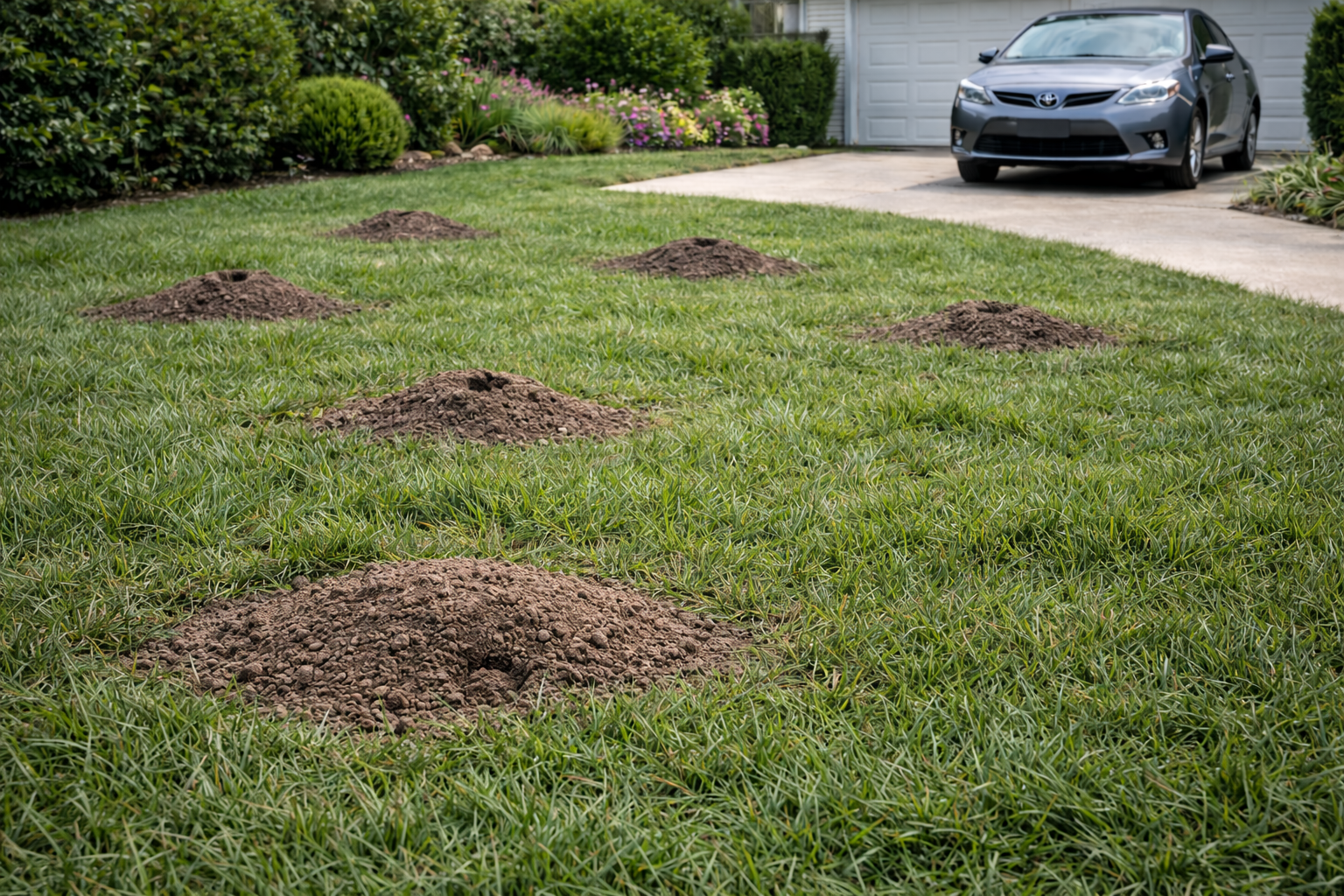
Gopher Activity in Westlake Village, CA

Westlake Village, located in Ventura County's blend of suburban development and open space, hosts a persistent population of burrowing rodents that frequently impact residential properties. The community's proximity to the Santa Monica Mountains, combined with its extensive irrigation systems and favorable soil composition, creates ideal conditions for gopher colonization. Property owners throughout neighborhoods from Lindero Canyon Road to Westlake Boulevard regularly encounter evidence of gopher activity on their landscapes.

Why Westlake Village Has Significant Gopher Activity

The environmental conditions in Westlake Village prove exceptionally conducive to gopher populations. The area's soils consist primarily of clay loam and silty loam derived from weathered sandstone and shale, making them relatively easy to excavate compared to harder geological formations found in other Southern California communities. These soil types, prevalent throughout the Westlake Village Master Planned Community and surrounding unincorporated areas, allow gophers to construct extensive burrow systems with minimal energy expenditure.

Irrigation infrastructure forms another significant attractant. Westlake Village's Mediterranean climate receives approximately 15-17 inches of annual rainfall, concentrated heavily between November and March. To maintain the manicured landscapes characteristic of the community's residential neighborhoods, property owners maintain year-round irrigation systems that keep soil moisture levels consistently favorable for gopher tunneling and plant root accessibility. The combination of artificial irrigation and natural winter precipitation extends the growing season and ensures vegetation remains palatable to gophers throughout much of the year.

Proximity to undeveloped open space also contributes substantially. The Santa Monica Mountains National Recreation Area borders Westlake Village to the north, and various preserved natural areas exist throughout the community. These spaces harbor established gopher colonies that frequently serve as source populations for residential yard colonization. Gophers migrating from wild areas into developed zones seek the reliable food and water sources that managed landscaping provides.

Common Gopher Species in Westlake Village

Botta's pocket gopher (Thomomys bottae) represents the primary gopher species affecting Westlake Village properties. Named for the distinctive fur-lined cheek pouches that extend from mouth to shoulders, Botta's pocket gophers are solitary, fossorial rodents rarely observed above ground. Adult individuals typically measure 5-7 inches in body length, with tail segments adding another 1-2 inches. Their coloration ranges from light tan to dark brown, often matching local soil tones, which provides camouflage during rare surface appearances.

Botta's pocket gophers possess several anatomical specializations for subterranean life. Their eyes are small and relatively ineffectual compared to surface-dwelling rodents, as darkness characterizes their tunnel environment. Prominent incisor teeth grow continuously throughout their lives and serve both as primary digging implements and food processing tools. Their front feet display elongated claws adapted for excavation, while their hind feet possess webbing that assists in pushing soil backward during tunnel construction.

The species maintains separate burrow systems for food storage, nesting, and toilet purposes, reflecting a level of spatial organization unusual among rodents. Individual gophers actively defend their tunnel networks against intruders, rarely tolerating others except during brief mating periods. Westlake Village's residential properties often support multiple independent gophers rather than family groups, with each animal maintaining its own underground domain beneath yards, gardens, and landscaping areas.

When Gopher Activity Peaks in Westlake Village

Gopher activity in Westlake Village exhibits clear seasonal patterns correlated with the local climate cycle. The breeding season occurs primarily from January through March, when soil moisture levels rise following winter precipitation in the Santa Monica Mountains region and throughout Ventura County. During this period, male gophers expand their burrow systems while seeking mates, and pregnant or nursing females require increased food intake to support reproductive demands. Surface mounding and tunnel construction activity becomes most visible during these months, as gophers tunnel closer to the soil surface while searching for tender plant roots.

Spring months, particularly March through May, bring secondary peak activity as juvenile gophers disperse from maternal burrow systems. These young animals, measuring only a fraction of adult size, must establish their own tunnel networks in nearby suitable habitat. Residential properties adjacent to wild areas or previously infested yards frequently experience colonization during this dispersal period. The combination of adequate soil moisture, available vegetation, and population pressure from maturing juveniles creates conditions where gopher populations expand geographically.

Summer activity typically diminishes as Westlake Village experiences dry conditions and irrigation-dependent moisture becomes more sporadic. However, properties with consistent landscape irrigation may experience continued moderate activity. Fall activity generally remains relatively low until winter rains resume the cycle. Understanding this temporal pattern helps property owners recognize when to expect heightened gopher presence and when populations may naturally contract.

Signs of Gopher Damage in Westlake Village Yards

The most conspicuous evidence of gopher presence consists of distinctive mounds appearing in lawns, planting beds, and landscaped areas. Gopher mounds differ noticeably from mole mounds commonly observed in other regions. Gopher mounds typically measure 4-8 inches in height and 8-12 inches in diameter, appearing as nearly circular raised areas. The characteristic feature distinguishing gopher mounds involves the plug—gophers push soil upward through a main tunnel opening, then reverse direction and seal the opening with a soil plug visible at the mound's summit or slightly off-center.

Gopher damage extends beyond surface mounding. Their tunneling activities undermine turf areas, creating soft spots and encouraging erosion. Root systems of ornamental plants—particularly favored species like roses, vegetables, and young trees—become exposed or severed by burrow construction. In Westlake Village's common landscape arrangements featuring drip irrigation systems, gophers frequently damage emitters, lines, and water distribution tubing, disrupting irrigation functionality across planted areas. Tree damage proves particularly problematic when gophers girdle root systems or tunnel beneath young specimens, destabilizing soil support.

Gophers selectively feed on preferred plants, causing sudden wilting or death despite adequate irrigation. Bulbs, tubers, and succulent plant roots disappear entirely into burrow systems for underground consumption. In some cases, plants wilt and die without obvious surface damage, their root systems having been consumed beneath the soil surface where damage remains invisible until plant failure occurs.

Landscape Considerations for Westlake Village Properties

Westlake Village properties typically feature mixed landscaping strategies combining turf areas, ornamental plantings, hardscape elements, and in some cases, productive gardens. The community's aesthetic guidelines and homeowner association restrictions influence landscape composition across neighborhoods, affecting which plants predominate and therefore which species experience gopher predation. Mediterranean and drought-tolerant themes characterize much modern Westlake Village landscaping, incorporating plants like California natives, drought-resistant ornamentals, and reduced turf areas.

Certain plants prove particularly vulnerable to gopher damage. Root vegetables including carrots, onions, and potatoes suffer extensive losses in properties where gophers gain access to vegetable gardens. Ornamental bulbs like tulips, daffodils, and gladiolus face similar susceptibility. Young citrus trees, avocado plants, and other fruit-bearing species frequently experience damage from gopher activity in Westlake Village's many properties featuring edible landscaping. Conversely, established plants with robust root systems and plants containing toxic or distasteful compounds generally resist gopher predation more effectively.

Properties featuring extensive hardscape—patios, walkways, and constructed features—experience reduced gopher activity than those with predominantly softscape plantings. However, burrow systems frequently extend beneath hardscaped areas, causing settlement and damage to constructed surfaces. The balance between aesthetic softscape plantings and practical hardscape implementation affects overall gopher pressure on individual Westlake Village properties. Properties incorporating rocky mulches and gravel areas also experience slightly reduced gopher colonization compared to those featuring organic mulches that retain moisture favored by gophers.